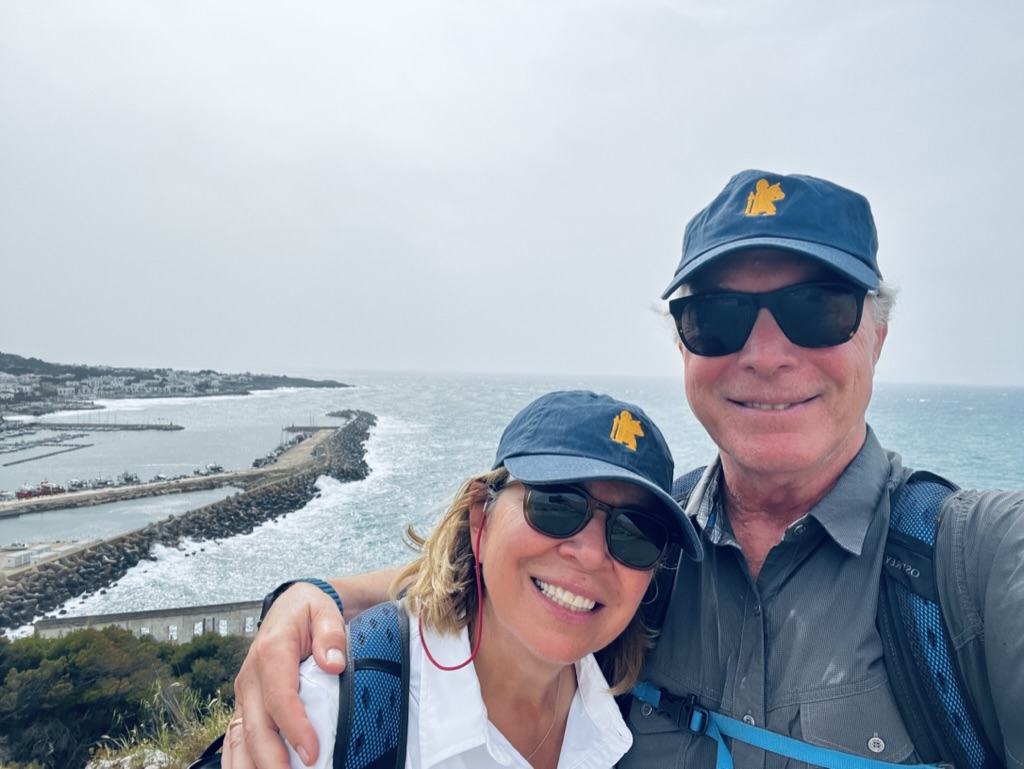
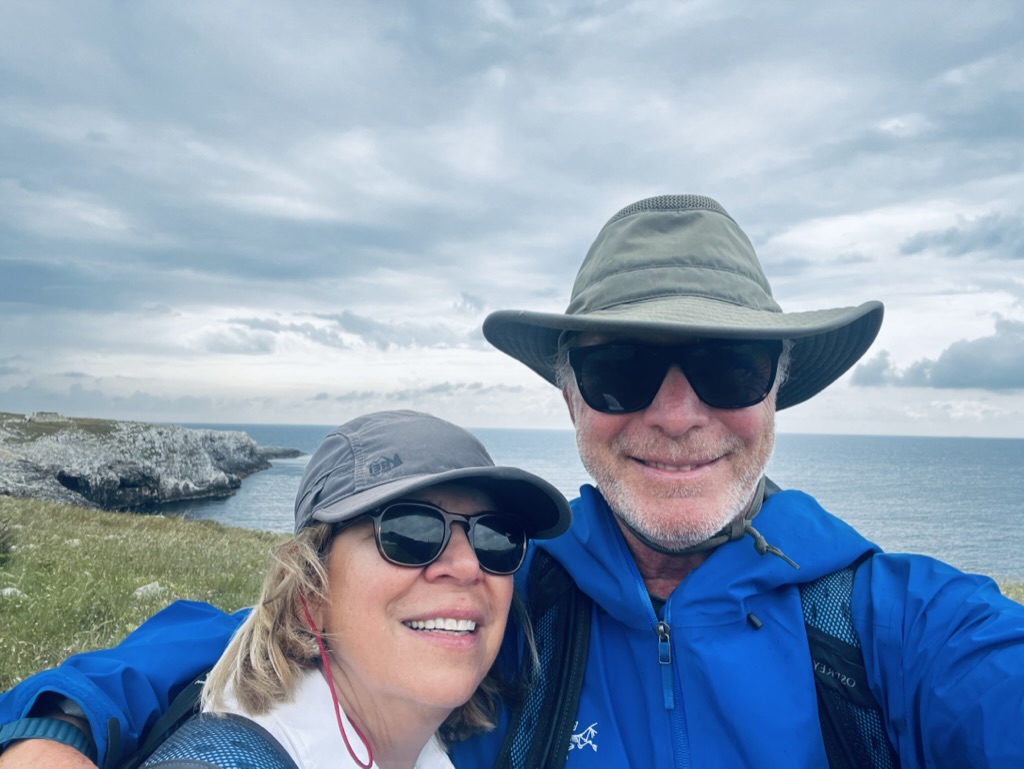
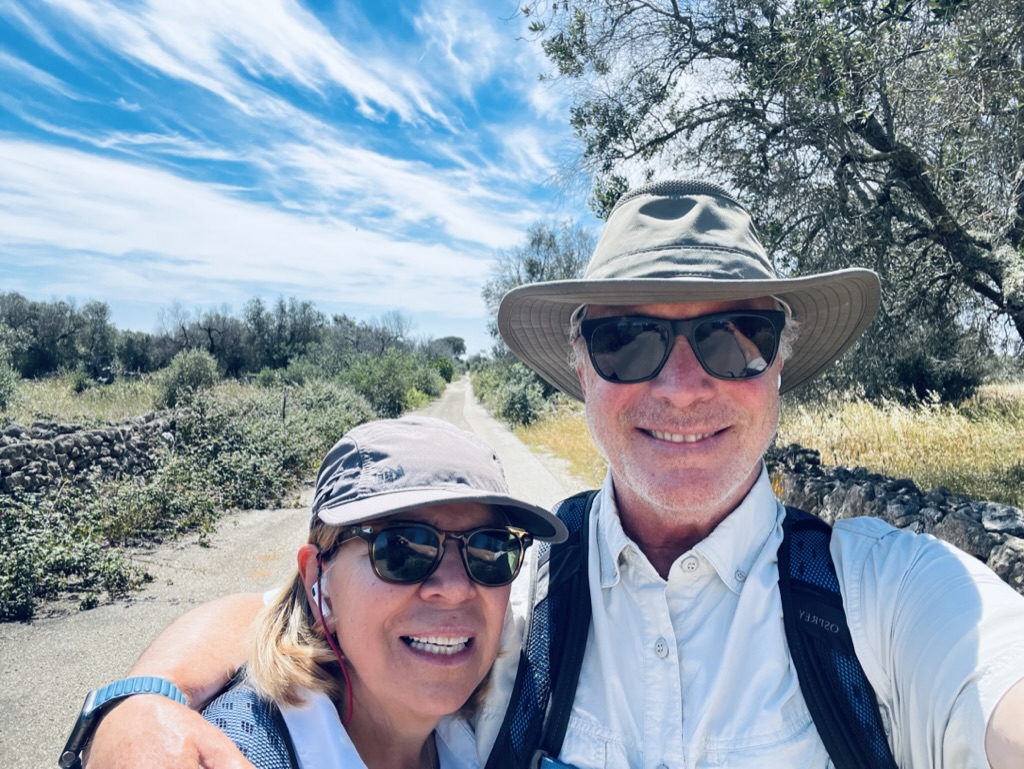
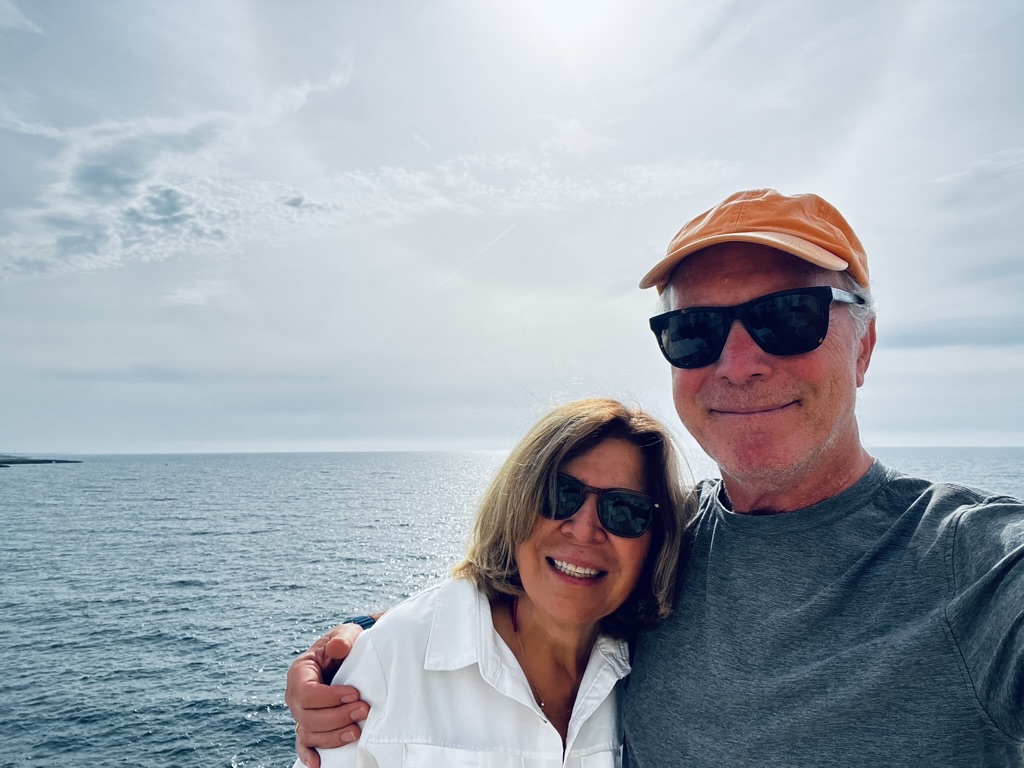
We reached the end of the road. To our left the Adriatic Sea and the hills of Albania outlined on the far horizon, to our right the Ionian Sea which today is crashing against the rocky shore driven by a 25 mph Scirocco that pelted us with sand particles all day. The Madonna de Finibus Terrae who calmed the waters in the 4th century to save the Leuca population from a gigantic tidal wave was resting. Instead, sister Fara, not Fara Fawcett she insisted, meticulously designed, and signed our Testimonium proving that we completed 975 km of the Via Francigena del Sud from Rome to SMDL. And that was that.
This adventure with my dear friend the Wildebeest is coming to a close. What began 40 days ago, seems now like a dream from a different lifetime. The details are growing more elusive, like watching passing scenery from a train window.
My daughter warned that asking friends to endure, yet another, journal marathon of our walk was asking too much. Maybe so, but our dispatches provide us with important details and reminders. Many of the specifics are already forgotten or confused. The record allows us to fact check our memories and each other. While you may be solving Wordle, we are trying to remember places and event as recent as yesterday. A daily occurrence goes something like this:
Edward, “Do you remember that guy in that town with that thing?”
Paula, “Oh yeah, his name was Rocco, and he was holding a cat and drinking a beer.”
Edward, “Right by which town was it? “See what I mean.
Our journey has been intimate and personal. Sharing this adventure with you has created an unexpected and thrilling dynamic. Thank you. Your comments and incredibly generous compliments have been a regular source of joy and encouragement.
Some Trip highlights:
Best listening:
Hamlet, Forger Theatre Audio Production.
Brooke Gladstone – On the Media – Every week.
Ezra Klein Interview with Adam Moss on Editing.
Best Purchases along the way:
multiplugs.
small black gauge duct tape.
Padre Pio refrigerator magnet.
Apple watch replacement wrist band at the Bari Apple store.
Trip miracles:
BoA shipping replacement debit card to tiny town in middle of nowhere in 5 days; Amazon delivering new boots to a different small town in the middle of nowhere in 3 days; clothes pins.
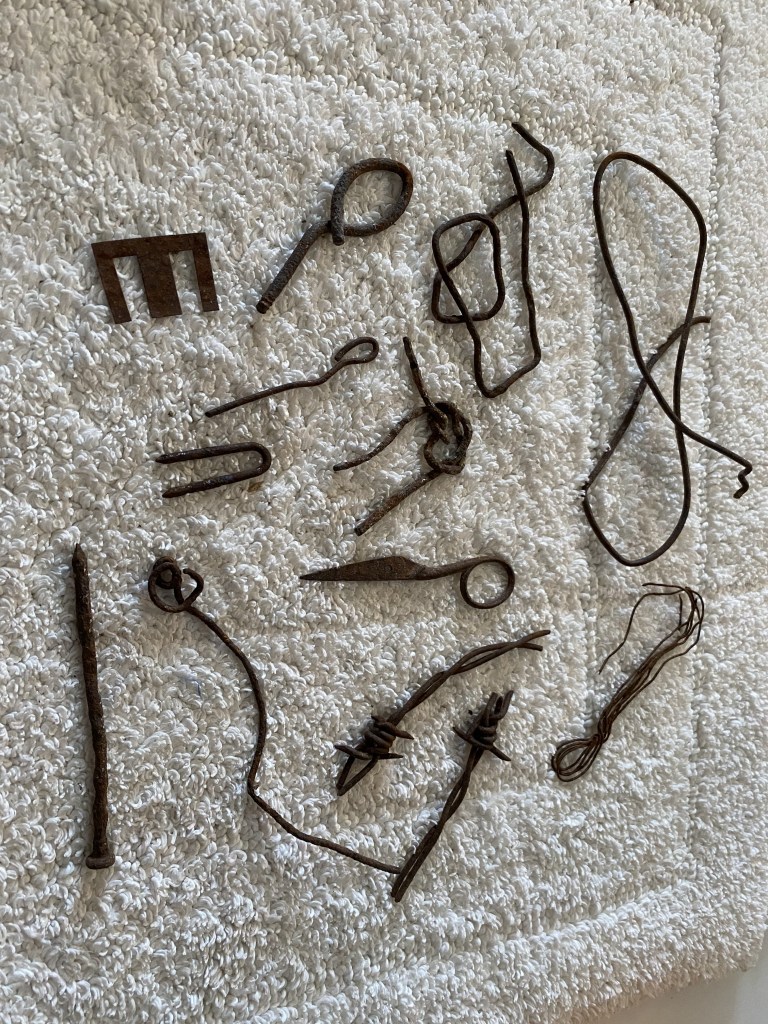
My ceramic chard collection in now complete. I plan to turn over the mountain of treasures to Isla, my 2-year-old granddaughter, who is a puzzle prodigy. I will not be surprised if she returns it with a recreation of Pangea. The rusted metal treasures are too dangerous for toddlers but will be displayed in a public location. Details to follow.
When we set out, we had no thesis to prove, no demons to slay, no angels to entice, no need to confirm beliefs or redemption to seek. Just taking a long walk with a friend who shares your eccentricity. However, lessons were learned, and human kindness was confirmed. We experienced the joy of the ordinary, and the thrill of accidental discoveries. These were our regular rewards.
To be a Zebra traveling with a Wildebeest life is safe and secure. He eats the bottom half of the grass stalk; I eat the top. His exceptional sight, when coupled with my exceptional hearing, places us in a world organized and complete in our reciprocity.
So now – after the boots and the blisters, after the Advil, the sunscreen, after the long talks, the lengthy lunches on logs, after the wrong turns and the helpful strangers, after the endurances and the water bottles, after the climb and the descent, after the inexplicable joy of enduring kindnesses, we return to those we love.
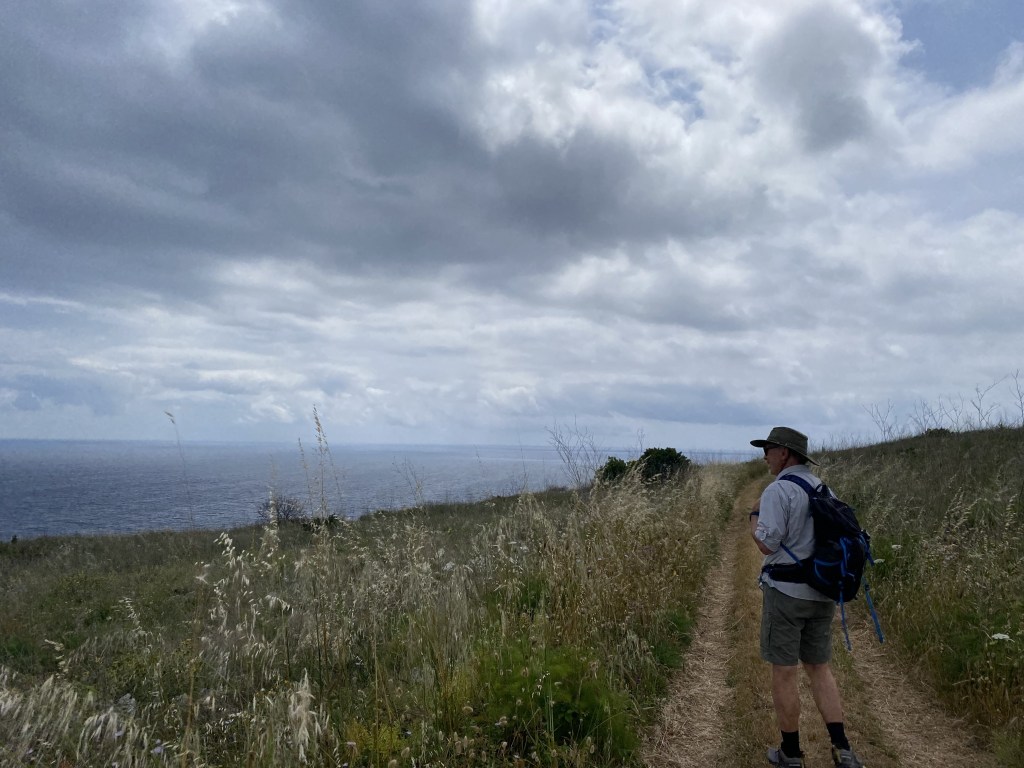
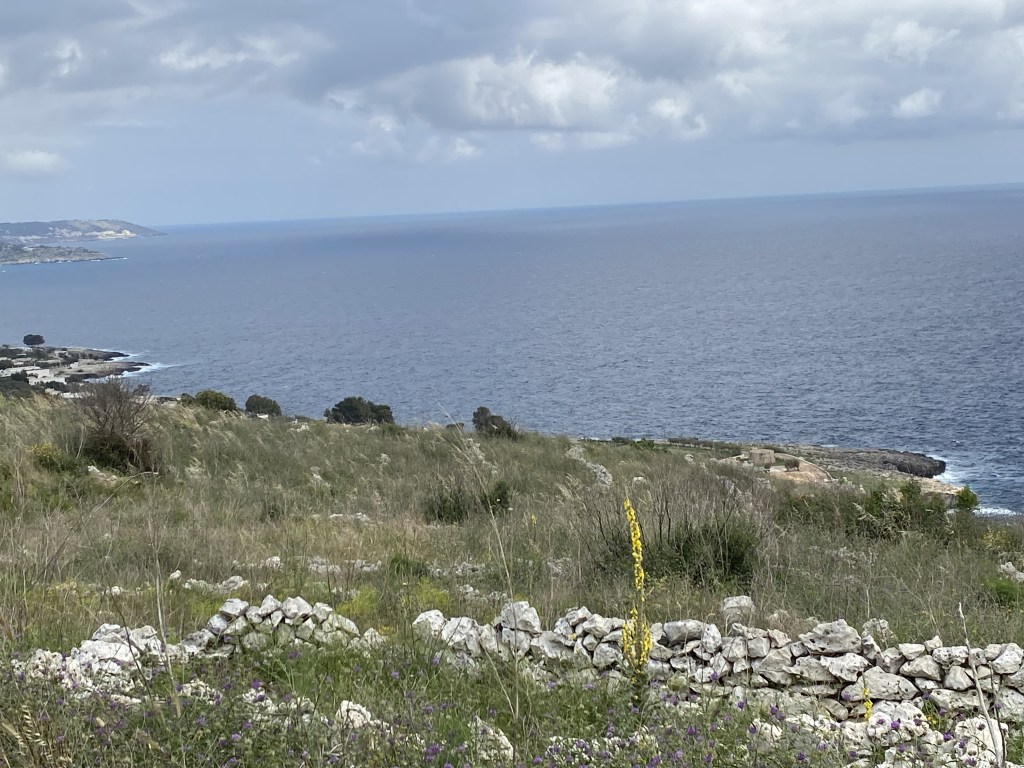
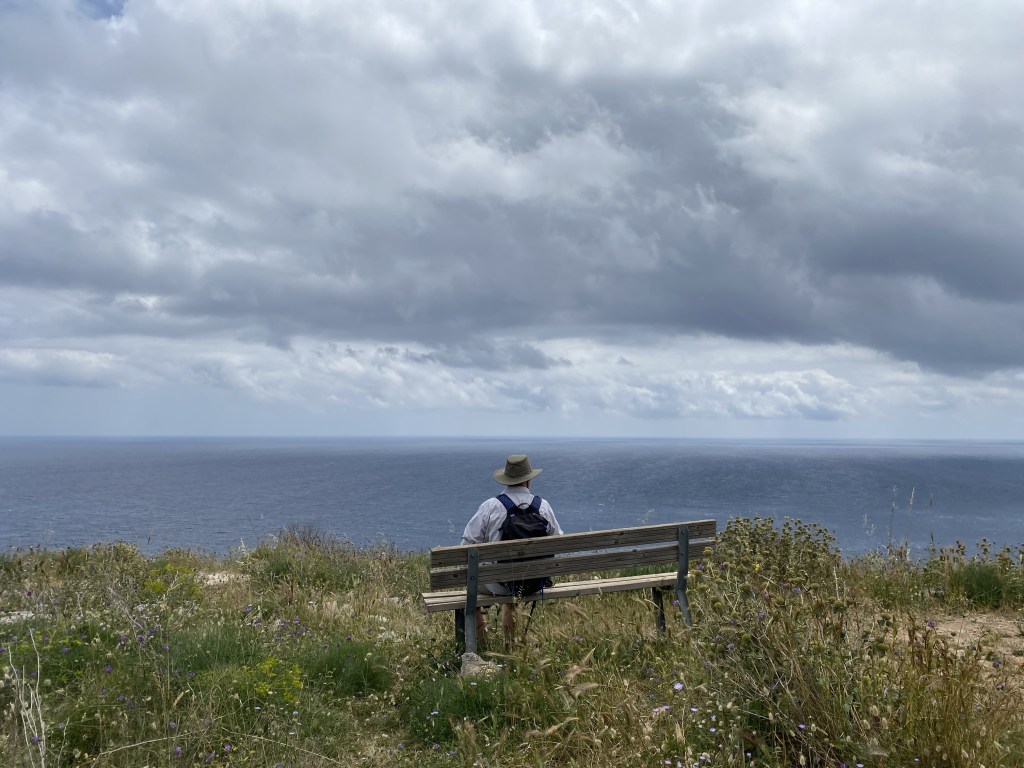
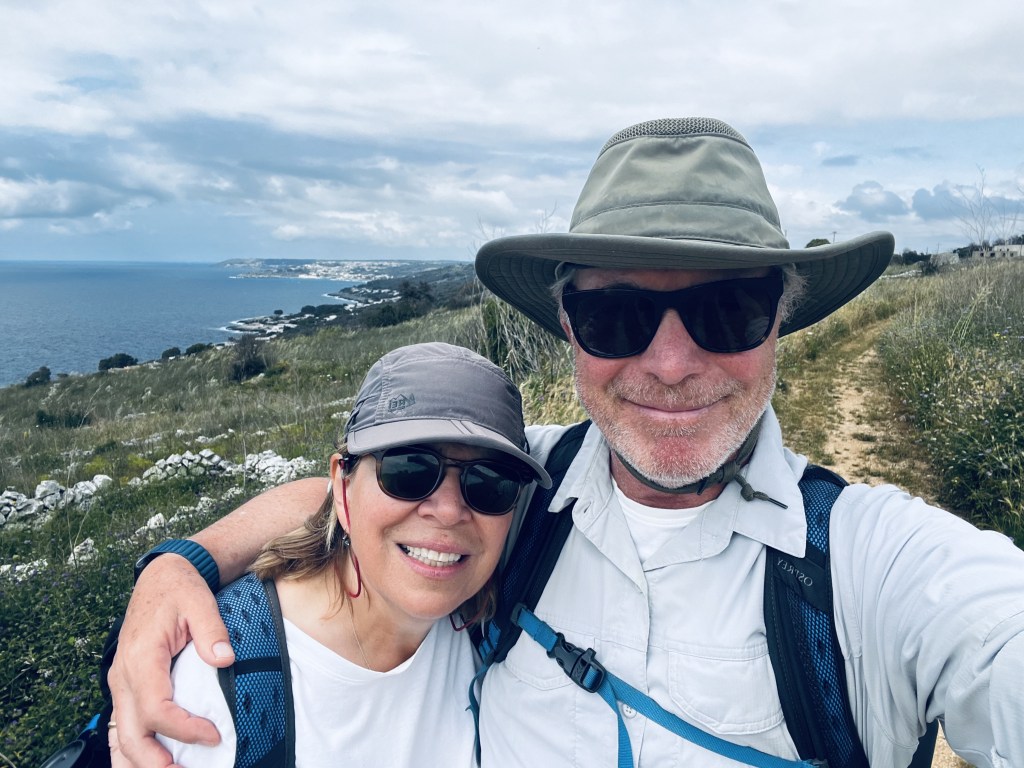
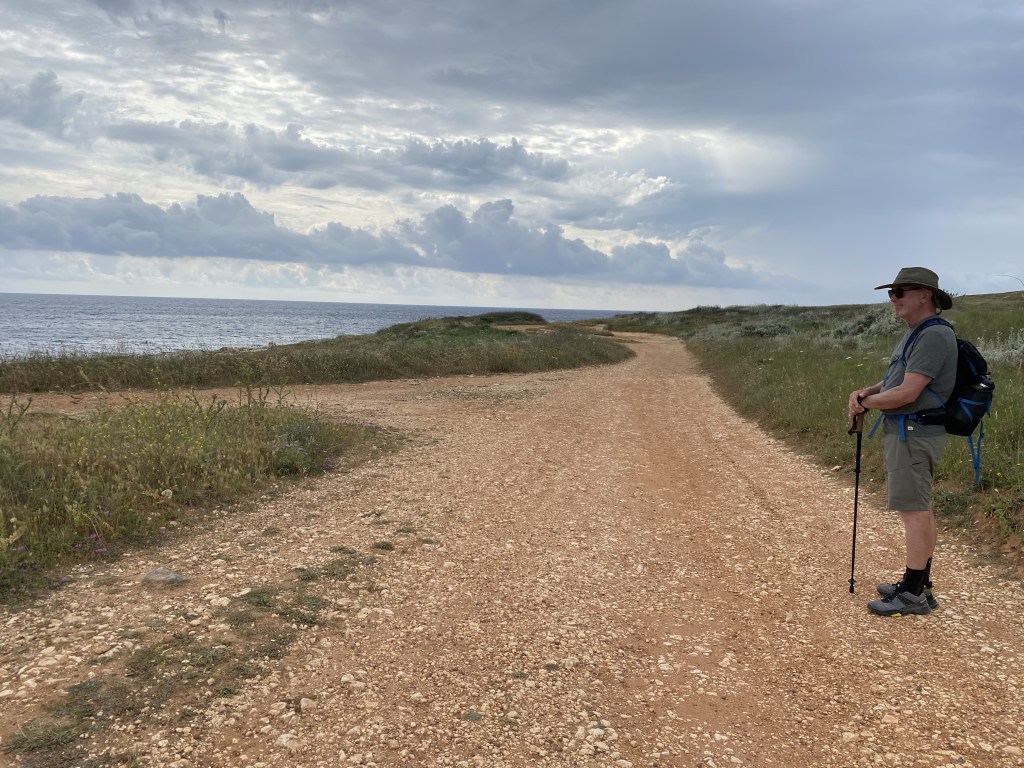
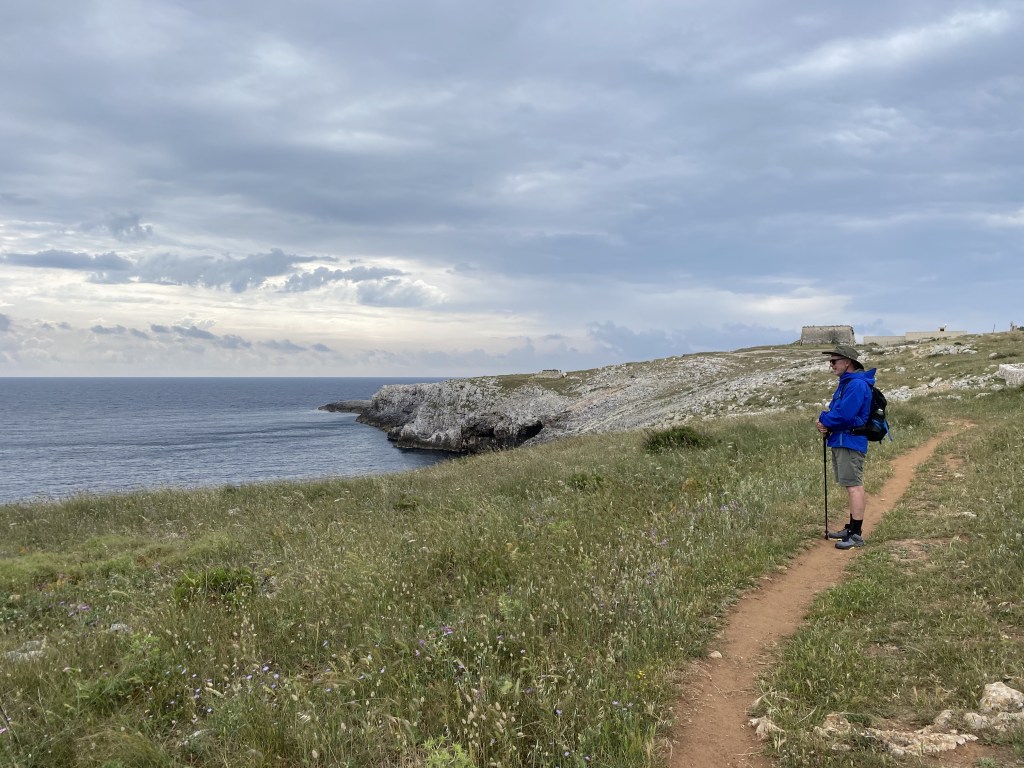
A beautiful walk high up on the cliffs overlooking the sea.
We went to the fruit vendor to buy a couple of oranges for today’s short trip. The store advertised dried figs. The fig trees we pass are full of figs, not yet ripe. As the lady was carefully selecting and bagging the oranges I asked her when fig season began. “Around the feast of St John” she answered automatically. When she saw my puzzled look, she added “Around the first of June.”
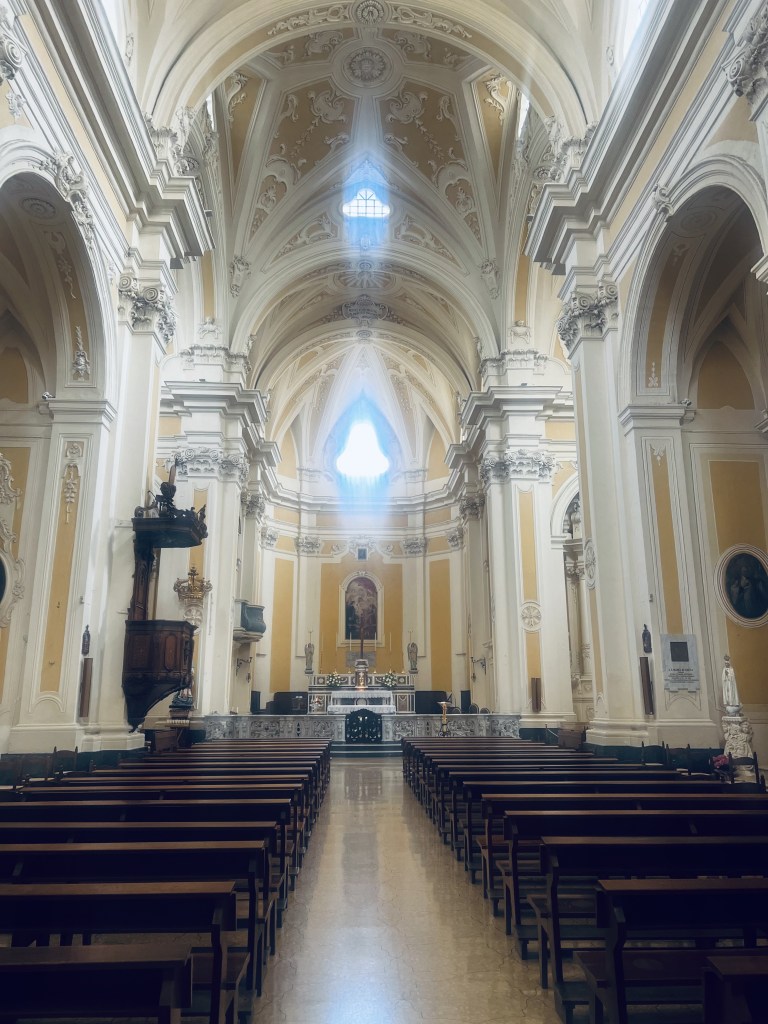
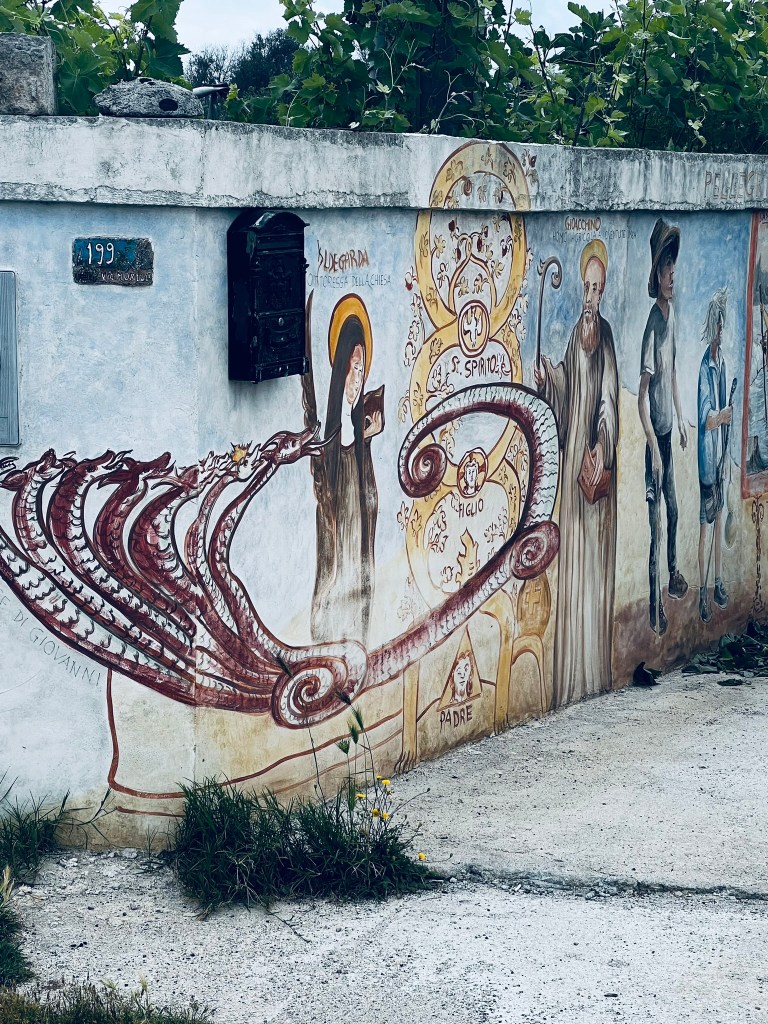
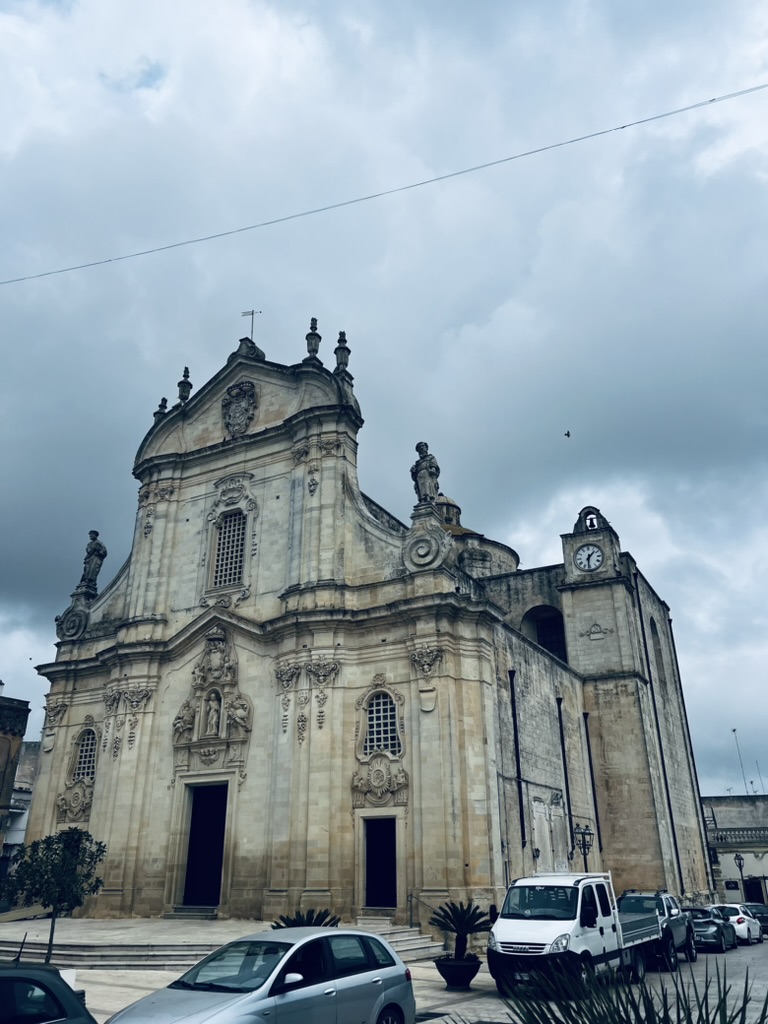
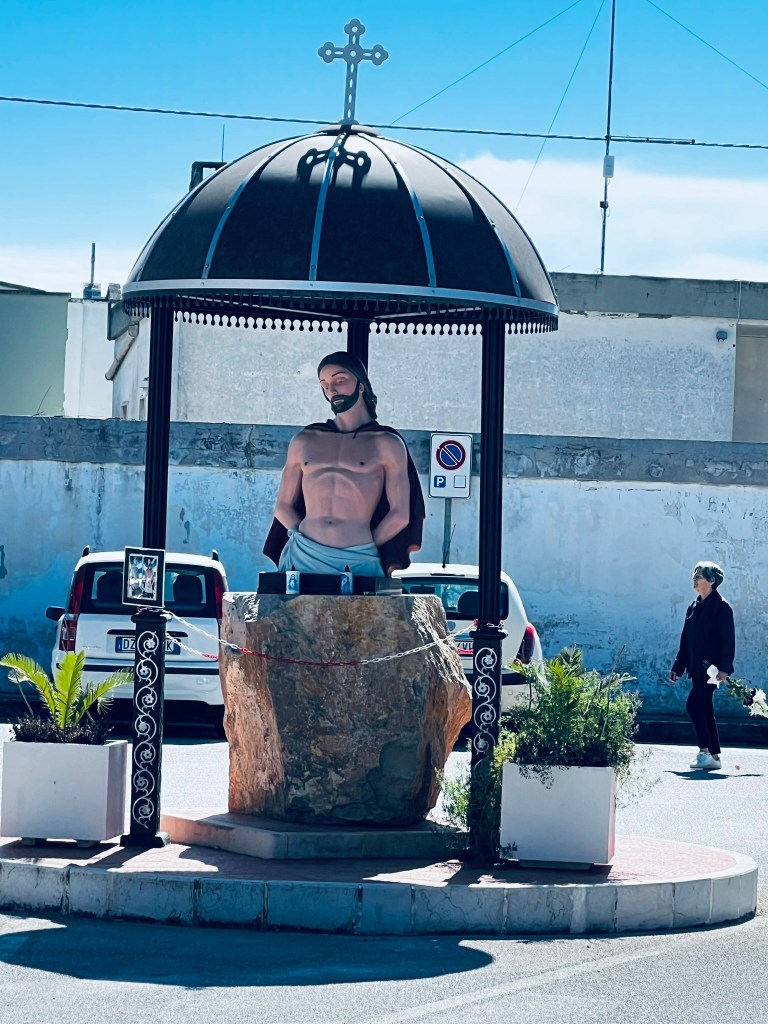
It is difficult to overstate how deeply religion is integrated into everyday life in Italy. Crucifixes and portraits of Pope John or Father Pio everywhere, the road is sprinkled with small devotional chapels of all kinds, some more unusual than others, and seasons are defined by the rhythms of a religious calendar. Small poor towns boast magnificent churches, feast days are devoutly observed and celebrated. The log of church attendance may lead one to believe this is a secular country, but church attendance is no substitute for the weaving of religious practice into the fabric of everyday life.
Tomorrow is the last day of our Via Francigena walk. We are bracing for an emotional arrival at St Maria di Leuca.
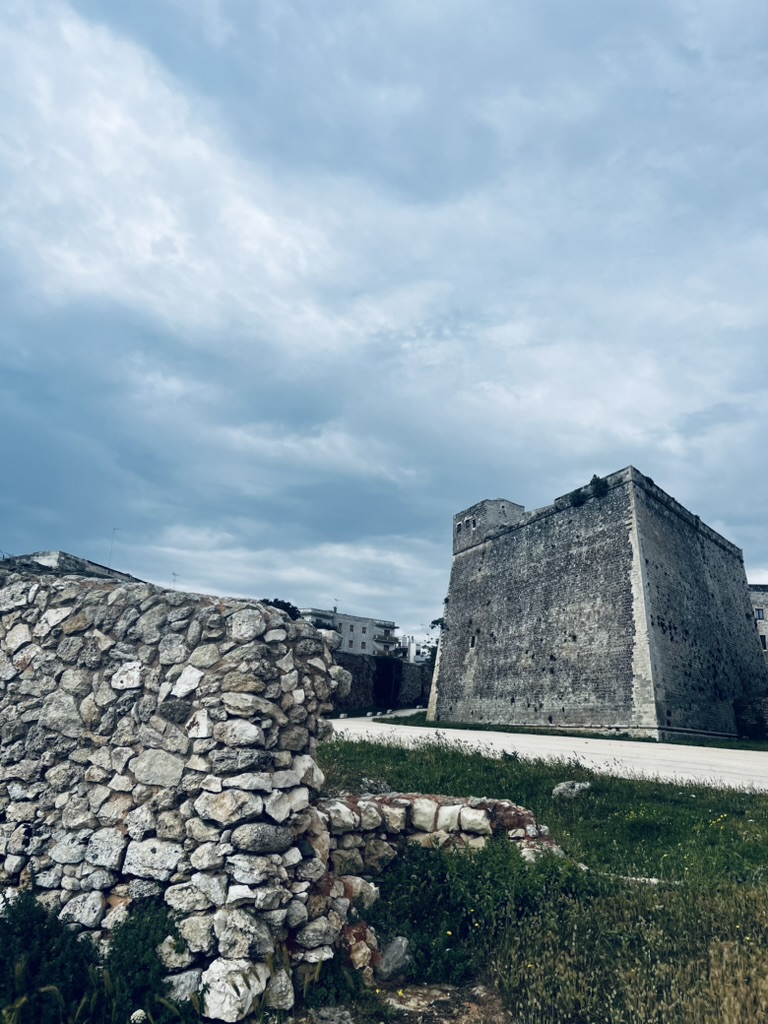
We left the Aragonese castle behind. A beautiful blustery, wet day, first along the coast, now marked by steep cliffs, and then back in olive groves and vineyards and thorough small towns (less than 1,000 inhabitants) with extraordinary churches. This is the last of our 20+ km days, a distance that at the beginning of the walk would have been debilitating, today it was a breeze. Human progress.
The landscape is littered with Masserie, the old, fortified manor homes, many dating to the 16th century, surrounded by vineyards, olive groves, cultivated fields and animal pastures. Many of them are now abandoned, the economic system that supported them eliminated, but some have been converted into attractive resorts. We stayed in one, Masseria San Domenico, back in Savelletri, that was one of the best hotels/resorts we have ever frequented. It is another example of the resiliency of Italian culture. Not to mention the most exquisite dinner we are having in Vignacastrisi, population 1,700, at a restaurant that anywhere else would be a 3-star Michelin. Such is life.
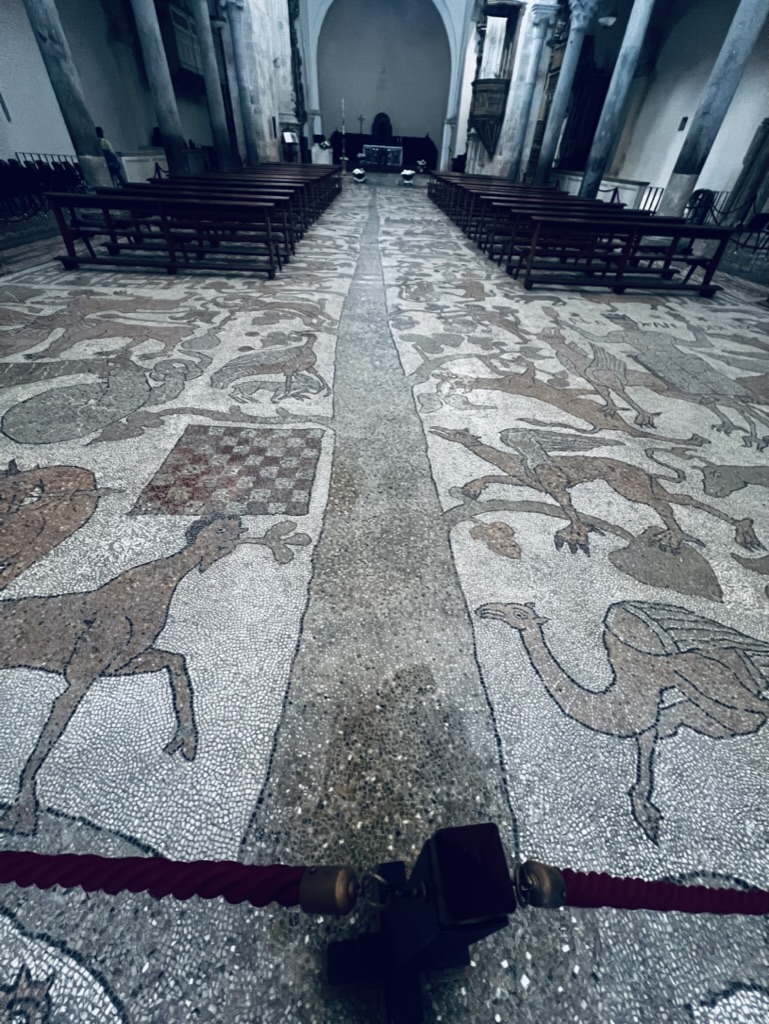
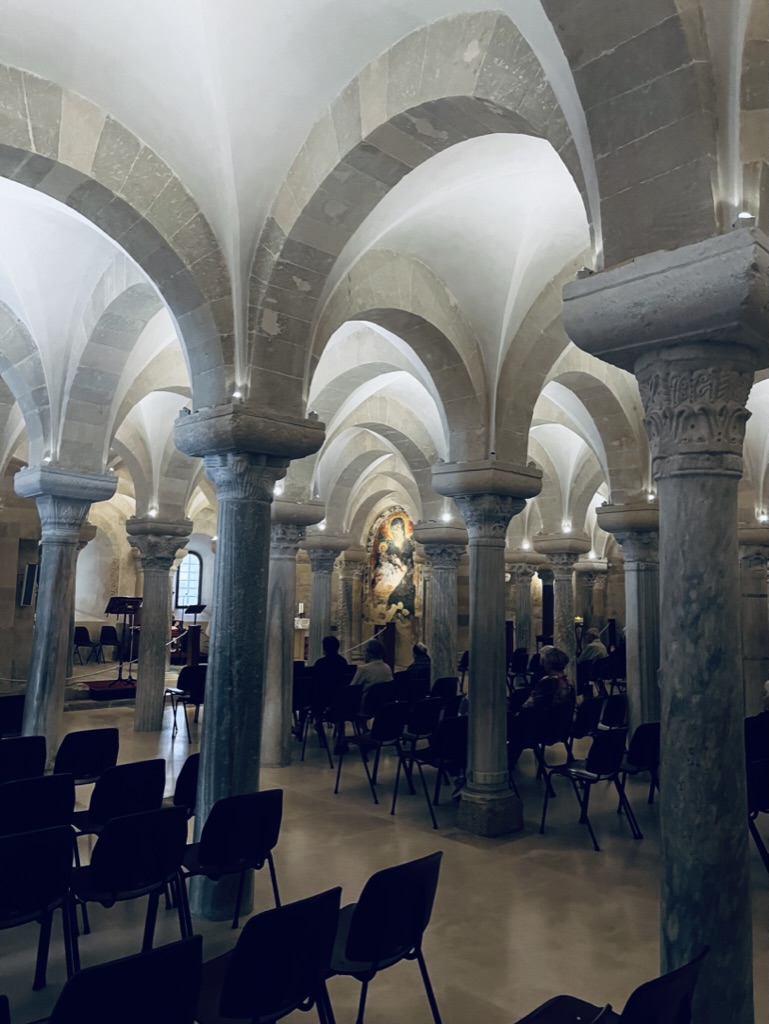
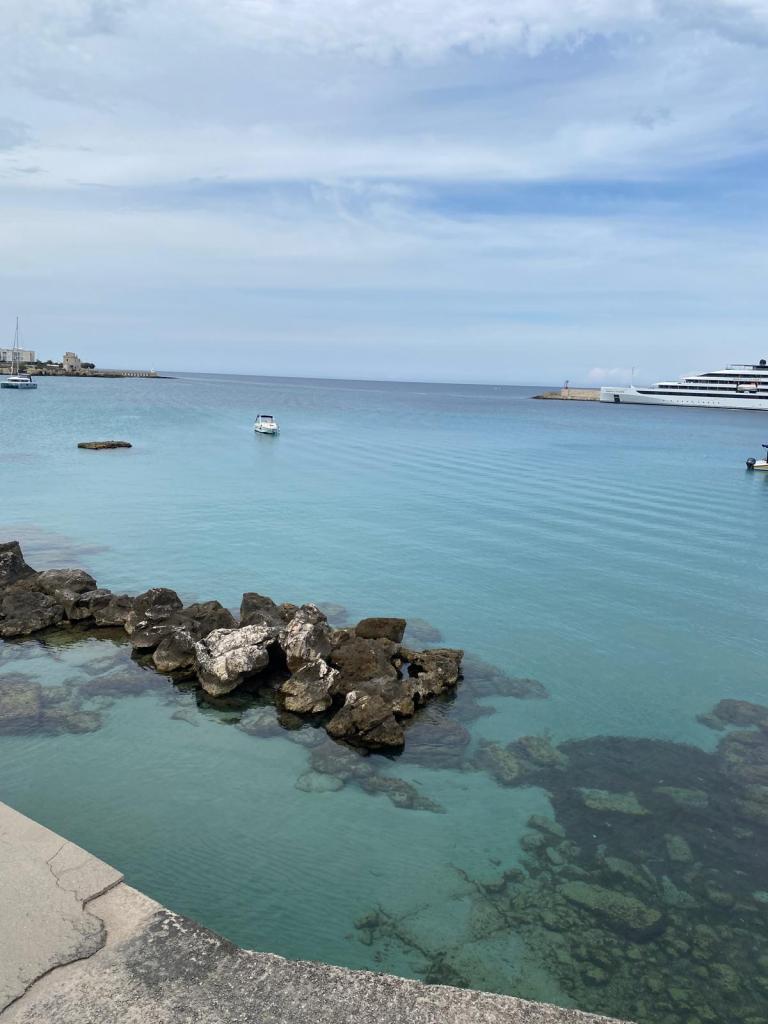
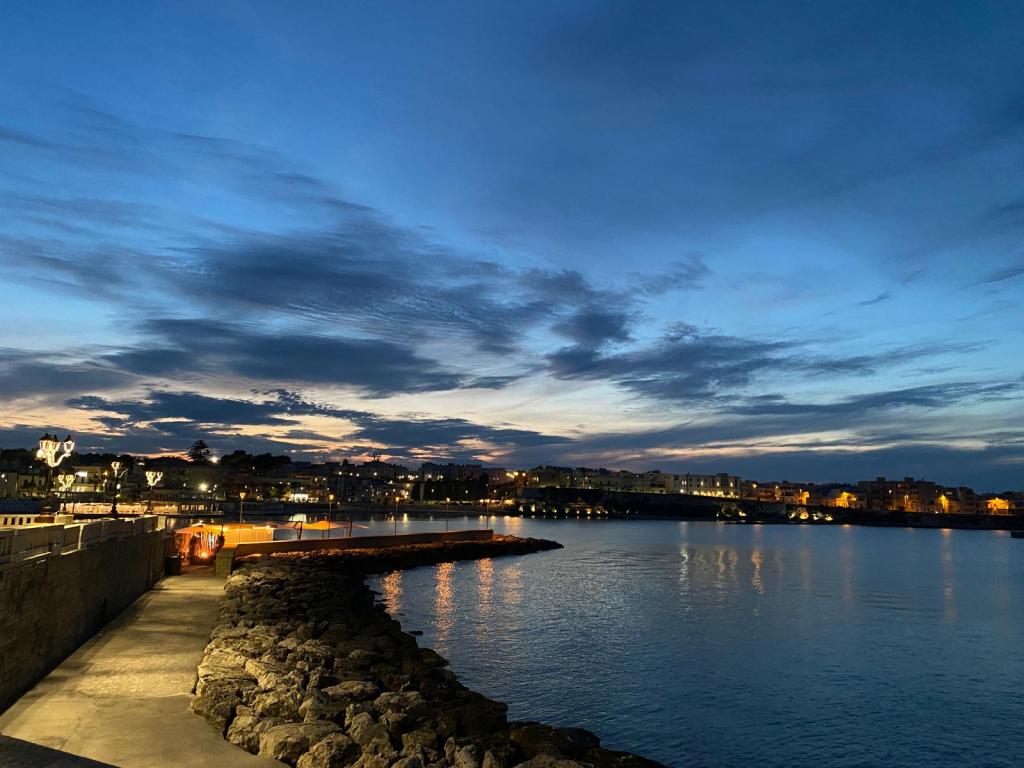
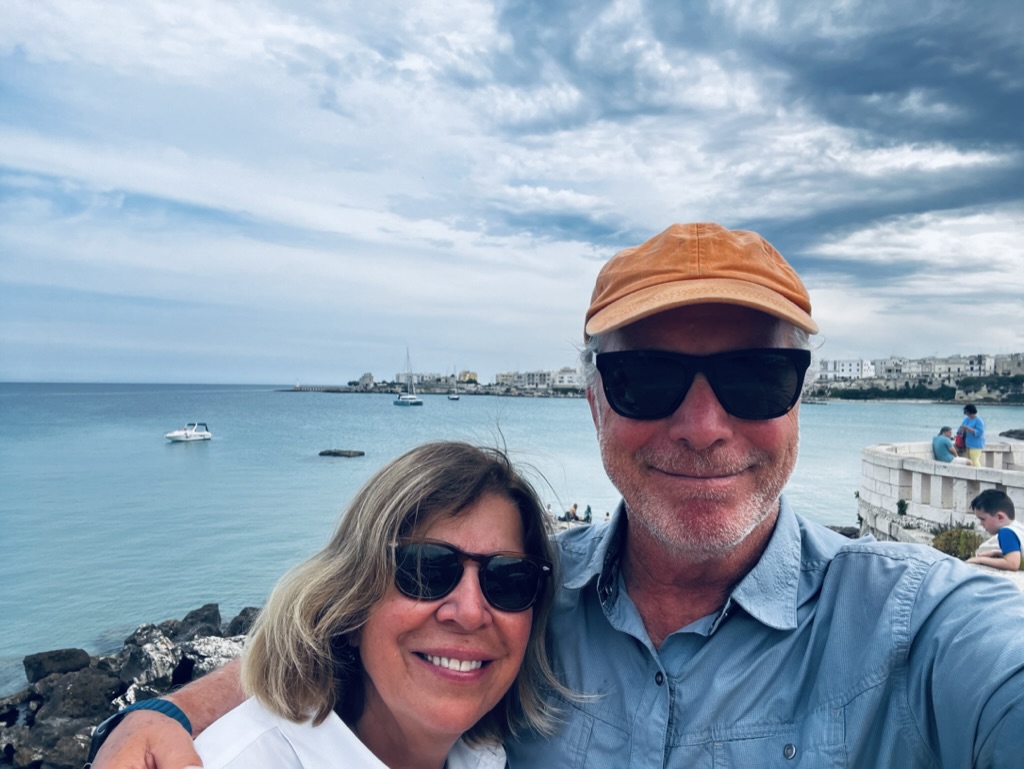
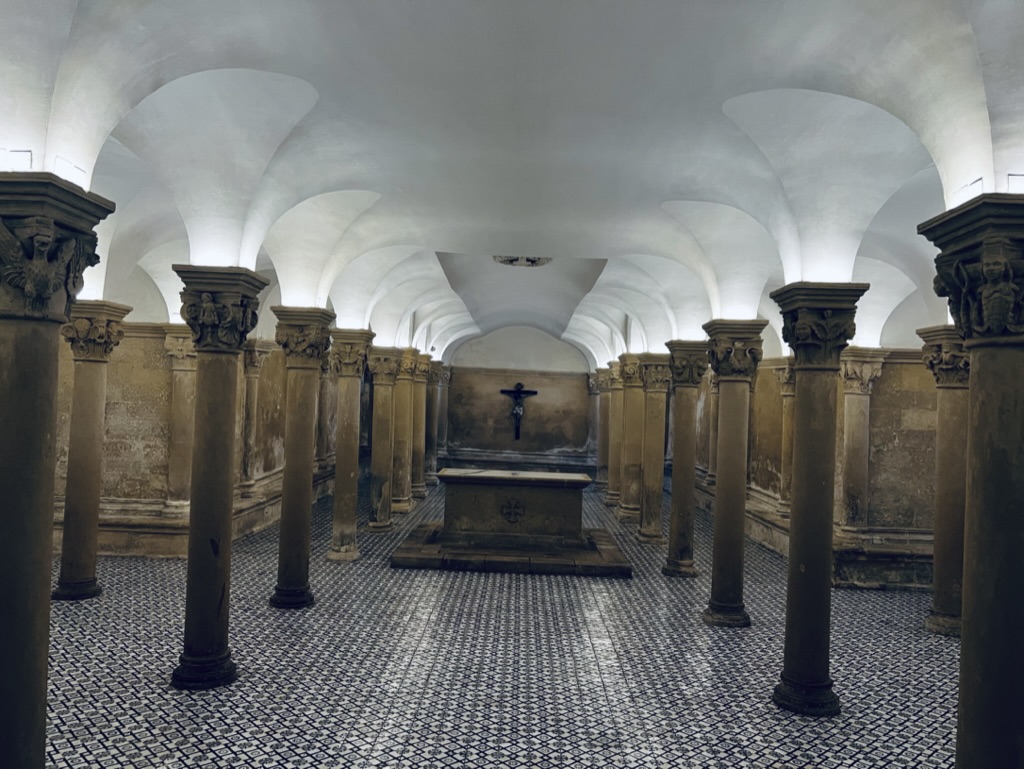
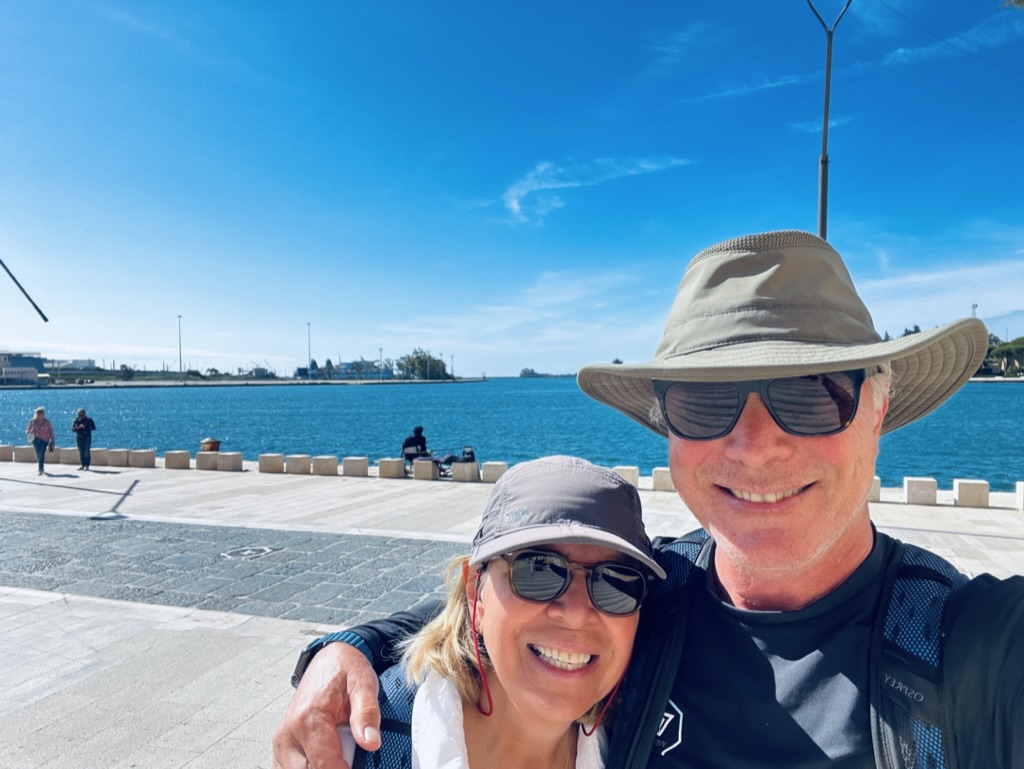
We are back by the sea at the small town of Otranto, population 5,000 that swells up to 100,000 during the high season. It is a stunningly beautiful town with a broad, marble boardwalk along the shore, lined with restaurants and gelaterie, the length of its harbor. It is home to a significant Romanesque Basilica and an Aragonese castle. The 11th century basilica sports an elaborate tree of life mosaic on the floor of the main nave representing the history of Otranto in gory and suggestive detail. The docent in Lecce recommended we visit the crypt, that dates to the single digits, it did not disappoint. On our way back to the hotel after dinner we were drawn by the sounds of a Kyrie Eleison. We tucked into the side entrance of the basilica to listen to the choir ensemble practice. The acoustics were magnificent.
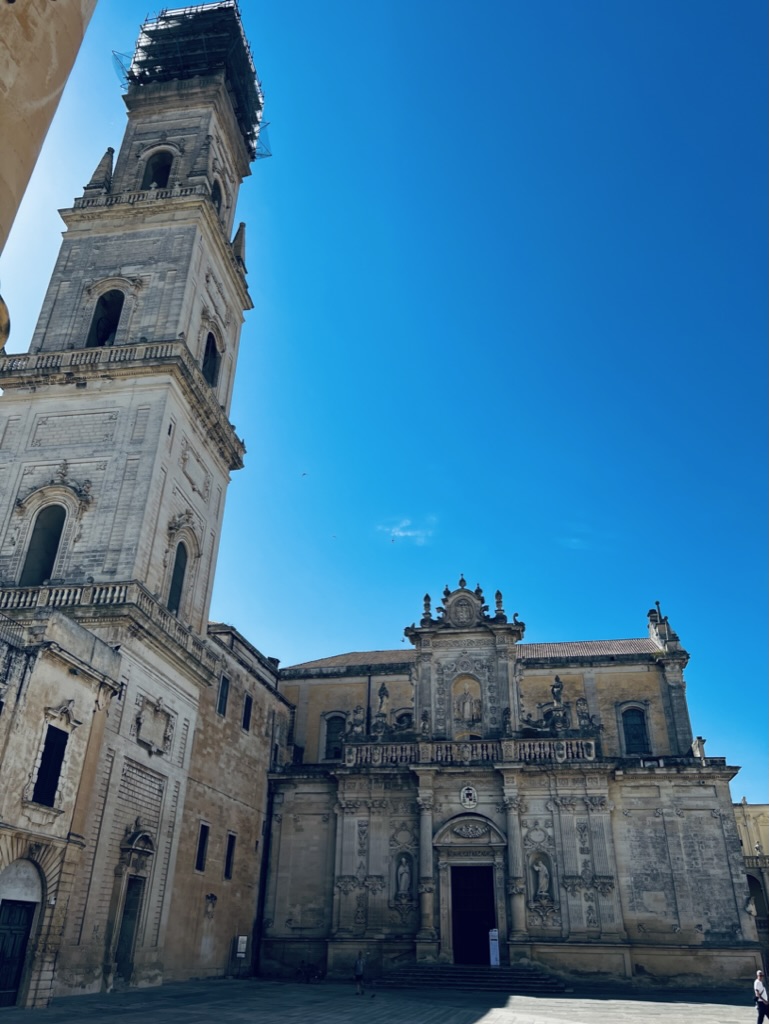
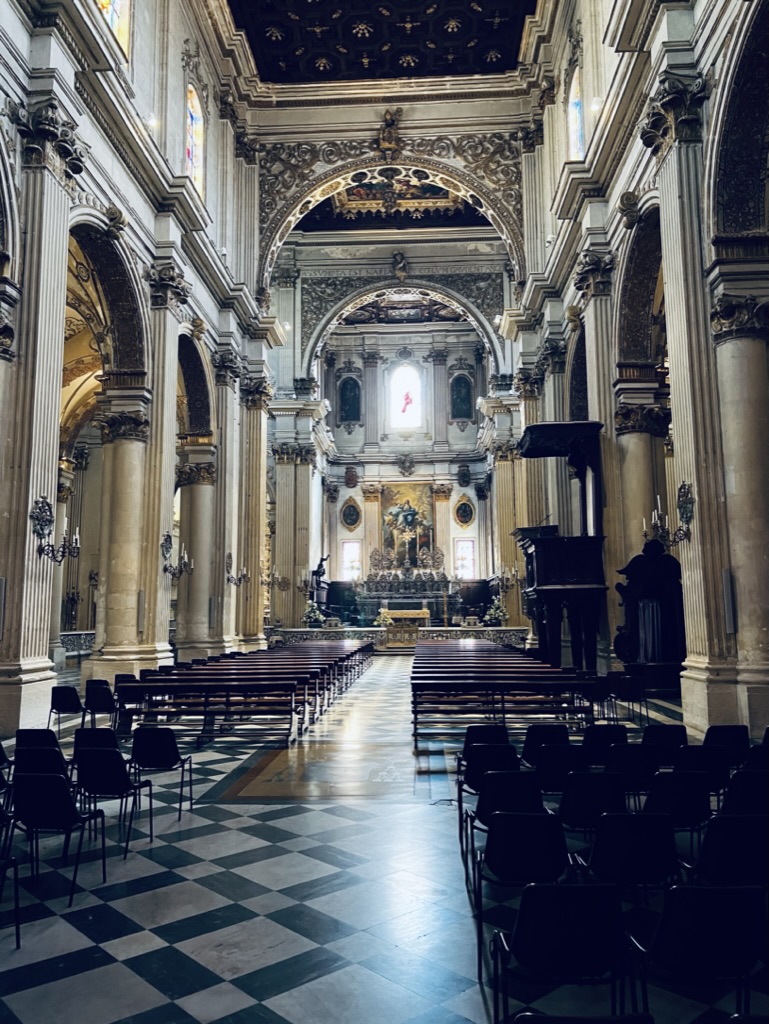
Lecce is a beautiful town with an overabundance of Roman archeological sites, Baroque architecture, and the crowds that these justifiably attract. We loved it and plan to return to it soon for a more in-depth appreciation than we could grant it with only a 12 hour stay. We were able to spend some time at the Duomo, the Cathedral of the Assumption of the Virgin Mary, early in the morning, before any other tourists. Pilgrims get in for free. While the main church is a riot of gilded ornament, the crypt under the length of the church, that dates to the 11th century, is sparse but not severe and we could see the foundations of the original church dating to the 7th and 8th century. We had the place to ourselves and took advantage of it.
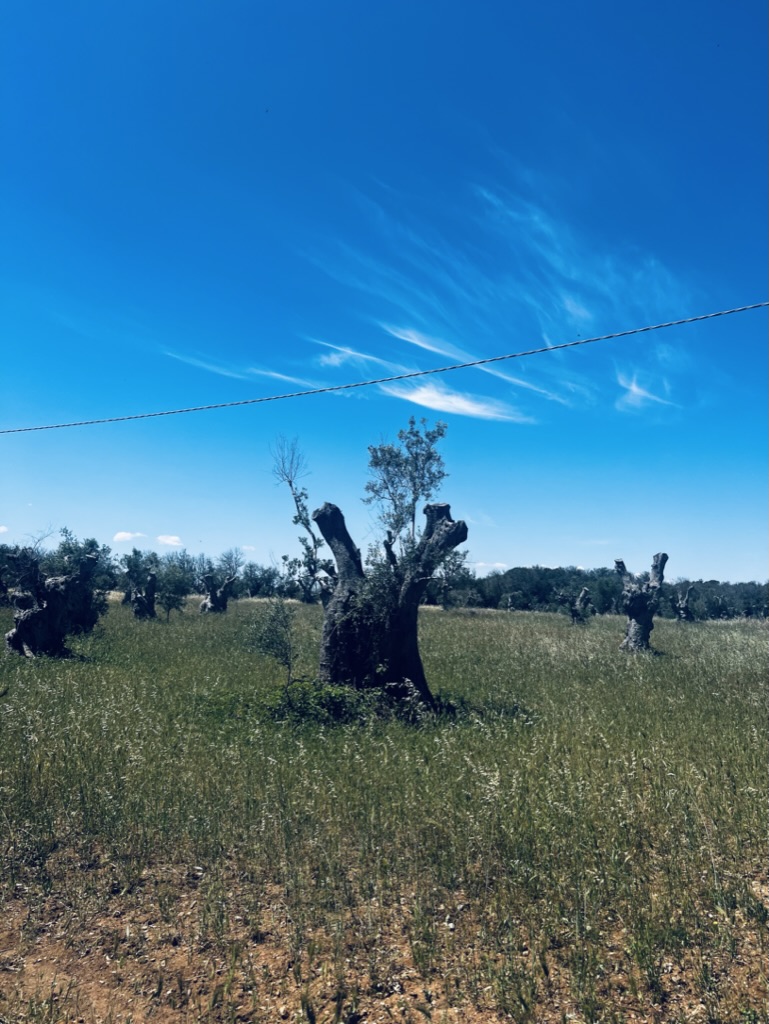
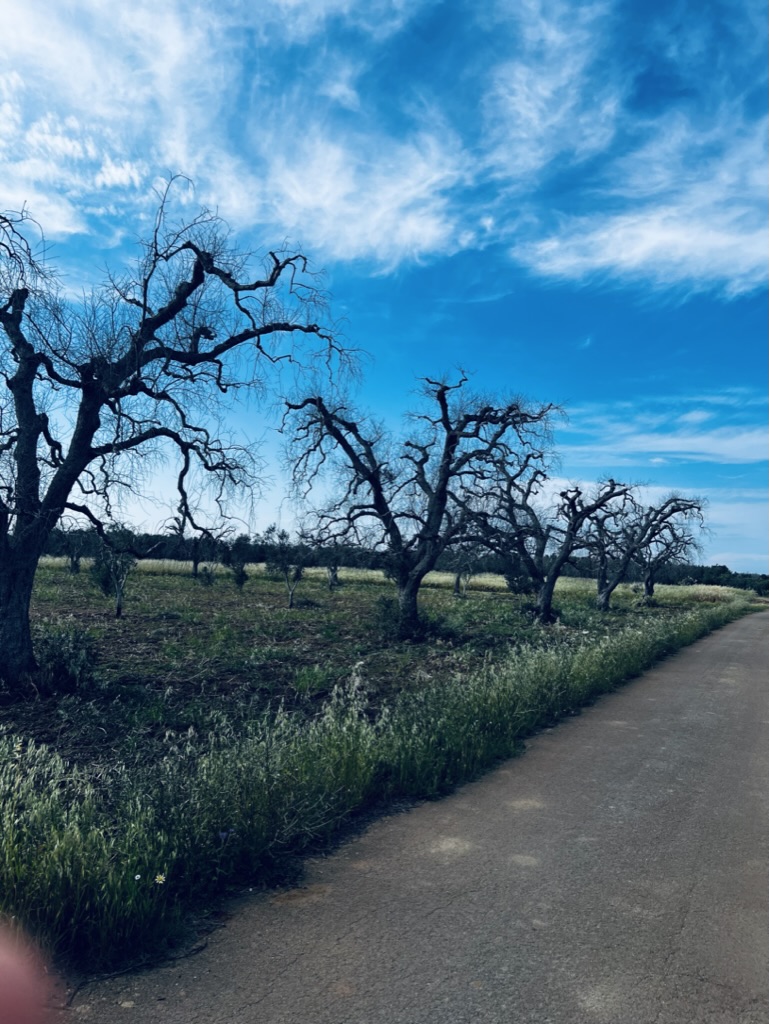
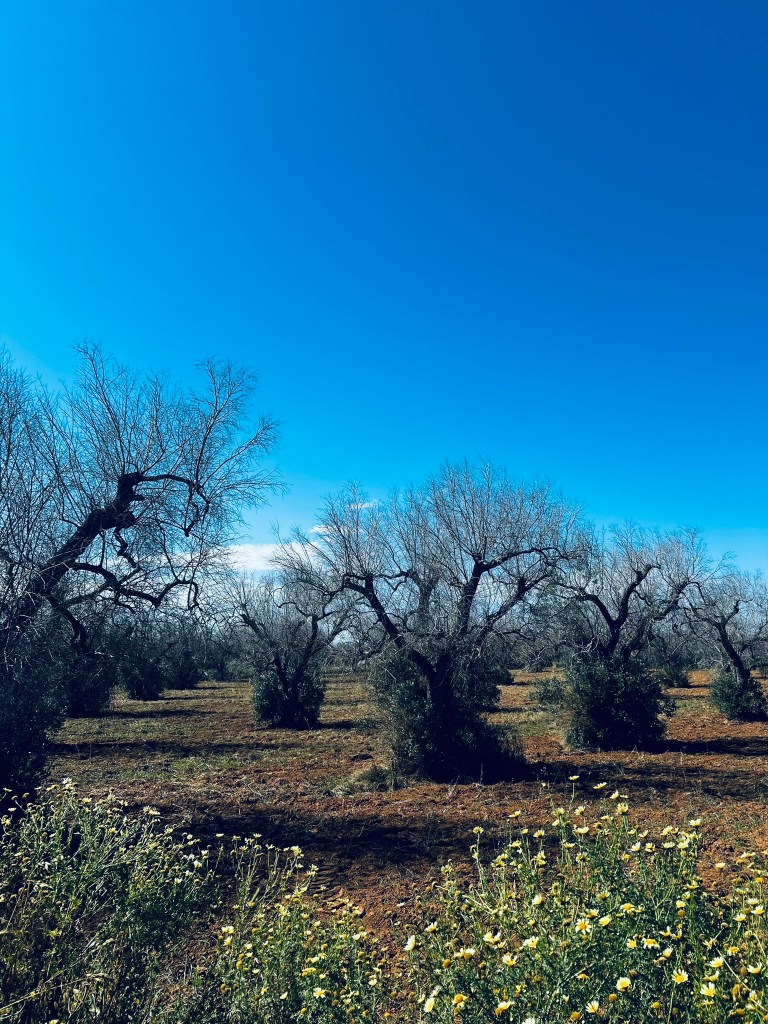
The walk to Martano was uneventful but marred by the devastated olive groves. We decided to cheer ourselves up by listening to the original Broadway recording of Hair. So relevant to our time. We desperately need an Age of Aquarius.
Even though our legs are strong, and we are accustomed to walking for 7 hours, 31 kms is taxing, but we made it to Brindisi with energy to spare for a fine fish dinner by the water. Brindisi, an old port city, is where the Via Traiana and the Via Appia end and is the jumping off point for innumerable invasions and excursions, throughout most of European existence. It was the capital of Italy for a brief period in 1945 under the Badoglio government, a distinction that merits little attention.
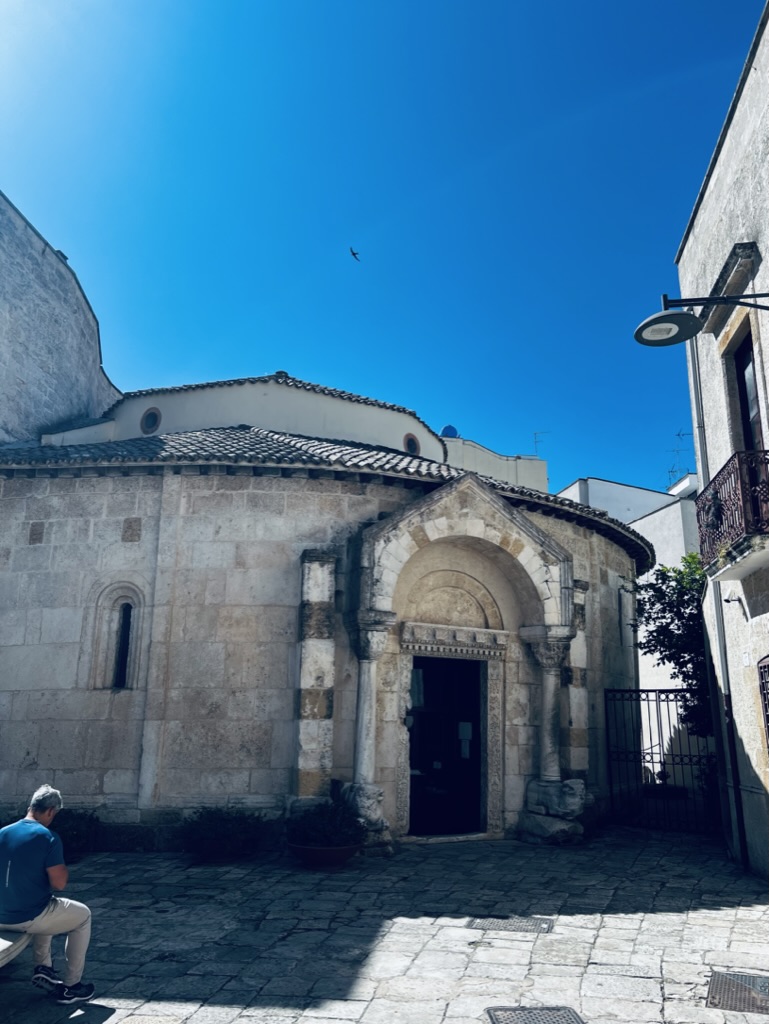
More interesting is the Church of San Giovanni Battista, a precise replica of the Holy Sepulcher in Jerusalem, which was built by our friend Bohemond when he returned form the first crusade. Maria, the docent, explained that Pilgrims enter for free. She was kind enough to deliver a history of the 12th structure which was neglected for 200 years after an earthquake in 1743 collapsed the roof. After WW2 there were plans to tear down the rest of the ruins to build high rise apartments but through the efforts of one individual the structure was saved, restored and now is one of the most important attractions. Brindisi is also where Frederick II took his second wife, Isabella Queen of Jerusalem, when she was 14. They had 2 children before she died 3 years later.
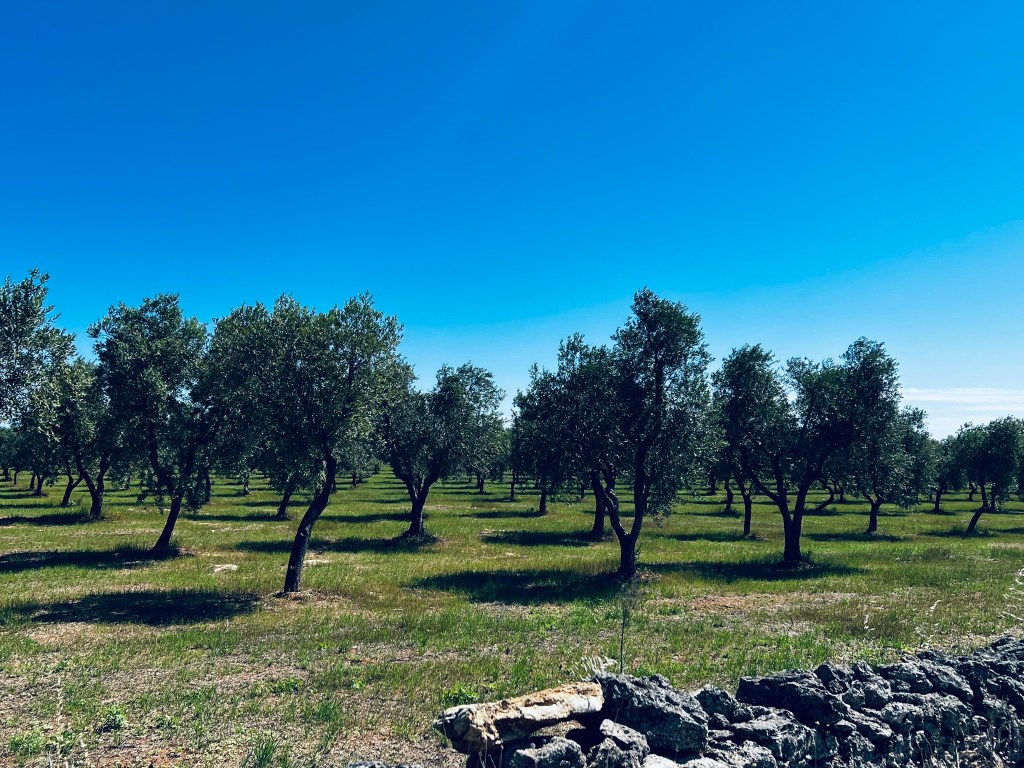
The walk from Brindisi to Torchiarolo took us through olive groves that have been devastated by the Xylella bacterium creating a post-apocalyptic landscape whose depressing effect is mitigated by resilient farmers who uproot the trees and plant new groves that are now flourishing. A controversy has emerged about how the bacterium was introduced, one theme being that it came from California when scientists at the University of Bari brough it over for research. The Chinese have not been implicated, yet.
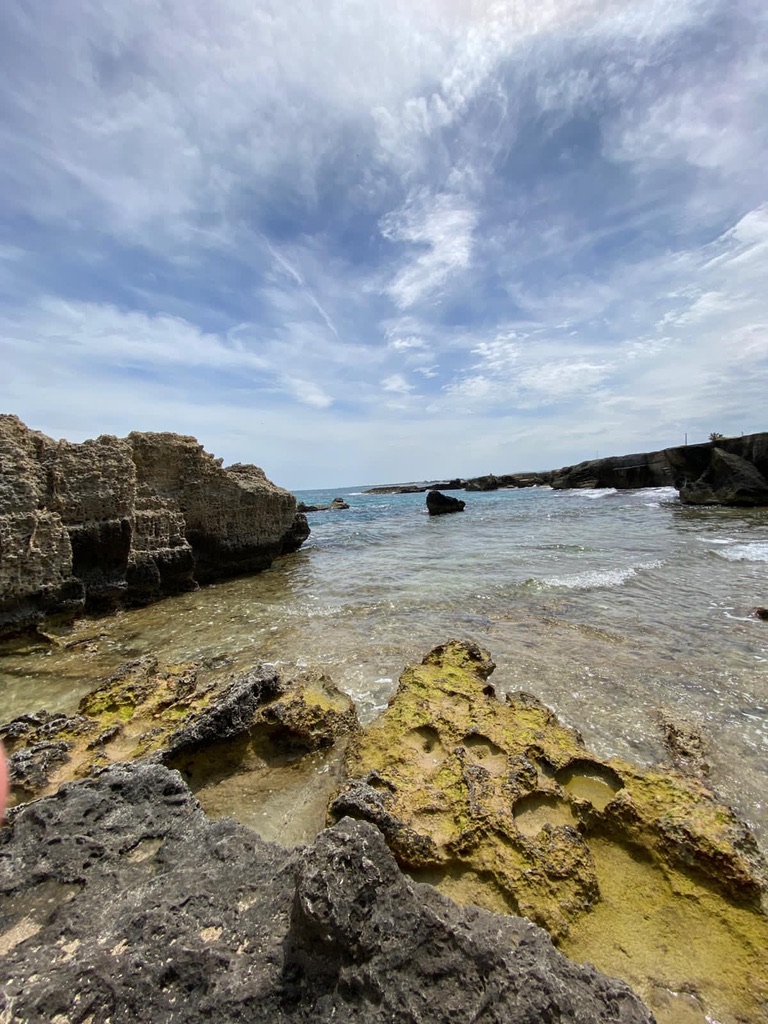
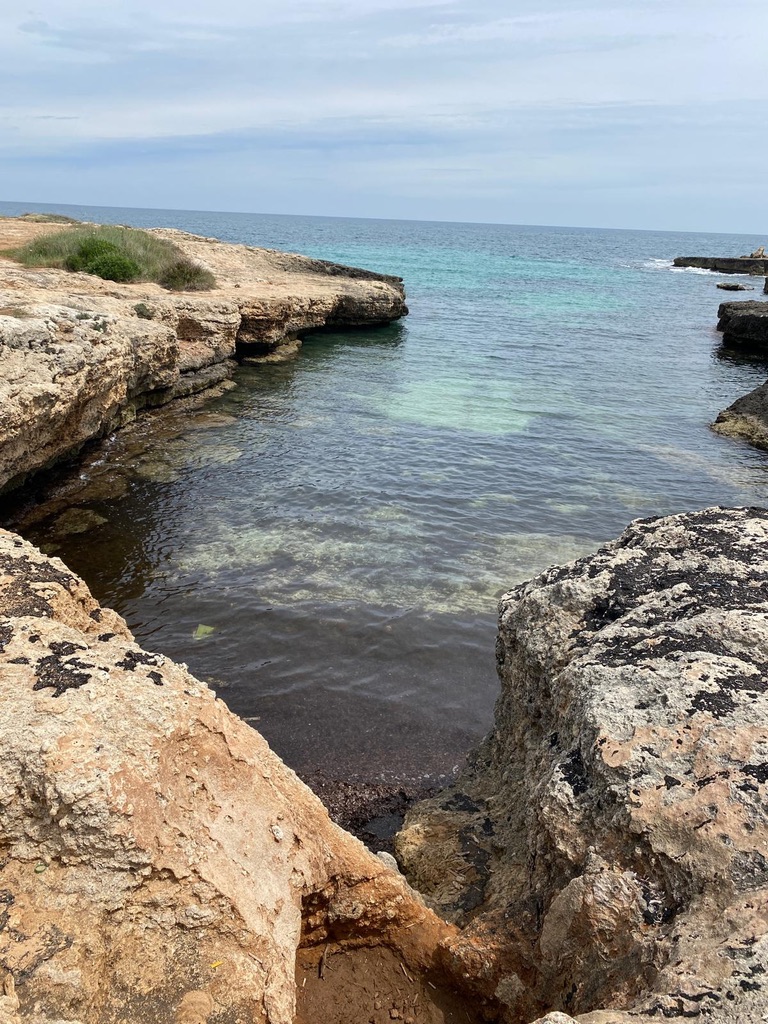
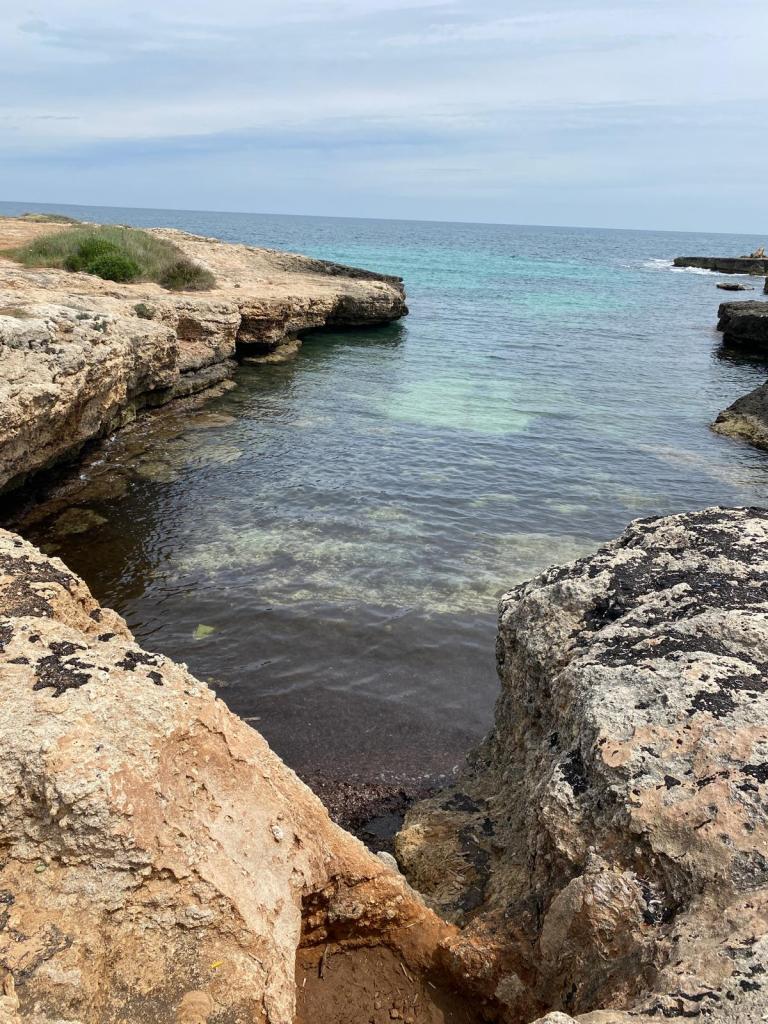
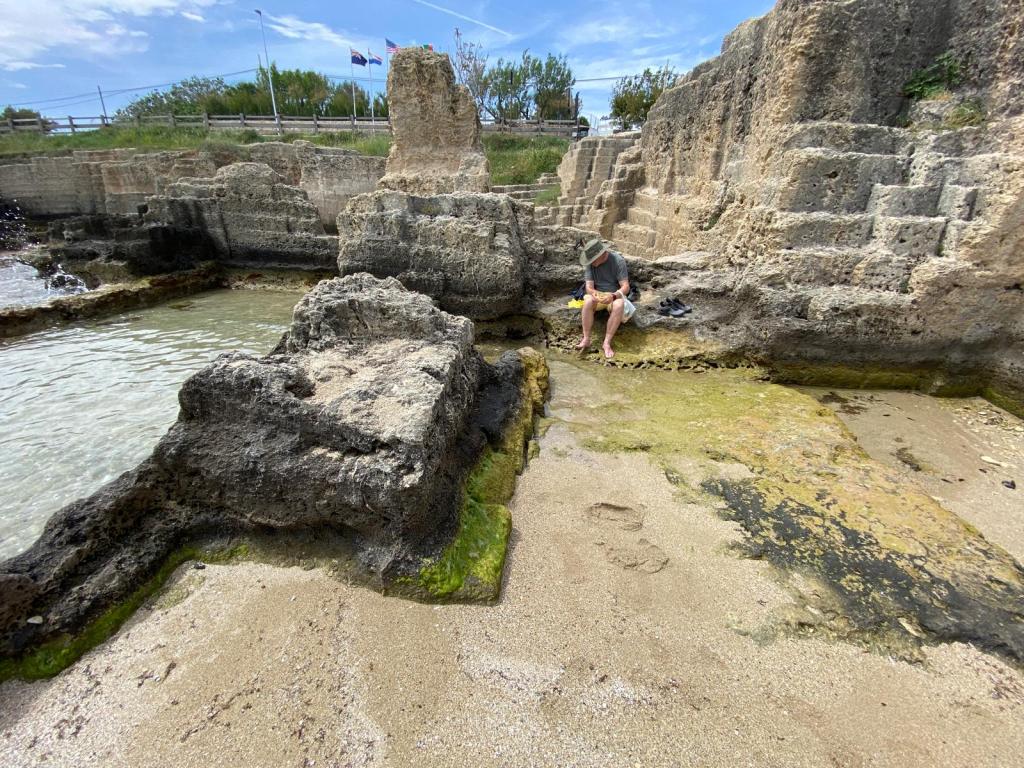
We’ve come to love the beaches tucked in coves defined by tufa slabs sculpted by the clear cerulean sea. We don’t go swimming but will take our various breaks sitting on a slab admiring the perfect serenity of water lapping the beach by the sound of an egg hitting a hot skillet.
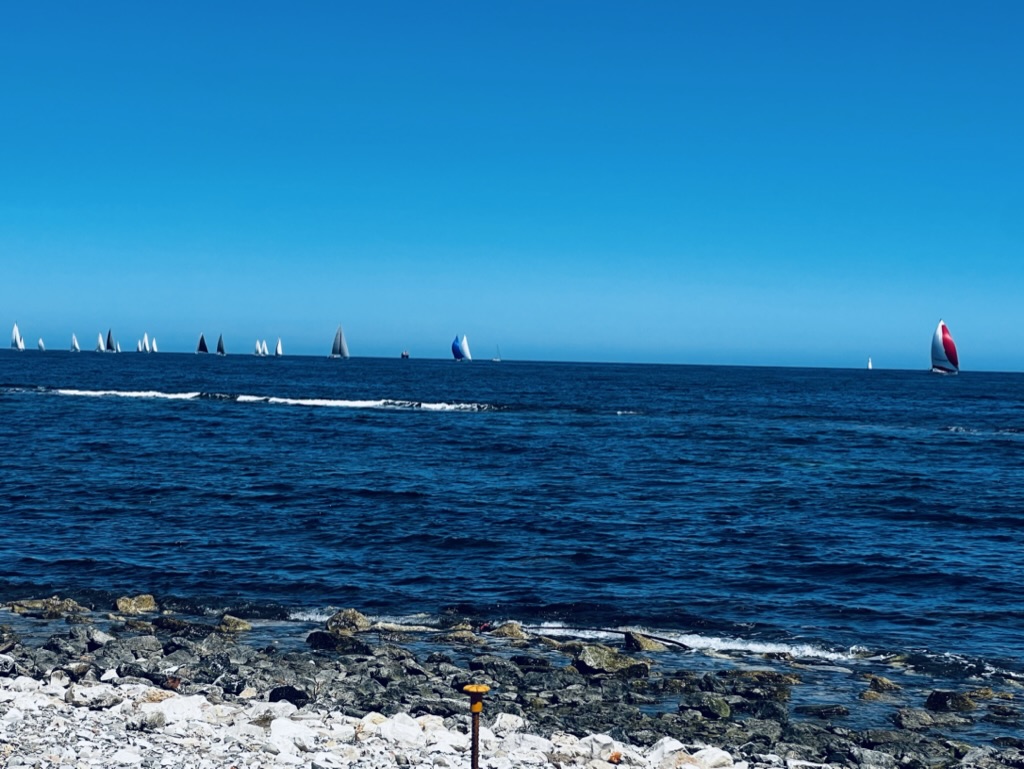
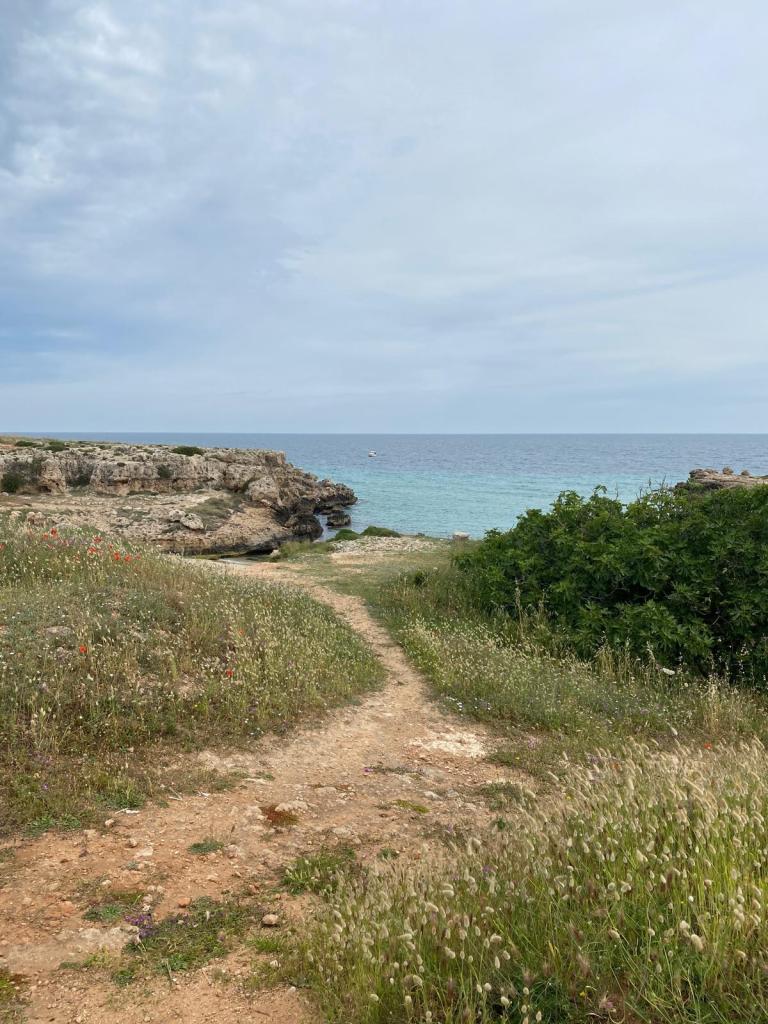
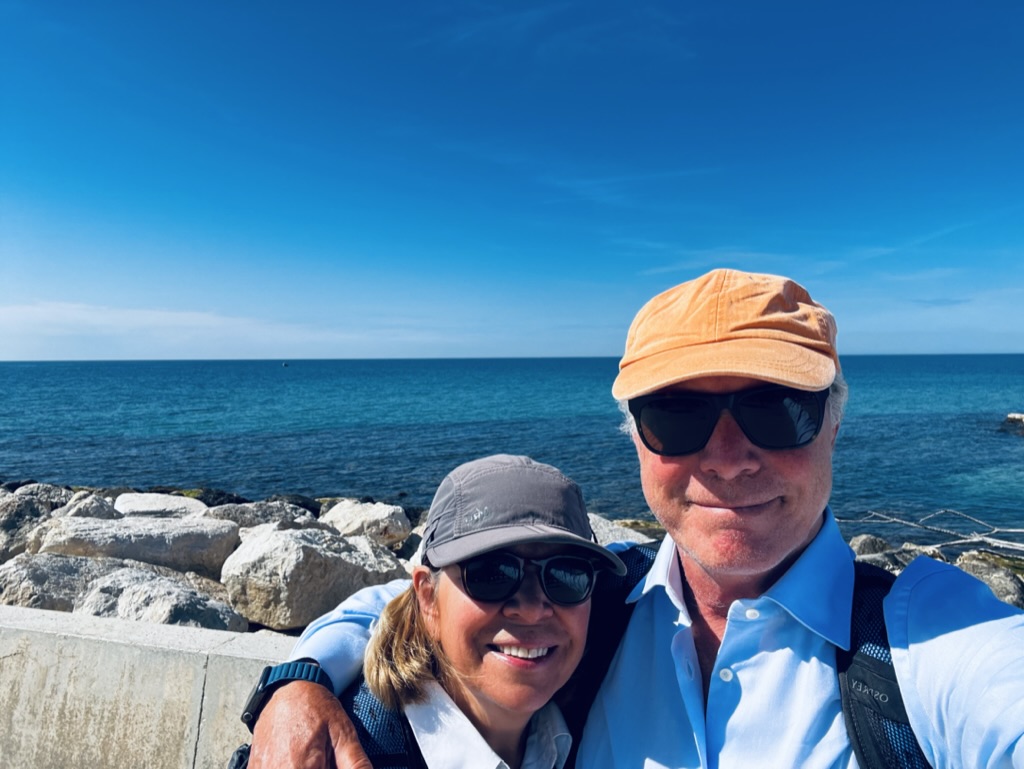
Sails have replaced olive trees, rocky outcroppings, and cliffs instead of straight dirt roads, sandy beaches in hidden alcoves in place of stone walls. The Puglian Adriatic coast isn’t like the dramatic mountains cascading into the water of the Amalfi coast; rather, it is flat and accessible, the crystalline blue water melding with low lying flat tufa home to hundreds of mussels. We lunch, consisting of an orange, in one of those alcoves where we rest our feet in the cool water while crabs delivered a crustacean pedicure.
Most seaside locations are still shuttered, only a few Northern Europeans and intrepid Americans in the water, but the rows of sunbathing chairs carefully lined up to the edge of the water suggest a tsunami of vacationers will soon wash ashore. We selfishly appreciate the quiet before the storm.
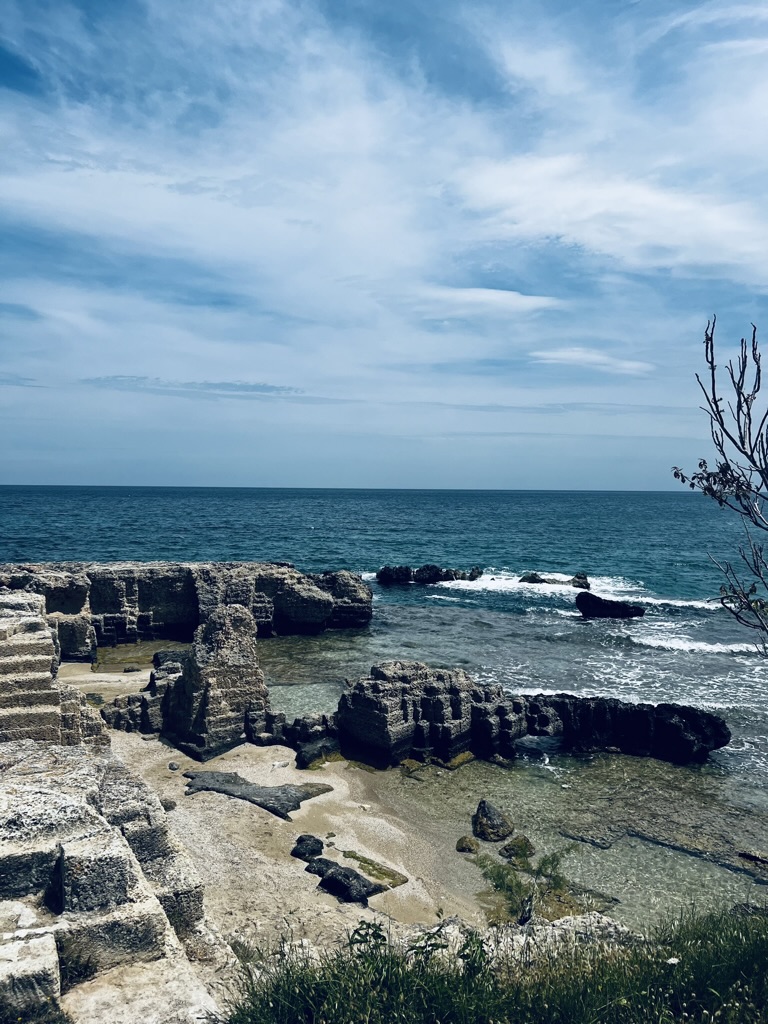
Aside from the occasional Angevin castle or Norman tower and the ever-present Puglian Romanesque churches in the small fishing villages, there aren’t any exceptional cultural sites along the coast. We visited a Roman archeological site, mostly granite blocks suggestively strewn about. The sea is the thing.
After 10 days of pounding gravel, asphalt, and dirt our feet and legs pleaded for a day of rest, so we moused around Mola di Bari before boarding a train for the 20-minute ride to Monopoli. Before leaving Mola, Francesco gave us an unsolicited tour of the Cathedral including a lengthy account of ceremonies on 22 July observing the feast of Mary Magdalene which include carrying the statue of the Madonna Dolorosa around the city to the chants of Jacopo of Todi’s Sabat Mater. Not to be missed, he said.
The train was packed with about 1000 of a mostly Polish tour group that de-boarded in the small town of Polignano, for which we thanked them profusely.
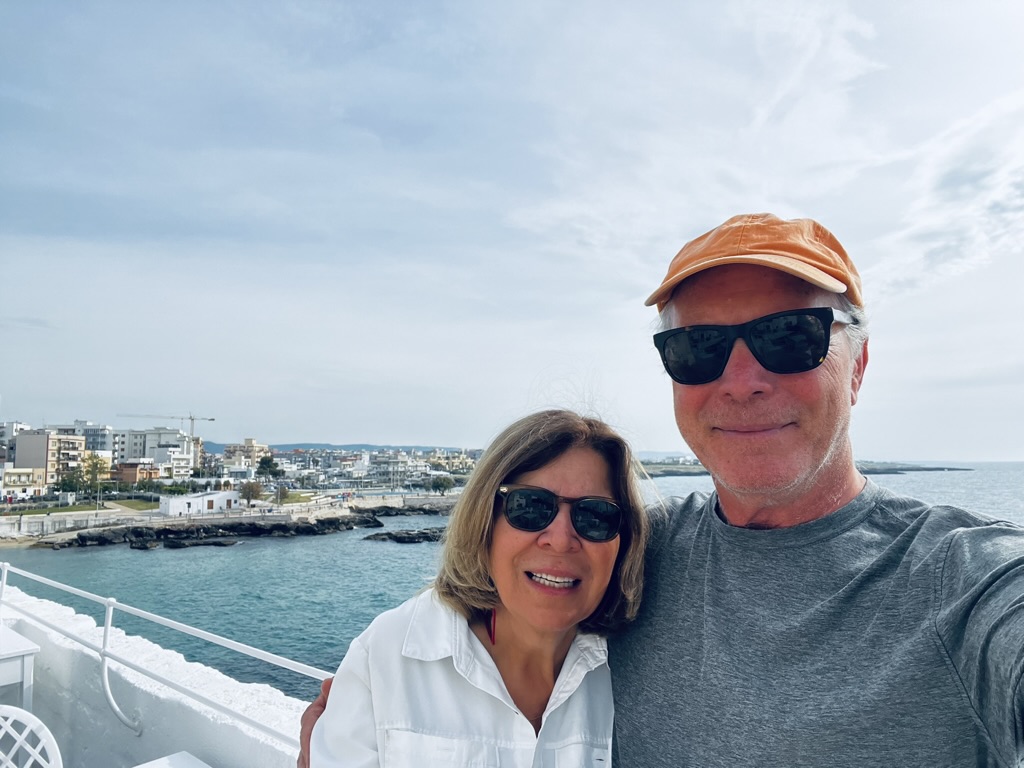
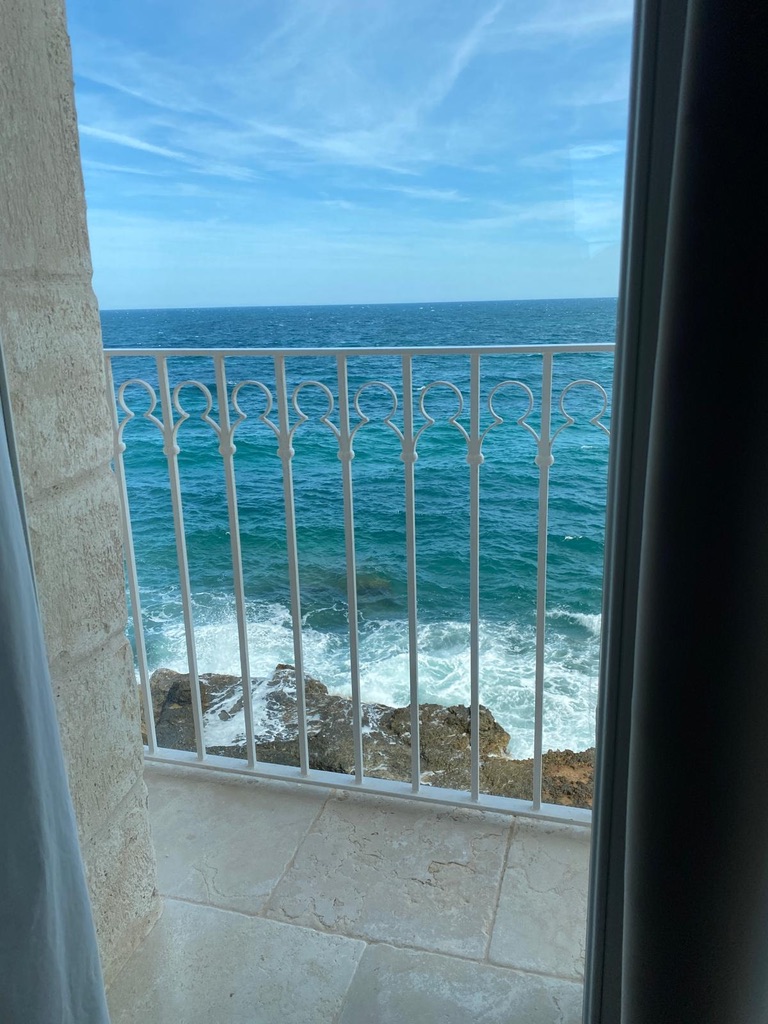
Monopoli is the pinnacle of whitewashed fishing villages etched into the rocky Adriatic coastline. Calling it charming just doesn’t do it justice. It is dripping with the palpable quintessence of a seaside village in our dreams.
But we awake to reality. Tomorrow is another 20km day so we must do laundry, re-pack our bags, hang damp laundry to dry and plan the next stage.





 Walking the Via Francigena