-
P2 Stage 10 Fidenza to Fornovo di Taro 33.8 km
Our accommodation this evening is a small B&B run by the accommodating Manuela.
We start the climb over the Appenines, the mountain range that bisects the Italian Peninsula form the Ligurian sea to its southern tip. This first leg takes us only to 1650 ft but as we leave the flat plain behind we can feel the cooler air as it sweeps down from the surrounding hills. The afternoon rain does not bother us
For dinner we are joined by a couple from Milan, he the head of the AI lab at the Milan Polytechnic, she a biomedical professor at the same institution. We got to discussing AI. His take is that AI will make it harder to know the truth. After 3000 years we are back to the fundamental epistemological question . Somehow that is comforting
Tomorrow onto Cassio. No photos tonight, signal too weak
Share this:
-
P2 Stage 11 Fornovo di Taro to Cassio 33.8 km
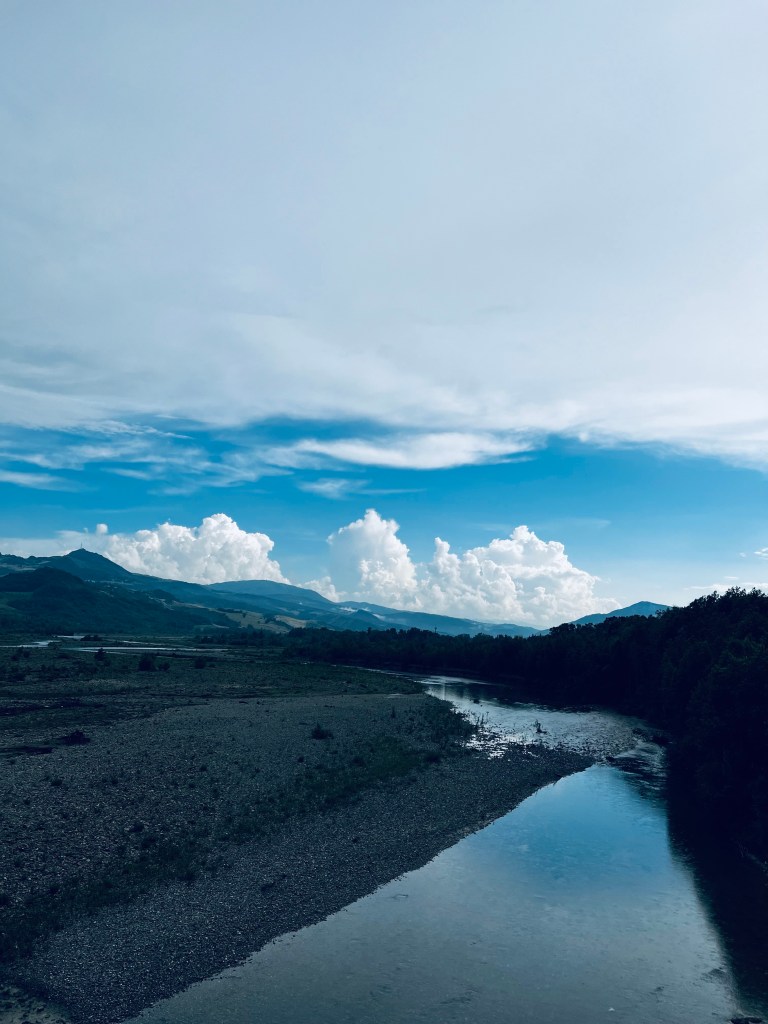
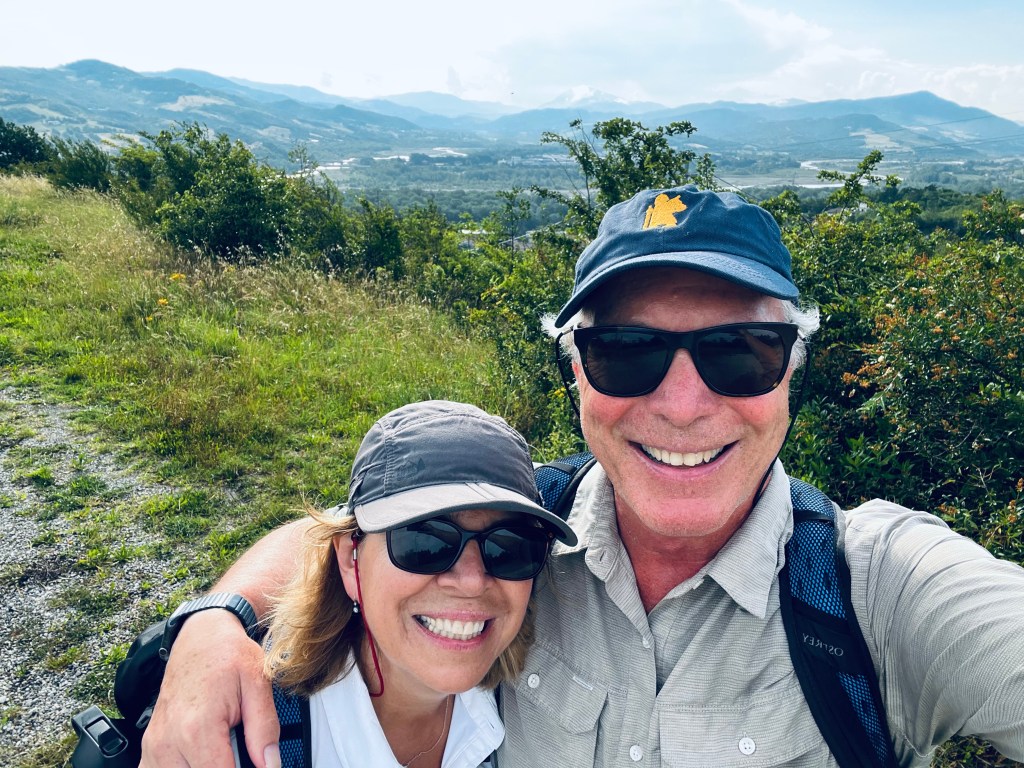
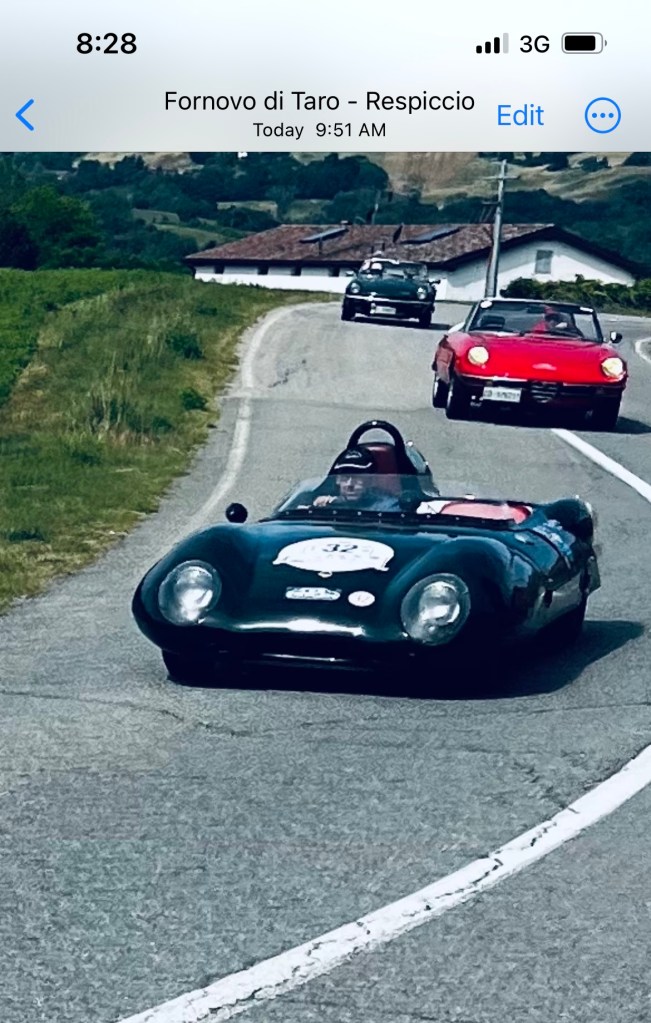
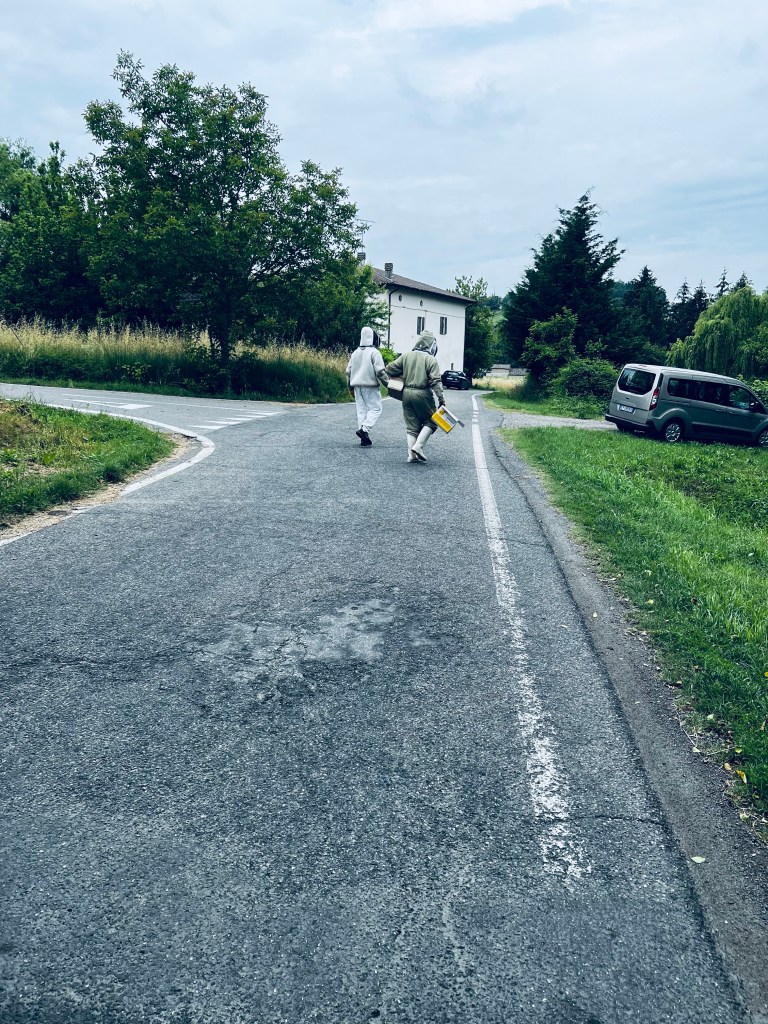
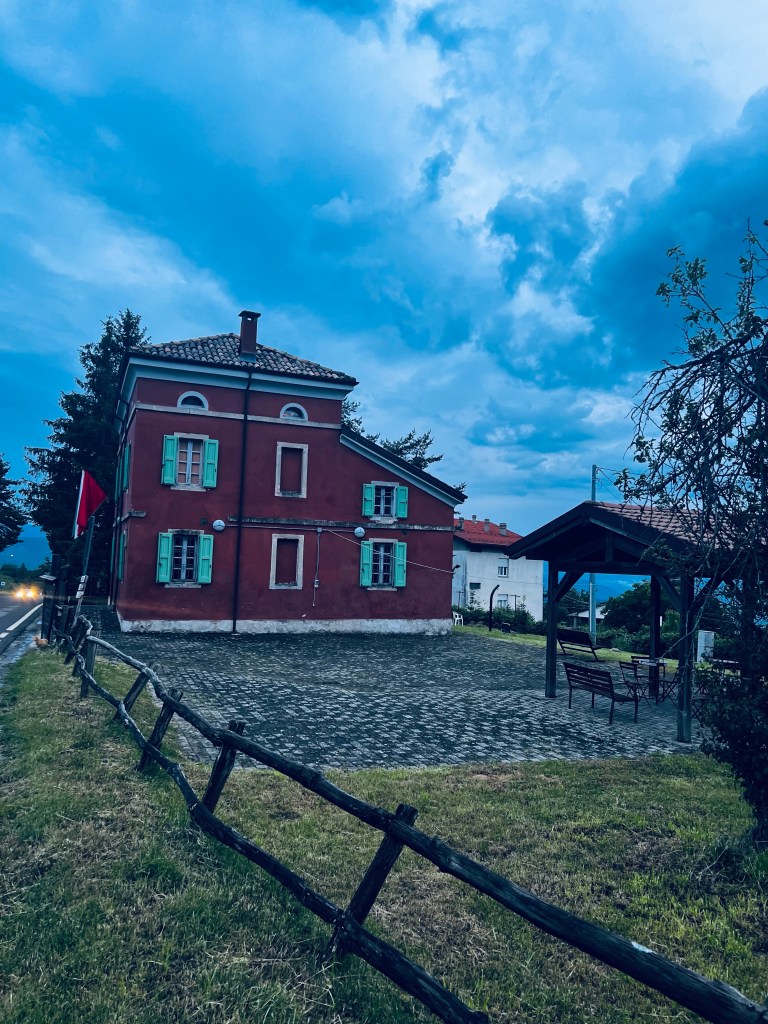
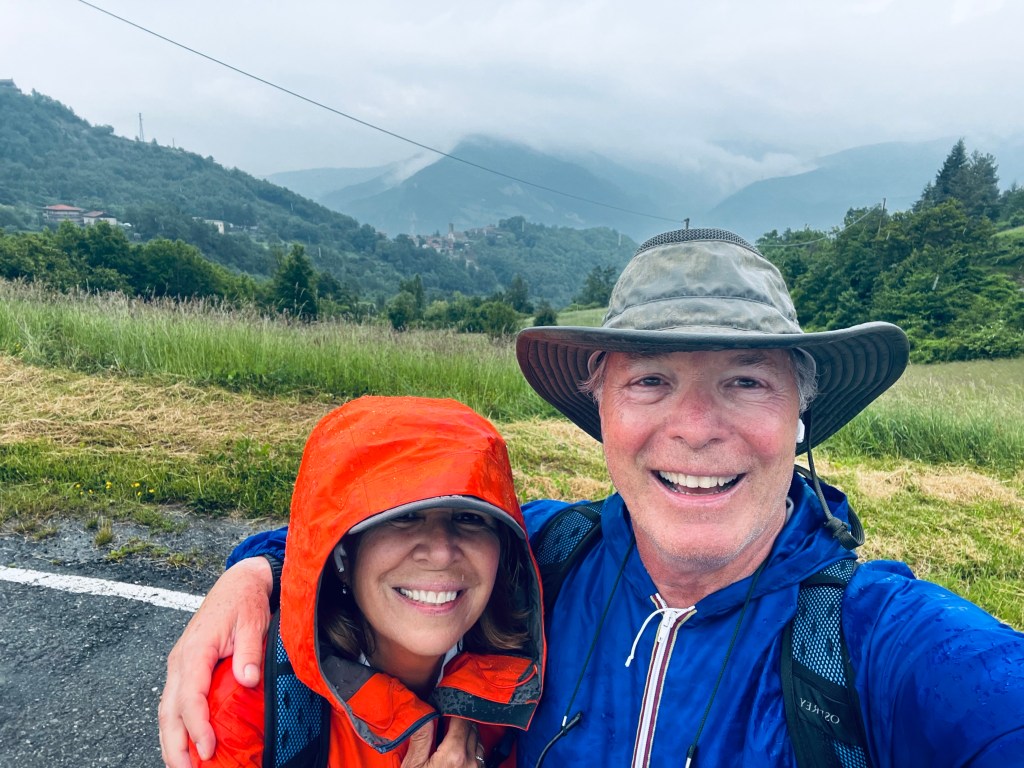
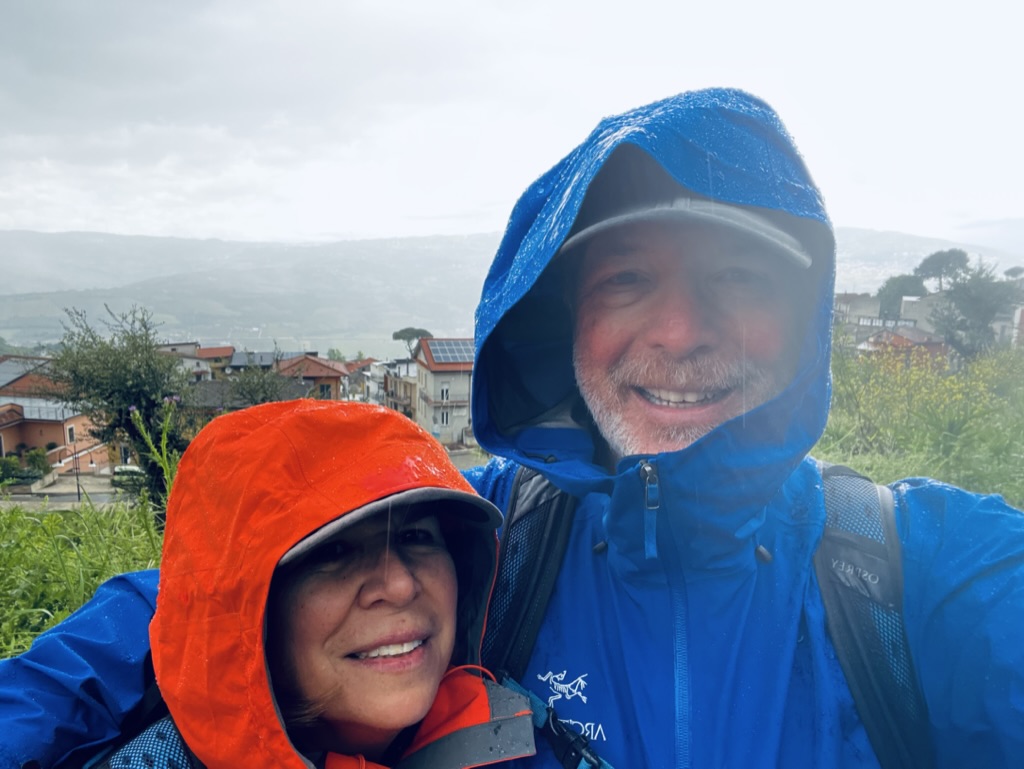
We are in or on the Apennines. Stunning panoramas on all sides if only it weren’t cloudy and by afternoon foggy and rainy and by later in the afternoon muddy and slippery. We trudge on encouraged by a chorus of encouraging words. Me: how you doin? Paula: STRONG! Paula: How are you doing? Me: STRONG! That carries us for at least 5 km
We walked through Svizzano, a very small town with a Cistercian monastery dating to the 11th century. The local historian and would be toothless mayor gave us a short history of the monastery, pointing out the age of individual stones and the various capstones that were evidence of its history. In 1998 the town had a year long celebration of the 1000 years during which the monastery was the heart of the community. I dipped into the abutting church, it being 11 am on a Sunday mass was just starting. A dozen women and one couple with a teenage girl in attendance, and yet the choir, two women in the slo-go years of life, sang a most beautiful hallelujah . Back in the rain we made our way to Ostelleria di Cassio.
Tomorrow Bercello.
Share this:
-
P2 Stage 12 Cassio to Berceto 11km
Our accommodations for the night were at the Cassio hostel which was empty except for one other pilgrim, and stout Dutch lady who commented on the terrible weather, appropriate for someone from Amsterdam. The hostel was austere but comfortable. Felt like a college dormitory
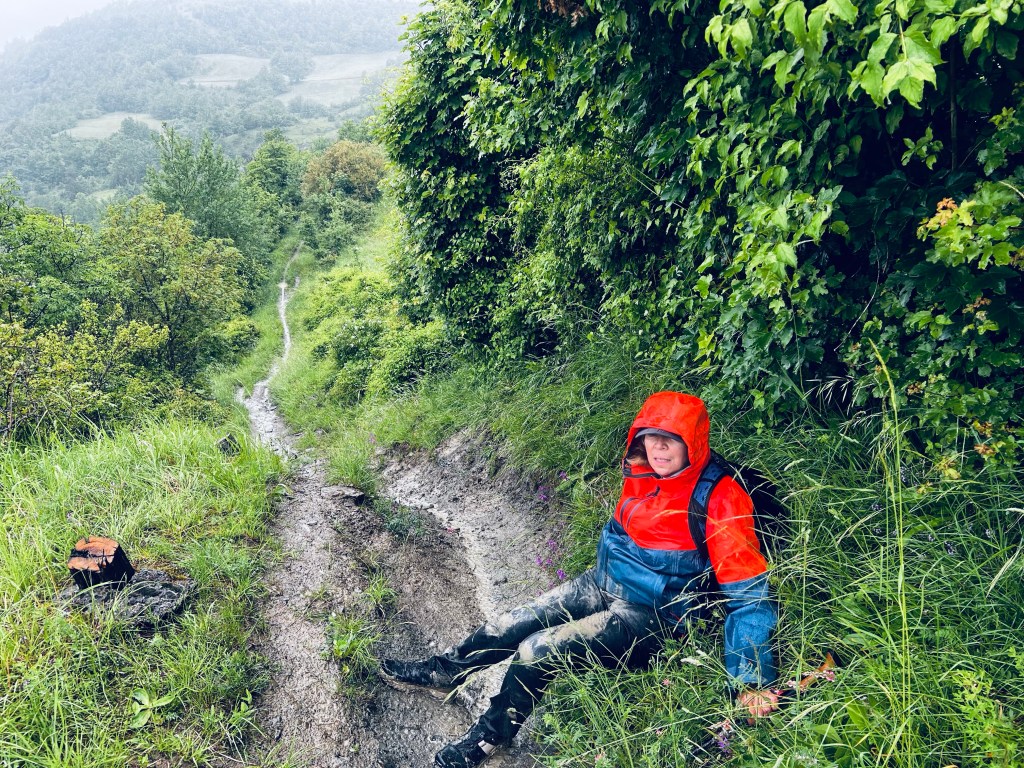
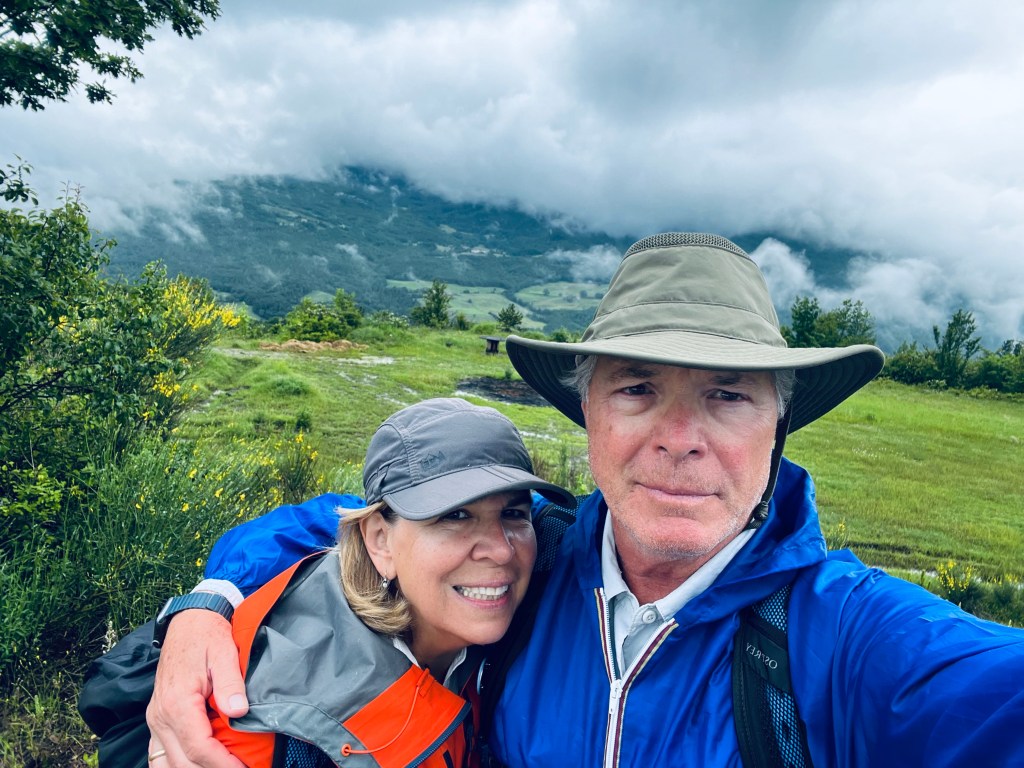
Out trek today is short but with very steep climbs and descents. Driving rain most of the day, cloud cover shrouded what were to be spectacular views in misty gray. We had several challenges, including clawing our way up a particularly muddy and slippery slope.
But we made it safely to Berceto, a small town clothed in medieval stone. The somber Romanesque cathedral is named after St Moderanno whose claim to fame was to lose the relics of another saint he was carrying to Rome as he gazed upon the breathtaking views of the CISA pass.
We feel like we were just put through a car wash
Tomorrow Pontremoli. Volendo

Share this:
-
Addendum to Stage 12 from Paula
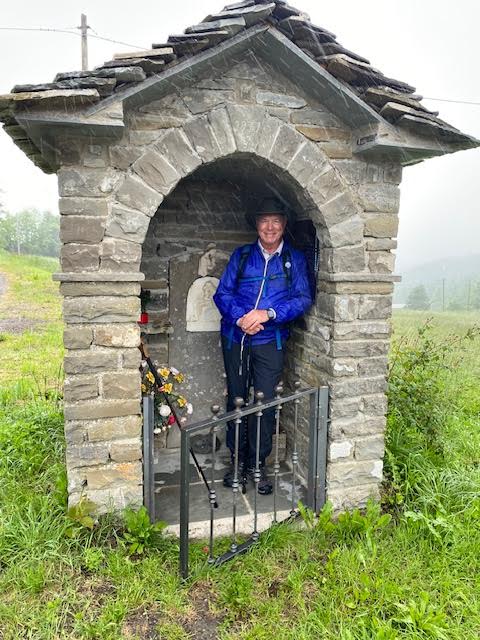
I would like to offer my evaluation/observation on yesterdays’s mud bath, photo was included. I rarely use the word epoch unless lunch with Hugh and Sineade. However, yesterday was EPOCH, the rain was absolutely biblical coming in all directions and unrelenting. We, at one point, sought refuge in a roadside shrine. We opened the small door, moved the floral arrangement to the side so we could both sit inside. We remained protected from the water apocalypse for about 20 minutes. Concluding the rain wasn’t going to stop or slow we moved on. Drenched but not broken, a single hill sat between us and our destination. It was a rather large hill. My Wildebeest takes it. Me , the Zebra, galloped forward but mid hill becomes a bit distracted perhaps by the incredible composition of the mud. As we have all been taught, an object in motion should remain in motion. It was at this point that I became a human toboggan hurling belly down the hill. It occurred to me that neither faith nor budget is commanding or directing this journey. Enjoy the ride, the Camino will provide.
Share this:
-
P2 Stage 13 – Berceto to Pontremoli – 32km
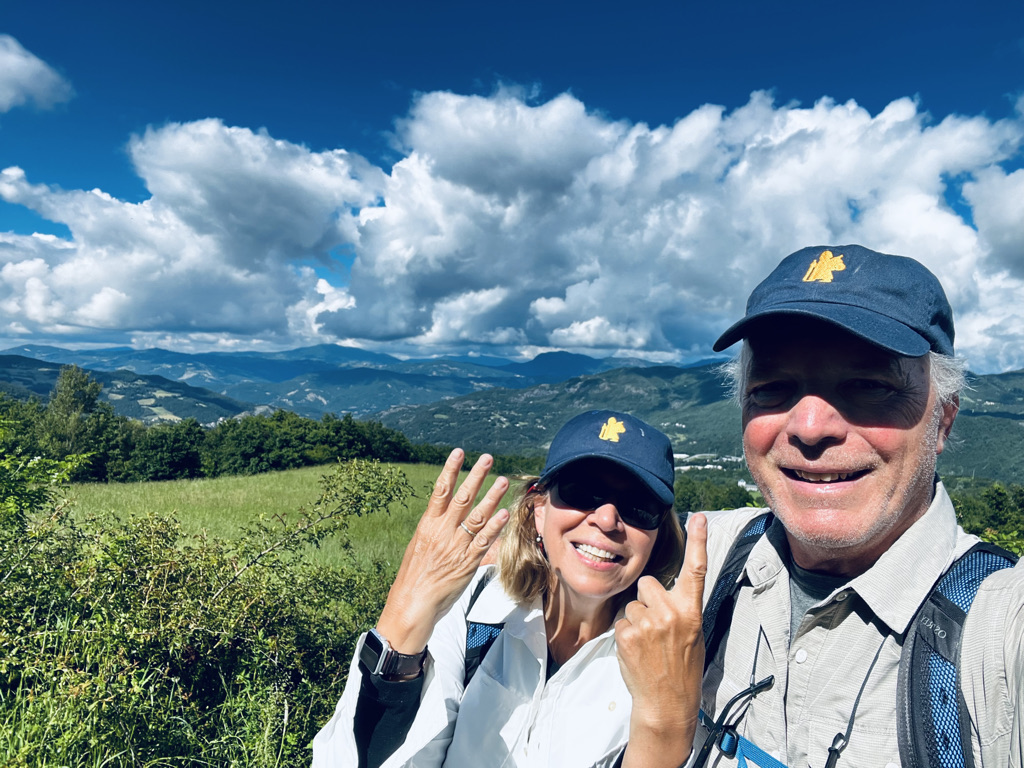
We made it across the Apennines! This is the third mountain range we cross on the VF, the others being the Jura mountains in France and the Alps. We walked through the CISA pass, a modest 4,000 ft, buoyed by some of the most spectacular scenery of the whole trip. The whole trek today was stunningly beautiful, from the panoramic views of mountains and valleys to the hushed walk on leaf covered paths under towering deciduous trees. We arrive at Pontremoli elated even though in a drenching rain. Days like today make every effort worth while. Great way to celebrate our 41st wedding anniversary.

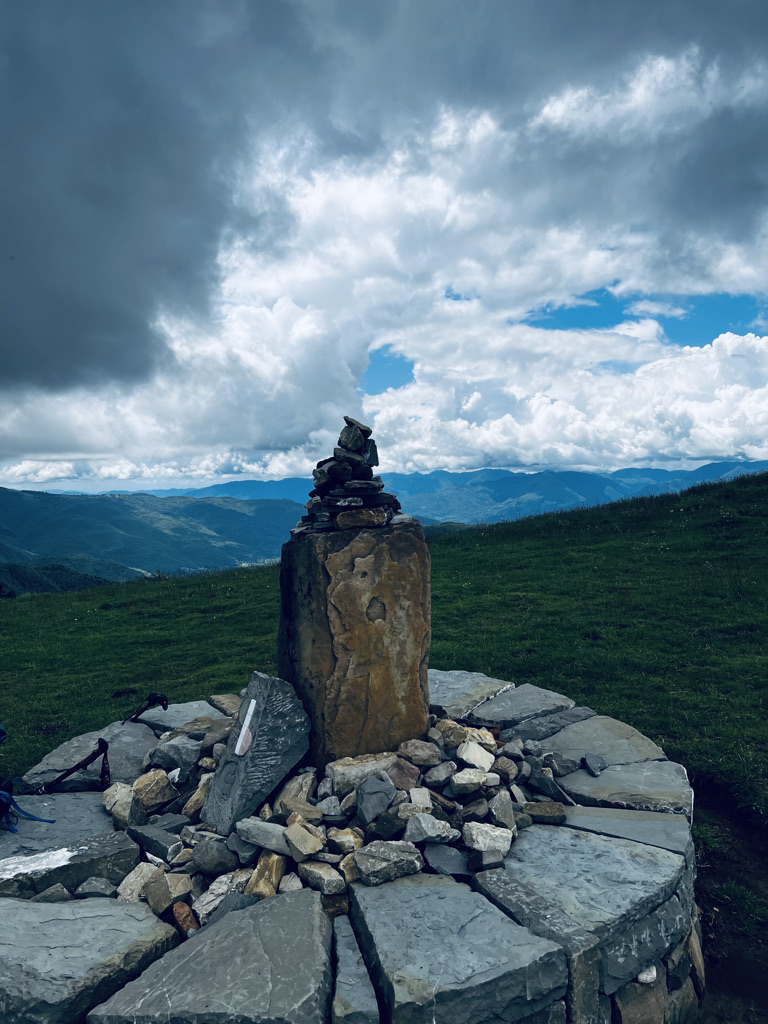
Monte Valoria/CISA Pass 4075ft 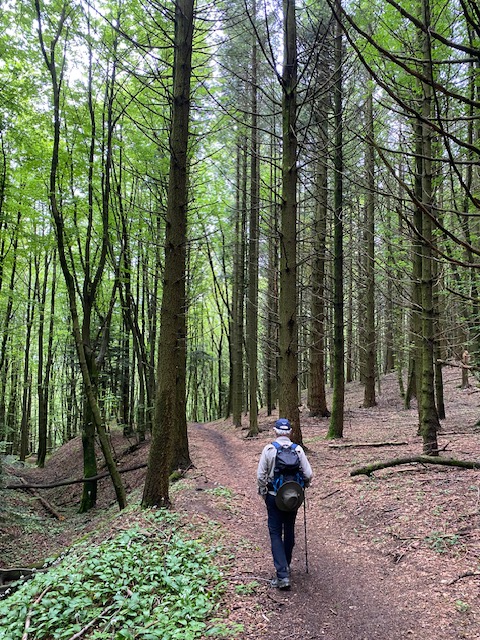

Share this:
-
P2 Stage 14 Pontremoli to Aulla – 32 km
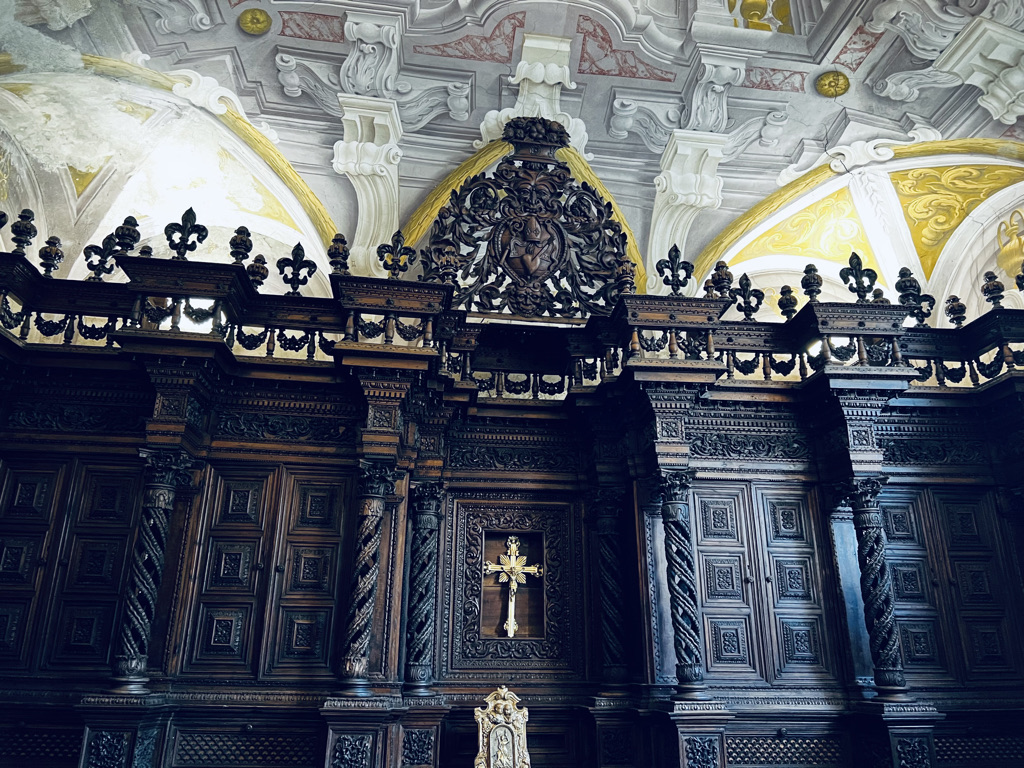
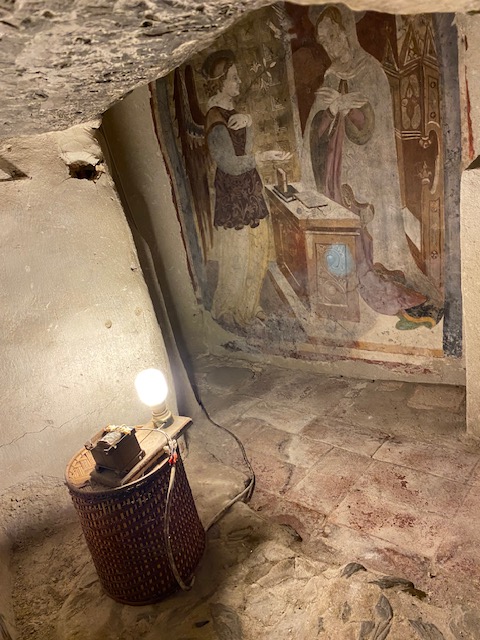
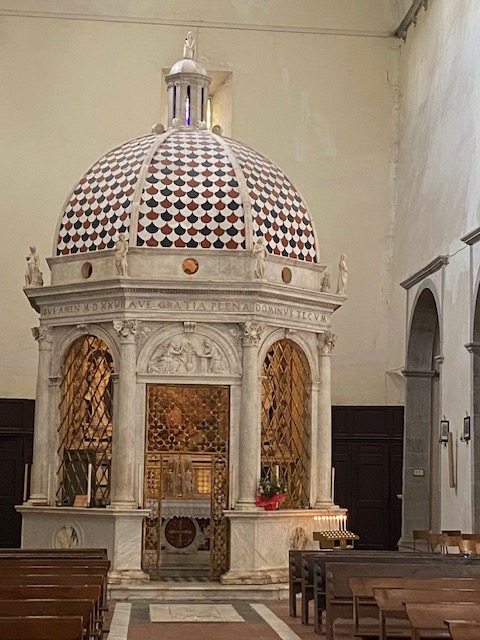
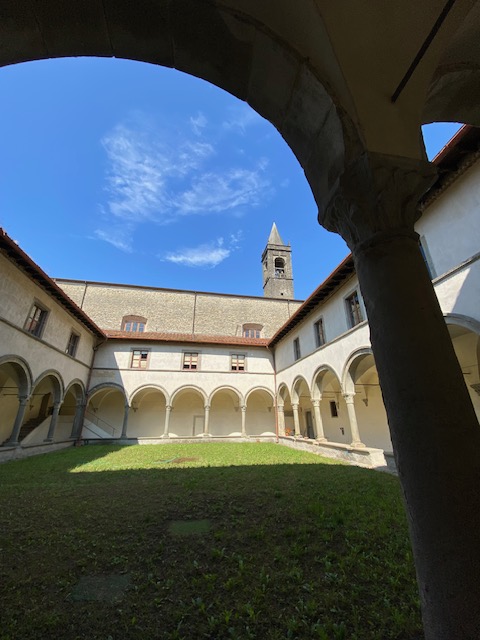
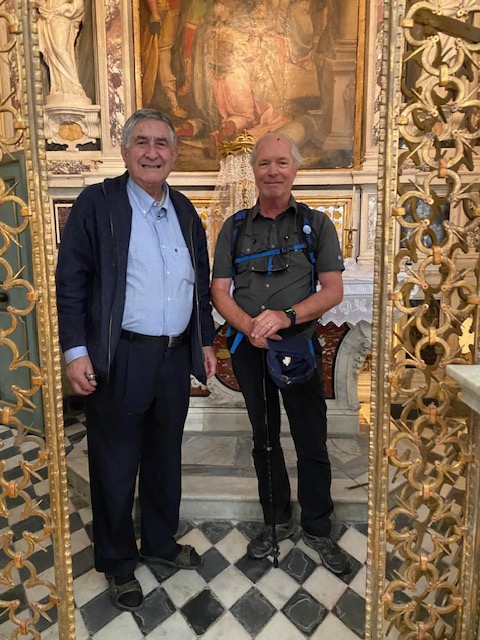
Don Lorenzo was sitting, pensively, on a cement bench outside the doors to the unassuming Chiesa della Santissima Annnunziata on the outskirts of Pontremoli. “Can we get our pilgrim passports stamped here?” “Yes, but we have a problem”, he answered, “we have a pigeon in the church.” And so began an hour dissertation on the history of the church and the iconography of medieval art, especially the Annunciation. Don Lorenzo first led us to the sacristy for our stamp remarking that the Rafaello hanging over the 17th century engraved, wooden choir stalls was a fake. The original was stolen in the 1970s. In the hallway a false wall hides the well were partisans hid when Nazi’s came looking for them. He then showed us a 13th century fresco, which he said was along the original VF, that depicted the madonna in receiving mode, a Penelope’s thread and needle on the table representing the stitching of a new world. The fresco was the cause of several miracles, an octagonal domed structure, 8 signifying eternity, now enshrines the fresco which, I kid you not, one must kneel to view. But we weren’t done. He then led us up to the altar, 14 steps to signify the “Via Crucis”, through a series of hidden, narrow hallways to a door which opened into the columnated loggia and courtyard of the Benedictine monastery which was in use until Napoleon emptied it. And then, Don Lorenzo opened a door and we said goodby. We walked a while along a narrow, dark path between high stone walls until we spilled onto the Via Francigena. When we looked back we could not see traces of the door or narrow path. We went on for our pleasant walk to Aulla.

Share this:
-
P2 Stage 15 and 16 – Aulla to Sarzana, 17 km; Sarzana to Massa, 30km
Catching up on 2 very similar stages along the Ligurian coast.
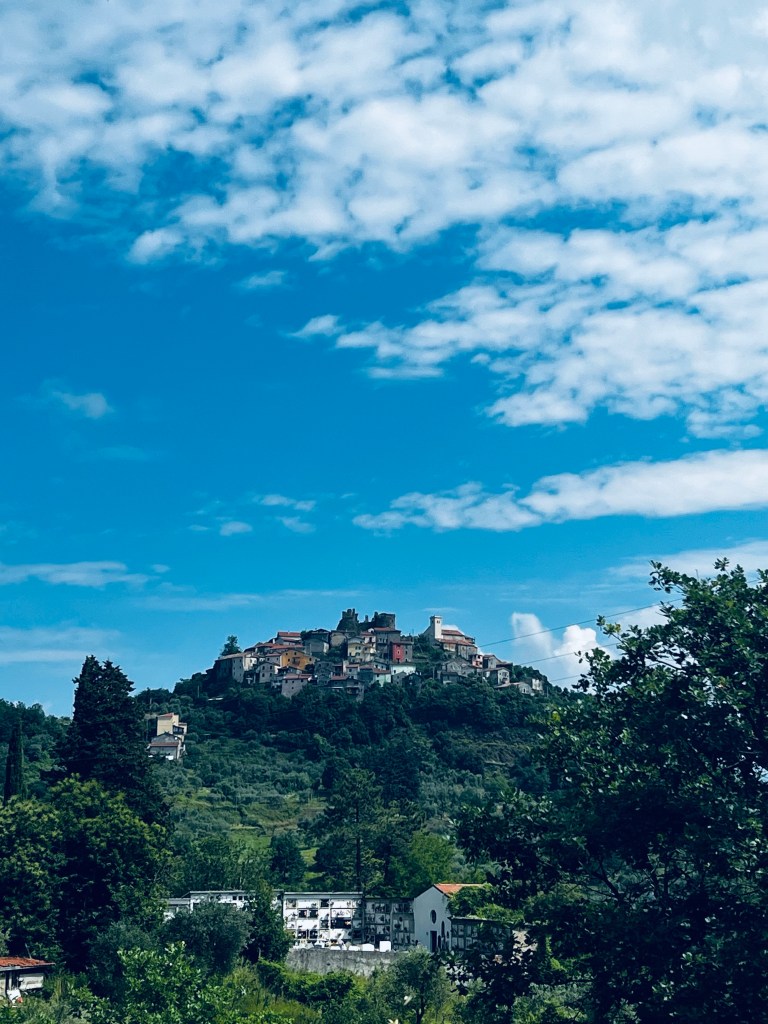
Aulla to Sarzana was short but included 2 very steep ascents and even steeper descents. It was all worth while when we arrived at the surprisingly captivating Sarzana, a small but meticulously well preserved medieval town where good living is practiced 24×7. The Duomo houses an 11th century multi media depiction of the crucifixion by Master Guglielmo and reputed to have drops of Christs blood.
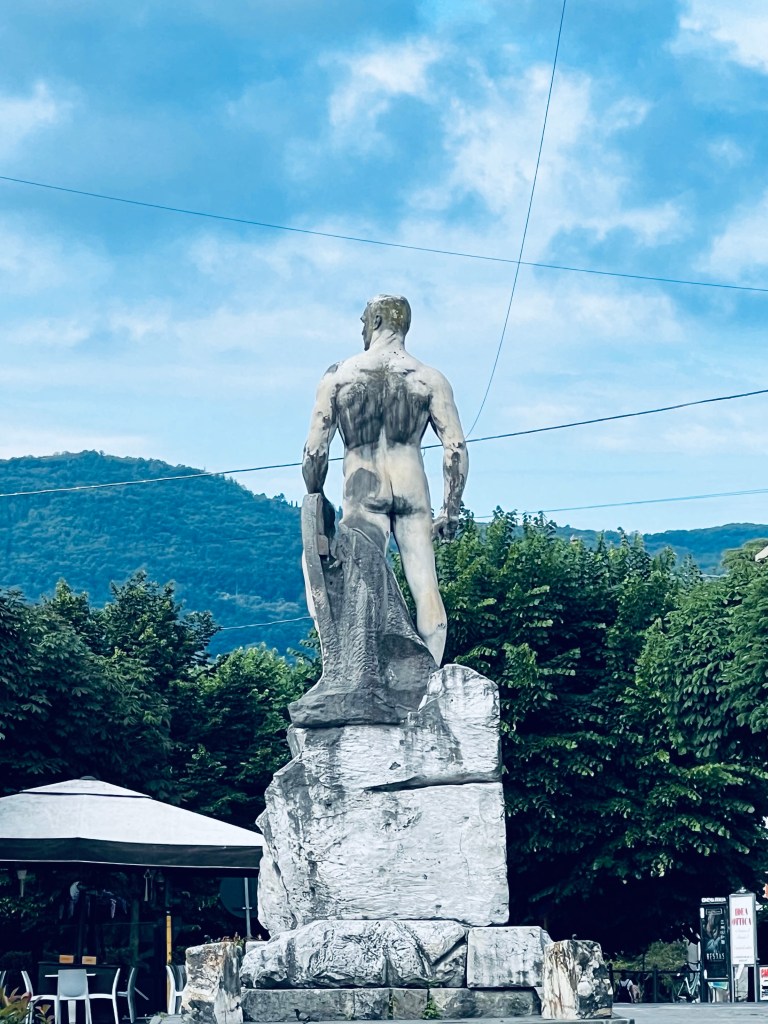
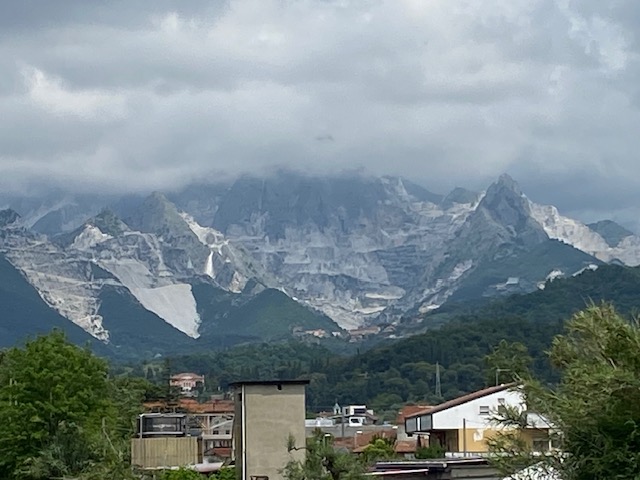
Sarzana to Massa offered the first views of the Ligurian sea and of the ghostly white peaks of Carrara marble mountains. We are on the shore, the waves almost audible. Dinner at da Ricca where Domenico, the owner, informed that he did the walk from Massa to Rome and became quite emotional when describing how beautiful it was.
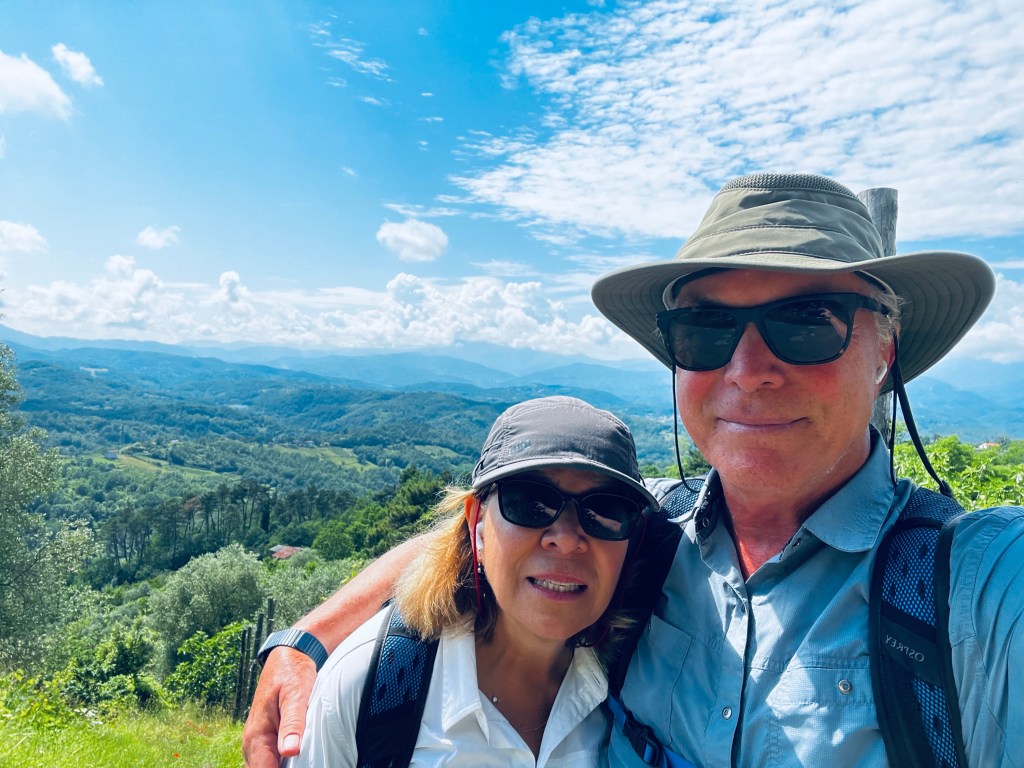
We are clocking Kms and taking hills with some ease. The last 2 weeks were good training. We run or walk into some difficult predicaments but somehow things work out. As Domenico said tonight: “Just let it happen.”

Share this:
-
P2 Stage 17 Massa to Camaiore 26km
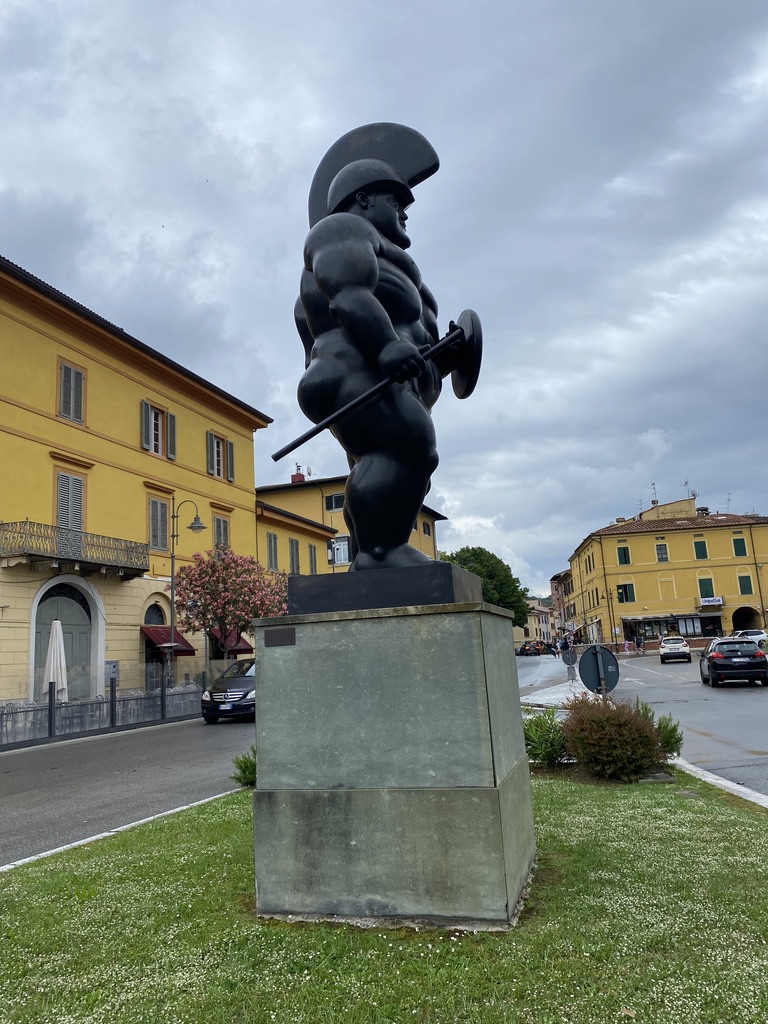
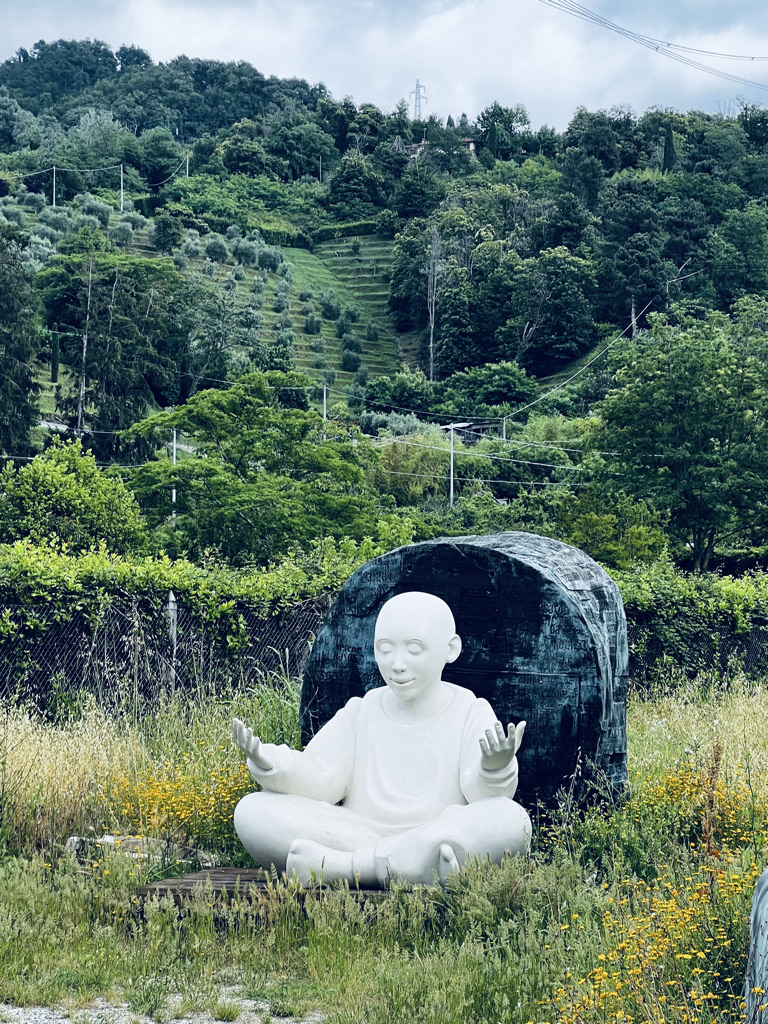
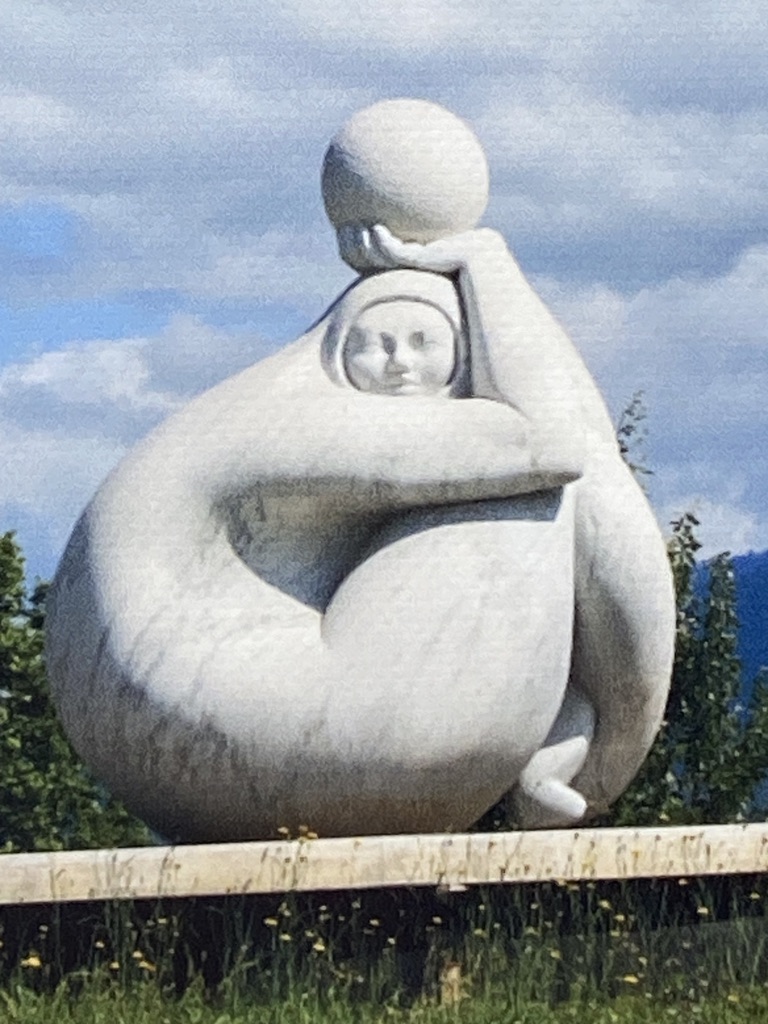
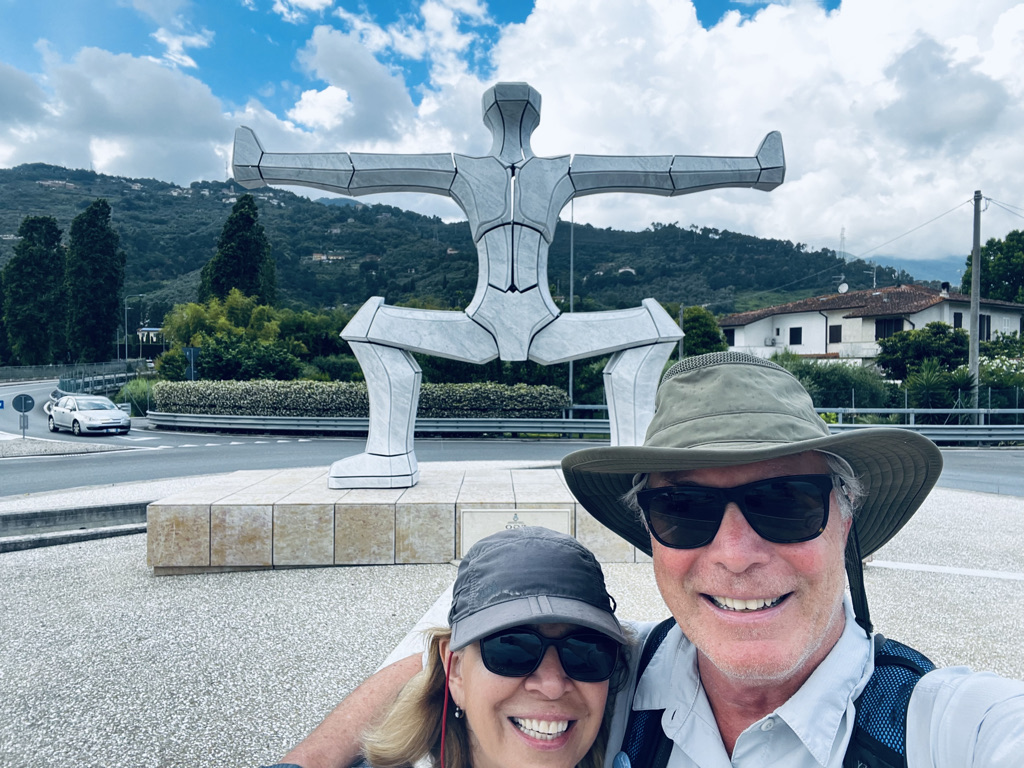
Much of the day walking above the Ligurian coastline through charming towns, notably Pietrasanta, a remarkable medieval village brimming with sculpture, much of it marble but some bronze such as the Centurion by Botero. We lingered in Pietrasanta for lunch, in front of its large Duomo, a marble palace, before walking the last 10 km to our hotel, perhaps not the brightest strategy but sometimes goals compete with aesthetics. But Carrara marble is omnipresent here, even the curbs are made of marble. We are at the half mark of our journey. Tomorrow Lucca, pine trees and cypresses.

Share this:
-
Weekly Summary of my Big Fat Francigena
I have decided to rename my weekly summary to reflect the abundance of delicious food we are enjoying along the way.
A great second week. We left the rice fields of the valley for the gorgeous mountains of the Apennines. The CISA pass, a boogey man for us for some time, has been conquered. Now we walk through new landscapes: Roman pines, monumental cypresses, the glowering face of Carrara marble mountains, and the mediterranean sea on the horizon. We walk often in waste high wildflowers, walls of juniper and flagrant mentuccia.
We follow the signs for the Via Francigena, Edward verifying with a trusty app. In addition we use a guide book written by a retired American living in Lucca. His narrative can often be disturbing or alarming. For example: “relentless climb”. Or “Ignore the threatening signage posted by the deranged hermit living on the lane.” Or “harrowing road.” Or my favorite “This part will require physical and mental stamina.”
Our lunch is typically a panino on a log or park bench, with an orange that I anticipate and guard like Jo Marsh in little Women. The other day we took refuge from the rain under a train overpass, found a discarded cushion and ate apricots.
We meet very few people walking the VF. Recently, during several days of downpours, we crossed paths with 2 American women who are walking the Parma to Lucca segment. We saw them at the CISA pass, following a particularly grueling and mud-up-to-your-ankles trek. One of the women was wearing a black sleeveless jersey dress, under which, she shared she was wearing a pair of bicycle shorts. A lovely pair of earrings dangled from her ears and a straw half visor completed her outfit. But here is the kicker, her footwear resembled those once popular black cloth Mary Jane slippers. She looked like a woman searching for her car in the Bloomingdales parking lot. There was no mud on her, she was spotless. Edward and I looked like we had been through a mud treatment at the spa. I could barely raise my foot from the weight of the mud caked under my shoes. I asked how she managed to remain so spotless through the mud drenched trails? She confided “in an earlier life I was a gymnast, I am light on my feet.” I think she’s a strega.
Share this:
-
P2 Stage 18 – Camaiore to Lucca 26km
For the first time we took the wrong turn and it was a doozy. Not just more kms and altitude gain, but walking across the face of a mountain that 2 years ago suffered a devastating fire. Stepping through the remaining detritus was apocalyptic, nightmarish. Deep rivulets were carved into the path exposing slippery rocks and muddy terrain. But we made it to Lucca to rest in this truly lovely town. And, of course, had a fabulous meal.
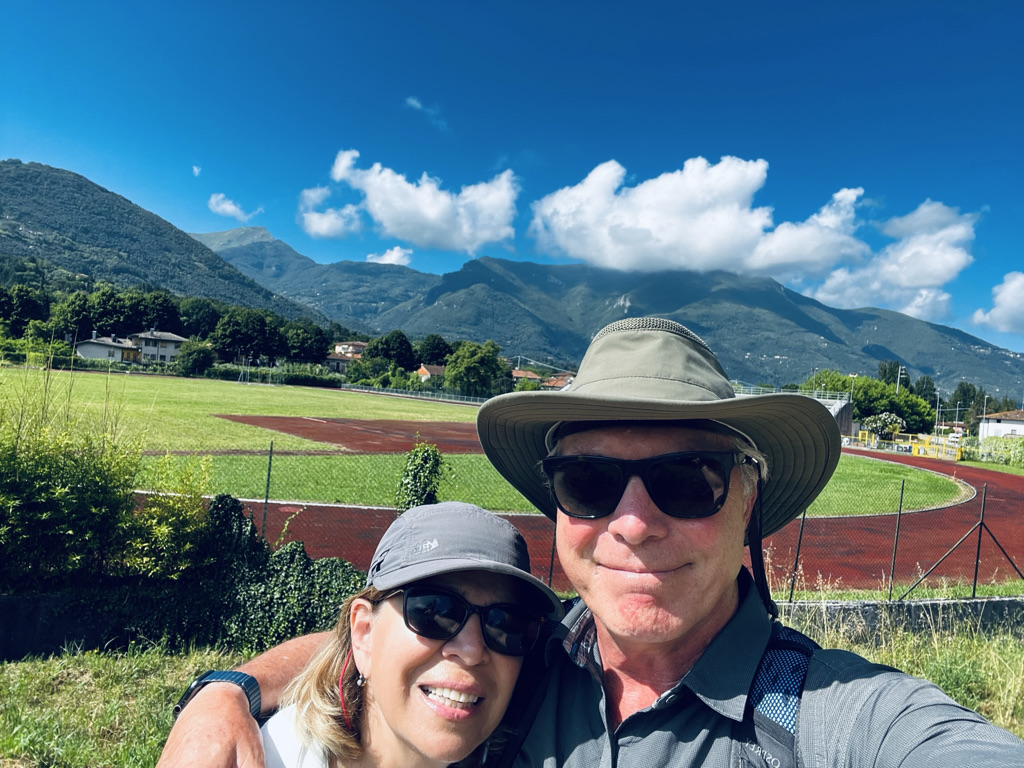
Yesterday on our way from Massa to Camaiore we were overcome by four Italians, Paula thinks they were firemen, who were marching at the pace of Roman legionnaires, Chum Chum Chum Chum on the gravel path. “Salve!” they shouted gleefully, “Dove andate?” In short order, as we were walking, we learned that one of them trained at Camp LeJune, North Carolina, Paula’s birthplace. “Buona passeggiata!” they shouted joyfuylly as they sped on under the hot sun. We also ran into a trio of Americans who, looking at us with what we took for condescension, greeted us with “Oh, you are luggage forwarding. ” Competitive pilgrimaging has come to the Via Francigena.
Share this:
-
P2 Stage 19 Lucca to Altopascio 21km
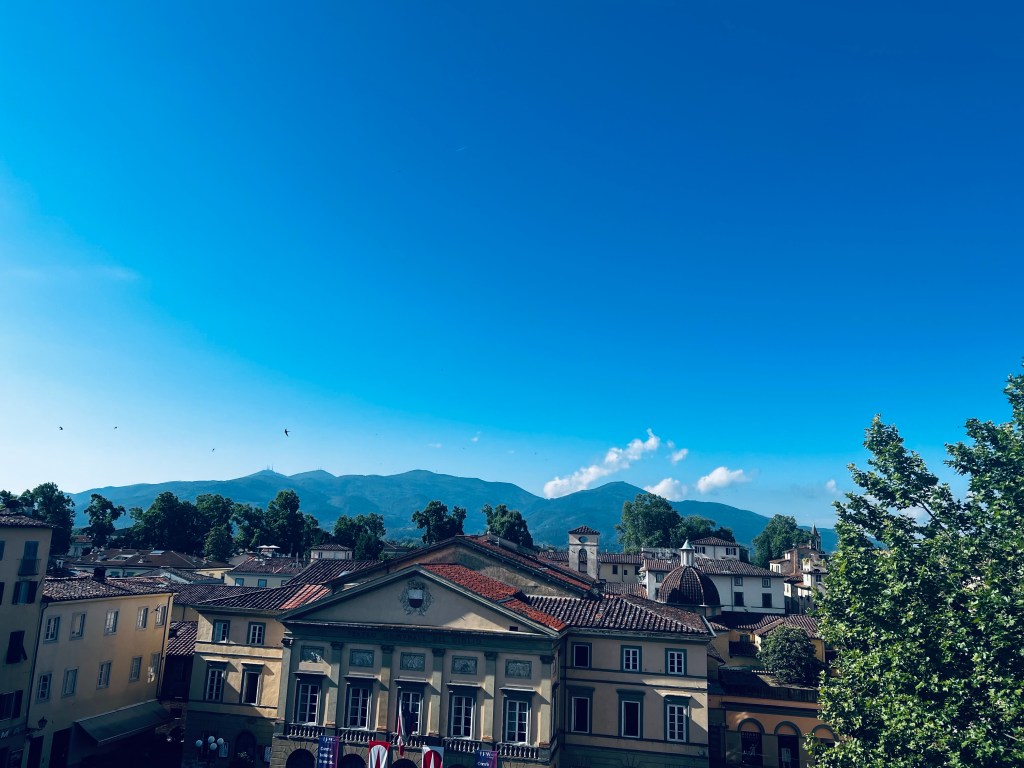
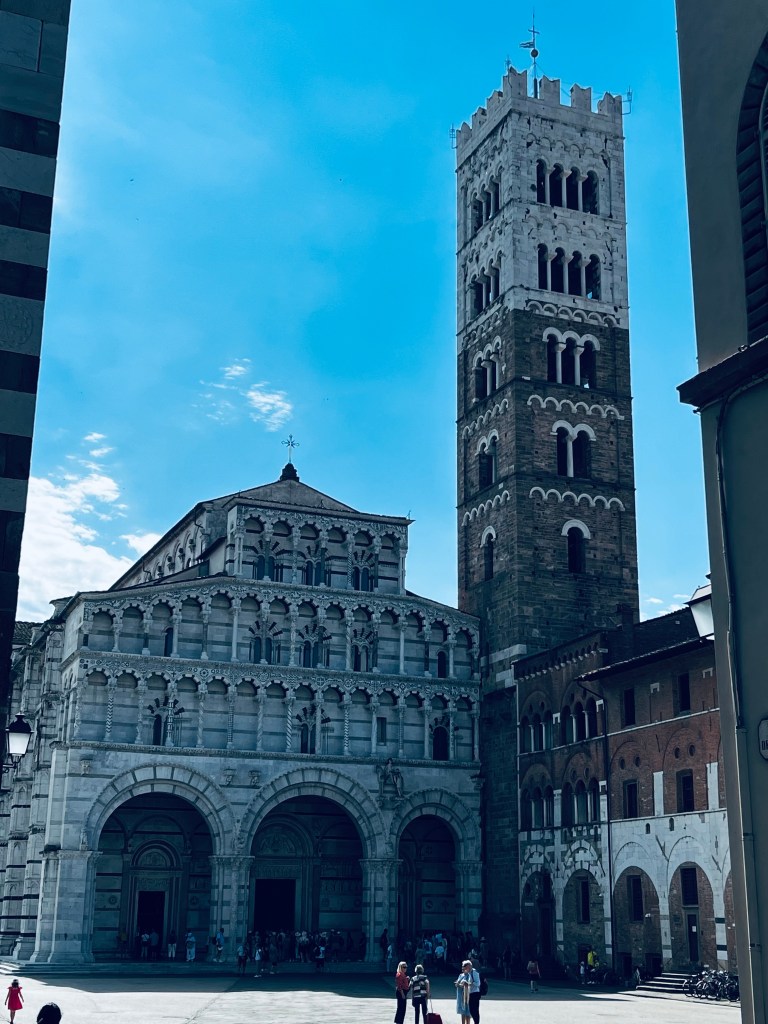
We did not roll into Lucca until after 7 pm so we had just a brief rest there. We will return
A mild day along flat terrain. We are so far from all the goings on in the world that the passing of Berlusconi only brought to minds my elderly aunt’s joke that when he was seen with a head scarf after hair implants people concluded he had been circumcised. But he was an important figure in the politics of Italy for the last half century, though his impact will likely be lost to the mysts of time

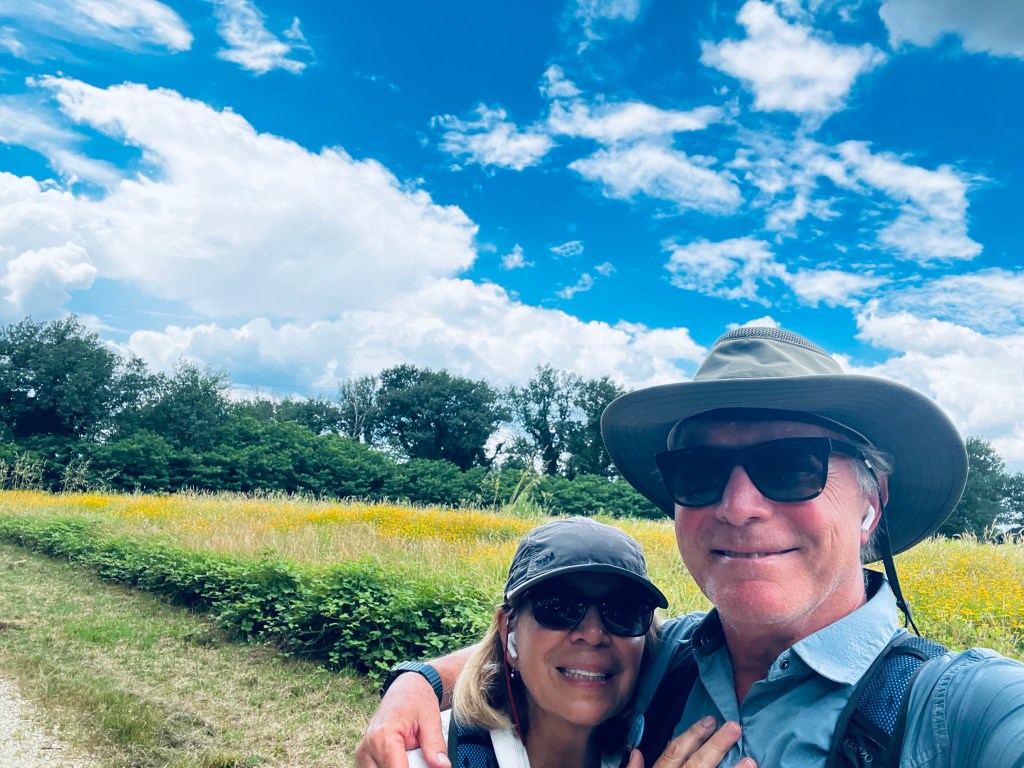
Share this:
-
P2 Stage 20 Altopascio to San Miniato 35 km
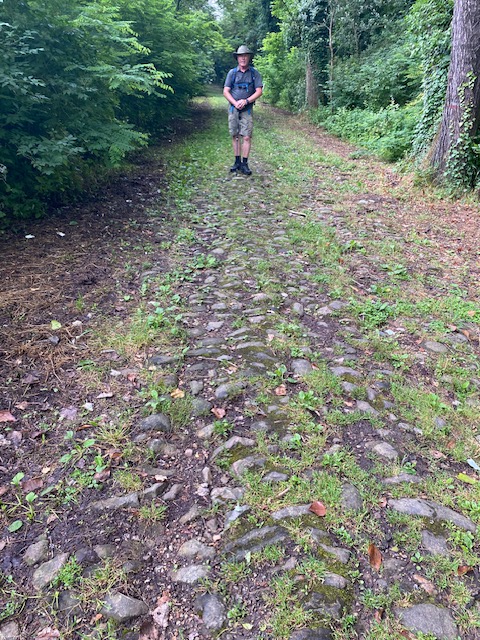
We walked along parts of the original cobble-stoned Via Francigena. In the rain we ran into two French women, who weren’t inclined to return a greeting, a German couple who were well attired for a hike but were using paper maps and a lone Italian fellow who was lollygagging along the the trail all as we roamed rolling Tuscan hills and, finally, crossed the Arno.
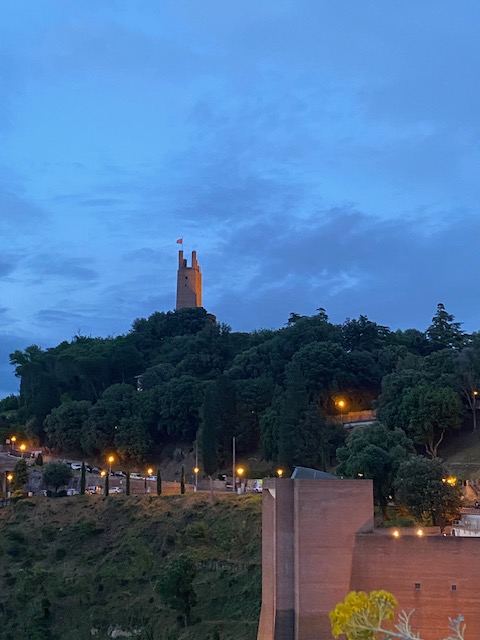
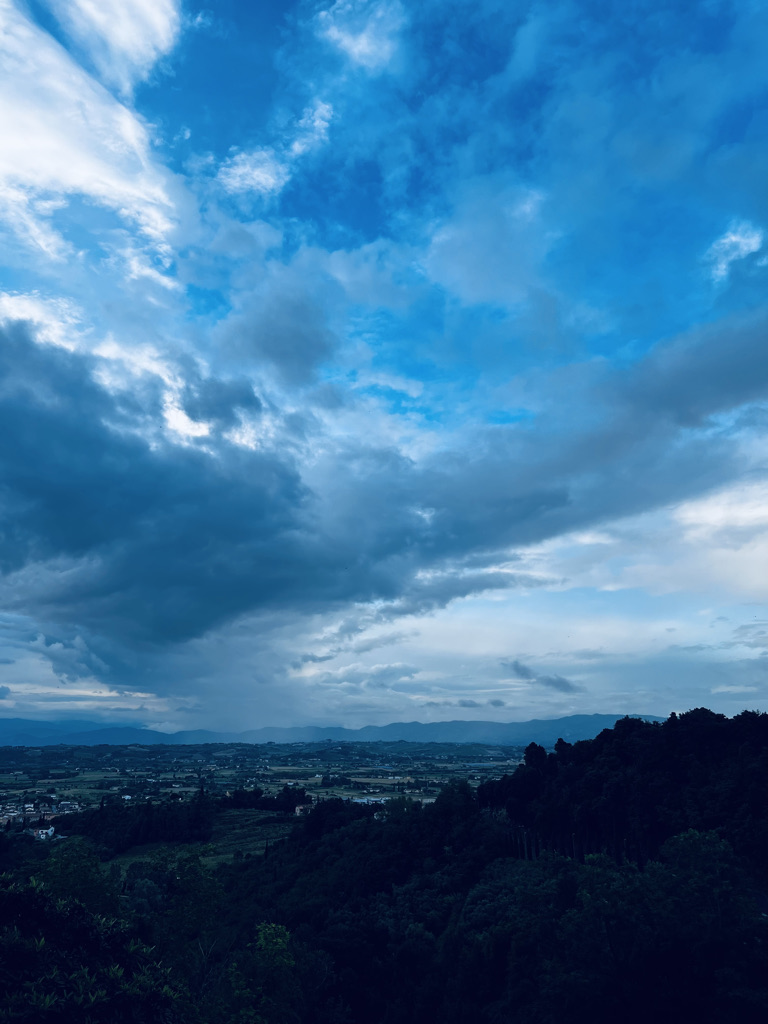
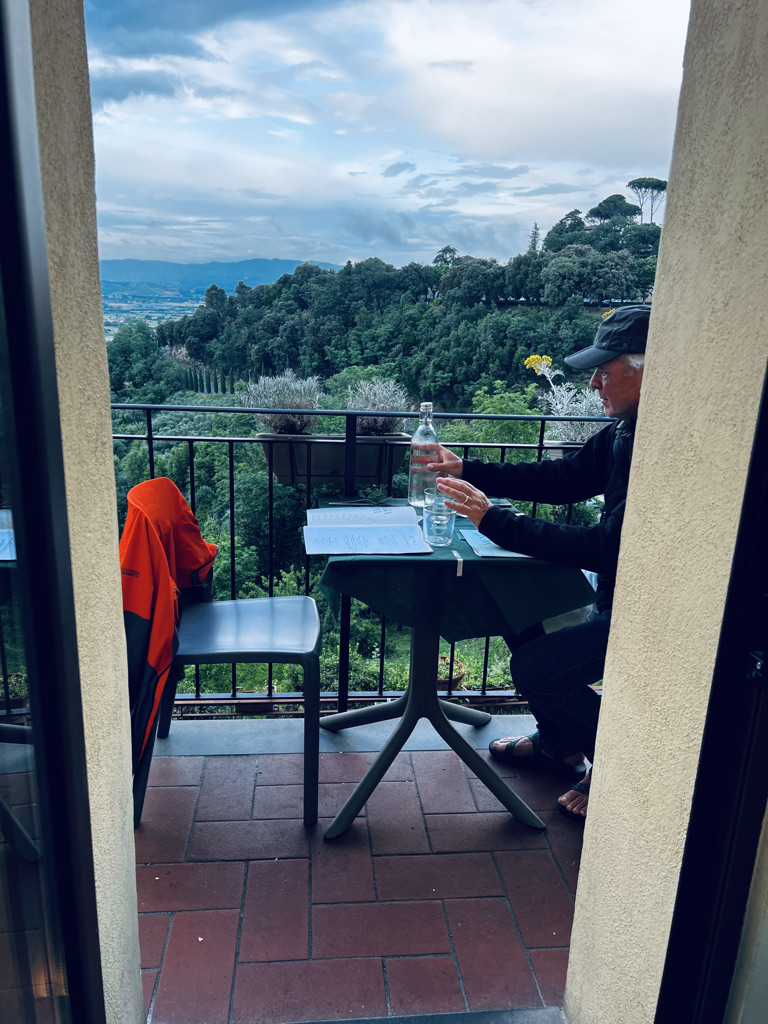
San Miniato the mediaeval hilltop town where we spent a restful night, is perched on a cliff with commanding views of the valley below. It is quite a lively town, with half a dozen upscale trattorias and bars with ultra modern decors. Let’s Face the Music and Dance wafted out the doors of one where, as we passed by the kitchen, we glimpsed the chefs dancing with frying pans.
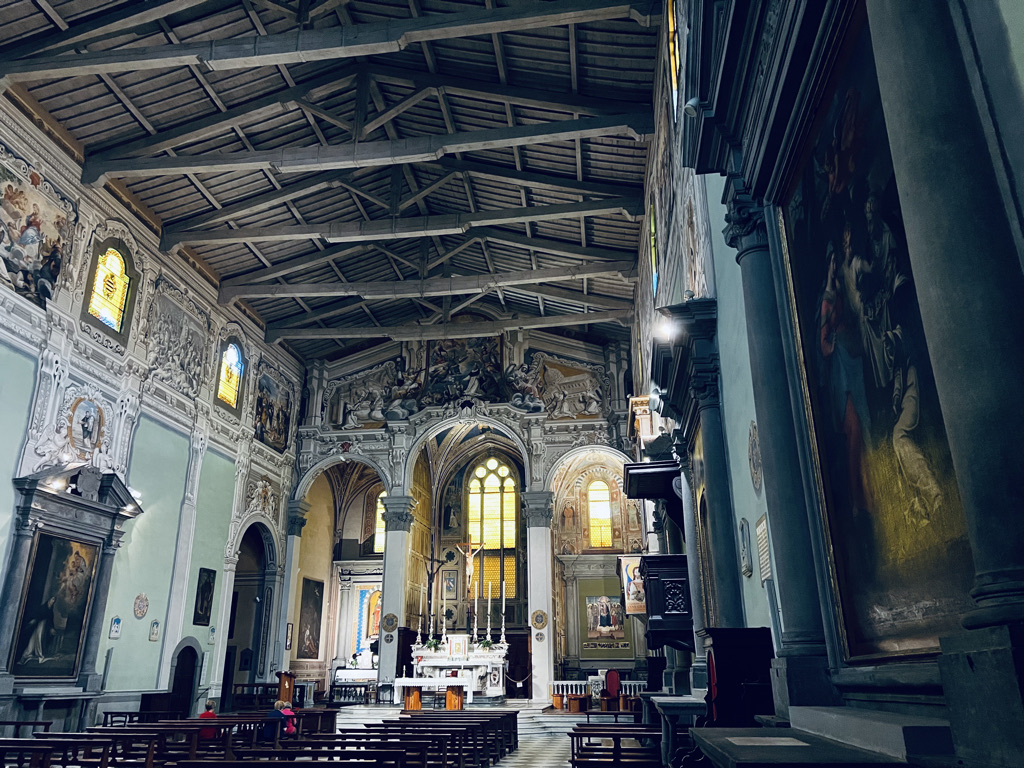
The Duomo, a 12th Century structure, betrays alarmingly deceitful baroque trompe l’oeil. Next to one of the side altars stands a dignified testament to the 55 Italians who were killed under American artillery while taking refuge in the church where they thought they would be safe.
Share this:
-
P2 Stage 21 San Miniato to Gambassi Terme – 27 km
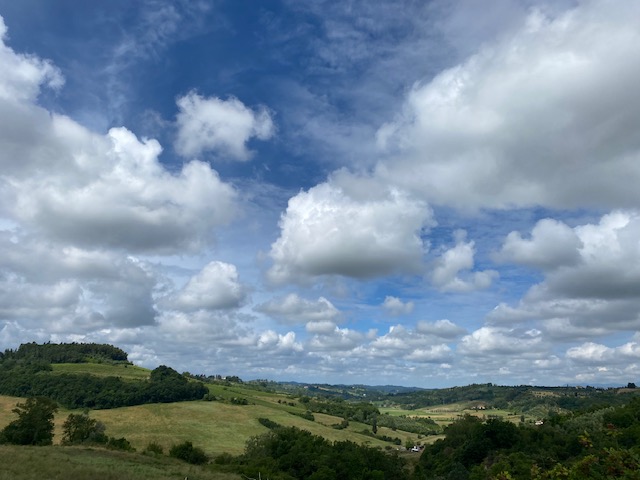
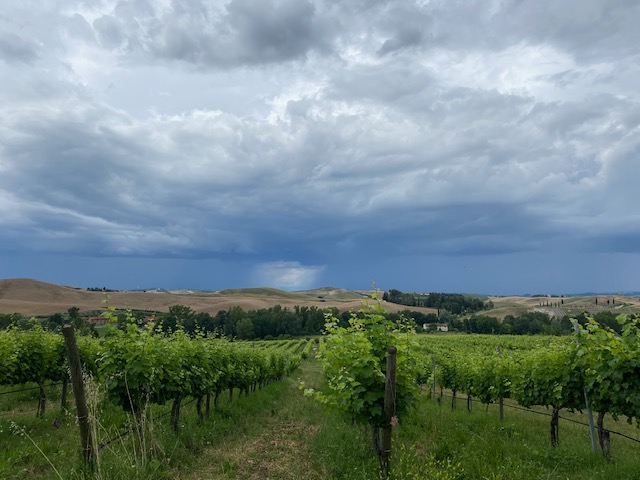
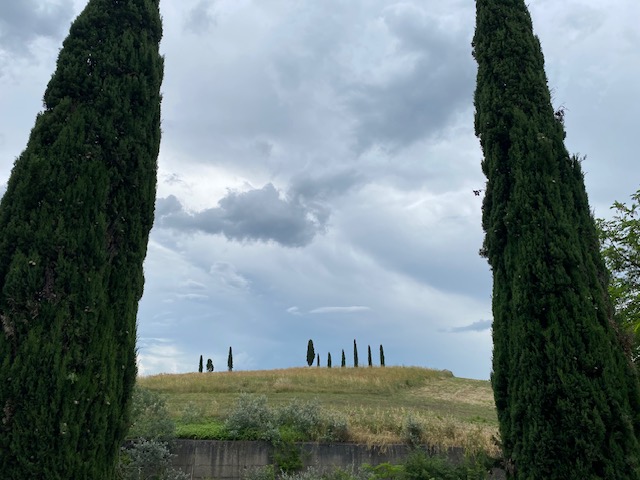
All day we walked around in a renaissance landscape painting, replete with undulating paths lined with cypresses, Roman pines, vineyards and wheat fields. If serenity can manifest itself on the ground we walk, we can be said to have moved through the most serene and tranquil reality imaginable. Paula called it a caricature of itself, this simple but iconic landscape beauty, but not a cliche.
On our way out of San Miniato we stopped at an Alimentari that would put Dean and DeLuca to shame. A WW2 photo of the bombed street in front of the store hung on the wall. When I asked who dropped the bombs the owner shrugged and said “history is history you cannot change it, it’s only a story.” Later in the day we were at the laundromat taking care of three weeks of horse doo do smelling clothes, where we met the elderly gent that manages the place. “This is the most communist area of Italy, I am a communist, but we thank Americans for liberating us. Biden is making a big mistake not giving Ukraine what it needs to beat back those Russian mascalzoni. Putin is just a thug. Oh and Berlusconi was a great man.” The obit in Corriere Della Sera recounted how when Berlusconi met Pope JP 2 he said: “You and God are like me and AC Milan, we always win.” Though this be madness, yet there is method in’t.

Share this:
-
My Big Fat Francigena Weekly Summary
Another wonderful week. This time our wanderings brought us to Tuscany. The week’s weather has been wet, not a big problem for us, we don our raincoats and our waterproof boots, however the puddles linger and paths remain slippery and muddy and more challenging for days.
My trekking strategy is to follow the exquisite choreography of Edward’s steps – his ballet like movement gliding seemingly effortlessly, an arabesque here and a pirouette there. We interact in a variety of local tableaus. Coming down on a particularly challenging path reaching for bamboo stalks the size of a fist along the path we were delighted to hear music in the distance. As we approach we saw a tent and neatly covered chairs in rows and the voices of a cheering crowd as “We are Family” entertained a wedding party. Further along as we entered a narrow pathway out of town we were passed by 2 cyclists. Their animated conversation was about food. One cyclist yelling “Molto importante, pomodori piccoli.” His companion muttered a response but was corrected loudly “No, no, no, no, piccoli pomodori sono molto importanti.” As they cycled into the distance I could hear a repeating “No, no, no, no.”
For me it is impossible not to feel conspicuous. Perhaps it is the walking stick, my sartorial splendor, the sweat, maybe the blank stare from fatigue. Often when we enter a town we find a congregation of older men, perhaps pensioners, who glance up from their game of Scopa, long enough to render a judgement. There is a term, “umarell” , that refers to a man who stands at the edge of a construction site, pants resting just below his breastbone and hands clasped behind his back, offering advice to the construction workers. These are the seated version.
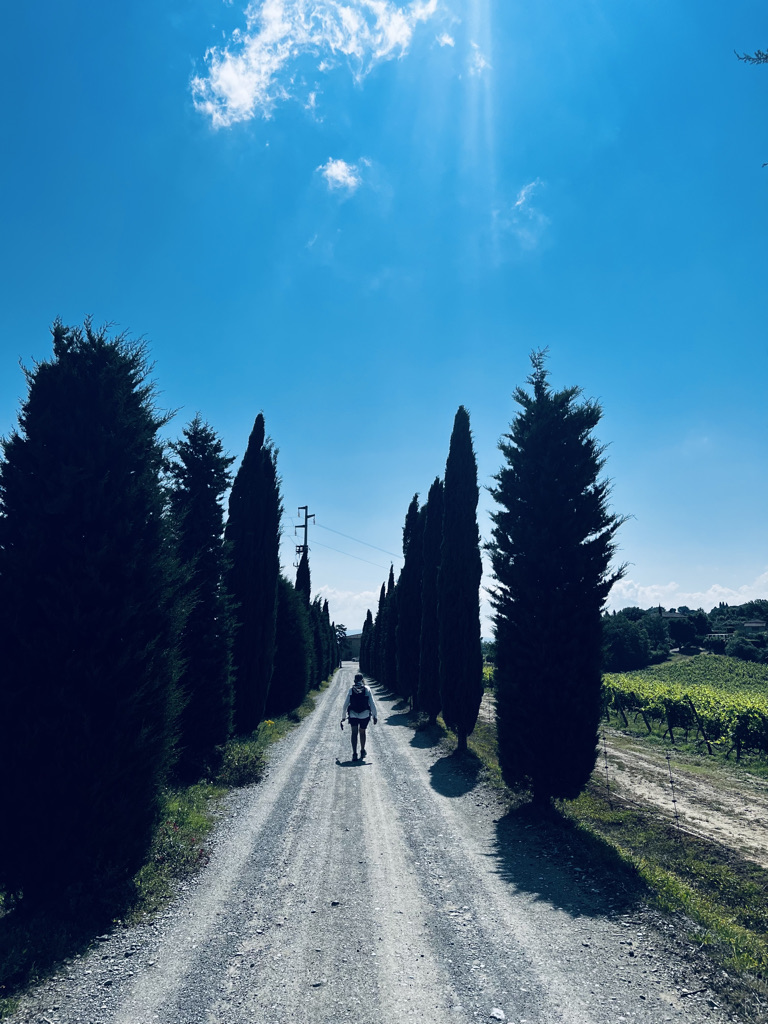
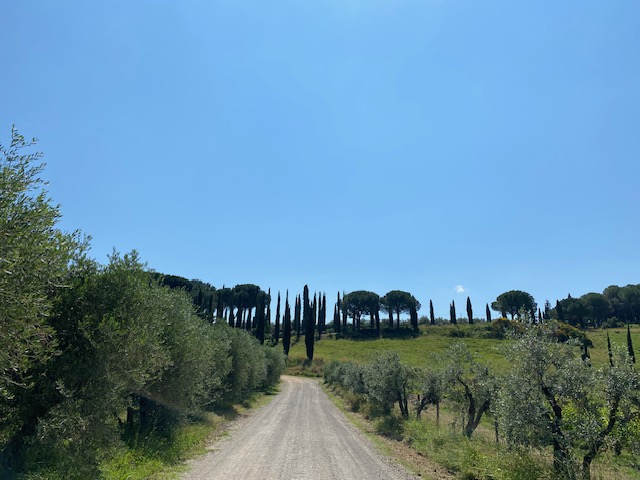
Tuscany offers endless stunning views and chiming church bells marking the passage of time and our progress. The new challenges are the serial ascents to hill top towns, climbing 400 or 500 feet 4 or 5 times a day. In fact I have observed people from my car walking on these toads wondering why are they doing that? Are they crazy?
We arrived in San Gemignano today, a vibrant town packed with visitors. It looked like an Italian Medieval Pavilion you would find at Disney world. Two days to Siena.
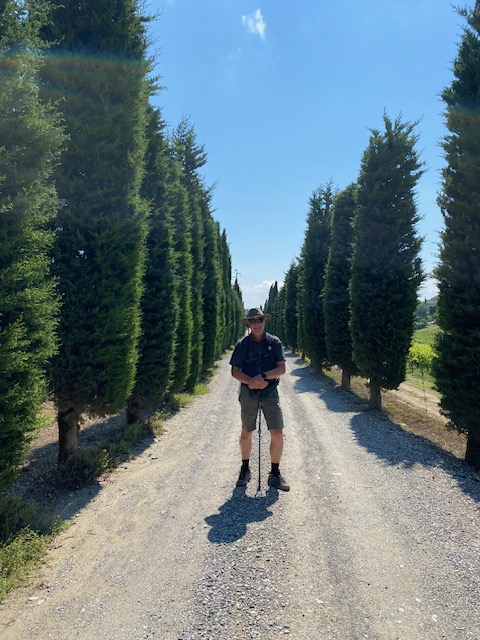
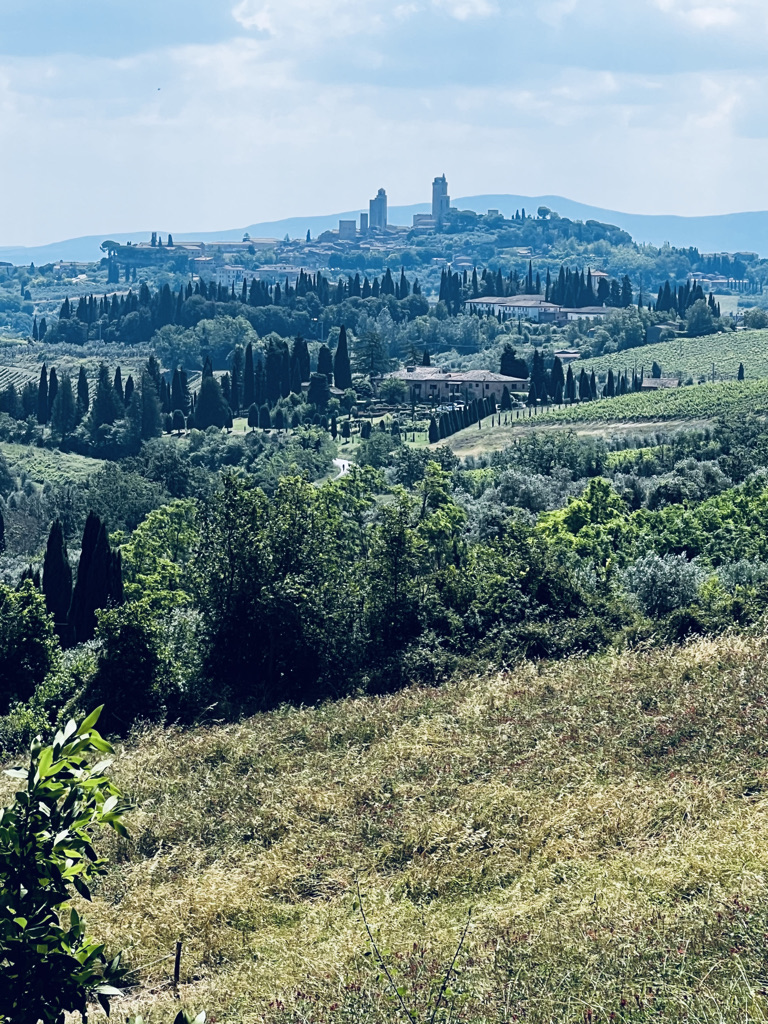
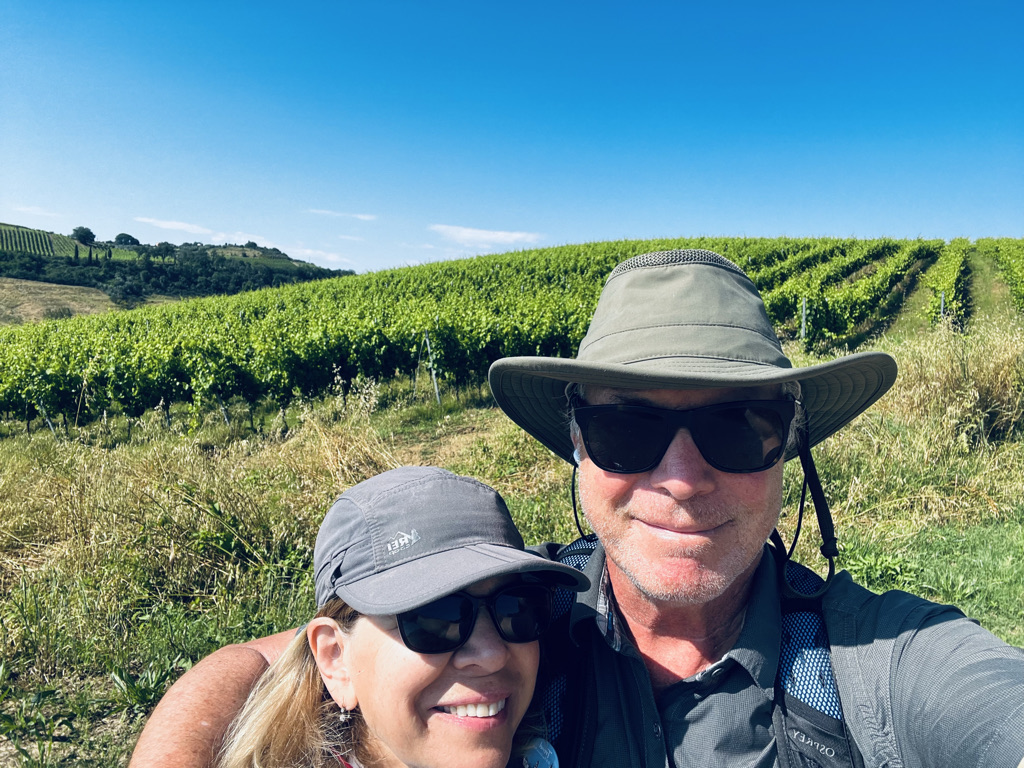
Share this:
-
P2 Stage 22 and 23 Gambassi Terme to San Gemignano 22km, San Gemignano to Strove 27km
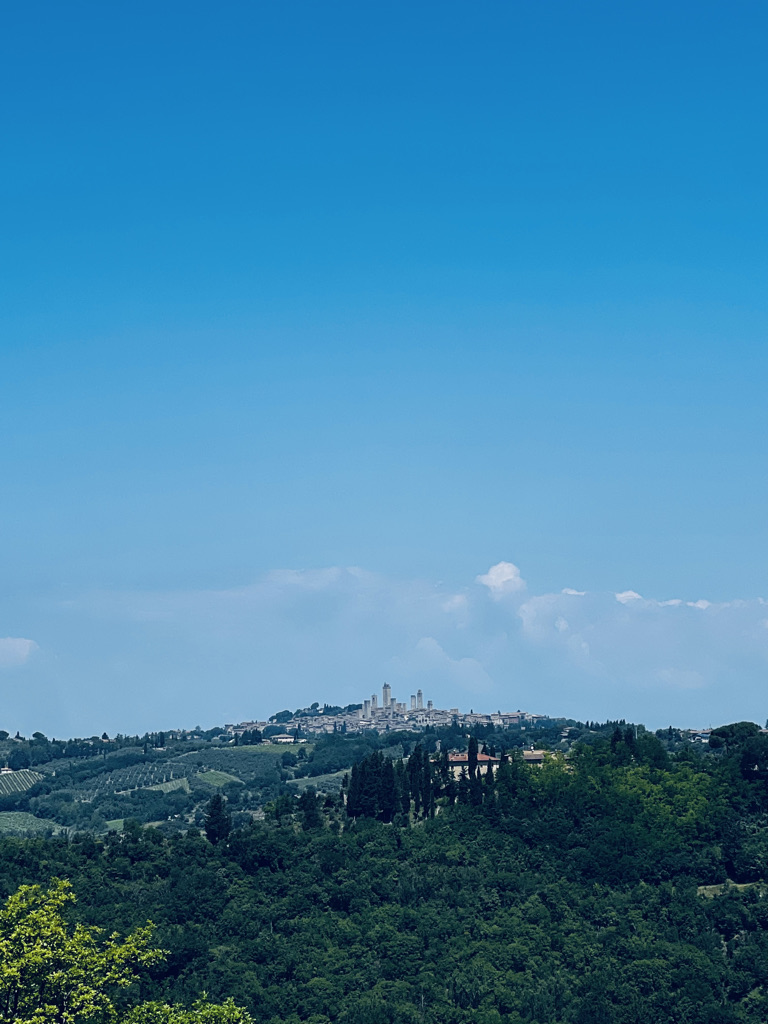
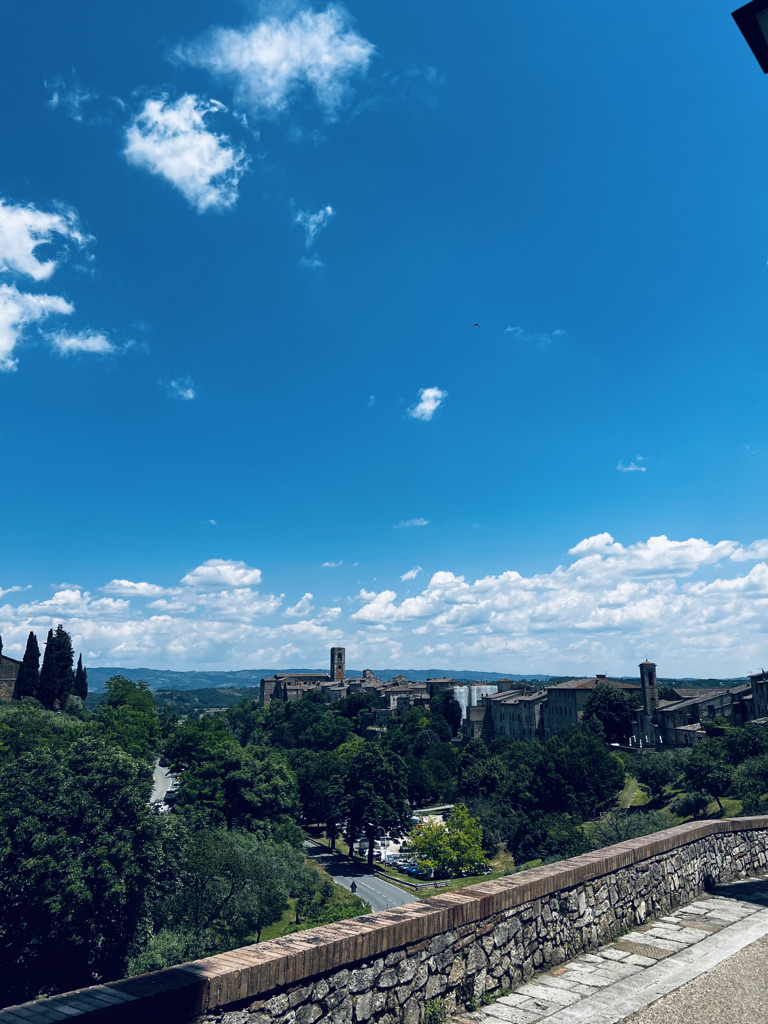
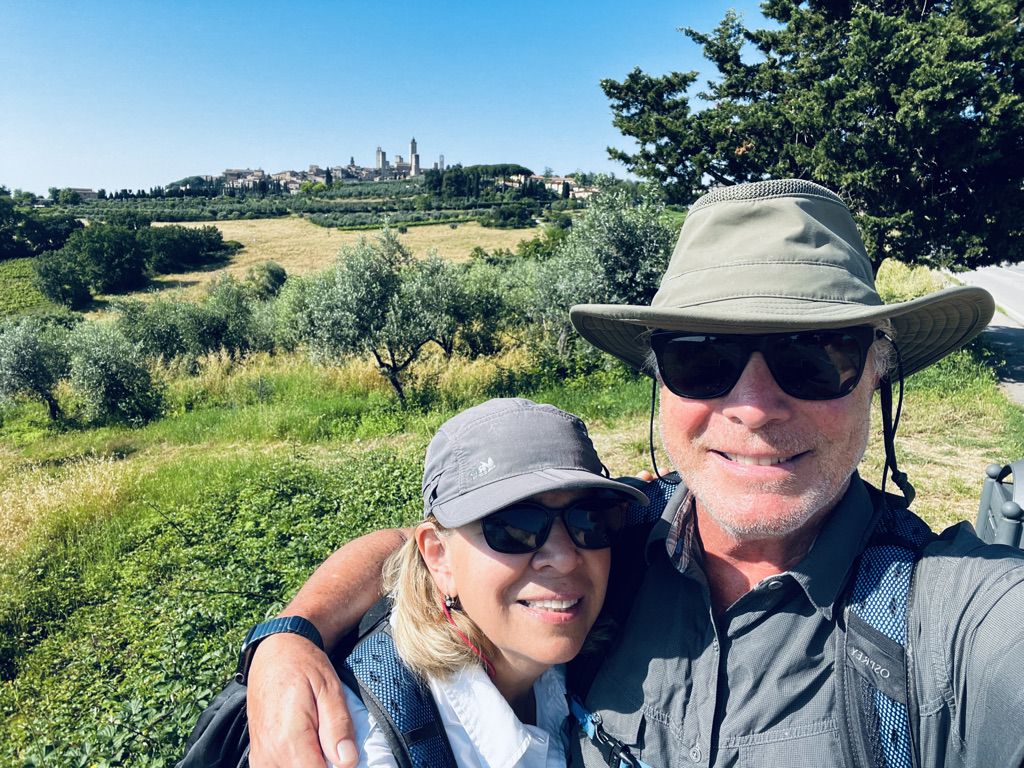
We are in Chiantishire, greeted at every turn by “Bion Journo” or “Bionah Sayrah”. San Gemignano was a shock at first, throngs of tourists fighting over their slice of pizza “What’ s on the Putinaceca” and “Can I have that without the anchovies.” But as evening came and the town empties out we could appreciate its beauty and grace. How Italians are able to preserve these Middle Aged gems and still provide all the conveniences and curations that cater to the tastes of modern visitors is a wonder. And not just one, but one after the other and each unique and impressive in its own way. San Gemignano, known for its towers, is a vibrant and exciting town that attracts thousands every day. A really charming and richly attired. We liked it.
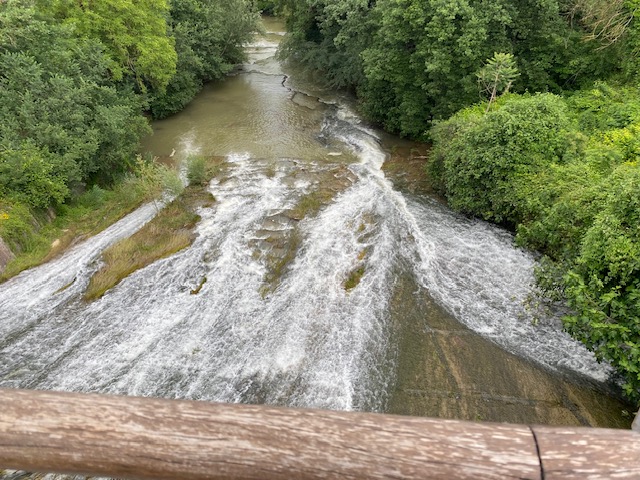
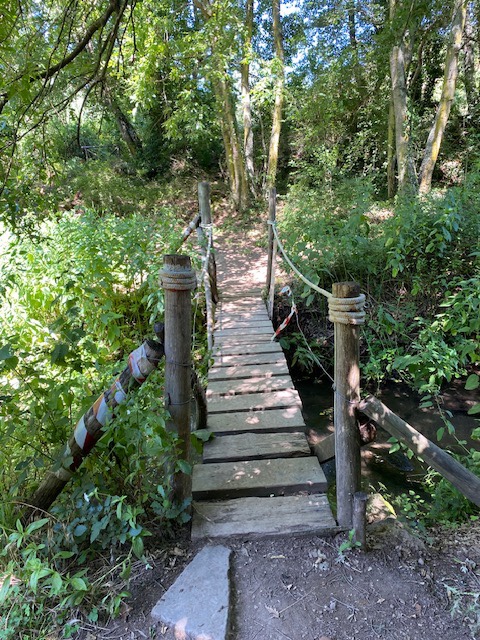
The route from San Gem, as we call it, to Strove crossed the Elsa River 5 times, no bridges and only a guide rope to aid in the crossing. Some of the crossings were challenging due to high waters. Ropes can help only so much. Otherwise we made it to Strove by evening. The town has a population of 80 or so but, you guessed it, we were able to find a great little restaurant with a fine wine list. Italy is just that way.
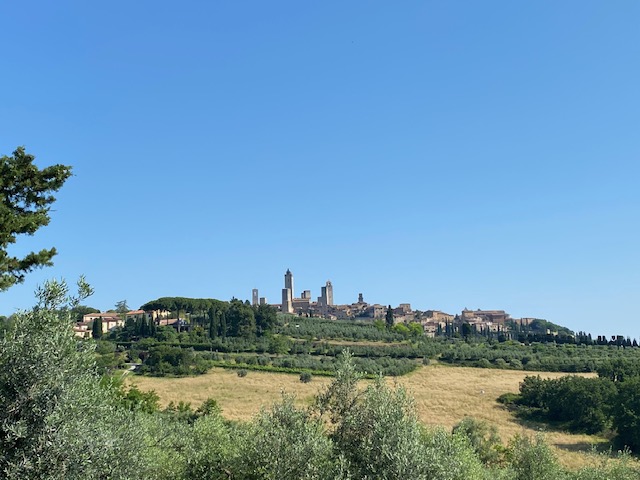

Share this:
-
P2 Stage 24 Strove to Siena 27km
The ascents and descents roll along over white roads and, at times, muddy trails in the forests. We finished listening to Tim Snyder’s Bloodlands which we recommend to everyone who wishes to better understand the war in Ukraine. The contrast between the history of mass killings by Hitler and Stalin and the breathtakingly beautiful scenery we was jarring.
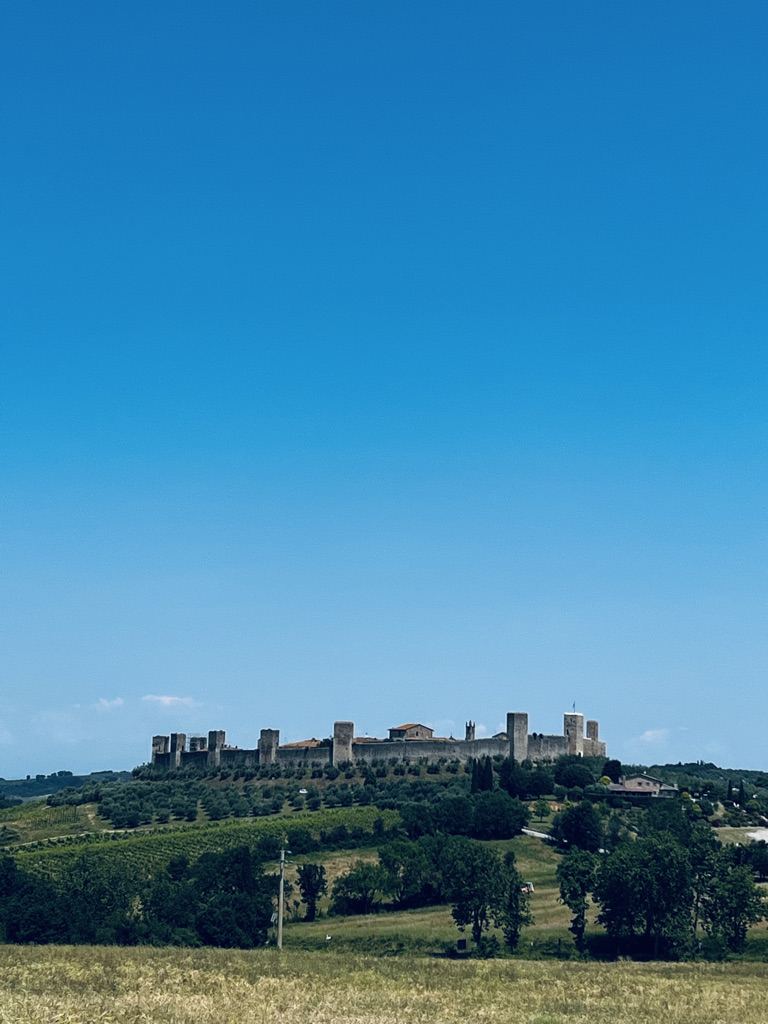
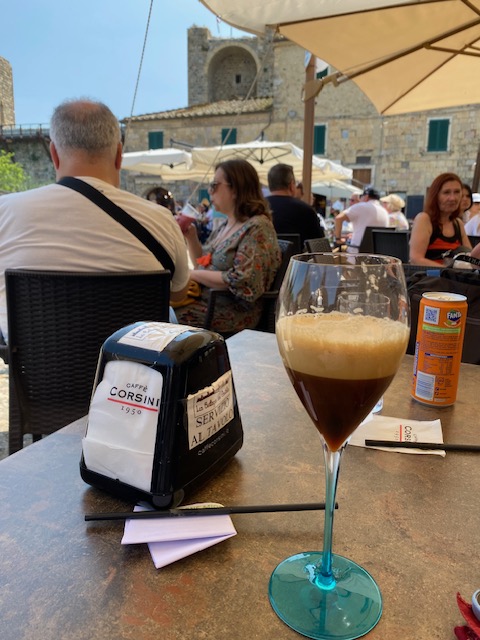
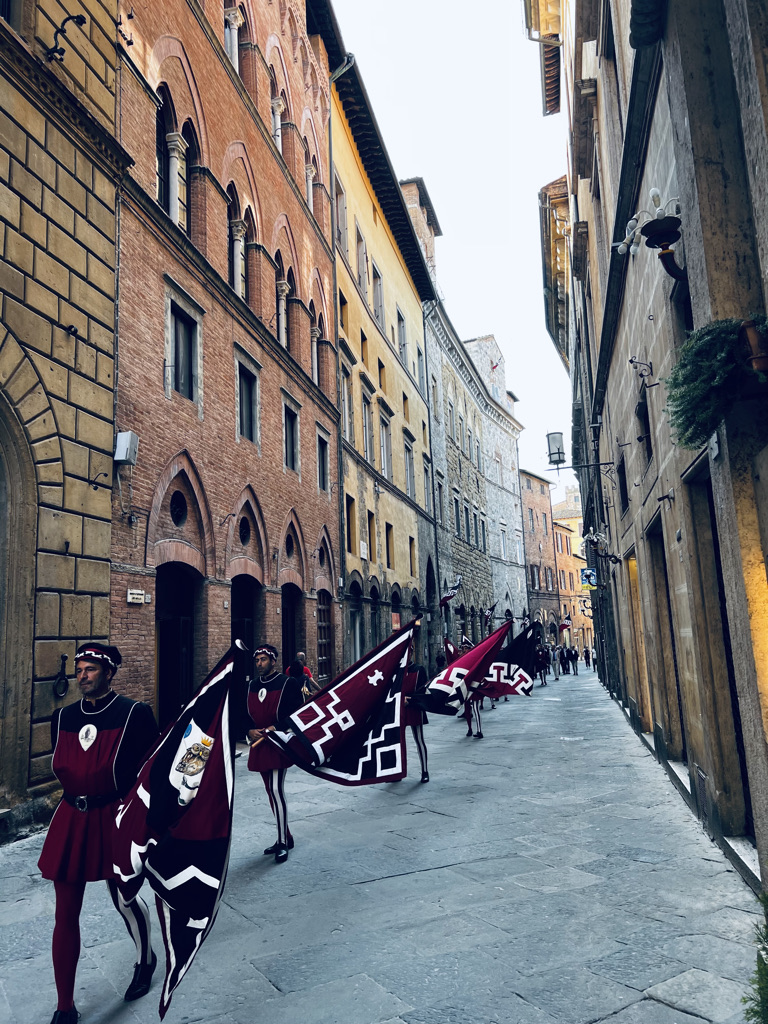
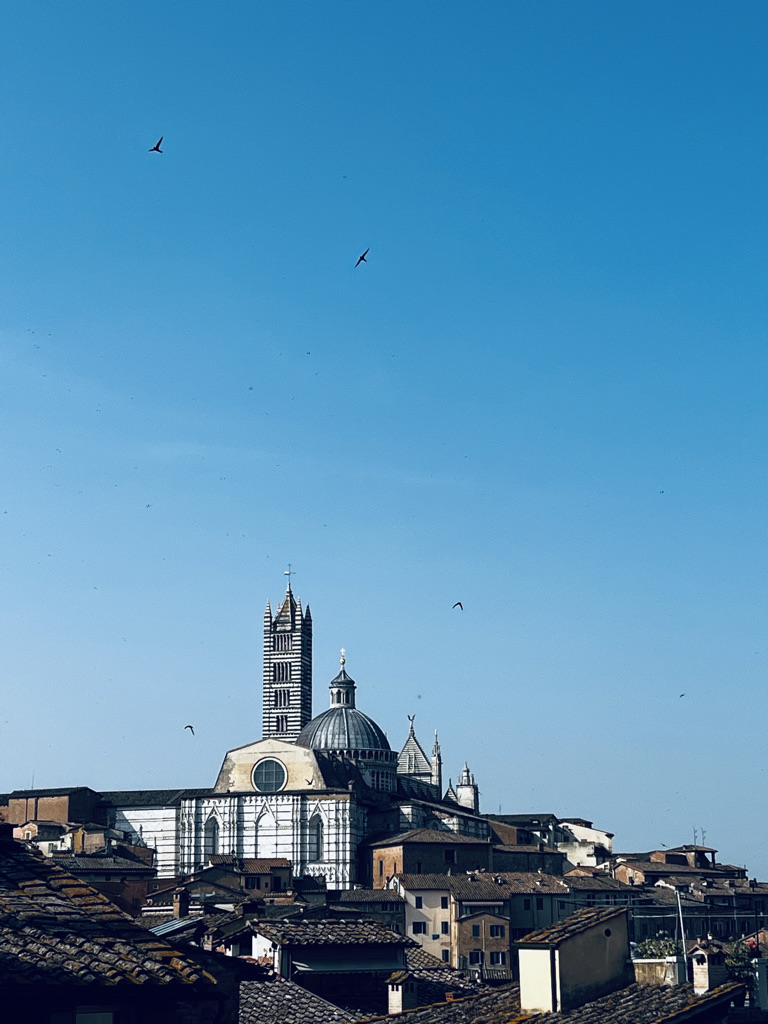
We stopped briefly in Montereggione for a Shacherrato (shaken iced coffee) and finally arrived in Siena at 6:30 during an anti-vax protest apparently convened because Dr Fauci is receiving an honorary degree from the University of Siena. The city, with its 1000 year old duomo, campo and tower, is so rich in history and art that we would have to spend at least a week to properly appreciate it. As it is, this is our first, and only, 2 night stay and we will do a lot of sitting and foot resting instead of touring. Our respite will be accompanied by trumpets and drumming in the streets of the Contrade practicing in preparation for the Palio July 2.
The North African Anticyclonic High has settled over the center mediterranean bringing hot air to much of Italy. The heat will build up over the coming week, expecting temps to climb to 100 later in the week. We will arrange to start earlier and take cover mid day.
Share this:
-
-
P2 Stage 26 Siena to Buonconvento 32 km
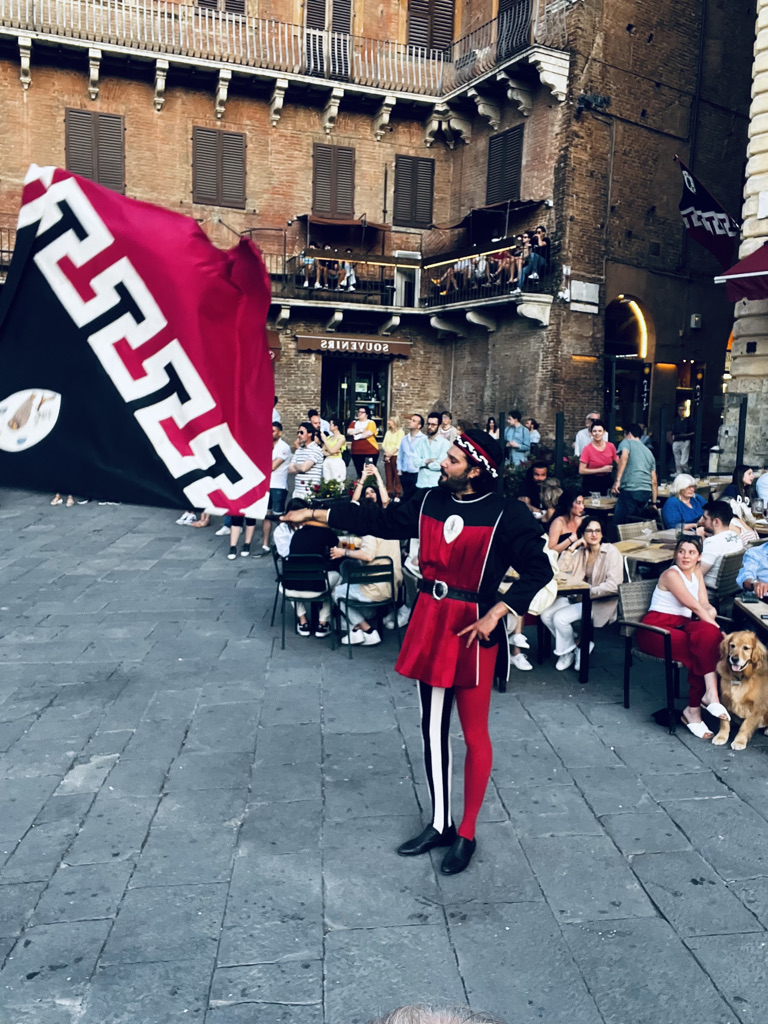
We enjoyed Siena immensely, touring the Duomo early in the morning before the crowds, pausing for some time to enjoy Michelangelo’s sculpture of St Paul set without fanfare or announcement by one of the side altars. The Duomo is spectacular, a testament to the engineering and artistic prowess of 12th century Sienese. We then retired to the Campo for a lunch under misting umbrellas to watch the Contrada practices in preparation for the Palio July 2. It is all taken so seriously.
We left Siena very early because of the long walk and to beat the heat later in the day. The second goal remained illusive. This is such a beautiful part of the country but the long white roads up and down the ridges through the vines offer no shade. We were thankful for the scirocco blowing from the south.
Buonconvento is a small town tucked into Brunello country. Only a couple of thousand people but the museum houses Duccio and Lorenzetti paintings that, unfortunately, we were not able to see because the museum was closed when we arrived and left.

Share this:
-
P2 Stage 27 Buonconvento to San Quirico D’Orcia 24 km
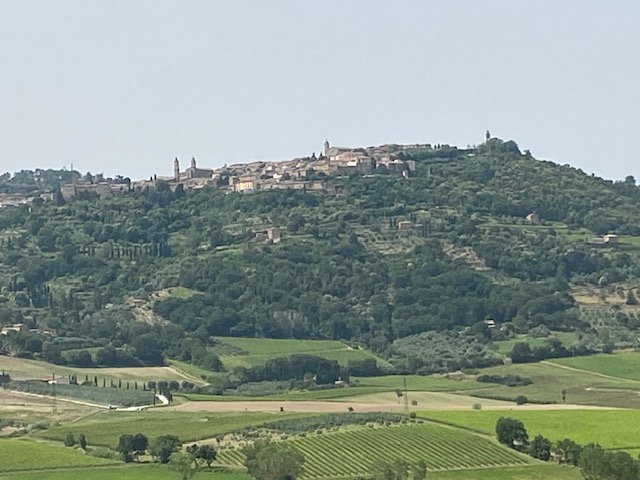
One hates to complain about the weather but walking in 90 degree heat for 5 hours with significant elevation gain will change your perspective. The heat just saps the energy out of you. When we finally arrived at San Quirico D’Orcia we were spent. The journey, however was spectacular. In the heart of Montalcino country, the town up on a hill overseeing its Brunello producing domain laid out in neat rows below. We received innumerable invitations to visit wine sellers for a wine tasting but wisely restrained ourselves. We will leave that to another occasion. We drank lots of water instead.
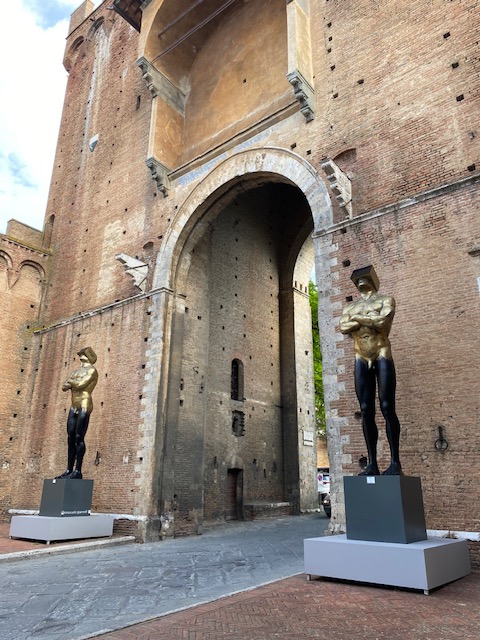
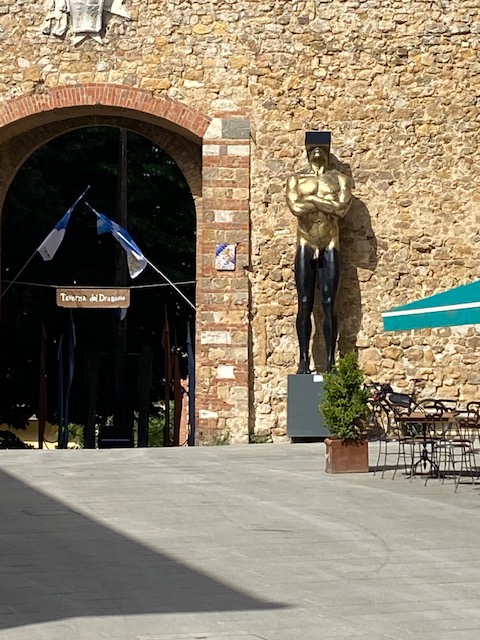
San Quirico, like many towns in wine regions, is well managed and provisioned. Lots of restaurants, Cafe/Bars, an information office open till late, Churches open at all hours, and enough wine tasting cantinas to quench the thirst of invading Huns. It also exhibited imposing sculpture by an artist we first noticed in Siena, Emanuel Giannelli, of a giant bronze figure searching the skies with what look like virtual reality lenses, in both cases place just outside the Roman Porta. The modern equivalent of a Roman Centurion.
Share this:
-
P2 Stage 28 and 29 San Quirico D’Orcia to Gallina 16 km and Gallina to Ponte Riga 26 km
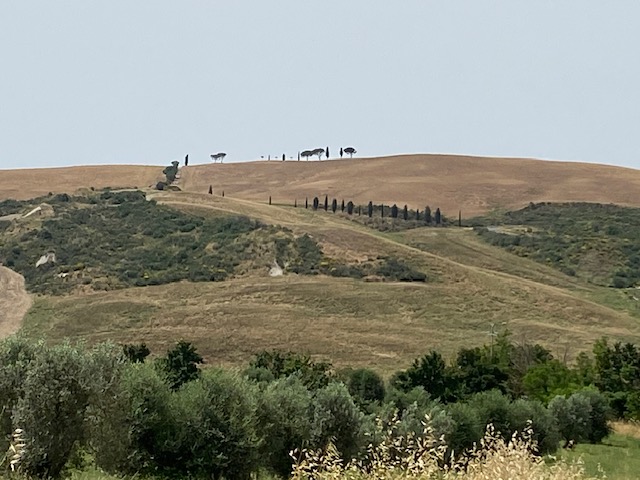
These 2 phases are usually combined with the stop in Radicofani instead of Ponte Riga but we decided to break in Gallina so we could approach Radicofani in the morning rather than at the end of the day. Reaching Radicofani (with the accent on the “fa” like former Italian PM Fanfani) entails a brutal 3000 ft climb in 4 km , something devoutly to be avoided in 96 degrees.
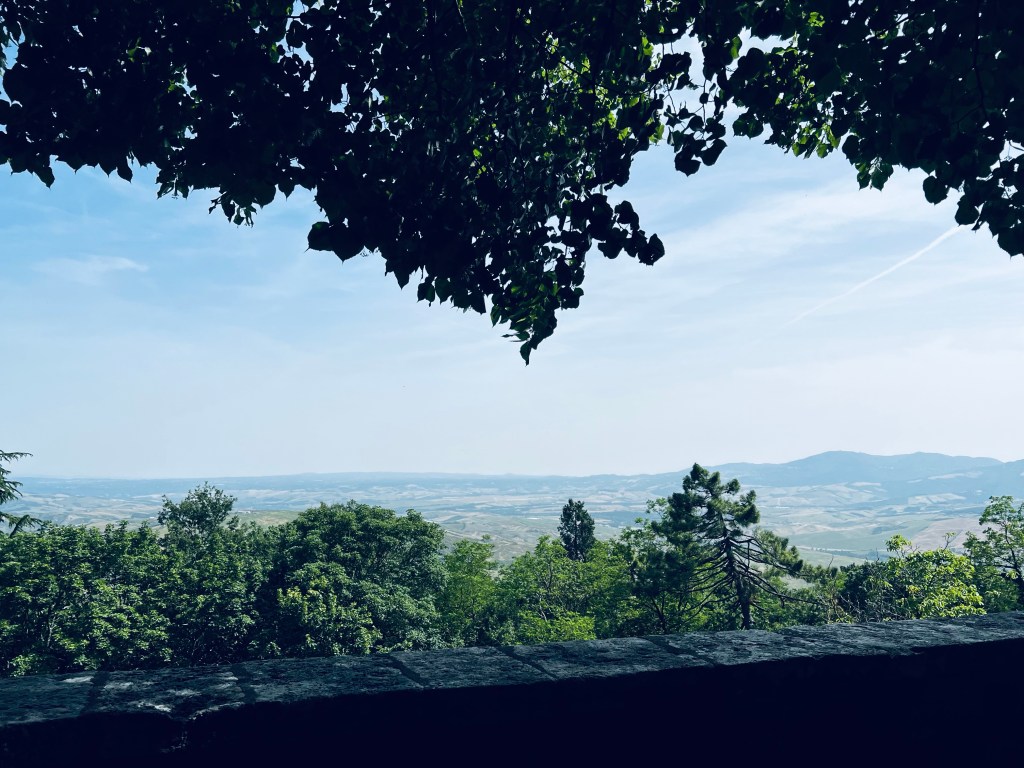
We reached Radicofani, had a delish lunch and then stretched out and napped on park benches in a large shaded park with spectacular views of the Val D’Orcia and sweet breezes. It was a good day.
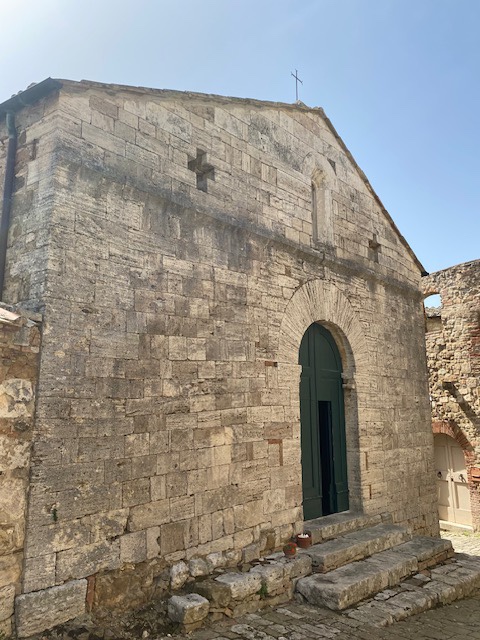
We passed a single digit, 8th or 9th century Romanesque church dedicated to St Blaise a doctor who was martyred in the 4th century. He was a physician who refused to renounce his Christian beliefs so the Romans first peeled his skin with metals combs used to comb wool. When he didn’t die he was decapitated. Cause of death unknown. He is the patron saint of wool combers and doctors.
Share this:
-
P2 Stage 30 Ponte a Rigo to Acquapendente 15 km
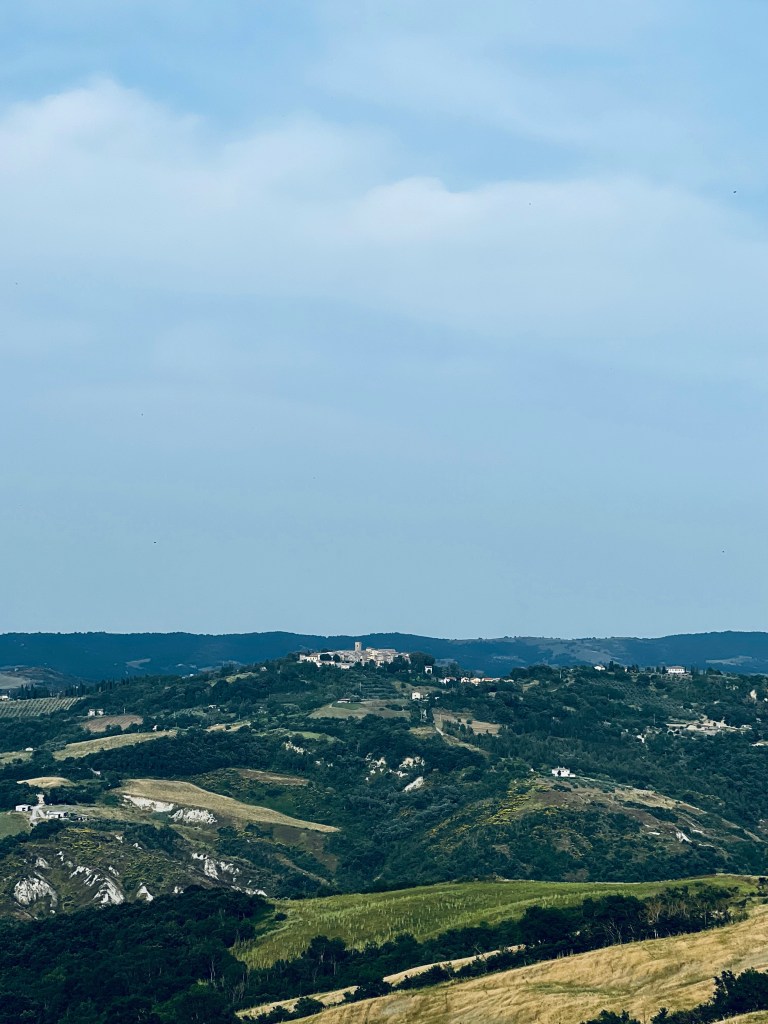
A welcomed shorter walk marred only by long sections along the Via Cassia which is heavily trafficked. As we moved out of Tuscany into Lazio we noticed a marked degrade of the trails, as though weed whackers have yet to be discovered. But the walk through the Val di Chiana is beautiful.
We spent much of the day listening to podcasts on the latest news on the war in Ukraine. A lot of British stuff (the Telegraph has some good reporting), Daily Kos, which has some the the best in depth, front line reporting (I kid you not) and the American press. I am somewhat stunned by the nonchalant treatment of the latest Russian threats to detonate tactical nuclear weapons. Maybe we should not take the threats seriously but Russia signals its intents early and usually sees them through.
But here we are in the center square of Acquapendente, bustling with people, young and old, Aperol spritzers at hand with the generous appetizers served with a drink after 5 pm: pizza, prosciutto, olives, chips and crostini. Life is good.
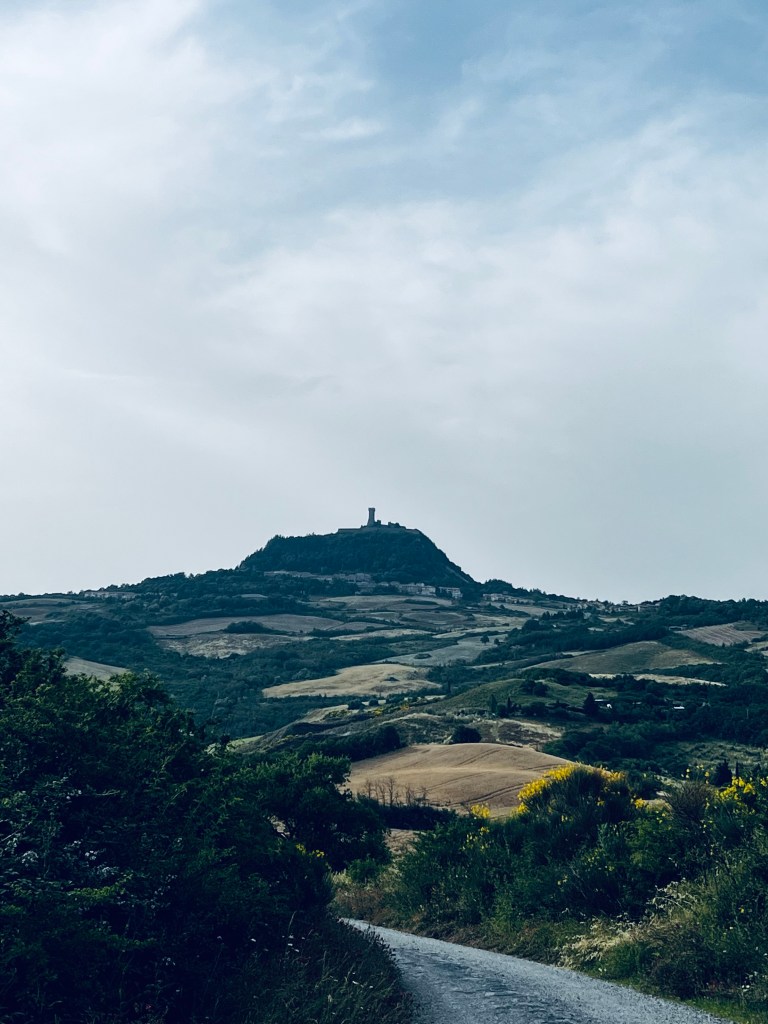
The monster Radicofani from yesterday 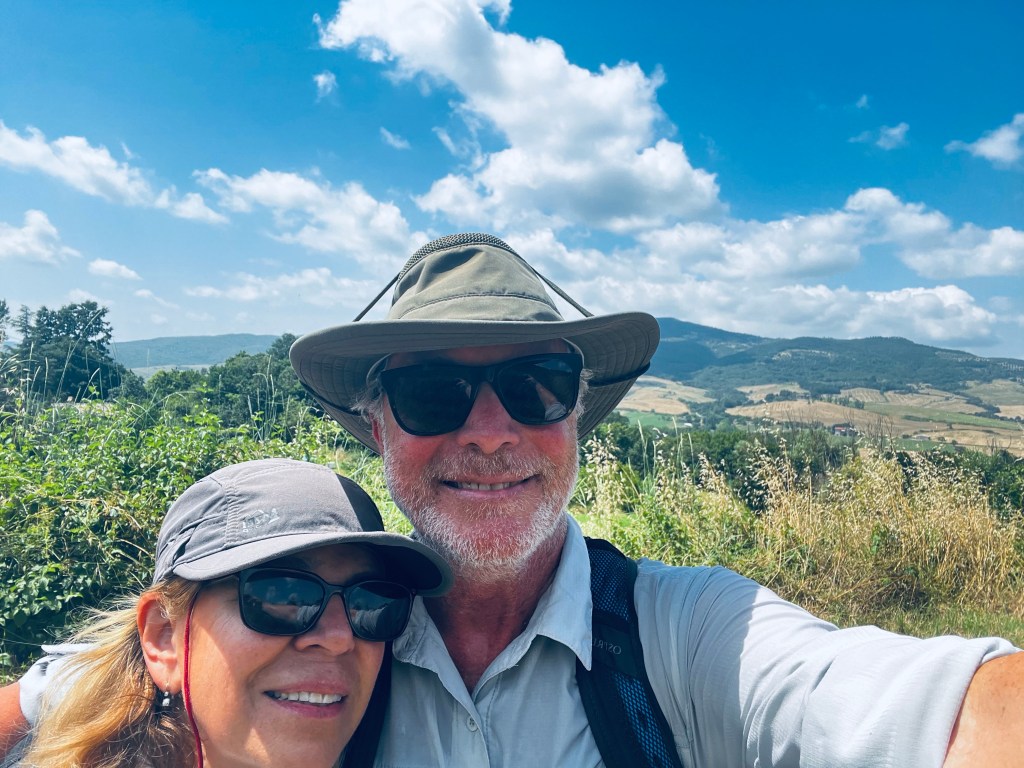
Share this:
-
Weekly Summary My Big Fat Via Francigena
Another wonderful week which started with water elements, a raging river complete with a water fall. I was surprised by the method provided for crossing this river: so, there were 2 parallel ropes anchored in the river about 3 ft apart, submerged under the water was a line of stones. The idea is hold the rope and trust your footing. Off Edward goes as if dancing a Samba. My turn – why are these ropes so slack? *#&! A big inelegant wobble but a dry finish. The Camino always provides.
The week also included meanderings from the top of the world. There were some equally intense climbs and descents, they are not called “hill top towns” for nothing. At one point on a particularly steep climb I noticed a biker directly next to me, we shared the same thought bubble: “Why are you next to me? I am on foot and your are on a bike.” We exchanged grimaces, words were out of the question. To borrow a phase: the hill was the hammer we were the nails.
Walking up various narrow gulches we resemble drivers taking sobriety tests, one foot in front of the other, the space too narrow for a normal step. Our walking communication takes on a version of 3 stages. The day starts with a general discussion of events and observations. Then as the Kms add up, we turn to light banter, that’s when only one person gets the joke. Finally with elevation gains, stone silence. Cue the earpods, our walking aids. We listened to 3 books: Bloodlands, by Tim Snyder, The Wager by David Grann and My Father’s House by Joseph O’Connor, and various podcasts. But music works best for me. There isn’t a hill that Bill Withers can’t get me over, and when I need an encouraging playlist I turn to “Sad Songs of the 70’s” or “Bella Ciao.”
Our adventure required a total of 108 Hotels/B&B/ and other accommodations. The principle criteria for selection is proximity to the path. As you can imagine this allows for great variability. For the most part our accommodations have been perfectly adequate, a couple exceptional when we needed to indulge. Most hotels are 2 or 3 stars. Some have AC, sometimes it works, many have hair dryers and elevators. Some bathrooms are so space efficient that the shower stall allows you to shampoo and rinse your hair simultaneously and a well placed sink encourages the use of the toilet side saddle.
Our usual routine when arriving at our hotel is to put our clothes through a bidet wash cycle and then discreetly hang them to dry out the window or on the ledge. Trust me at 2 or 3 stars no one cares and our laundry is not alone. A problem occurs when at nicer hotels Edward insists on hanging clothes out the window and I have to coax him out of his preferred practice. It isn’t easy.
However at the end of the day, even before locating our destination for the night we find a bar, sit down slowly and order a beverage. We then exchange our congratulations, admiration, respect and sometimes mutual confusion. We recall the day briefly but immediately review the chart complete with kms, elevation gain, availability of water and food for the next day ahead. There is a kind of amnesia that settles over us, how else can you explain the nonchalance in our discussion of our day ahead of 32 kms.
Two stories from the field:
- while dining a woman can over to our table to inquire if we were walking the Via Francigena to which she offered words of support: “Coraggio!” It made a difference. *
- the other day we entered a charming town were outside an Enoteca a blackboard read: “Life is too short to drink bad wine.” This reminded me of our dear friend Rob who would recite the same mantra as he poured full bottles of “bad wine” down the drain with a smirk.
Our final week coming up. Rome July 1. Thank you for your encouragement and support. It makes a difference.


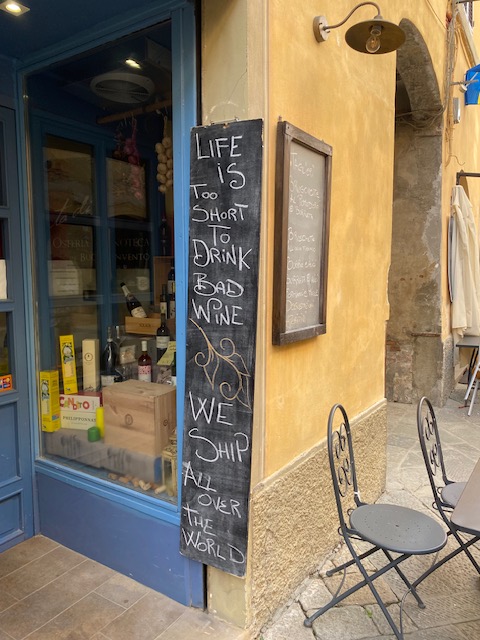
Share this:
-
P2 Stage 31 Acquapendente to Bolsena 22 km
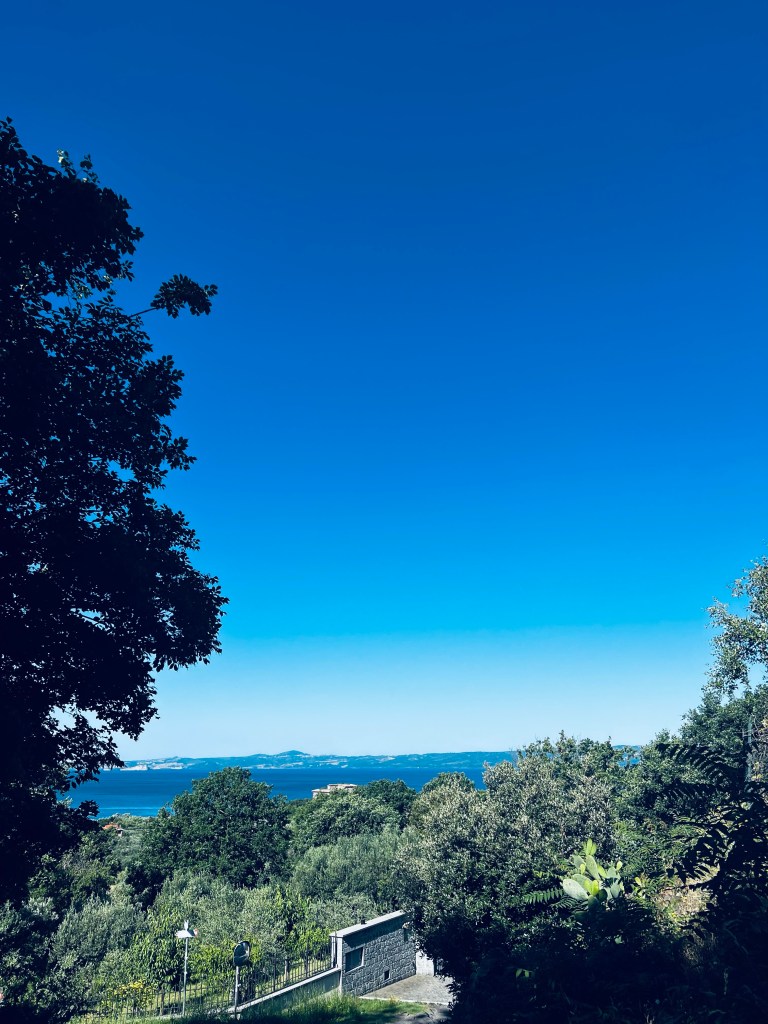
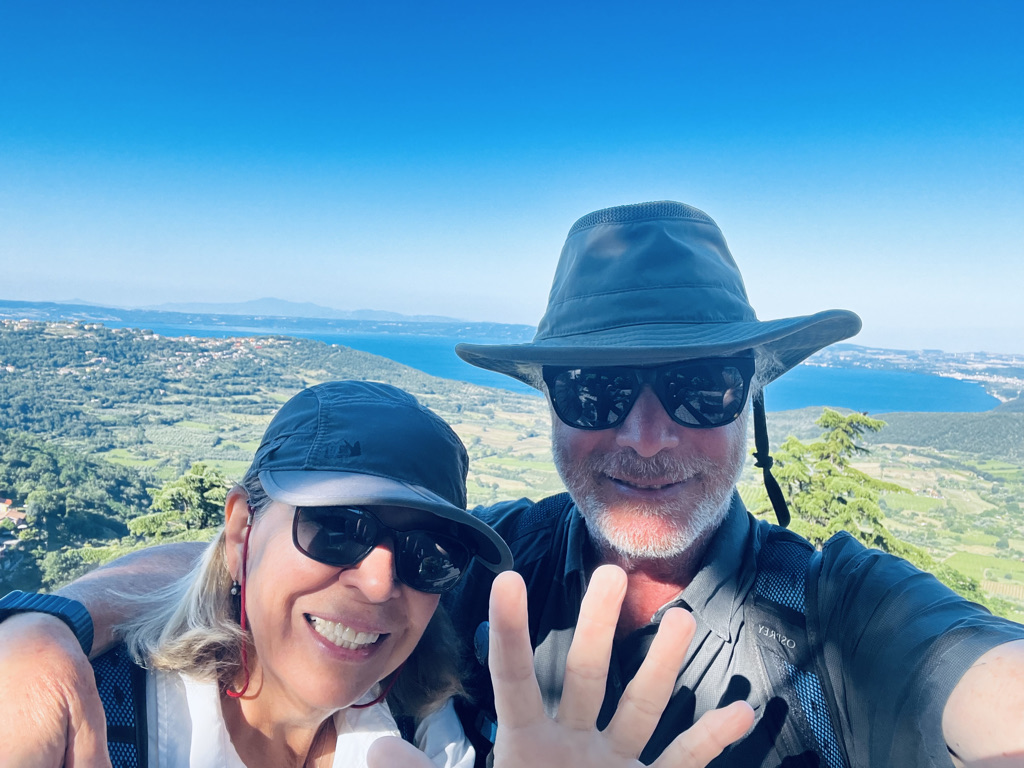
Beautiful walk to Lago Bolsena. As we crested the rim of the crater that holds the lake at San Lorenzo Nuovo we were struck by the beauty of this unspoiled gem. One of our friends describes it as the best kept secret in Italy. He may be right.
We stayed at a hotel on the lakefront, an unnecessary luxury since we spent only 8 hours in the room and never opened the curtains. It’s the thought that counts. For the first time on our entire journey we had dinner with friends, Ian and Lyndsay, and their friends Stephany and Mark. We gushed with excitement to answer their questions, monopolizing the conversation even more than our usual custom . Good seafood too.
Tomorrow onto Montefiascone
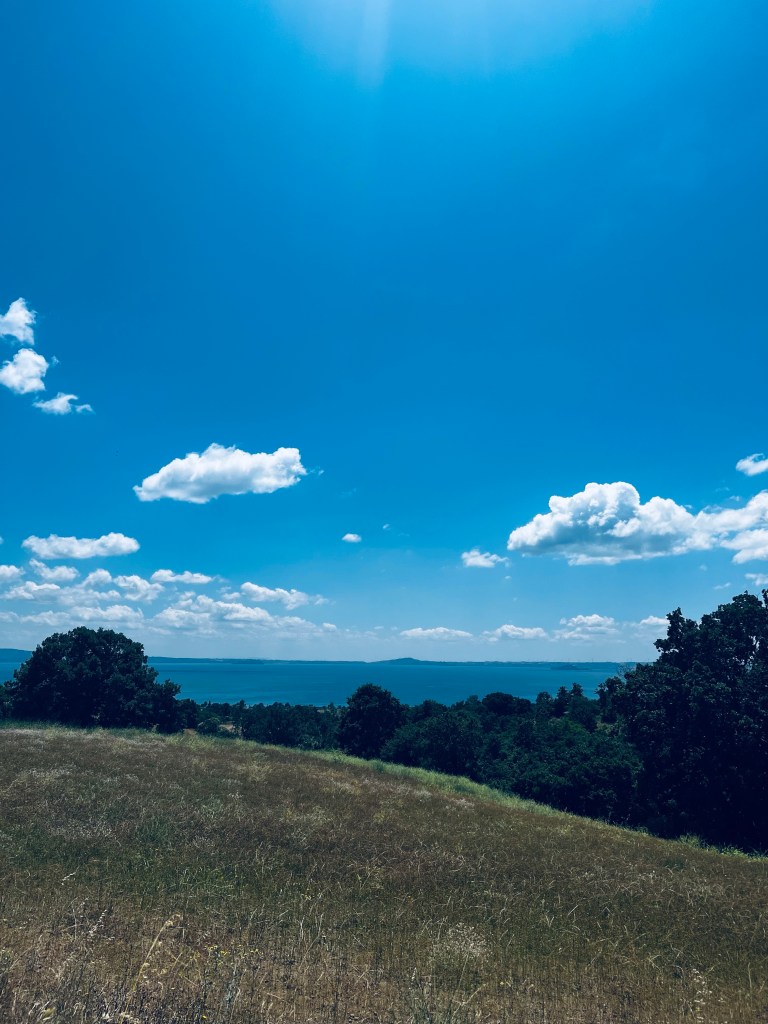

Share this:
-
P2 Stage 32 Bolsena to Montefiascone 18km
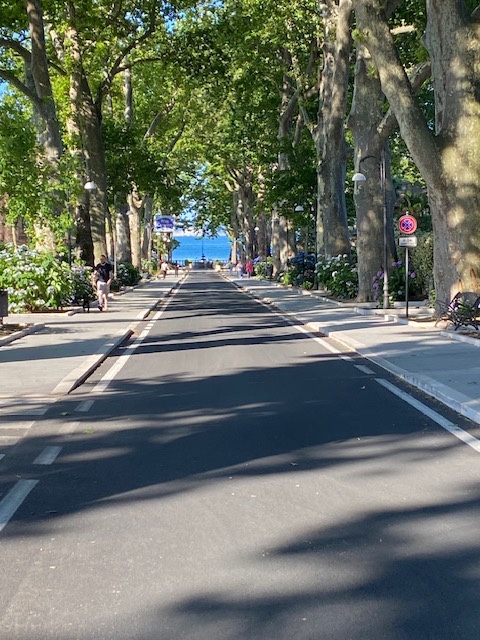
Relatively easy day walking the rim of Lago Bolsena through a mostly shaded national park well provisioned with water and park benches, the essentials in life. Other than the steep climb to the center of Montefiascone moderate inclines, undulating hills enlivened by panoramic views of Lago Bolsena sparkling below us.
This is a dramatically different landscape. A wide valley lies before us to Viterbo, none of the undulating landscape of Tuscany. Here the Etruscans centered their empire 3000 years ago.
Montefiascone has several mentions of Urban V, the first pope to return to Rome from Avignon. It turns out Queen Bridget of Sweden met Urban V at Montefiascone to convince him to recognize the order of Bridgetteens which survive to this day . They follow the Benedictine rule . We are indeed fortunate.
Note from the front: rumors that Paula is having troubles with her feet are alarmist . Evidence notwithstanding her feet are fine, and fully functional.
Share this:
-
P2 Stage 33 Montefiascone to Viterbo 18 km
At Montefiascone we had dinner with dear friends Jacques and Betsy. Betsy had just finished a rehearsal in Acquasparta and Jacques shared many stories about his cycling the Via Francigena, including over the Alps and up to Radicofani which he agreed was a monster.
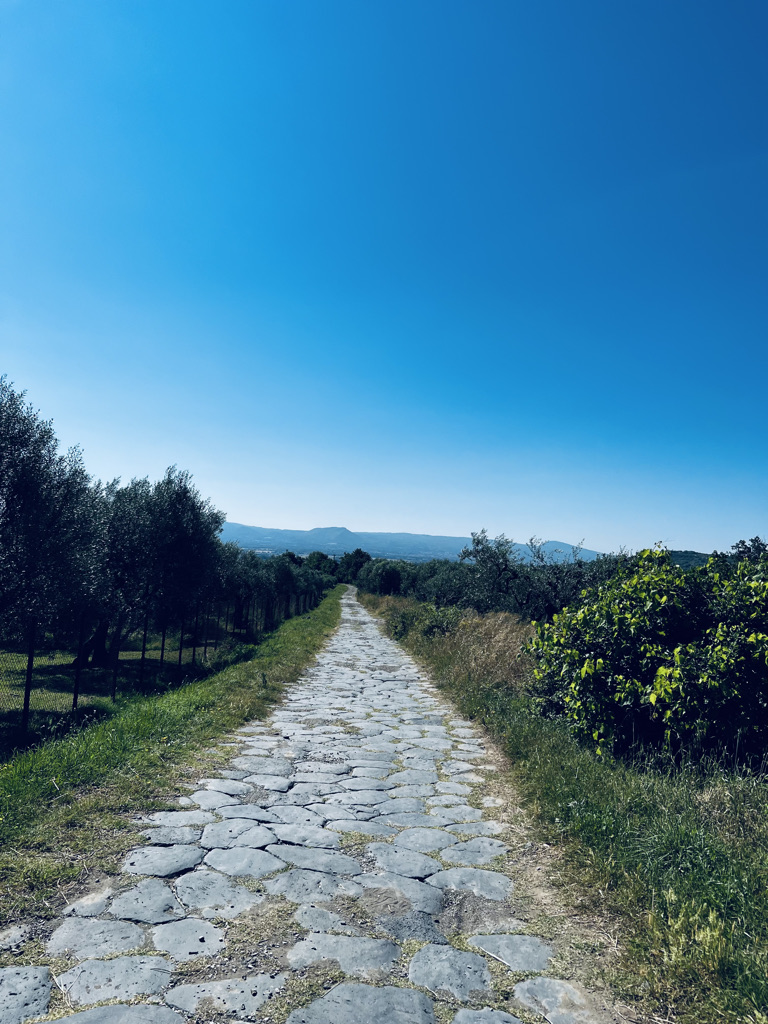
The walk today was along the old Via Cassia, dating to about 100 CE, paved with the limestone boulders Romans used to surface to the road. This is the road used for over 2000 years by by anyone coming from or traveling to the north from Rome. D.H. Lawrence mentions it in Etruscan Places. It is so rich in legend and lore every step on it smooth surface is a history lesson.
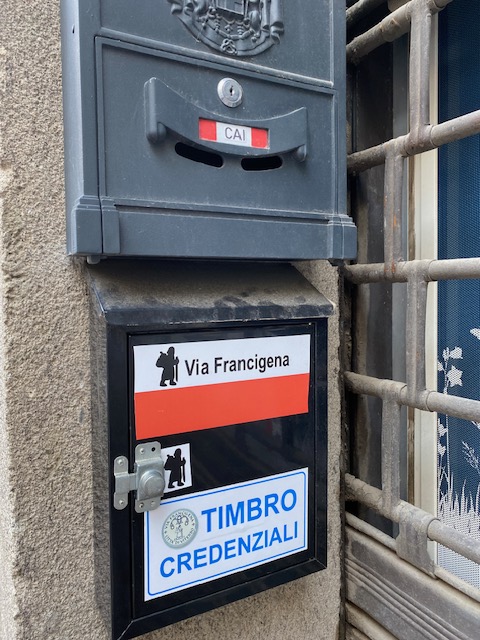
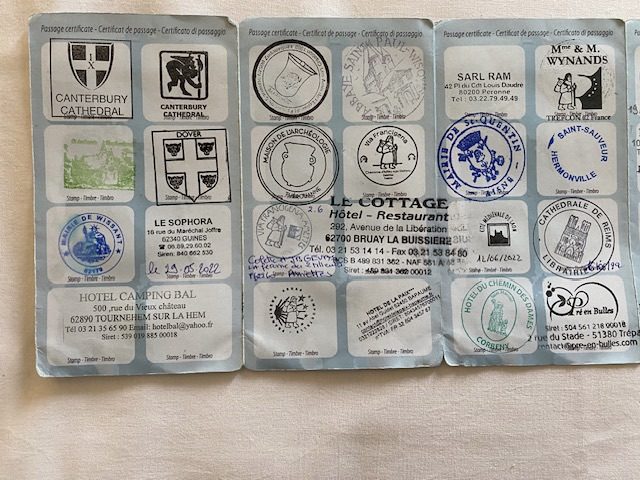
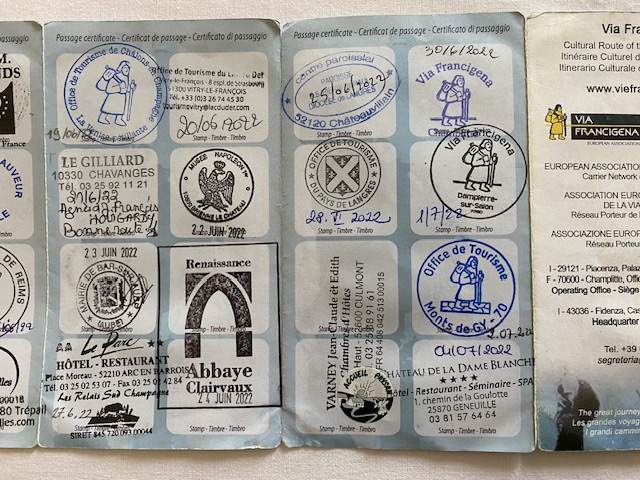
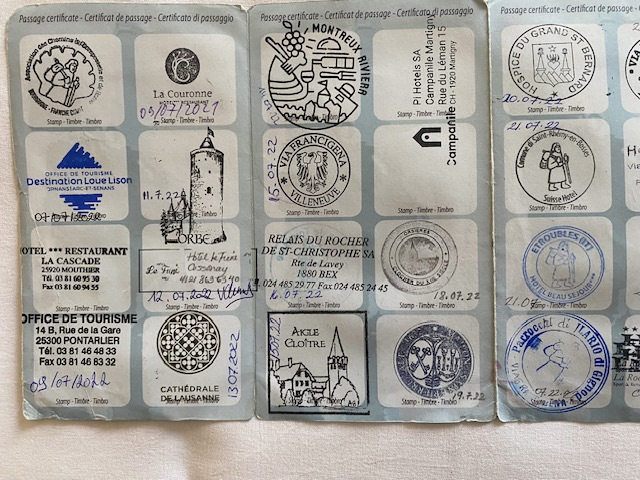
We left Montefiascone in early morning, getting our pilgrim passport stamped at the tourist office, which was open, where we were informed that Montefiascone marks 100 km from Rome. Walking 100 km just a short while ago would have seemed extreme, now it is just a 4 day journey. We march on.
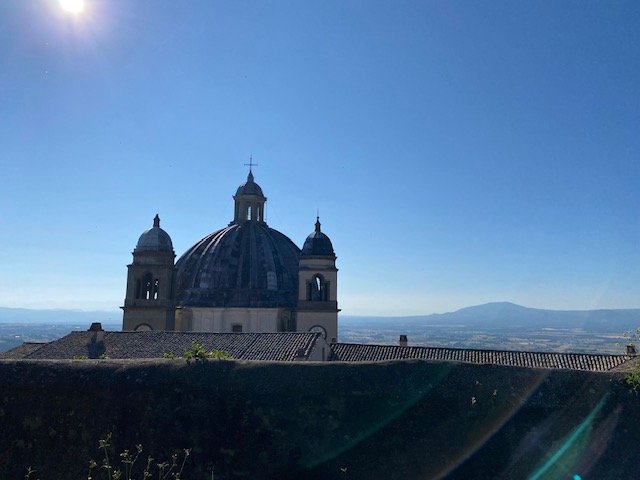
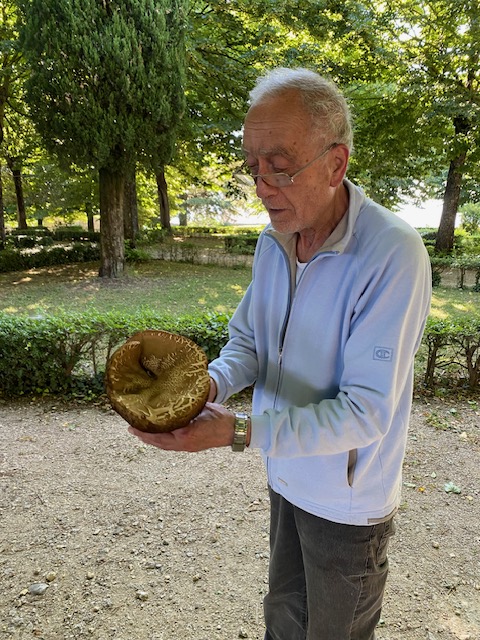
Before we descended from Montefiascone, leaving Bolsena behind, we walked through its park where an older gentleman invited us to admire the huge porcini mushroom he found near an oak tree in the park. It was an amazing fungus. He then went on to describe how he would cook it in great detail.
Tomorrow onto Vetralla.
Share this:
-
P2 Stage 34 Viterbo to Vetralla 22 km
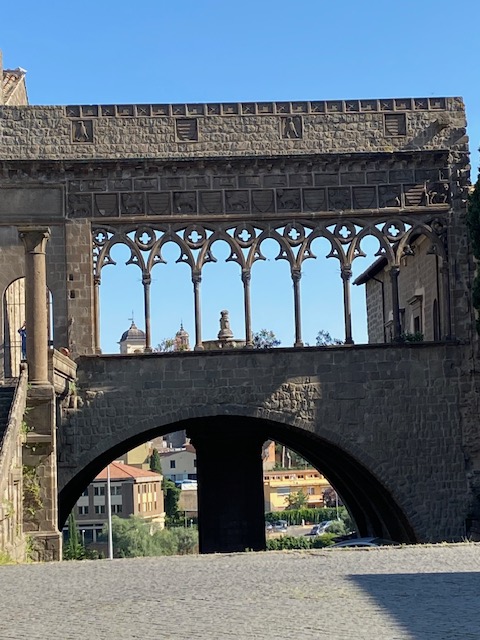
Before leaving Viterbo we walked through the older, “historical”, neighborhood, and glad we did. Much of it sits on top of large rectangular Etruscan boulders and houses 11th and 12th century structures as well as the House of Popes where several 13th century Popes lived and which somehow survived the allied bombing in 1944. The Cathedral of St Lawrence was not so lucky.
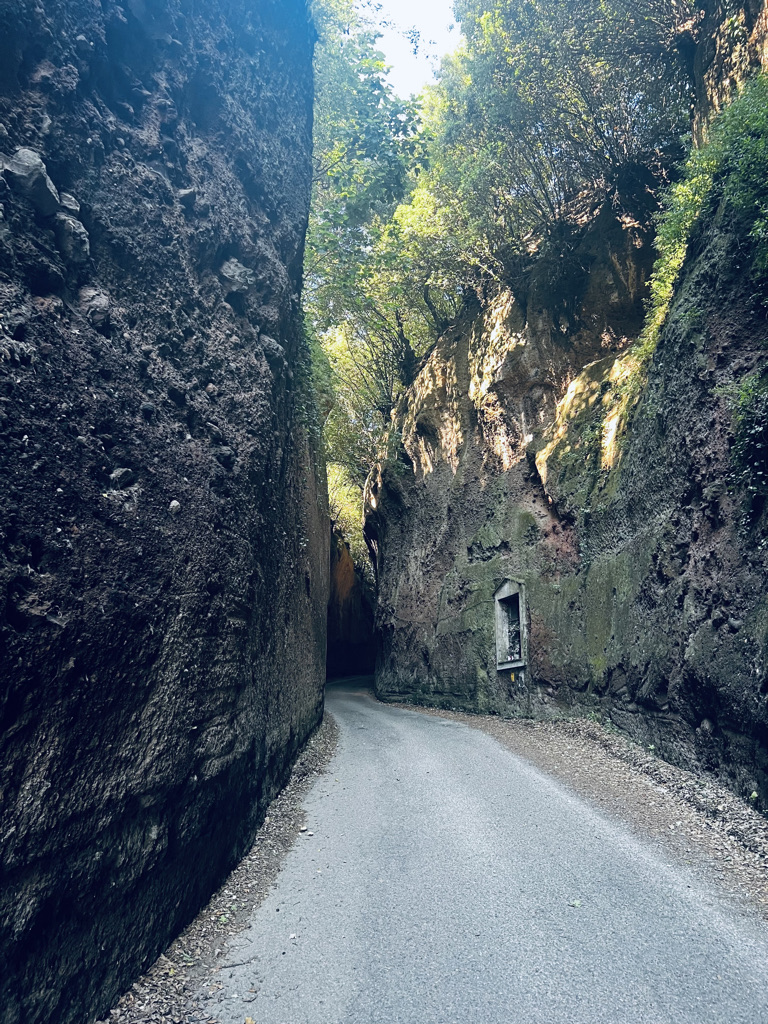
The road to Vetralla took us on a very strange road at the bottom of a tufa canyon with 30 to 50 ft high walls rising vertically on either side. But it was cool and we were thankful for that.
A fellow traveler, whom we call Pavia because that is where his journey to Rome started (he calls us Canterbury), related that another pilgrim, an American woman whom we had seen on occasion, had to halt her walk because her feet gave out. All sorts of images crossed our minds but we hope she recovers soon and can resume her walk.
Otherwise today was uneventful. Tomorrow. onto Sutri.

Share this:
-
P2 Stage 35 Vetralla to Sutri 28 km
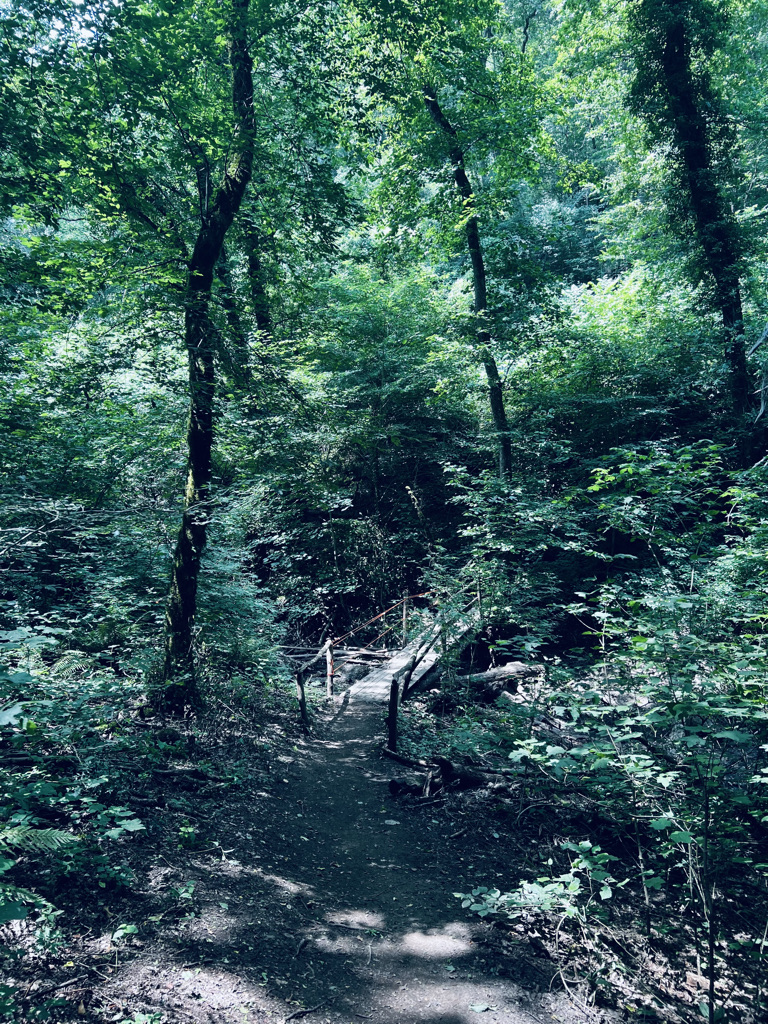
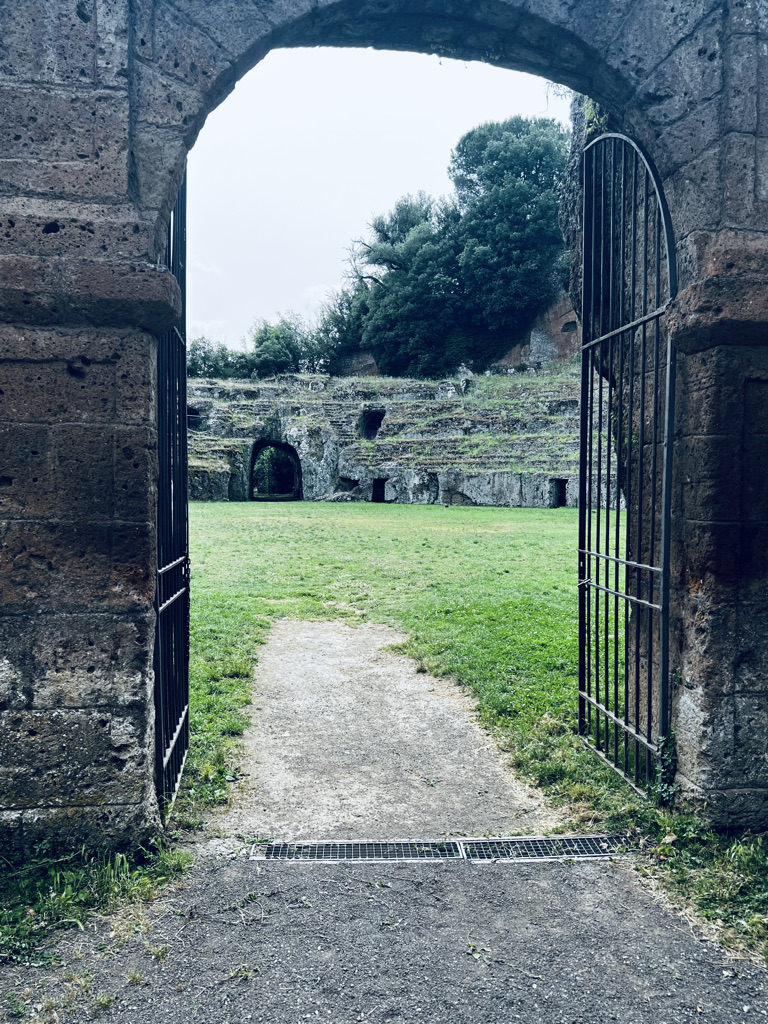
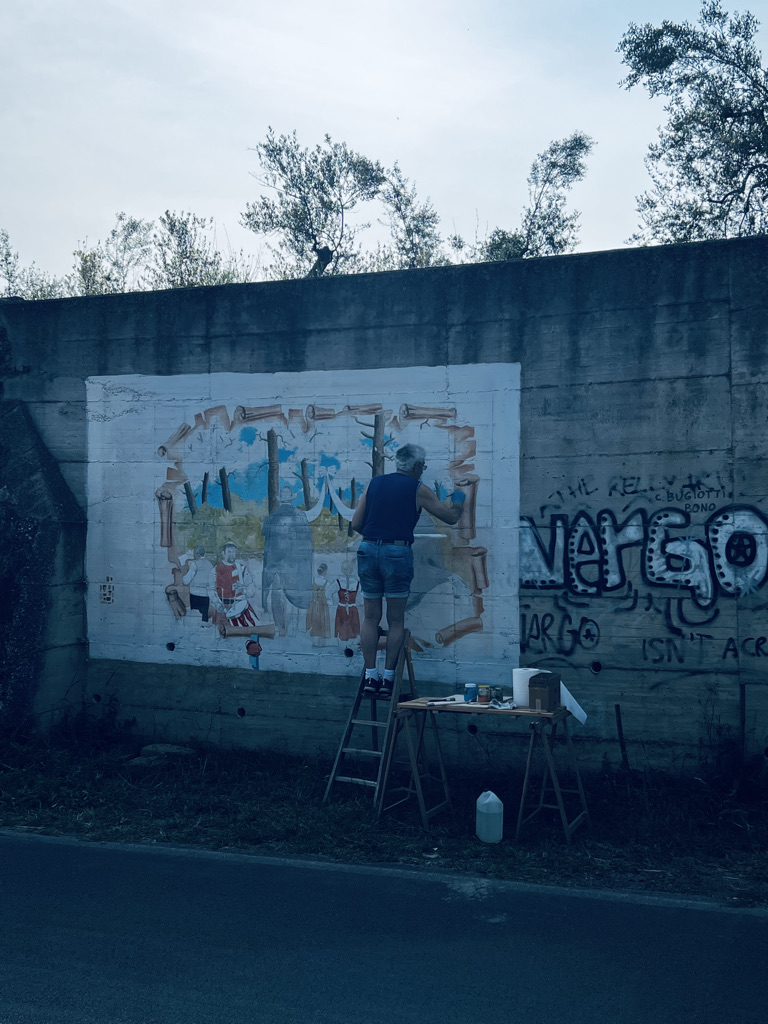
A very pleasant walk today through hazelnut orchards and along wooded paths criss-crossing a gurgling stream with some elevation gain at first and then gently undulating. We are struck by the random Roman ruins we pass, remnants of aqueducts and a fully preserved 2nd century amphitheatre cut out of tufa rock that in any other setting would be a national treasure attracting tourists from the four corners of the earth.
For several hours we walked with Eric, an Australian walking from Viterbo to Rome. We enjoyed his down under banter and his unabashed enthusiasm for American baseball, the Oakland As in particular, though he acknowledged wearing a Red Sox hat, his favorite. He’s a walker; he recounted tails of walking to Everest base camp and the Kakota Trail in Papua New Guinea, the hardest things he has done. We last saw him having an espresso in Capriana.
We are holding up very well. A 28 km walk would have nearly killed us at the outset. Now it’s just another Wednesday. The body can adjust to anything.

Share this:
-
P2 Stage 36 Sutri to Campignano Romano 27km
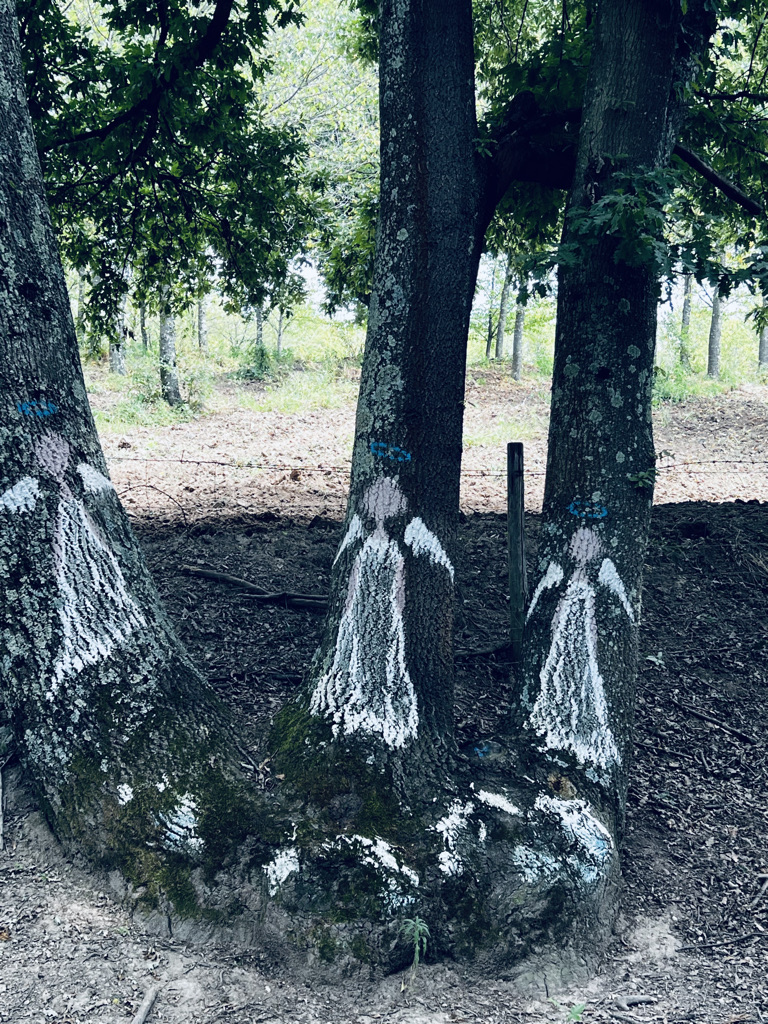
A walk through the endless hazelnut orchards. Why so many hazelnut orchards, I asked my all knowing companion. Nutella, Paula replied, a one word response that explained the whole enterprise. And so it went on, row after row, field after field, hill after hill. I only thought of kids’ happy smiling faces smudged with brown Nutella. Having tasted Nutella once I was grateful others could gain pleasure from it.
We passed through Monterosi where we stopped at the church of the Santa Croce for our passport stamp. You would think we were the second coming. Three women who were busy cleaning the church led us to the sacristy in the back where they offered cold water, coffee and a large roll of paper towels, always welcomed by sweating pilgrims. Where are you from, where are you going, wow, too much. And then would you do it again? That caught me for a nanosecond. No, once is more than enough. They seemed genuinely concerned for the our well being. I am sure they would have given us lunch if we had asked.
We met up with our Australian fellow traveler in Campignano Romano. He now is accompanied by Alexa, a friend, who finished the Camino di Campostella last year. They were drinking a bottle of rose over dinner when we saw them last.
Tomorrow Isola Farnese by way of an uncertain route since the traditional route has been closed due to an outbreak of swine fever among the wild boar in the area. We will be discovering as we go along.

Share this:
-
My Big Fat Via Francigena Final Weekly Summary
I am feeling very emotional as I consider our walk into St Peter’s Square tomorrow concluding this wonderful adventure.
When we began our walk there was no thesis or hypothesis; no demons to slay or angels to recruit, just an ambitious walk with Edward. As simple as that: 1,375 miles, 16 weeks, 4 countries, 3 major mountain ranges.
The three most frequently asked questions have been –
- did we fight – no
- did we lose weight – yes
- what will you do next – for now I will let this beauty of an accomplishment stand alone. Let it enjoy the special status of longest and most romantic vacation of our 41 years together. To turn it into a hobby or name a successor would trivialize the experience.
Way back in France a lovely farm host asked us how is it possible to have enough money for such a long journey? She marveled at our ability to embark on such an adventure. Then, and now, I am humbled by our good fortune. Grateful for all the gifts given and lessons learned. Gifts like the ladies in the church who gave us water, smiles and waves along the way; your enthusiasm, love and support. Then the other day Olivia said “I am so proud of what you and Dad are doing.” Say no more.
And there are the lessons learned: shouting NO to gravity does not work, so if you are sliding down a hill of mud, enjoy the ride. We did not always know where we were but we knew we were where we wanted to be. Stuff newspapers into wet boots, look for water in cemataries, in Italy a church bell tower means an a cafe/bar is nearby…
That is enough about us. For now I will continue to follow my beautiful Wildebeest and trot off with my calendar of 17 summers tucked under my Zebra arm.

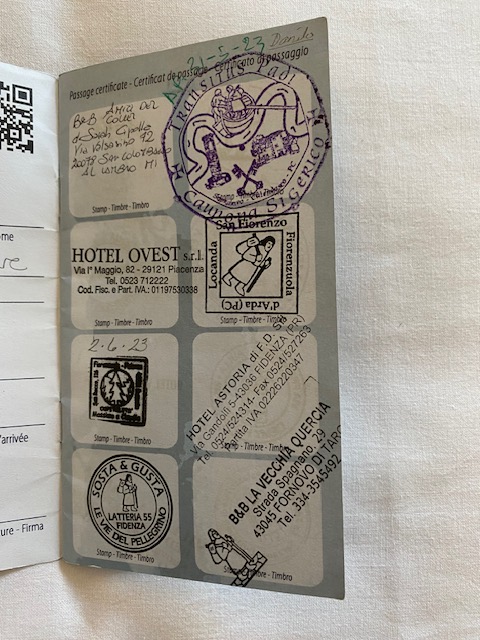
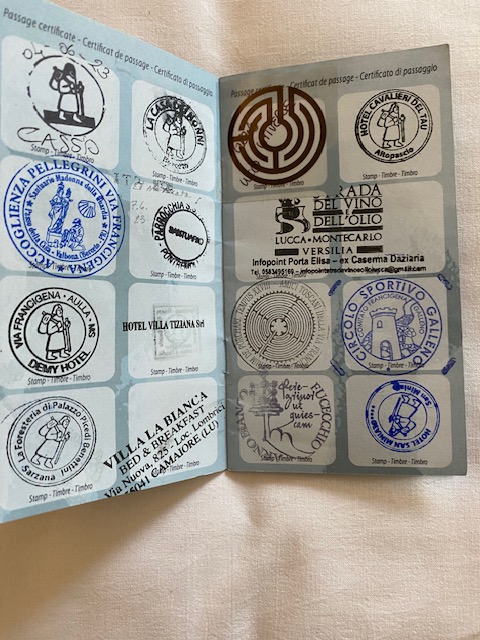

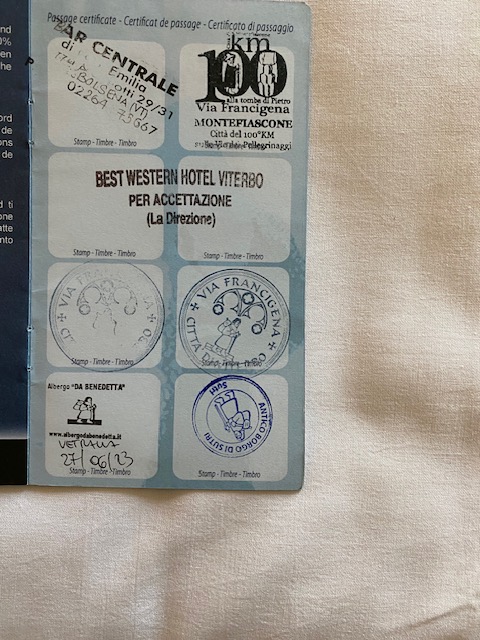
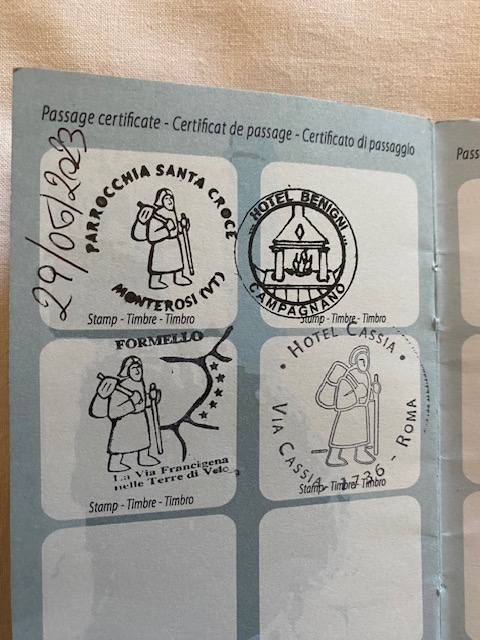
Share this:
-
P2 Stage 37 Campignano Romano to La Storta – 25 km
Our last day in the open fields as tomorrow we cross the Rome GRA and walk through the Rome suburbs and finally to Vatican City. The scenery looks amazingly like the one we swept through in Pas-de-Calais in France at the beginning of the walk. Fields of tall wheat, the pungent smell of cow pastures and hog farms, gently rolling hills and puffy clouds in the distance. No amount of fatigue can obscure the lightness of such walking.
In Formello, about half way, we stopped for Tramezzini at a local Panetteria. The man making panini, a rugged, bald headed and tattooed man who looked remarkably like Il Duce, was so taken with us that he held up a whole line of customers and then loaded us up with chocolate. Honoraria, he called it.
Our Hotel is on the Via Cassia, a busy thoroughfare that at this point winds its way through some of the less desirable neighborhoods of Rome. Nonetheless we were able to find an Osteria that served delicious spaghetti vongole. Reinforcement for tomorrow’s entry into St Peter’s Square.
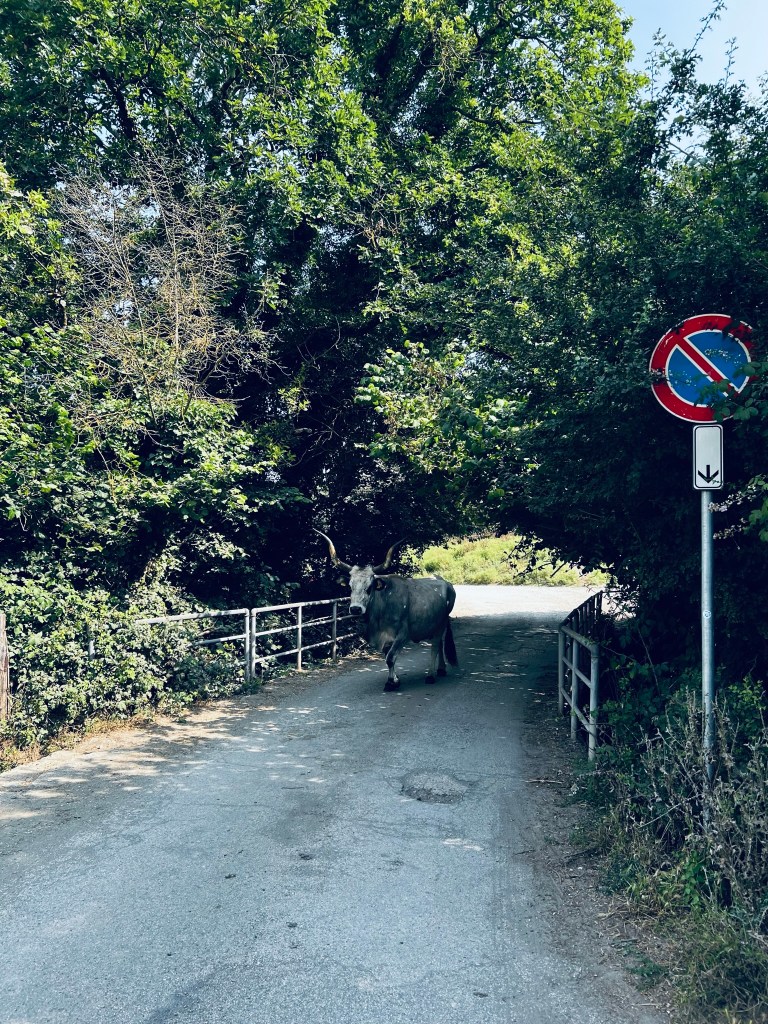
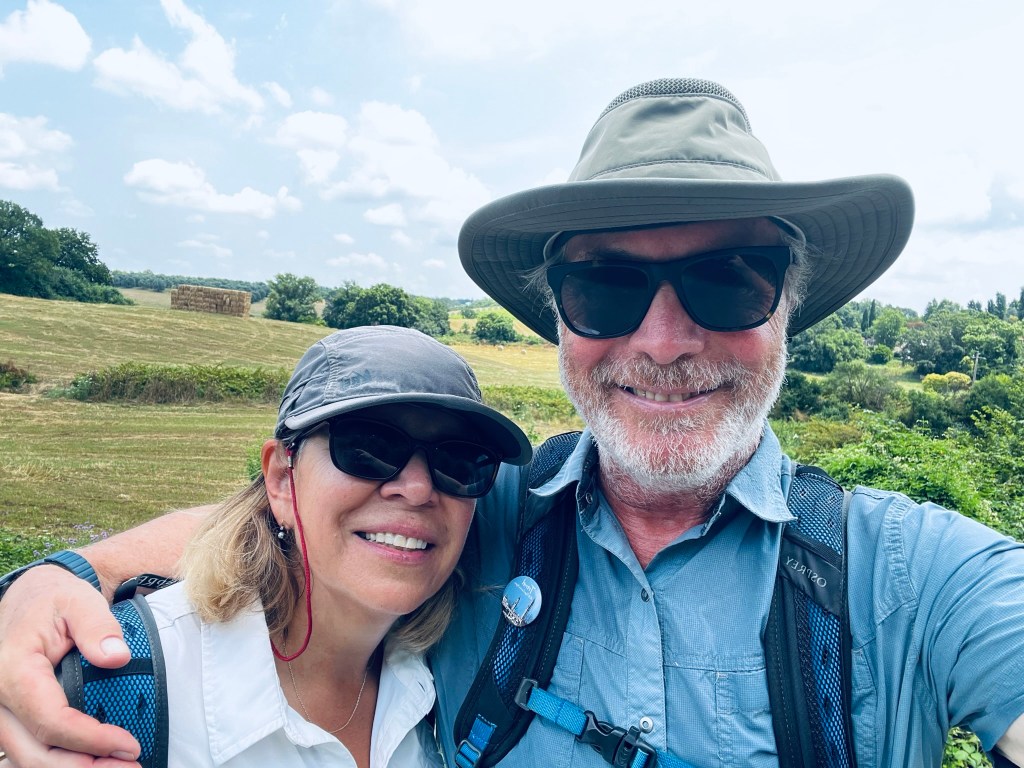
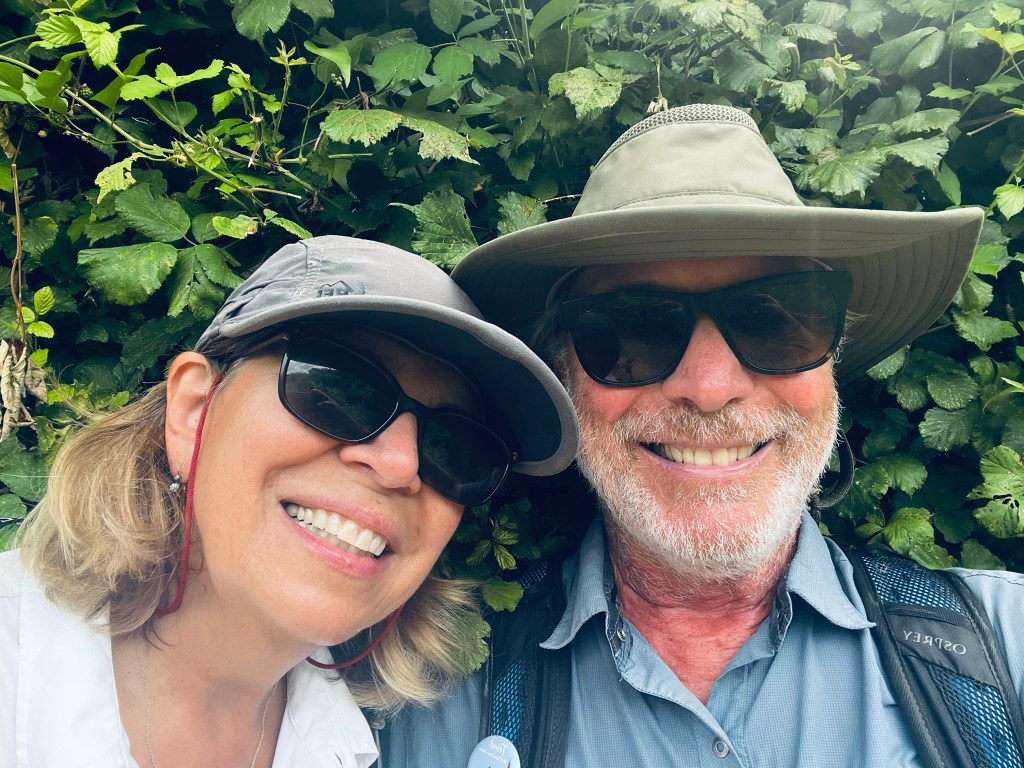

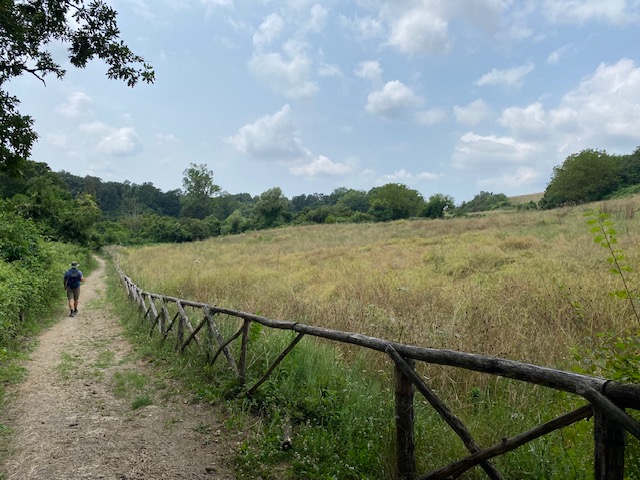
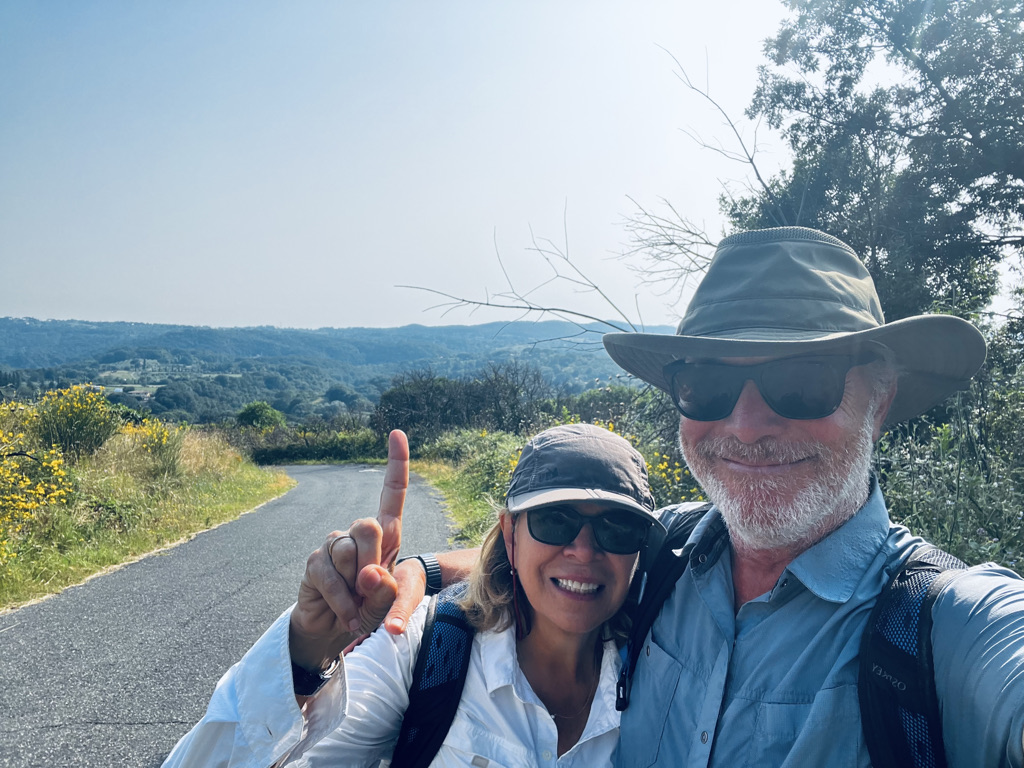
Share this:
-
-
P2 Stage 38 La Storta to Rome, 28km
Our final stage. We walked through the Roman suburbs, over Monte Mario, Mons Gaudii, and finally entered St Peter’s Sq. We crossed paths with Giannni, aka Pavia, who greeted us saying “You look like a work of art. Are you feeling emotional?” he asked in typical Italian fashion where emotions and feelings are always at the surface. Yes, we answered choked up a bit.
St Peter’s Square was mobbed with visitors from all over the world, but it is large enough to accommodate many more. The basilica is such an overwhelming structure in size and composition, it would be difficult to minimize its effect. Bleary-eyed we filed through the fast lane to get our Testimonium and then gained access to the Basilica ahead of a long line of visitors. In Canterbury the comment was “Pilgrims get in free”, in St Peter’s it’s “Pilgrims don’t have to wait in line.” After the pilgrim’s mass we tracked down the Archbishop. In Canterbury, we told him, the Bishop blessed our journey, we needed his blessing to close it off. He obliged. Thus in 16 short weeks we were able to bridge the Anglican and Catholic churches. Is Istambul or Jerusalem next?
We are too overwhelmed by the end of our journey and heavy with wine to say good-bye. There will be another “trip summary” tomorrow, before we cap this off. All I can say is we love Rome and loved our walk.
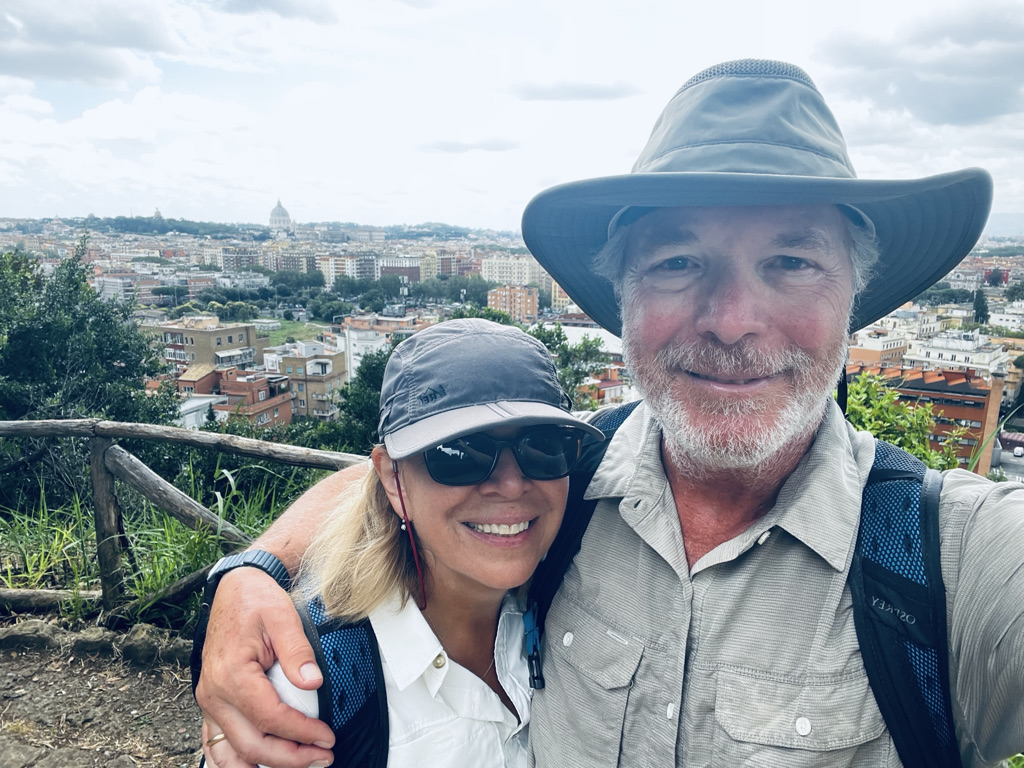
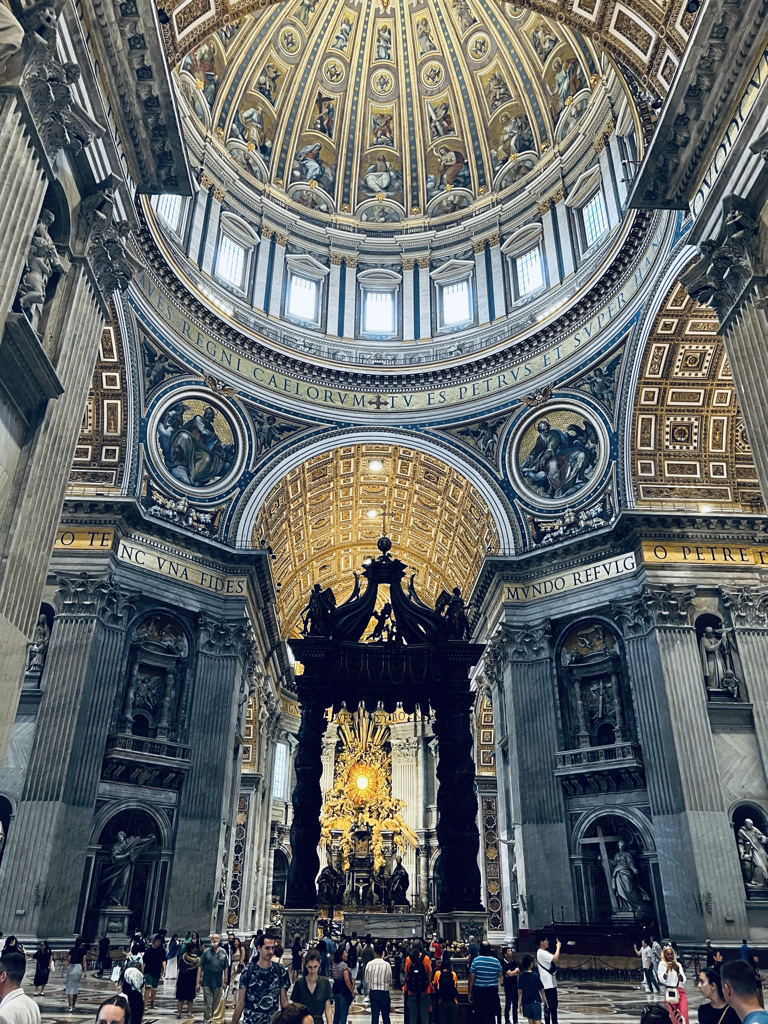
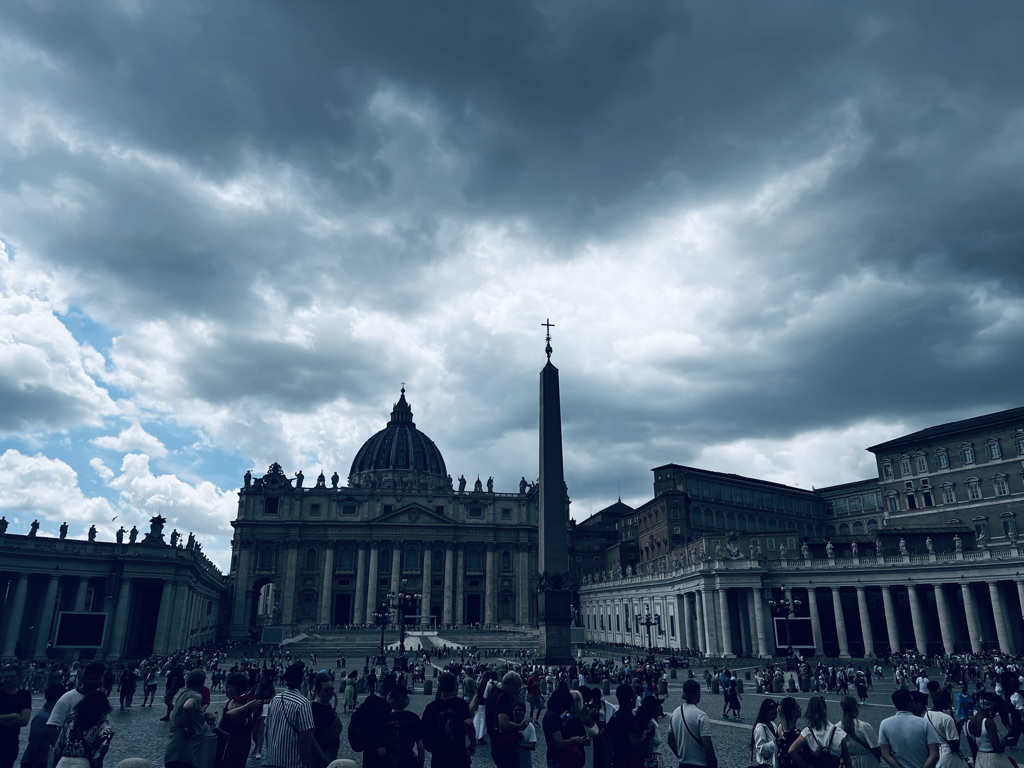

Share this:
-
Pope to Puglia
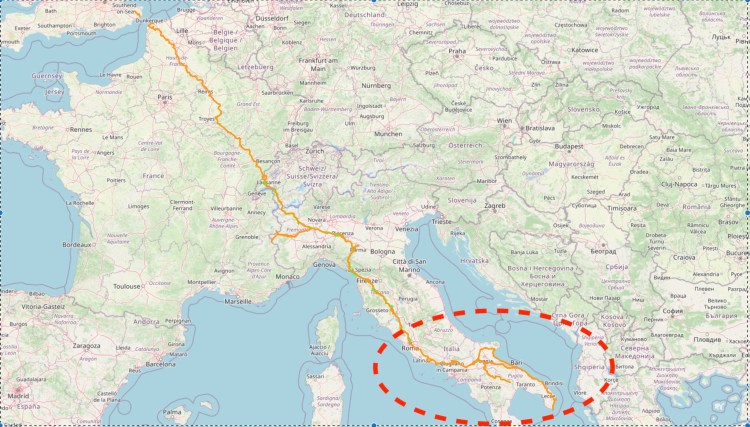
We walk, again, this time from Rome to Santa Maria di Leuca in Puglia, at the very tip of the heel of the Italian peninsula. It is referred to as the Via Francigena del Sud (VFS) though it is not part of the original Via Francigena pilgrimage route, the trek taken by Archbishop Sigeric of Canterbury in 994 from Canterbury to Rome to collect his Pallium from Pope John XV (which we walked in 2022 and 2023).
This peregrination will take us along the Tyrrhenian coast to Terracina, across the Apennines to the Adriatic coast at Monte Sant’Angelo then more or less along the coast to Bari, Brindisi, Lecce before we arrive at land’s end. at Santa Maria di Leuca. The 975 km trek will take us 6 weeks.
Via Francigena del Sud
Screenshot As with last year’s walk, we have no expectations. We will take each step as an achievement on its own merits, at the end of each day we will have earned the privilege of doing it again in the morning. The changing whether, the random animal sounds, the crunch of our steps on gravel, the rustle of wind blown leaves will be our companions. We will never be alone.
We will write a daily blog and weekly summaries. If you follow us, we will feel your presence and we welcome your comments, they fortify us.
Share this:
-
Pope to Puglia
Day 1
Rome to Castel Gandolfo: 26 km
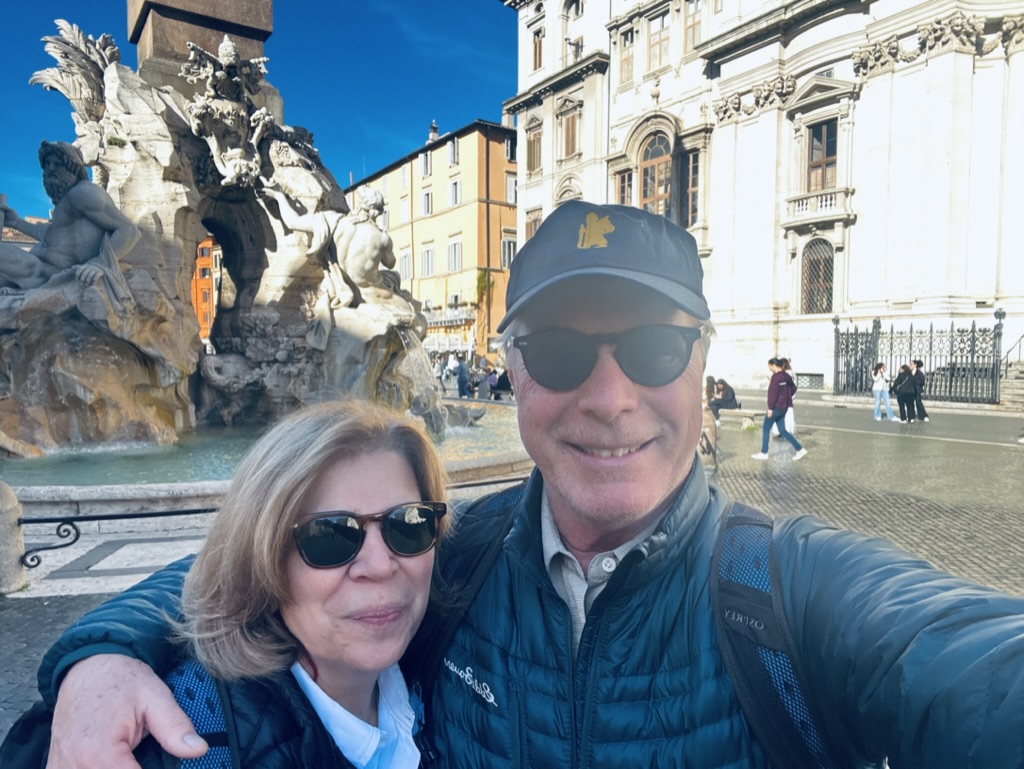
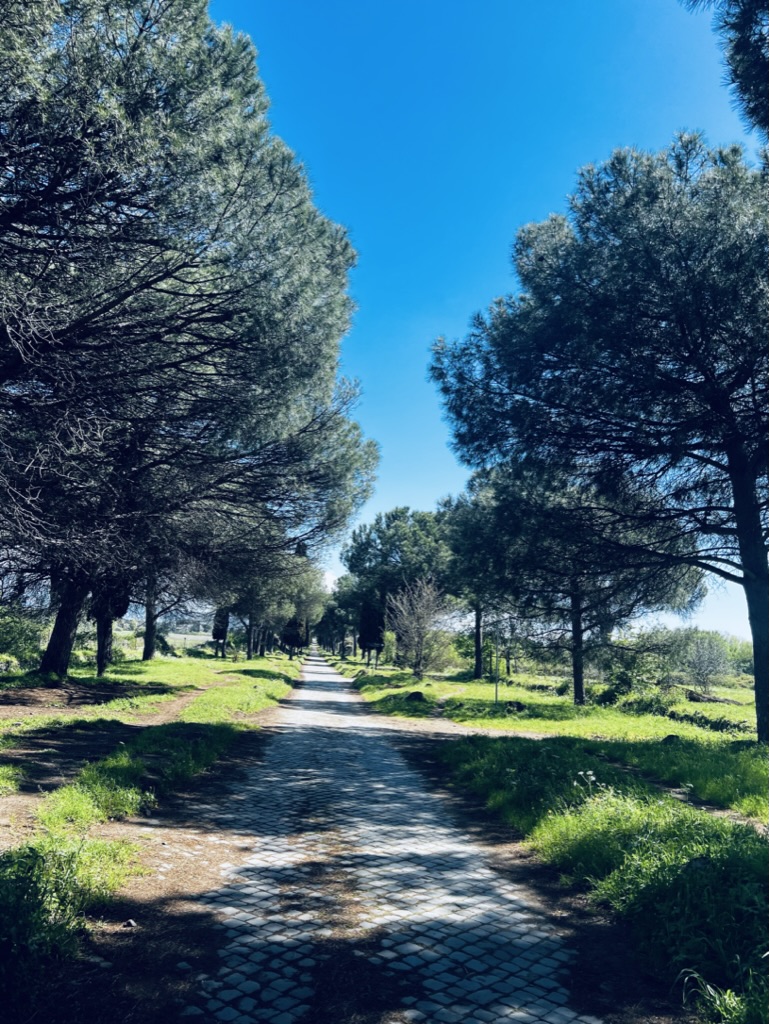
We departed Rome from Piazza Navona. We walked around the Pantheon, passed the Roman Forum, around the Colosseum, the Arch of Titus, the Baths of Caracalla, through the gate of Saint Sebastian and onto the Appia Antica which we followed for 18 km over the grooved basalt stones and passed the remains of Roman villas, tombs and aqueducts. A quick review of Roman antiquity
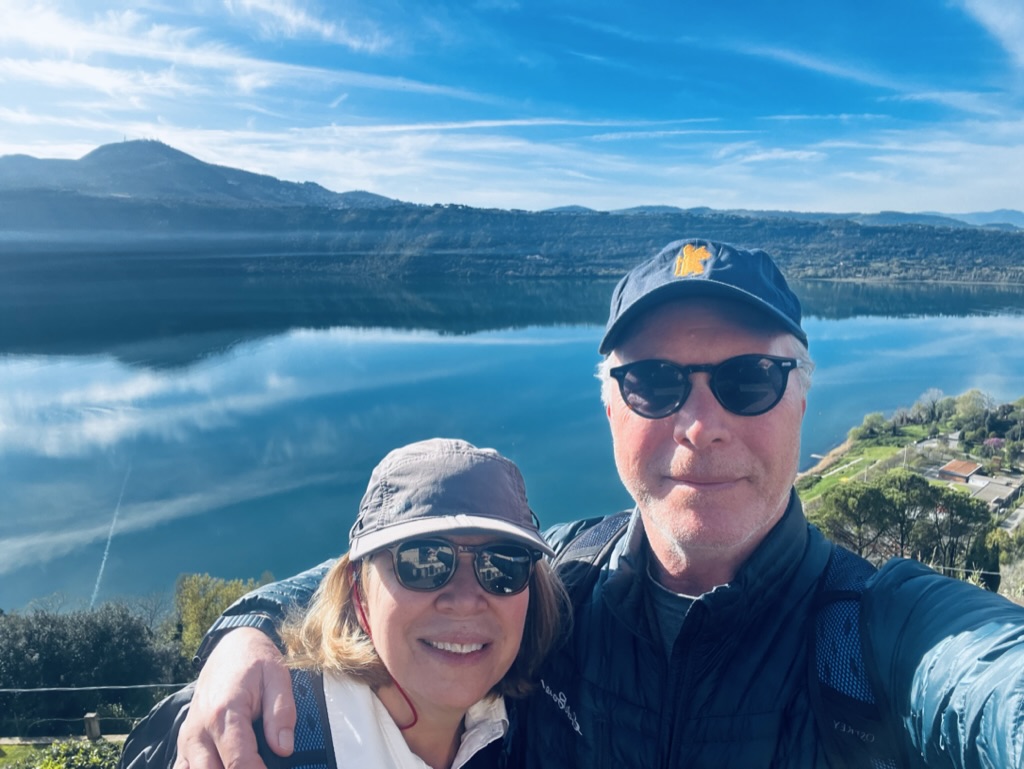
Castel Gandolfo , the site of the Pope’s summer residence, sits 1200 ft above the Roman plain on one side and Lago Albano on the other. It is a well ordered and carefully curated town built around the castle of its eminent summer resident. Quiet now.
Many have asked: why walk? We are told about the many physical and mental benefits of walking. It’s good for your heart, lungs, circulation, and bones. It’s a cure for depression, improves concentration and calms your nerves. It seems the architecture of our bodies evolved to favor walking. We are born to walk. But none of this really matters because we walk as we do because we like it. We have no goal in mind, other than to reach the next stop. We are not competing for distance, duration, or speed. We are stubbornly committed to the principles of slow walking, empty the mind, be grateful for each step.
Wonderful weather, getting in the groove.
Share this:
-
Pope to Puglia
Day 2
Castel Gandolfo to Giulianello – 24km
We left the papal palace and the church of St. Thomas of Villanova, the latter designed by Bernini, to walk around Lago Albano and over the crater’s edge to Lago di Nemi and its eponymous town which one enters through 20-foot-thick walls to be greeted by the massive Palazzo Ruspoli, often characterized as austere. Nemi is a graceful little town which, like most little towns in Italy, has its own identity, history, character, and treasures. Right now Nemi is celebrating strawberries, mounds of which can be found in front of every café and store.
After a demanding climb of 2400 ft we descended into Velletri, a bustling town that shows no sign of the heavy bombardment it endued during WW2. We proceeded to Giulianello which while only 6 km from Velletri at the end of the day felt like an eternity.

Share this:
-
Pope to Puglia – Day 3. Giulianello to Sermoneta 28km
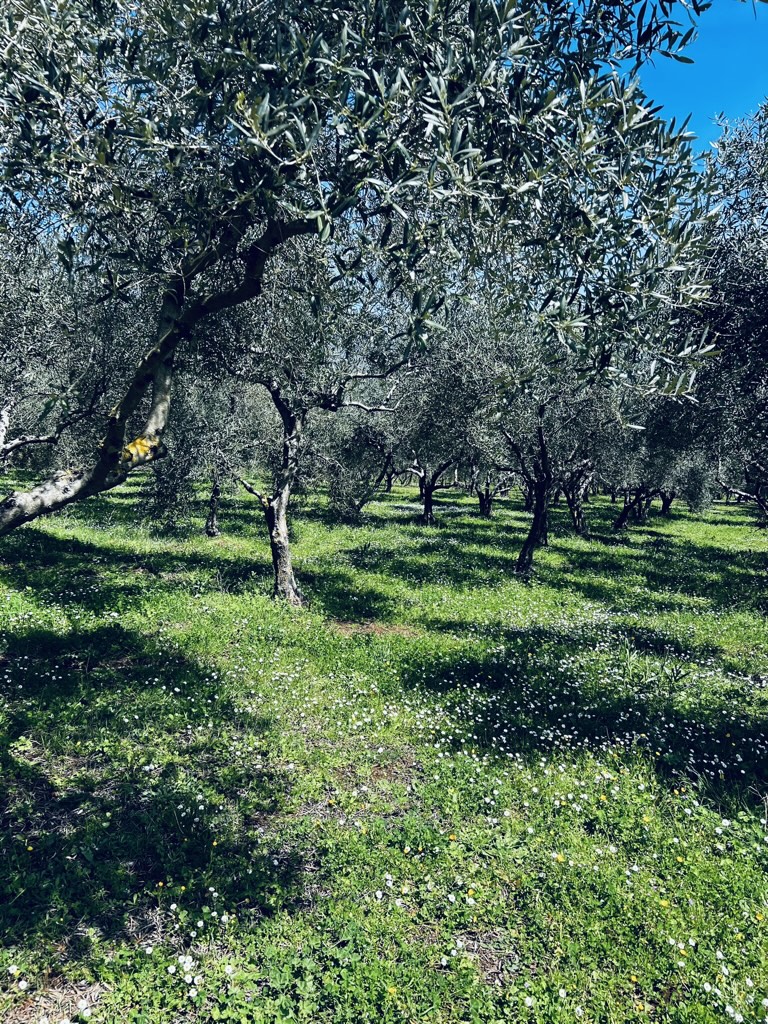
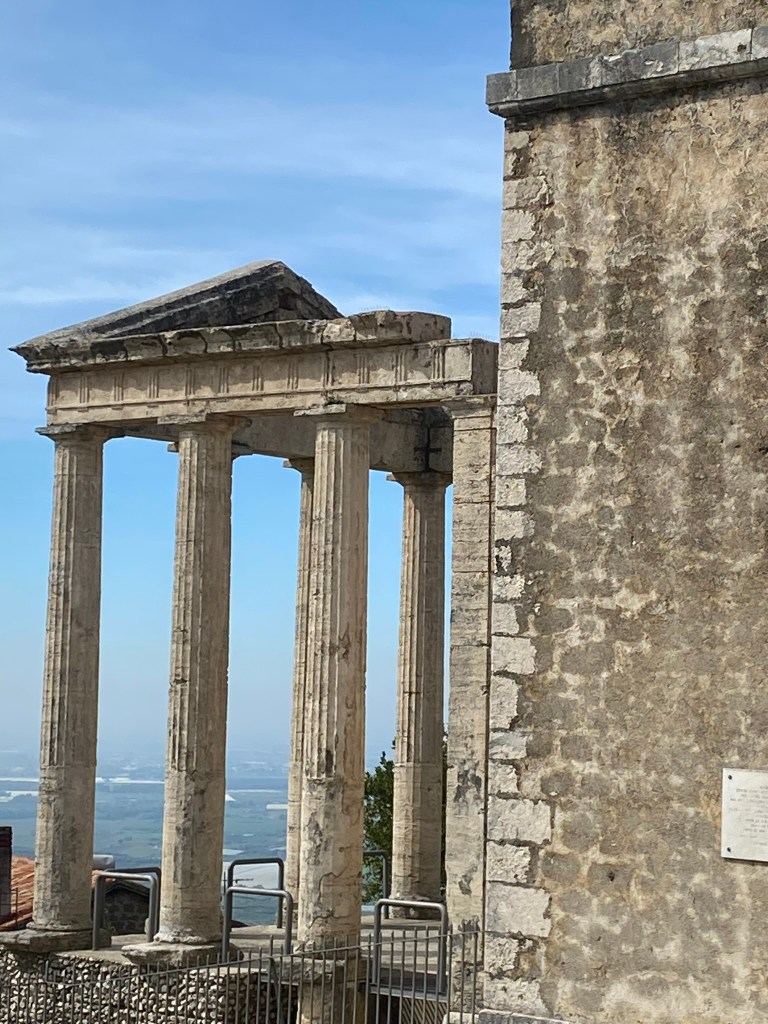
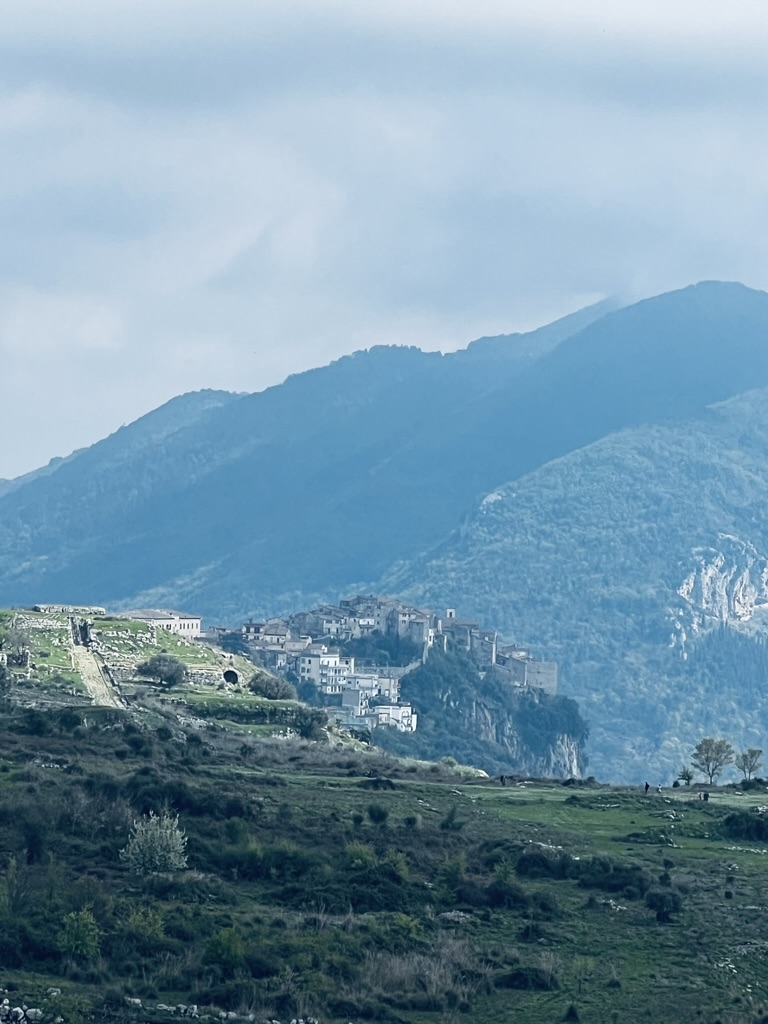
A 9-hour day, longer than expected, through olive groves, by a 1st century Temple of Hercules and with several steep ascents, but Sermoneta proved worth it. This well-preserved medieval town owes its place in art and culture to the Caetani family who in the 12th century built an elegant castle around which the town grew.
Pope Boniface VIII, a Caetani, took refuge there before he was killed by Phillip IV of France who, in turn, moved the papacy to Avignon. Not satisfied merely that Boniface was dead, Phillip persuaded the new French Pope, Clement V, to try him, posthumously, for heresy and sodomy. Boniface never saw it coming.
History wasn’t through with Sermoneta. 300 years later Pope Alexander VI, a Borgia Pope, converted the castle into a mighty, but austere, fortress for which the Sermonetans never forgave him. The main church, Santa Maria Assunta, boasts frescoes by Benozzo Gozzoli which alone should make the town a must see. And, finally, the movie Silk with Keira Knightley was filmed there and everyone we met had dinner with her.
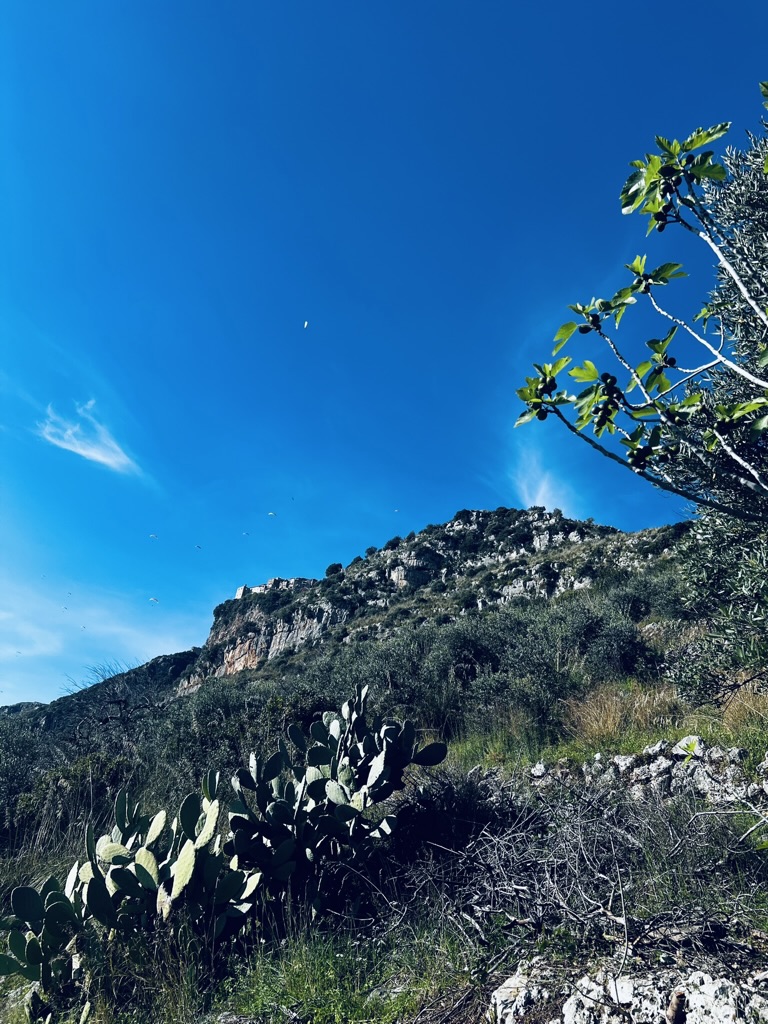
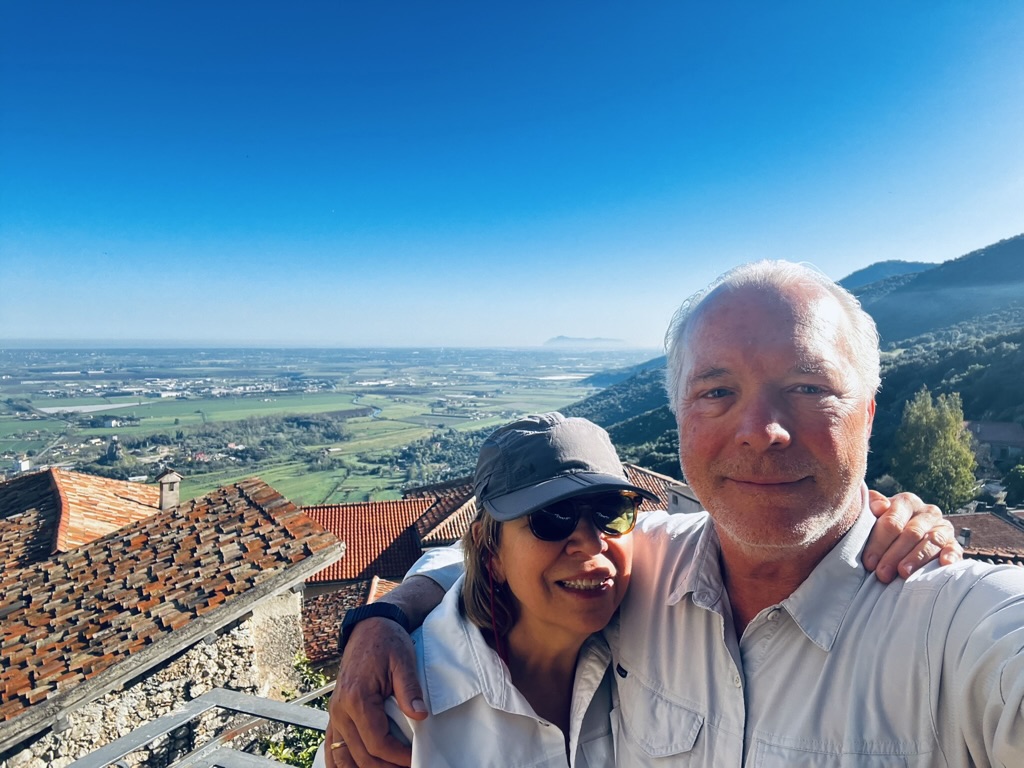
A long way up
Share this:
-
Pope to Puglia – Day 4 Sermoneta to Abbazzia Fossanova 28 km
We are falling into familiar patterns. Edward worries about logistics, navigation, supply lines, conquering the next hill, destinations. Paula collects ceramic shards, some of which may be the remains of Etruscan urns, porcupine quills and, recently, parts of concertina wire fencing whose significance will remain unknown.
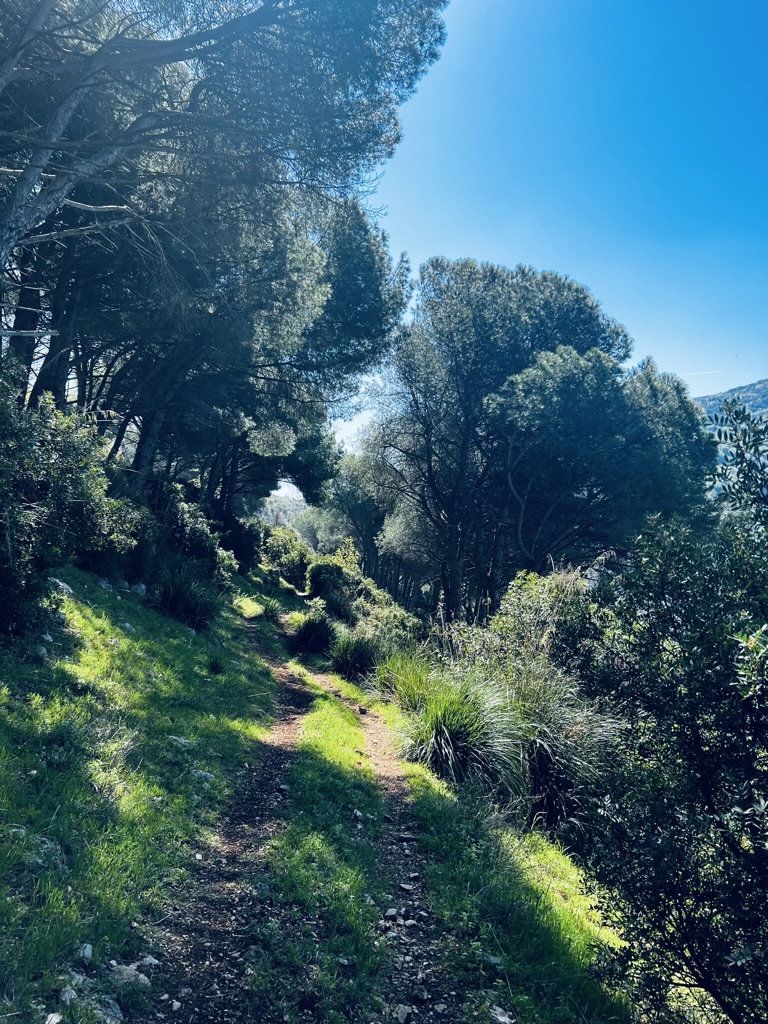
After 9 hours of walking, at km 28 of our journey when we should have arrived at our destination, we realize that we had taken a wrong turn; we were still 7 KM away from our end point and it was getting dark. We decided to hitch hike. Very quickly a car stopped, the driver asked, “Where do you want to go?”, when we told him he merely noted “That is a long way, get in.” Vincenzo, the driver, recounted his adventures on Il Camino di Campostella, the Via di San Francesco; he had been on many pilgrimages. When we arrived we were very grateful and offered to pay to which he replied “Ci mancherebbe altro. Il Camino provides” as he drove off.
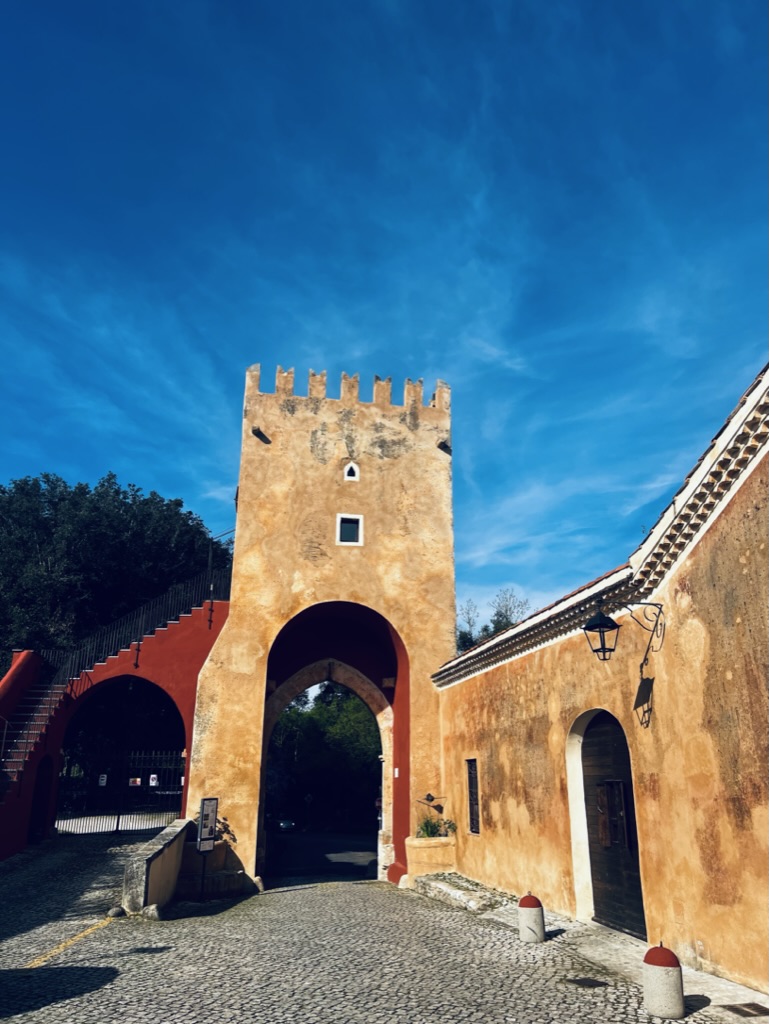
We arrive at the Cistercian Abby of Fossanova, the place where St Thomas Aquinas died in 1274. The Abby is austere, Cistercians did not believe in any decorations or “fantasies” except crucifixes. We logged in the tower over the entrance gate, a welcome respite after a long day
Share this:
-
Pope to Puglia – Day 5 Abbazzia di Fossanova to Terracina
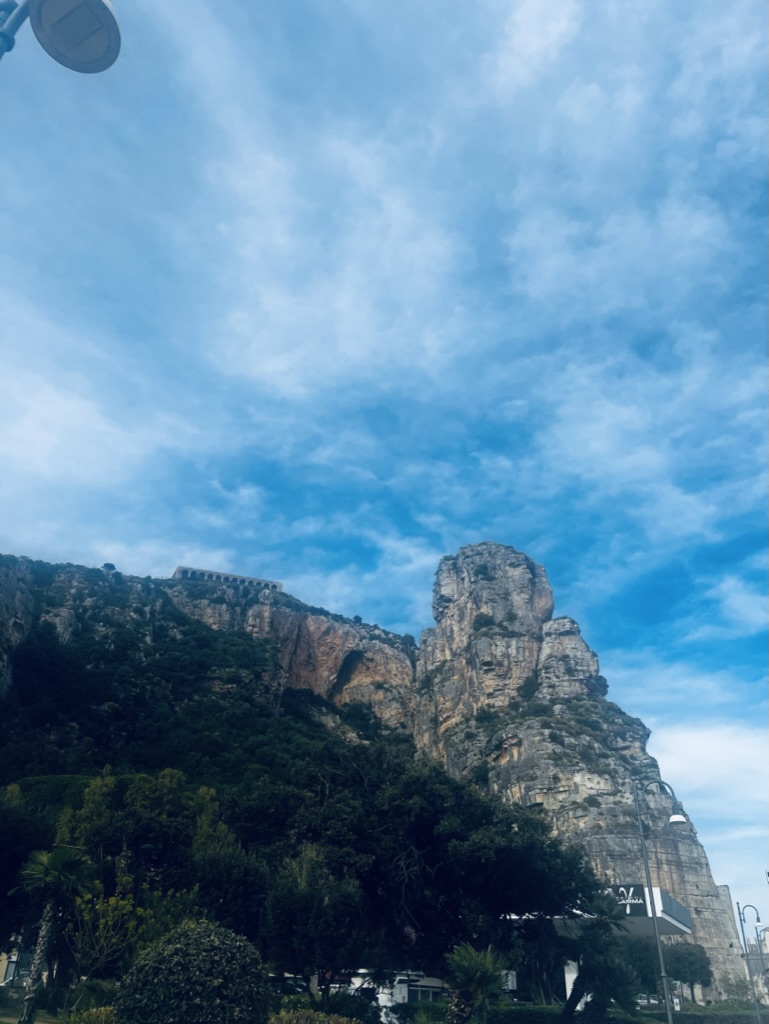
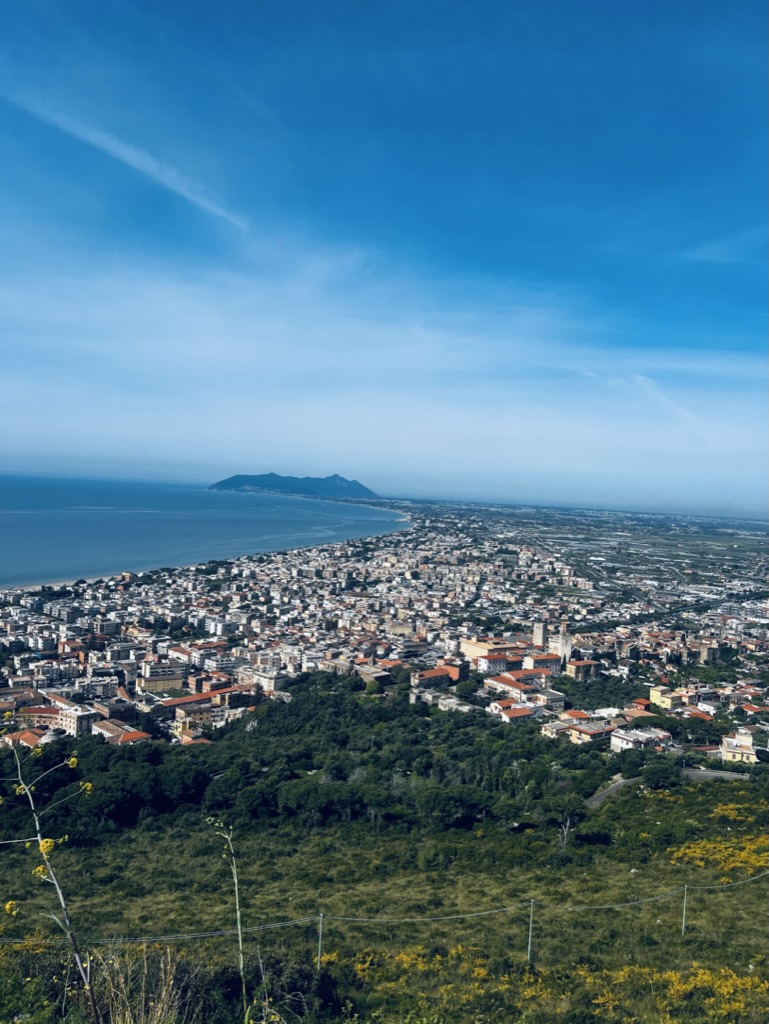
We walked on the Via Appia, a road as straight as an arrow, by canals that drain the Pontine Marshes. The land is flat, for ages home to deadly malaria that scourged visitors, especially in the summer months. Mussolini drained the marshes in the 1930s and gave the land to people from the north to farm. These days the landscape is festooned with all manner of fruit trees, vegetable tracks and lemon trees so heavy with fruit that the branches kiss the ground. We spend the night by the sea, under the watchful eye of Jupiter’s 1st century BCE temple that presides on a rocky promontory 1000 ft above.
Share this:
-
Pope to Puglia Day 6 Terracina to Fondi – 25 km
As we were getting the pilgrim’s stamp at the municipal center in Terracina, we met the mayor, a dapper looking man wearing jeans, a tattered leather motor jacket, a scarf and sunglasses who seemed very busy. His predecessor was arrested last year for granting public beach licenses to commercial establishments in return for a tip.
A section of the trail was precariously wedged between rock walls on the left and menacing scarp on the right. A feeble rope strung along wavering wooden poles provided a comforting sense that someone knew this section was perilous which was quickly overwhelmed by the realization that no adequate safety measures had been placed.
We sat briefly for a Fanta at a café mid-afternoon. The sun was shining, a gentle offshore breeze cooled the air. A group of men smoked cigarettes and drank beer as they spoke in excited tones in a dialect I could not decipher. I mean not one bit. Remarkable how the barista spoke to me in a very clear Roman accent and then turned to the man next to me speaking a completely different language. I feel like a Bostonian speaking to a Virginian. Oh wait…
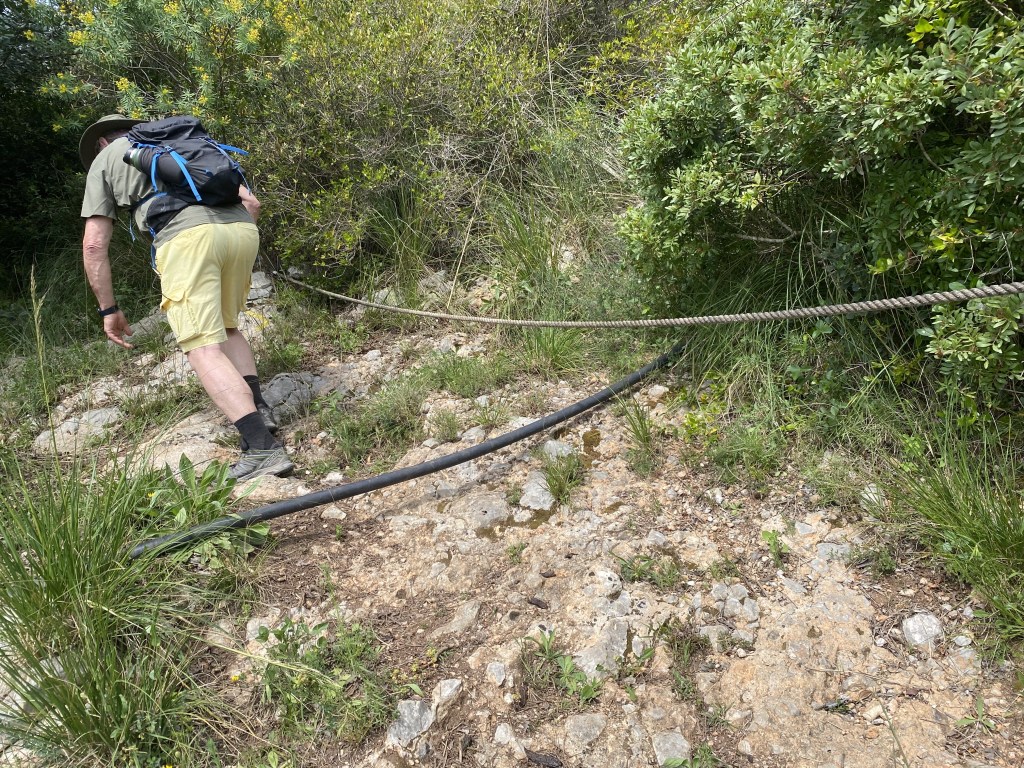
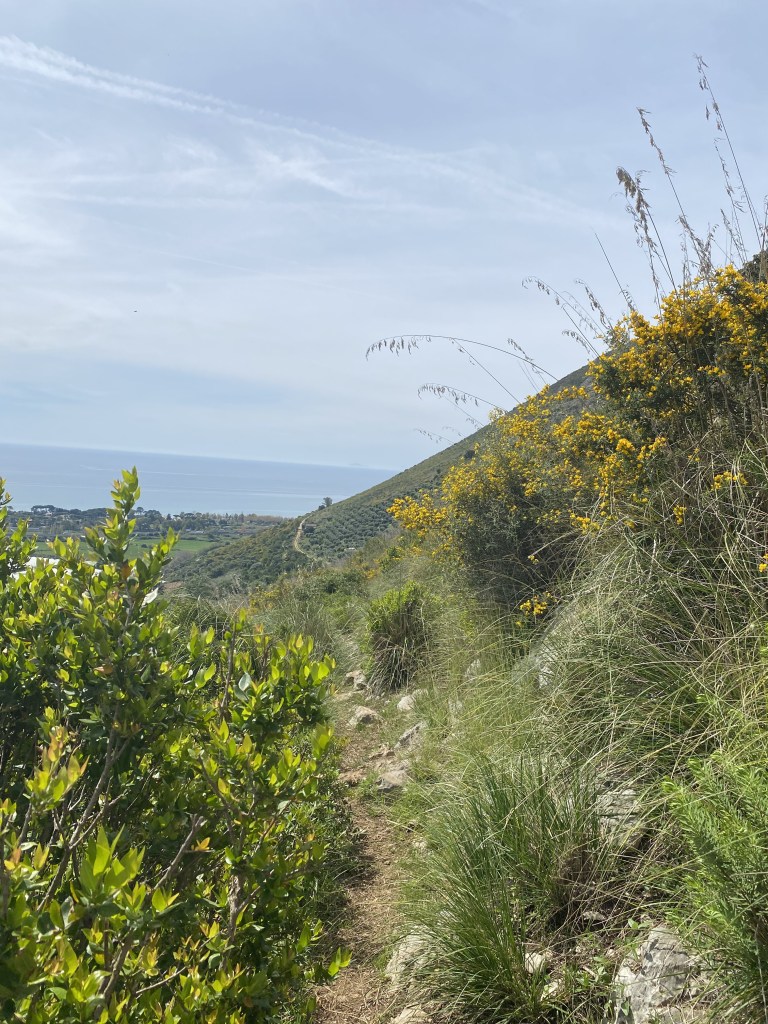
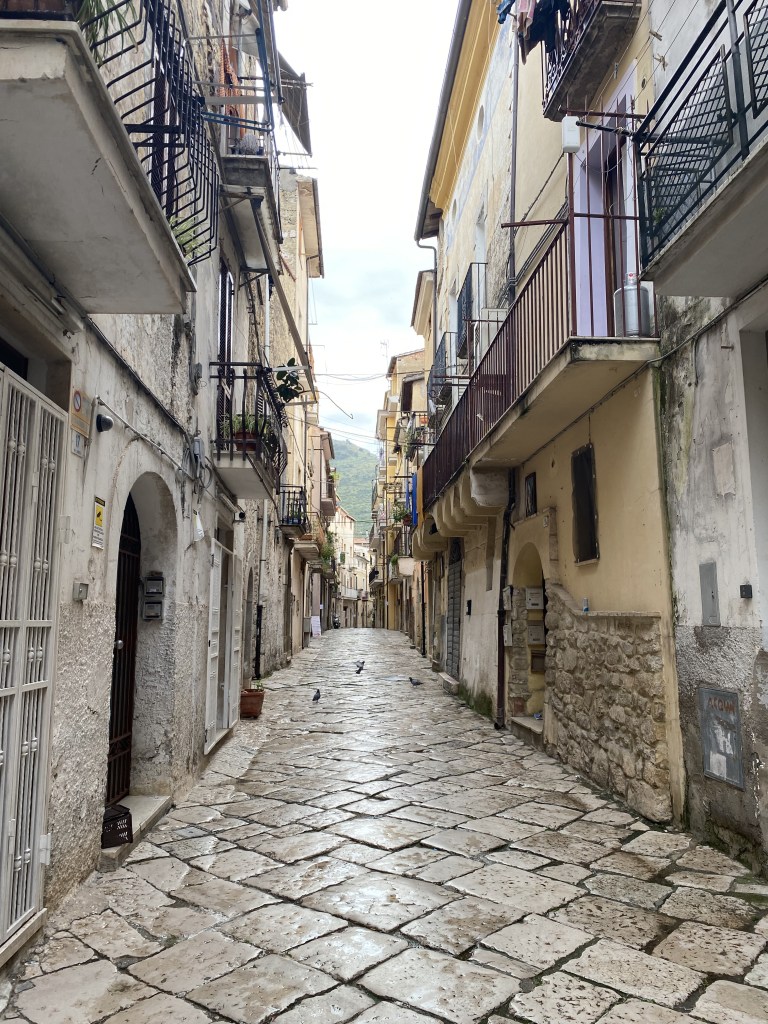
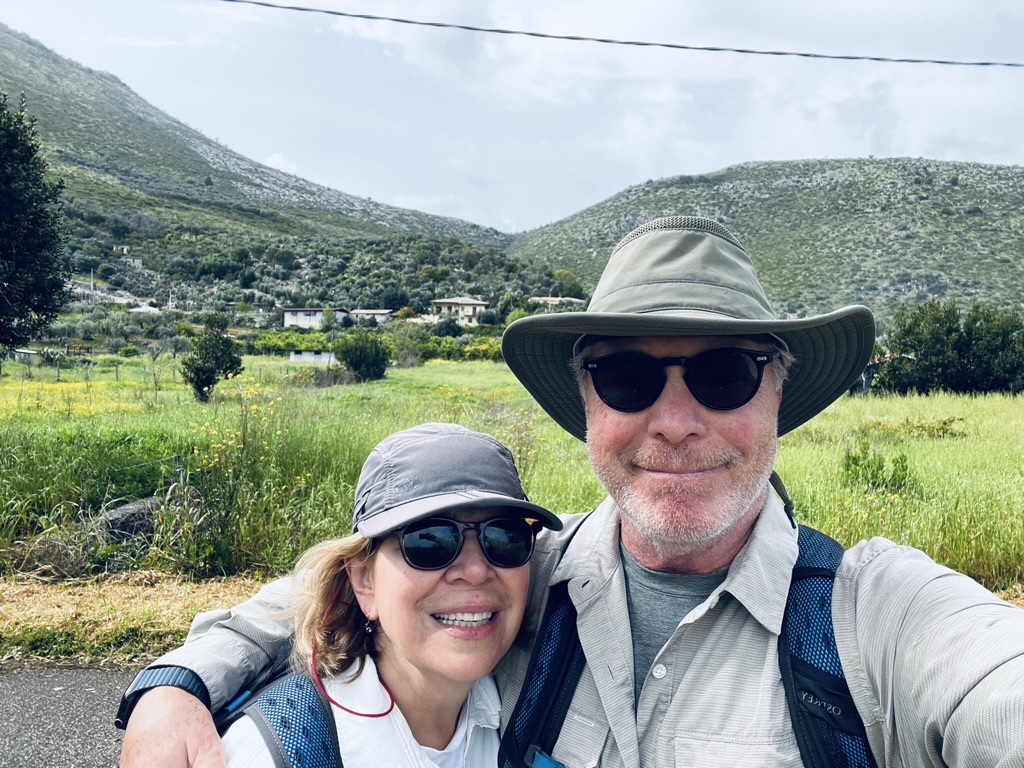
Share this:
-
Pope to Puglia Paula’s Weekly Summary: The Wildebeest and Zebra are Back
The wildebeest and zebra are back! The wildebeest offering guidance and security, the zebra expanding an incredible collection of ceramic pieces, porcupine quills, dead bugs (if travel sturdy) and rusty artifacts. Spoiler alert: all suitable for gifting.
This first week has been a baptism by fire. It started on a lavish note: the bathtub in our first hotel on Piazza Navona, a red-lacquered monument in the center of our Aphrodite sweet, would have been suitable to baptize a small congregation, and the complementary towels would have made Christo proud. Perhaps I was cavalier about the six-week journey at the start, but reality sunk in quickly following a series of 26+ km phases, walking more 8.5 hours each day, ended in our small rooms with us moving mechanically around like robots in a robot repair shop, bumping into the walls and each other.
But we are strong. In contrast with our foot centric commentary last year, that often bordered on qualifying for an “only fans site”, I have decided that further discussion of my feet will be limited. Some things are just better imagined than seen. However, I can report on 2 podiatric improvements: 1) I start with 10 new toenails; and 2) a shoehorn is more efficient than a mildly arthritic index finger when putting on a boot.
The Francigena occasionally throws obstacles in the path of a well-intentioned pilgrim.
For example, on the first day, a large metal fence and orange netting blocked our path. Of course we were unwilling to accept a detour. We instead deployed a two-phase tactic. First, find a sag in the fence; second, climb over it. The wildebeest cleared the fence like a gazelle and then offered to help.
Edward: “Ok Paula just lift your leg and I will grab your foot and pull it over.”
Paula: “Hold on a minute my pants are entangled with the barb wire.”
Note that this maneuver required a perfect arabesque to land safely on the steep incline on the other side of the fence. Rest assured that all was executed with the elegance and grace of a Dolce&Gabbana fashion show.
A couple of days later we had to breach construction site fencing, adorned with arts and crafts “Do Not Enter” signs (in Italian of course,) by unhinging part of the fence. Surely placing a construction site in the middle of the Via Francigena was an oversite which we felt no need to observe.
At one point we were obliged to hitchhike to compensate for a slight navigational miscalculation that took us 7 km off our path. I did go a little Diana Nyad on this one. Imagine 2 senior citizens standing on the side of the road hitchhiking, looking like semester abroad escapees from an REI sponsored camp.
This week was not just about vandalism. We are listening to “The Day of Battle”, Rick Atkinson’s account of the Italian Allied campaign during WW2. My suggestion of the Barbara Streisand biography was tabled, temporarily. We walked through many towns that only 80 years ago were scorched by war. Some of the historic treasures were spared by agreements between the combatants. One such agreement protected the papal summer residence at Castel Gandolfo, the site of our second night.
In Sermoneta we visited the church of Santa Maria Assunta where I noticed a small offering box with the following suggestion: “Offerta Per Anime in Purgatorio” which translates to “Donations for the Souls in Purgatory.” I have never seen such a collection box. I had several thoughts: “Gee, what could a soul possibly need” and “How are these donations delivered” and “They must have a crazy high administrative cost.” I really think a better business model would be personal sponsorship by which you sponsor a soul in purgatory like the ASPCA or UNICEF children. But how do you know who is in purgatory? It’s like delivering an Amazon package without an address.
In Itri we spent the night at a “Glamping” camp, a recent (?) development in camping couture. The camp consisted of 4 geodesic domes made in Japan complete with air conditioning, showers, toilets, bidets, television, and chenille bedcovers dotted with plastic-colored hearts. Our pod was in the middle of an olive grove.
For the next two days we walk around the Gulf of Gaeta. We arrived at our first destination, Formia, in time for a languid lunch by the sea, the first lunch of the week. The waiter brought a bottle of wine to the table and pulled the corkscrew from his apron. Holding the bottle confidently he turned it to cut the foil from its neck, his wedding ring marking each rotation when contacting the glass. Tap, tap, tap. Like a call to prayer.
A new feature of this weekly summary will highlight individuals who “made our week.” We want to recognize Corrado and Lidia who provided luggage transfers for 4 days. Aside from warm generosity and care, they gave us the carved wooden figure of a Francigena Pilgrim. Corrado, it turns out, is an excellent carpenter. We want to recognize Vincenzo who appeared out of the mist as evening fell while we were hitchhiking with the genial “Where do you want to go.”
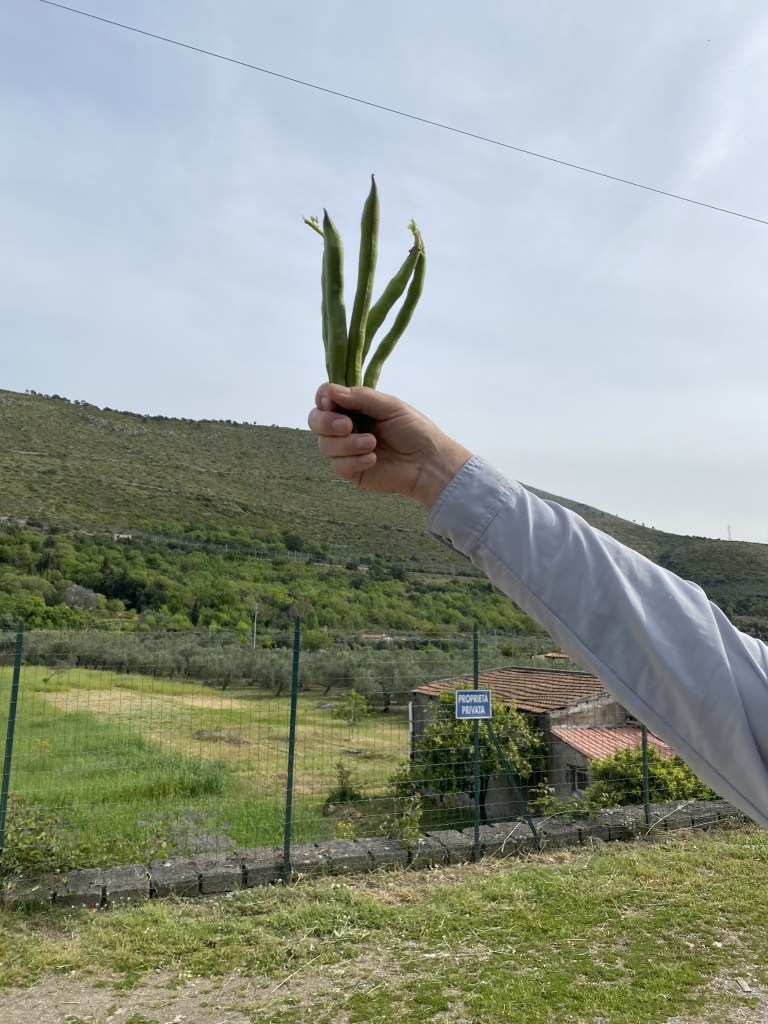
Finally, we want to recognize the unknown lady who stopped to give us a handful of fava beans pods which we ate while strolling along. Small gestures can have large impacts.
A presto
Share this:
-
Pope to Puglia Day 7, 8 and 9 Fondi to Itri – 19km Itri to Formia – 15 km Formia to Minturno – 20 km
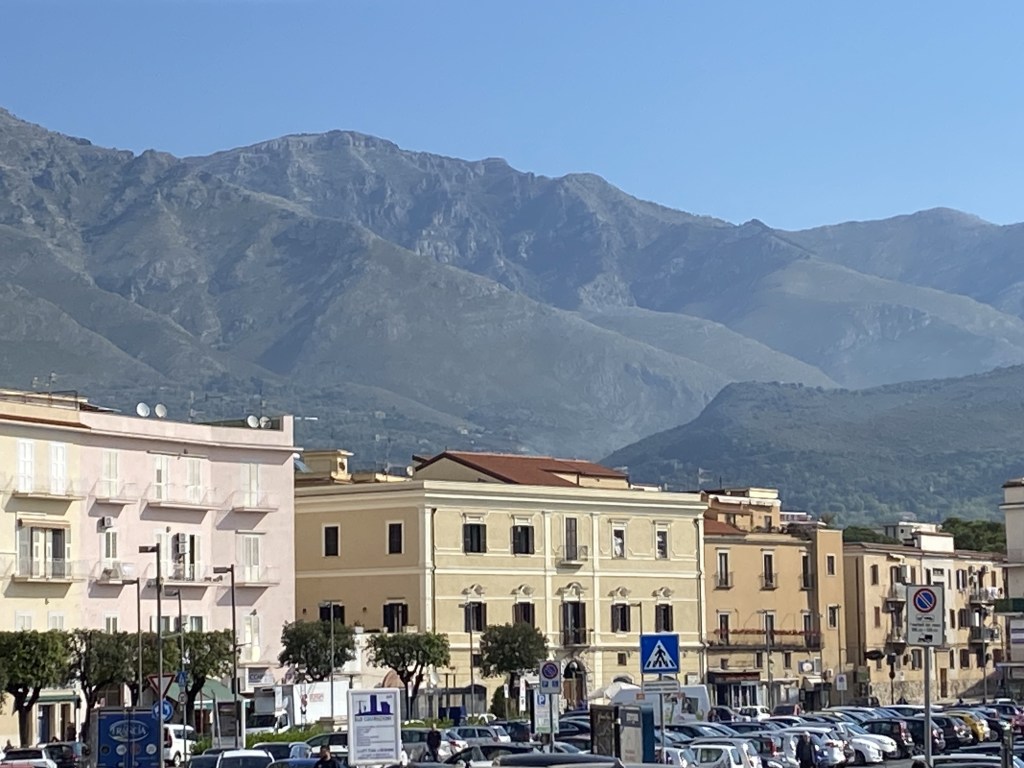
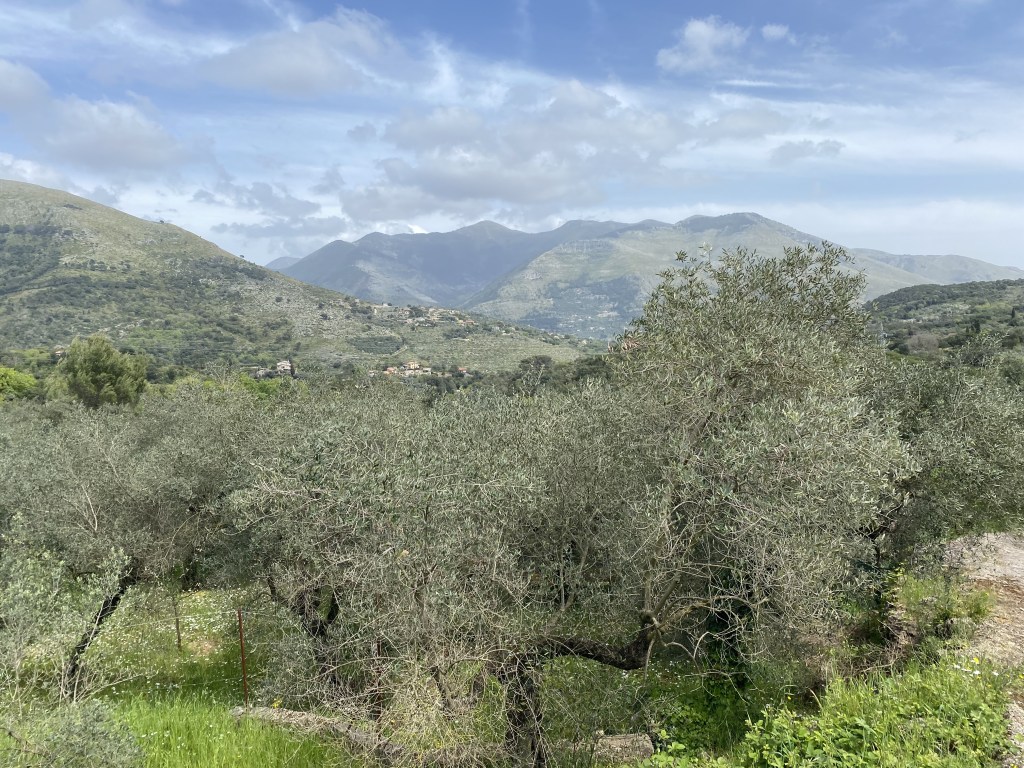
Three relatively uneventful and easier days, first walking along orchard groves, artichoke fava bean fields and fruit orchards, then by the sea in the Gulf of Gaeta. The path from Fondi to Itri is on the old Roman road, the Appia Antica, still navigable though probably not on a bicycle. The Aurinci mountains, part of the Apennines, tower over us like slumbering giants: daunting and impenetrable. How the Allies crossed these mountains in WW2 in the face of punishing defense lines defies reason.
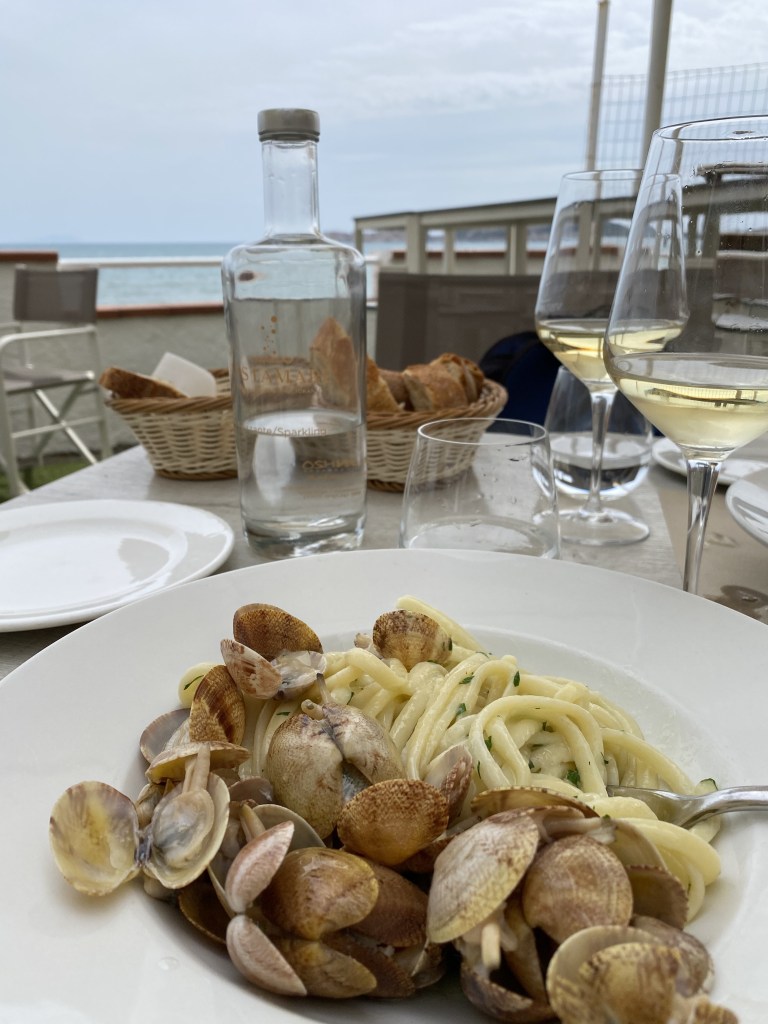
By the sea, we walk through beach towns, many deserted. One can hear the echoes of last year’s crowds and imagine the beaches lined with umbrellas and lounge chairs cheek to jowl, but for now they look like the morning after a wild party. Of course, the restaurants that are open offer great food.
Still, the sun is shining, the sea shimmering, and we stride with confidence. Tomorrow, we turn left to walk 7 days toward Benevento where we will begin our final assault over the Apennines.
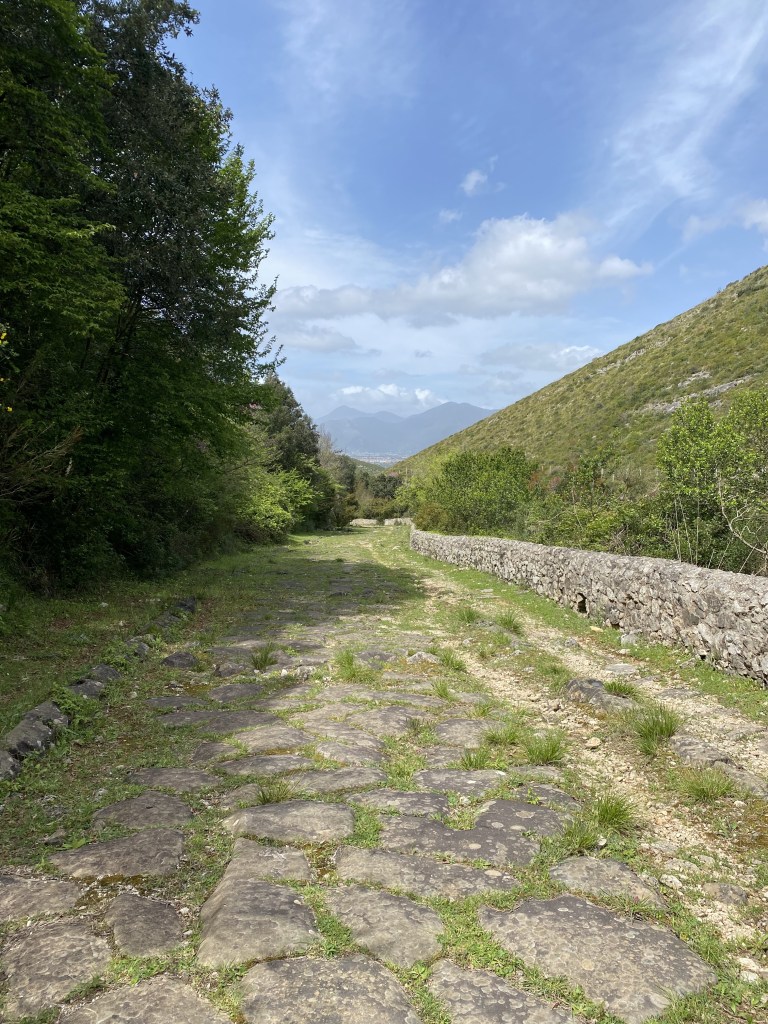
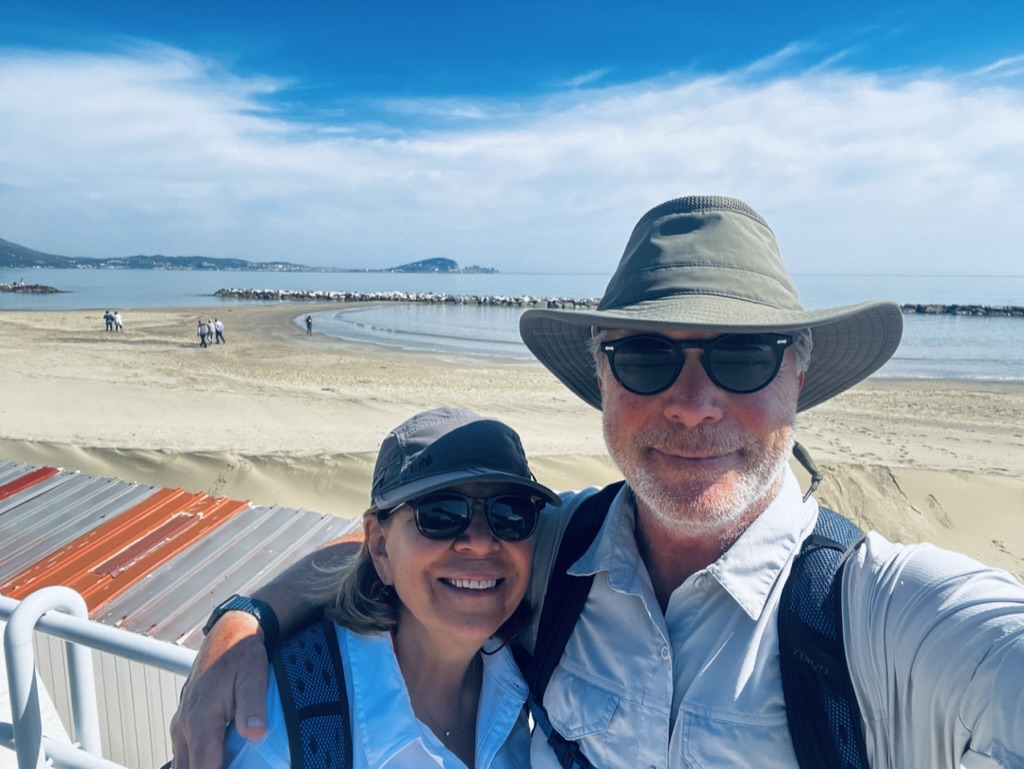
Share this:
-
Pope to Puglia Day 10 Minturno to Sessa Aurunca 30km
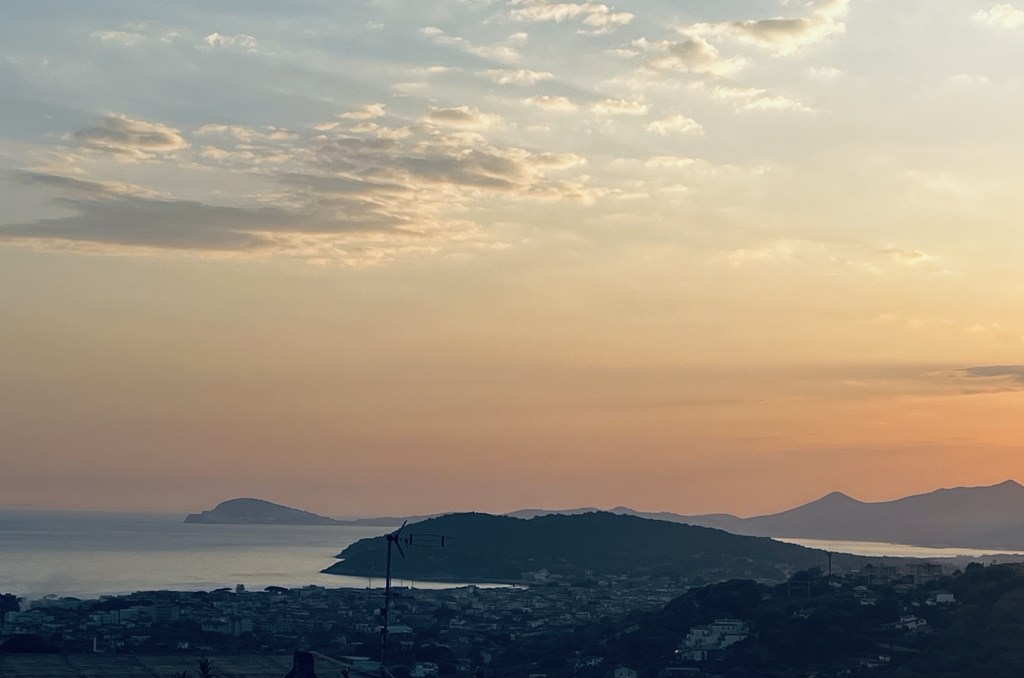
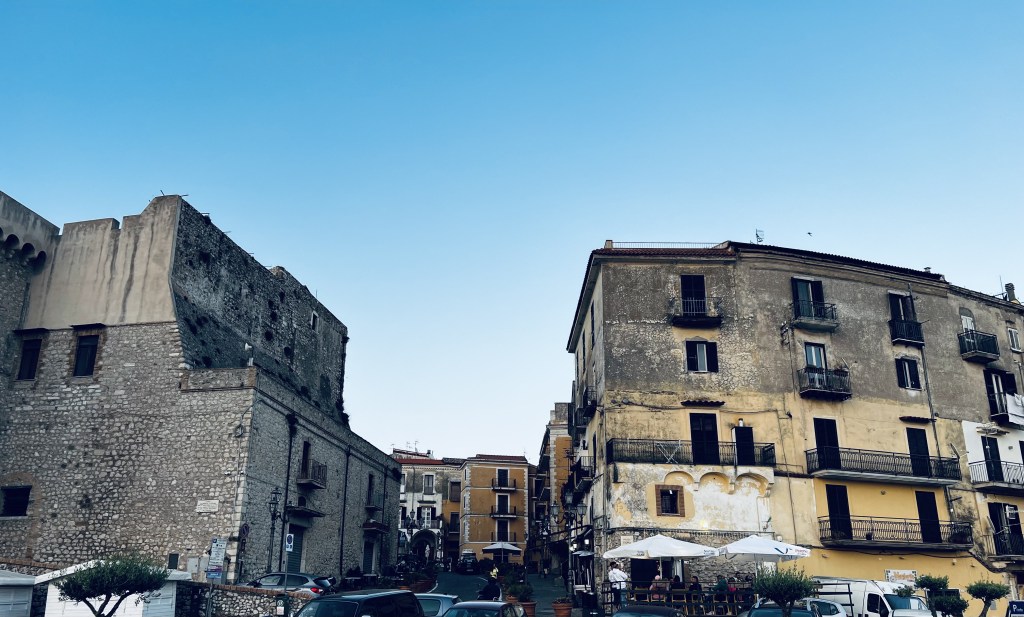
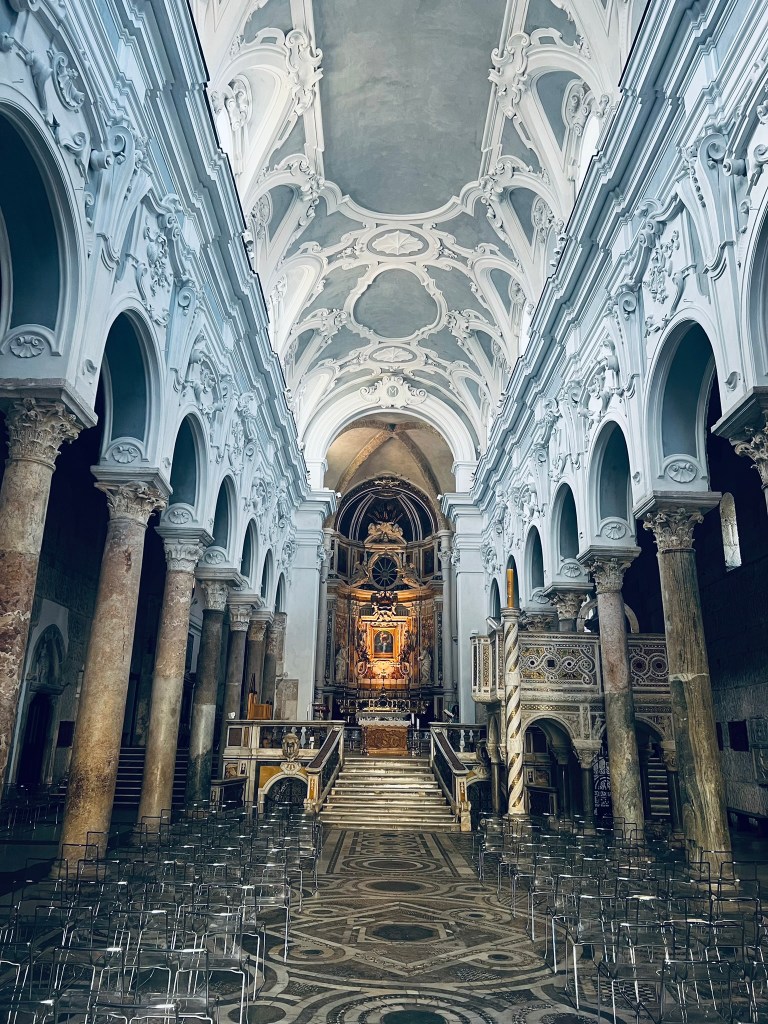
The heat is setting in earlier than ever, up in the 80s today, just in time for the first 30km trek of this walk. We started walking by the Garigliano River, and then made our way up the Aurunci mountains to Sessa Aurunca. This area was the site of some of the most ferocious fighting in WW2, Sessa itself and Teano, where we go tomorrow, were pulverized before the Germans were chased out. Nonetheless, the towns are full of life and you wouldn’t know they had come back from a pile of rubbish until you look at the pictures hanging in the café/bars that reveal a desolate landscape where nothing is standing. Great care was taken to restore the interior of the churches to their riotous Rococo pageantry, as though nothing happened. It was a tough day, but we had the best meal to date: a plate of spaghetti Lupini, the smallest vongole but by far the tastiest.
Share this:
-
Pope to Puglia Day 11 Sessa Arunca to Teano – 19km
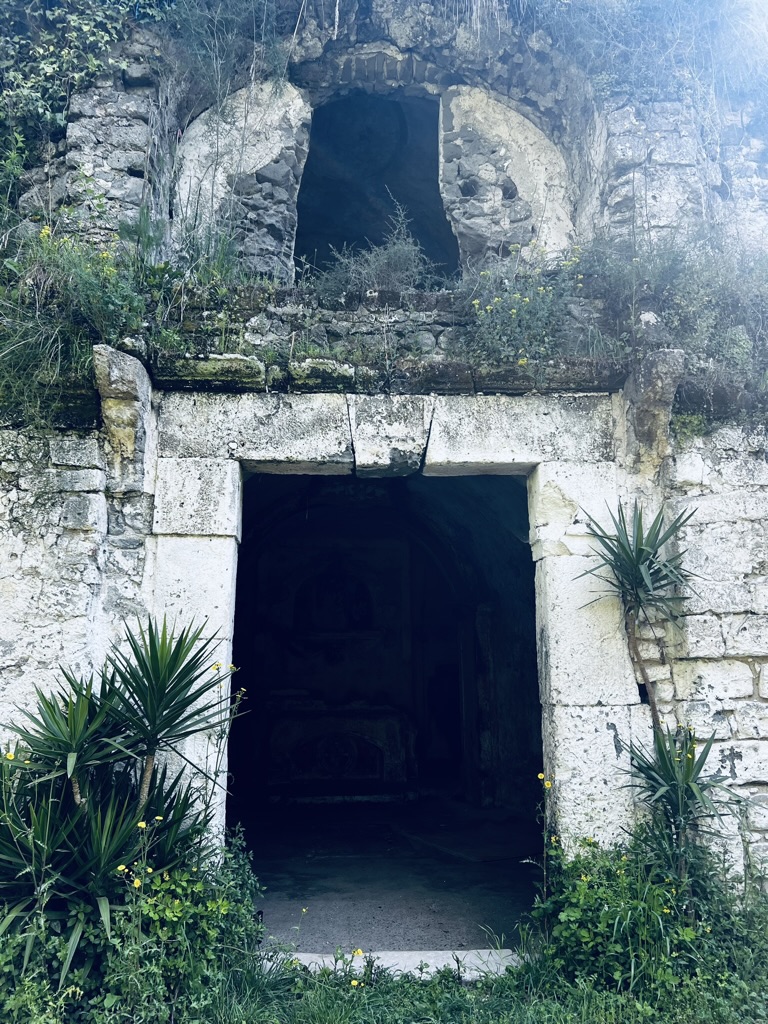
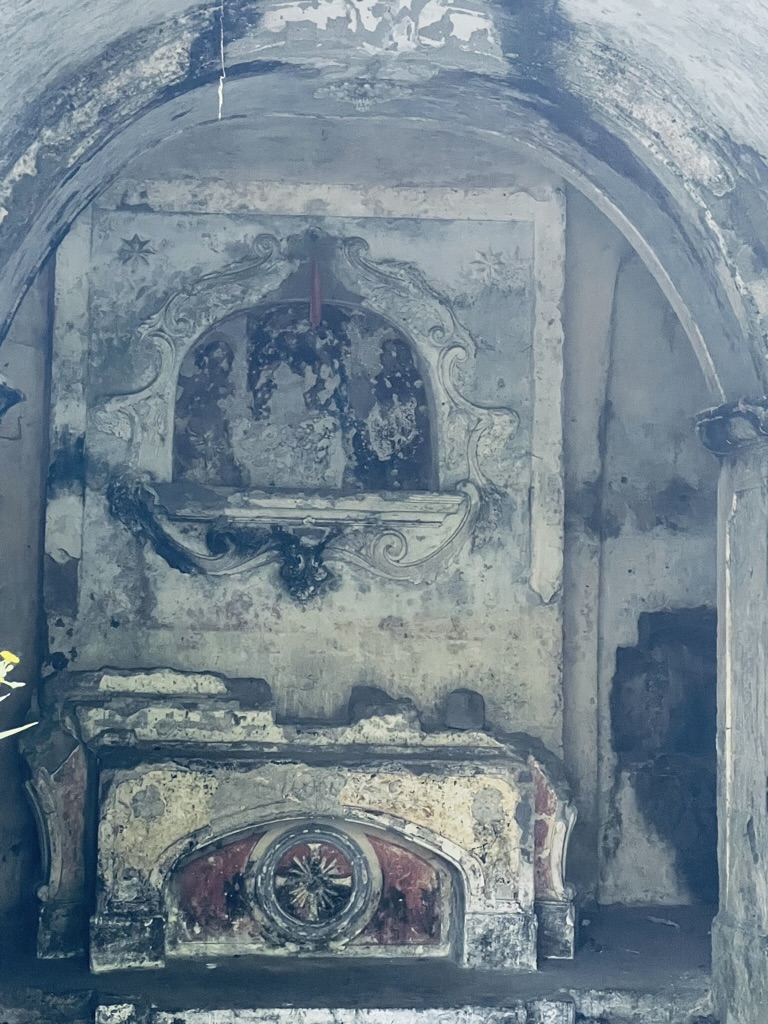
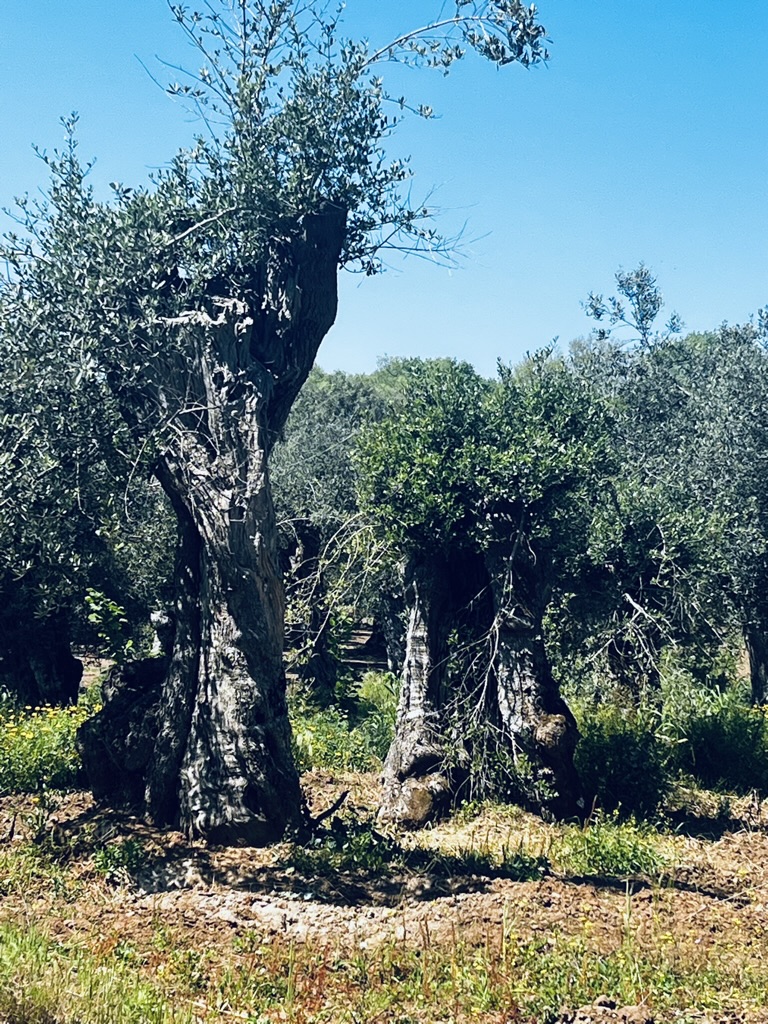
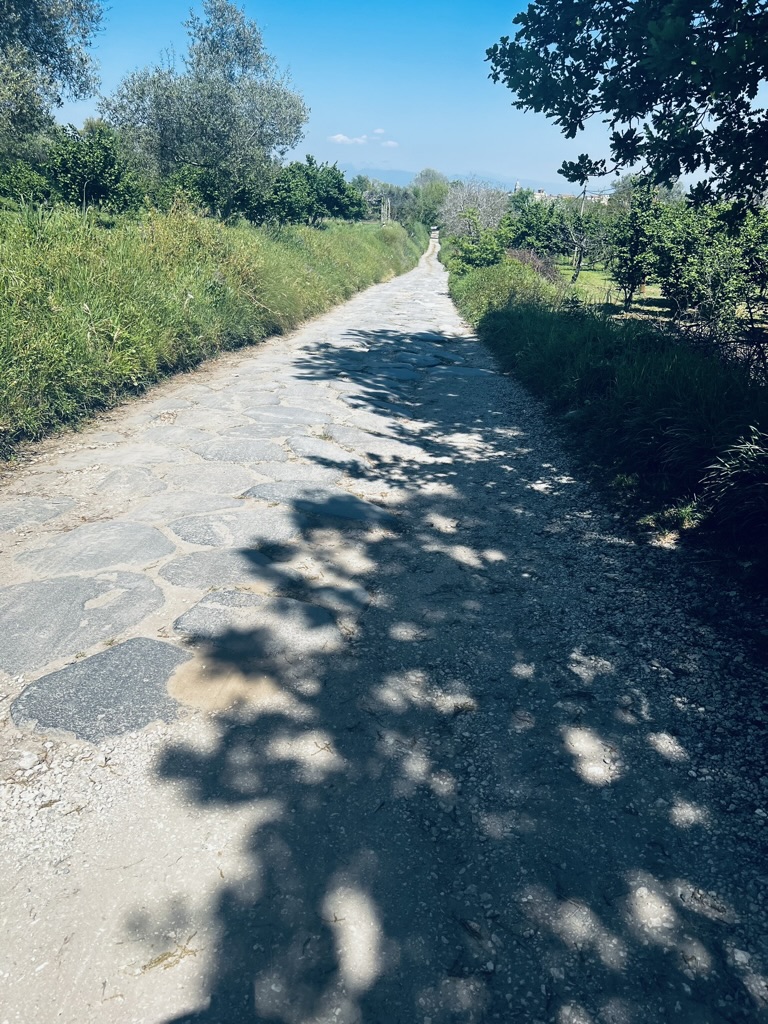
Walked by an old and unmarked church carved into a rock but of unknown origin or date. The iconography was unidentifiable. We paused for a while to imagine what it could have been concluding that it was most likely a church destroyed during WW2, but who knows it could have been an Etruscan temple infected by the Baroque. We are walking along the Via Appia, through old olive groves, where gnarly trees have survived hundreds of years, through earthquakes, plagues, famine, wars and human neglect but continue to produce a life-giving elixir for our benefit. Teano was a welcome relief even though it required a 300m climb, at the end of the day, up a deeply troughed escarpment. At Teano we enjoyed dinner at a restaurant that where patrons were out of Godfather central casting.
Share this:
-
Pope to Puglia Teano to Pietramelara – 21km
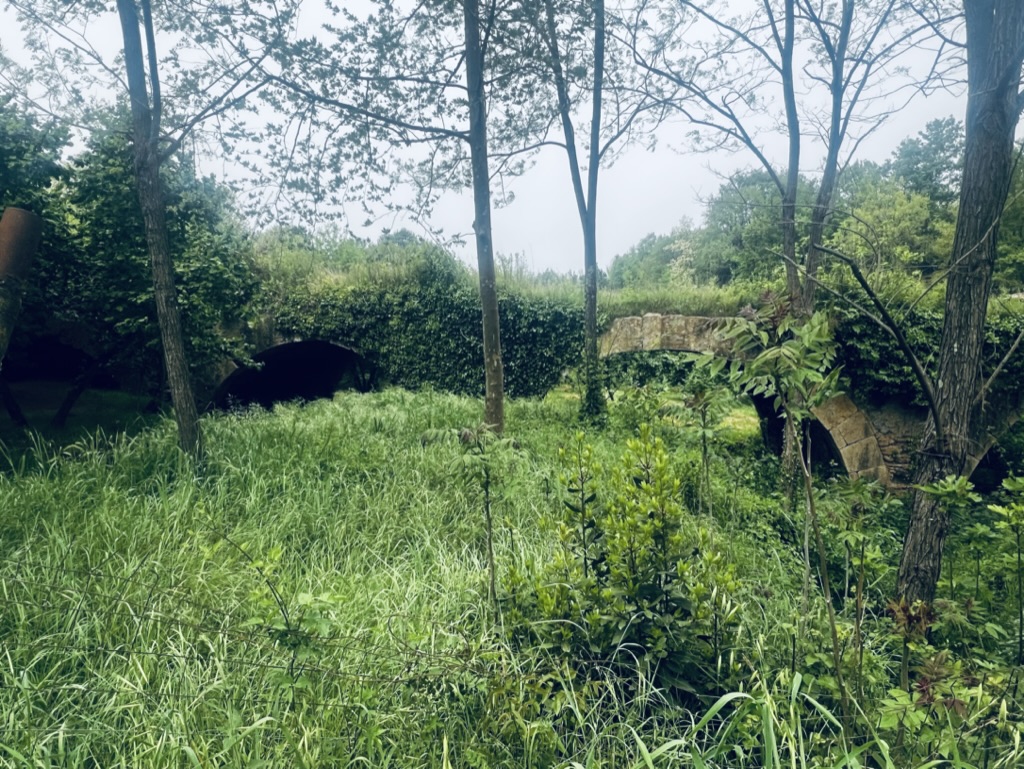
Walking along the Appia Antica we pass a 1st century Roman bridge which other than being overgrown with greenery seems to be in fine working condition. We pass ruins from various eras that testify to the long and tumultuous history of this area, invaded by everyone who had pretensions of Roman empire building: Lombards, Byzantines, Normans, Popes, France, Spain, the Holy Roman Emperors, Napoleon, Germans, and on and on.
At Pietramelara we ate unquestionably the best pizza we have ever tasted, cooked by Cosimo Chiudi, the pizzeria owner, who explained in great detail how he prepares the dough and selects the wide variety of supplements. We also had a bottle of very fine local wine which we will be looking for when back in the US.
One of the highlights of the day was the young man who came running out of his house to give us a book about the Via Francigena and then disappeared back into his house before we could thank him or even get his name. I guess the look the part of pilgrims though we feel more like wonderers.
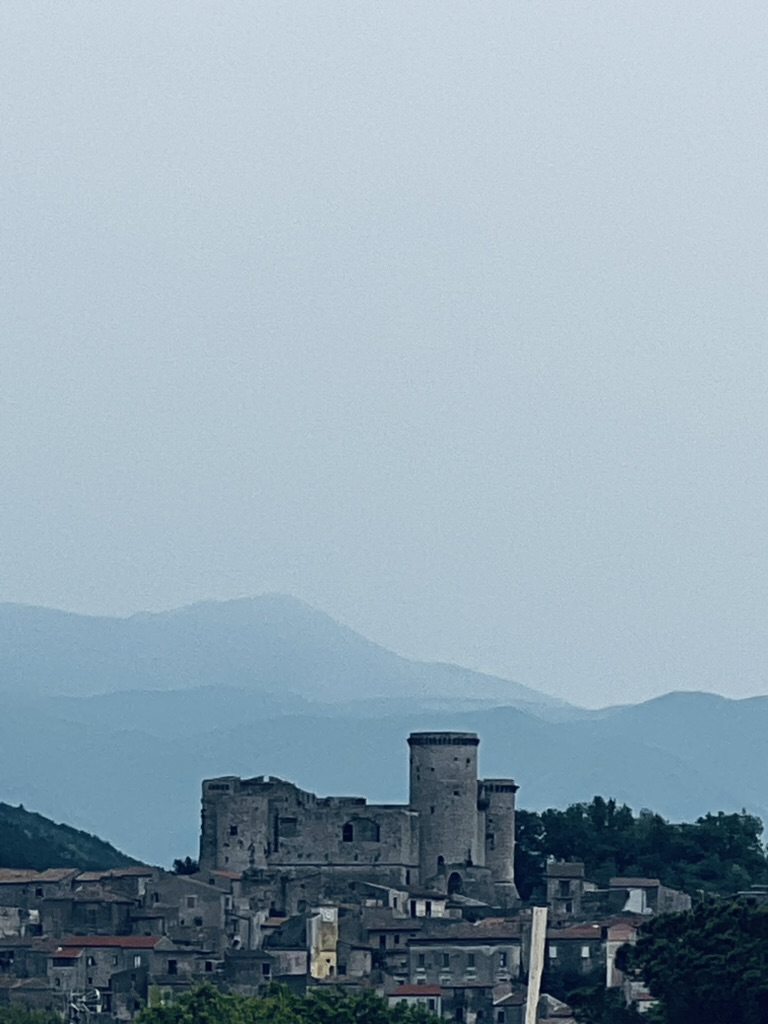
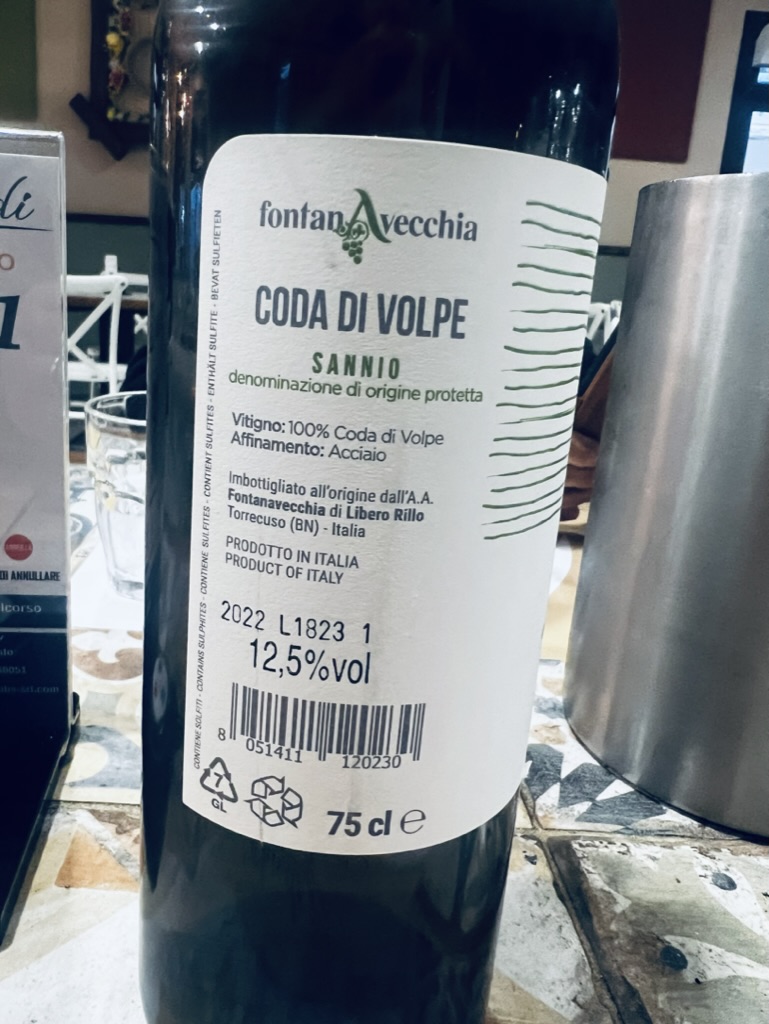
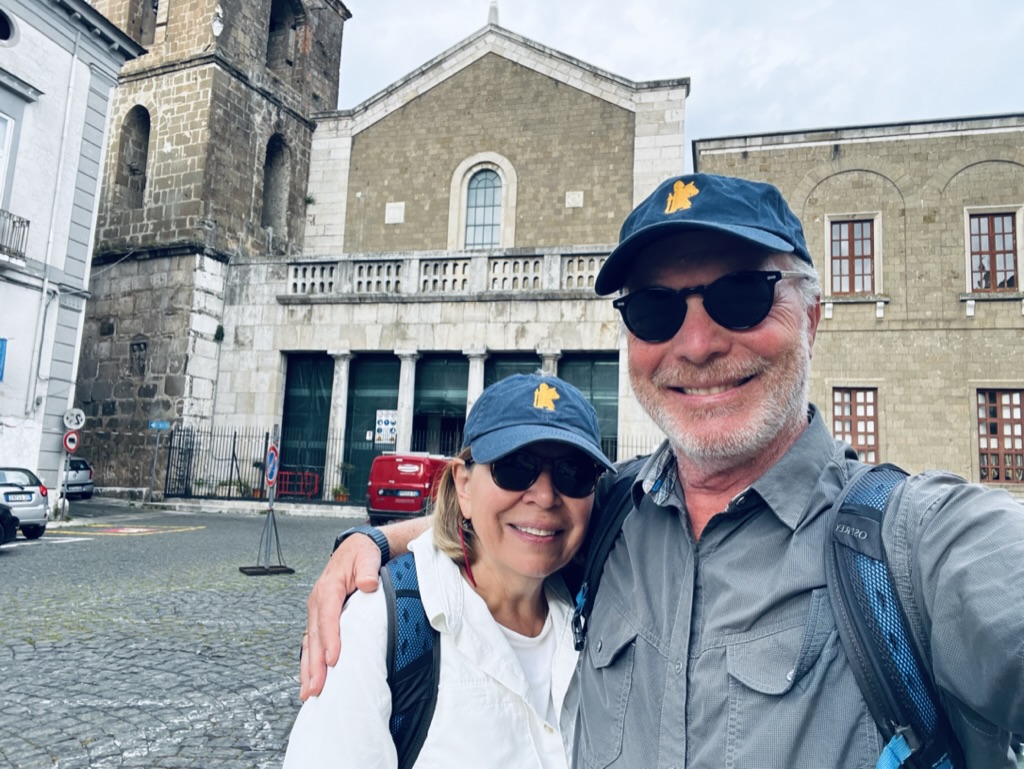
Share this:
-
Pope to Puglia Day 13 and 14 Teano to Alife – 24 km Alife to Faicchio – 19 km
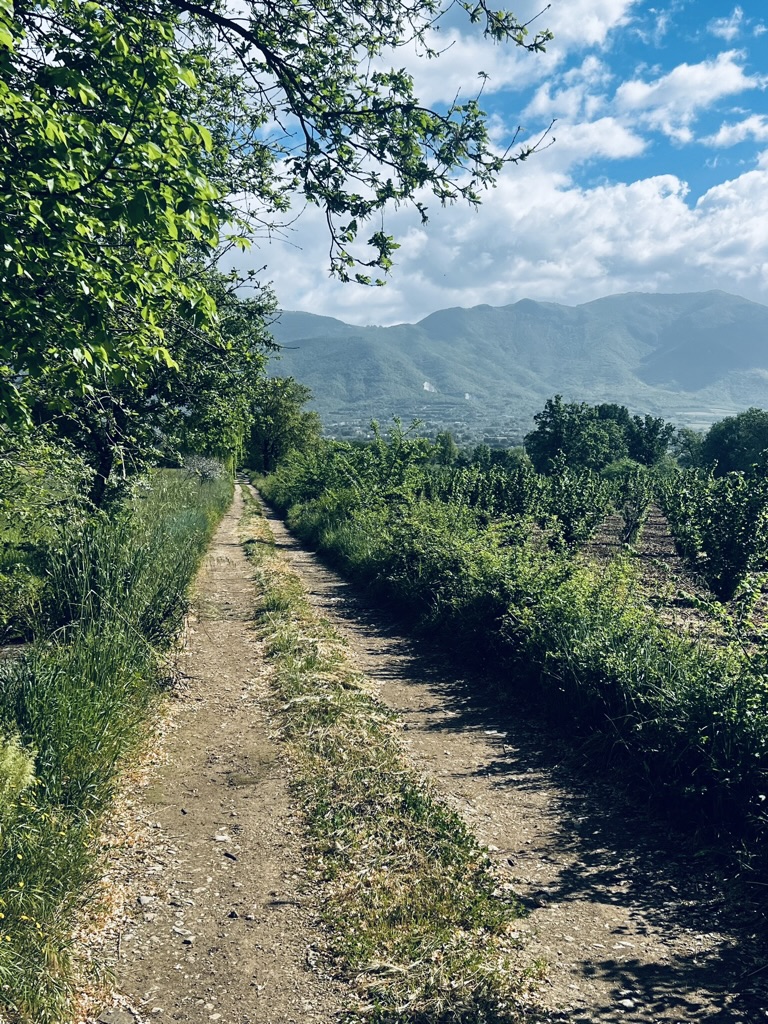
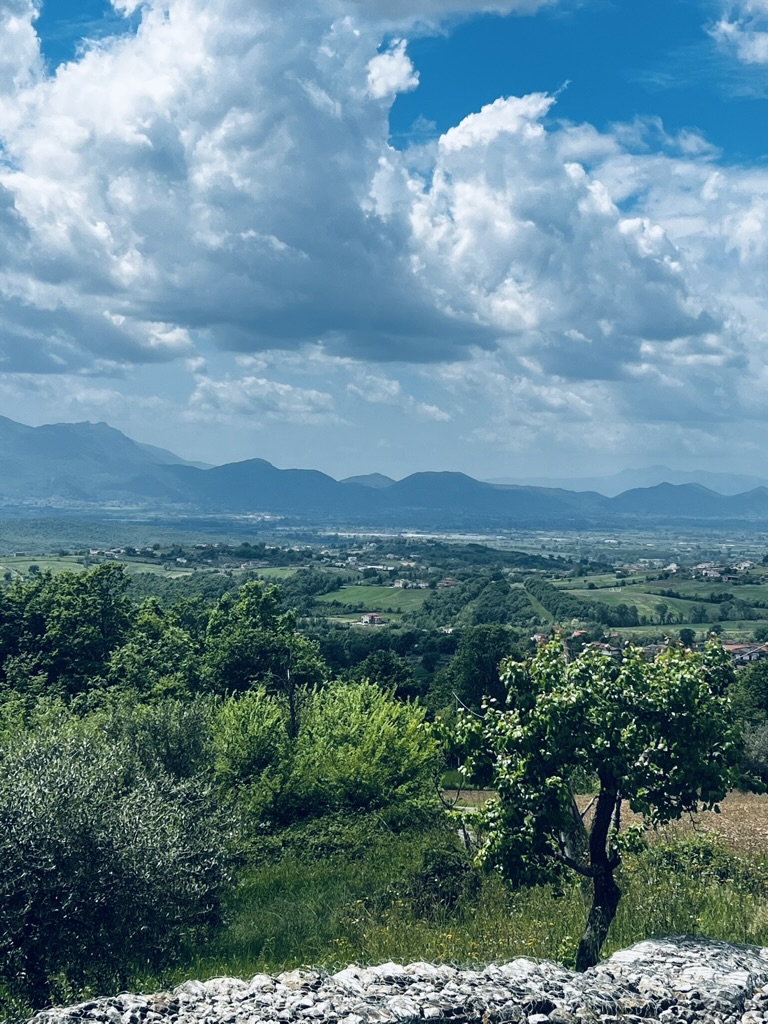
We swept down to the valley from the Irpinian hills toward the Matese and Vitulano mountains and the Apennines. We found rich farmland, olive groves, some vineyards and heard the grinding sound of tractors tilling the soil and the buzz of weed whackers clearing aggressive weeds. A valley teaming with life.
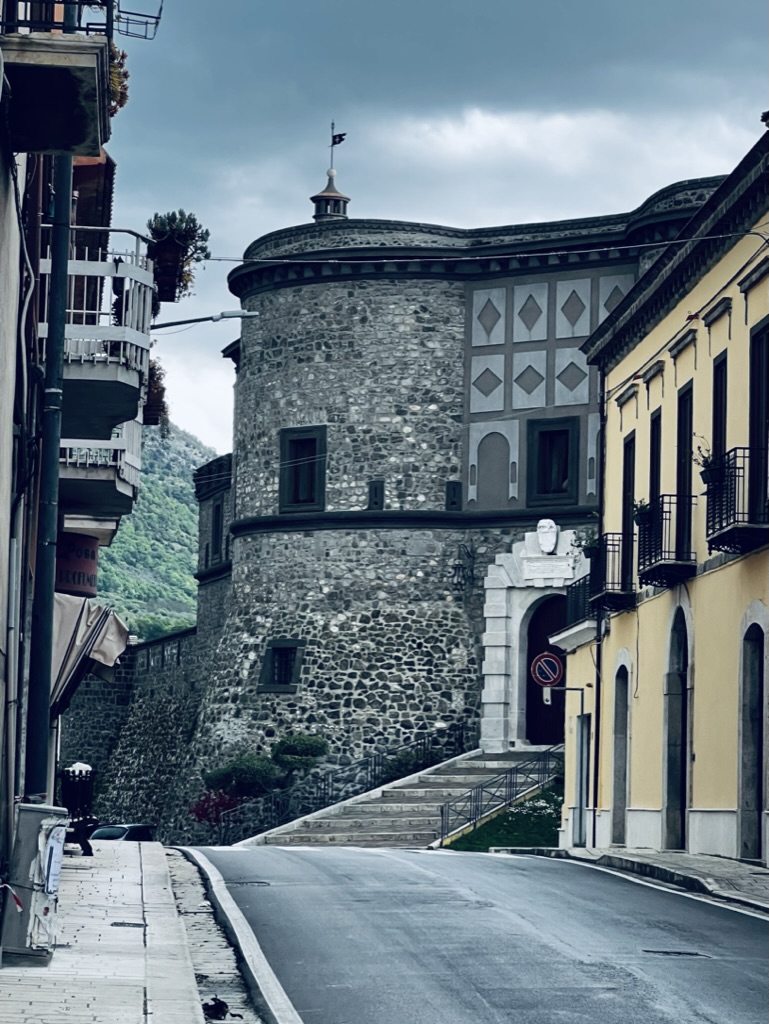
Alife is an ancient town, originally inhabited by the Samnites before Romans conquered it in the 4th century BCE. It’s on the flat of the land, not perched on a hill like almost all the other towns we travel through. The accommodations in Alife were on Viale Dei Caduti Di Lavoro (Street of the People Who Died Working). A name full of social irony. Our hostess for the evening, an enterprising lady named Antonella, who spoke in rapid fire Neapolitan with hand gestures to match, energetically slicing and piercing the air, while explaining the nuances of our apartment, did not care for the name.
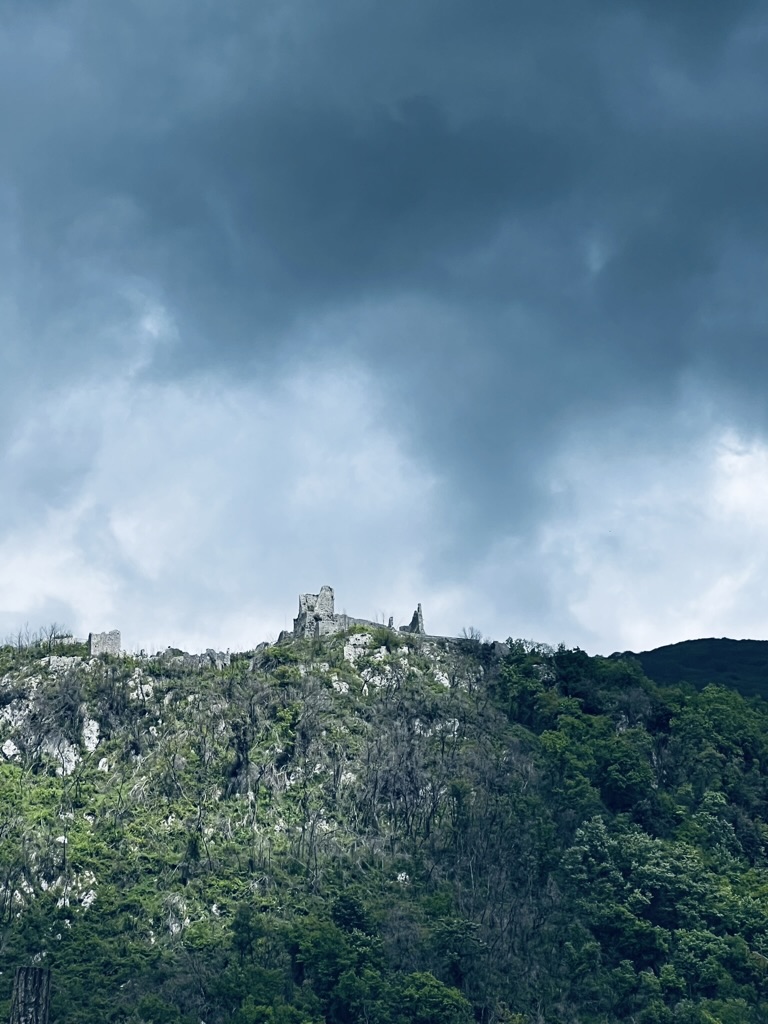
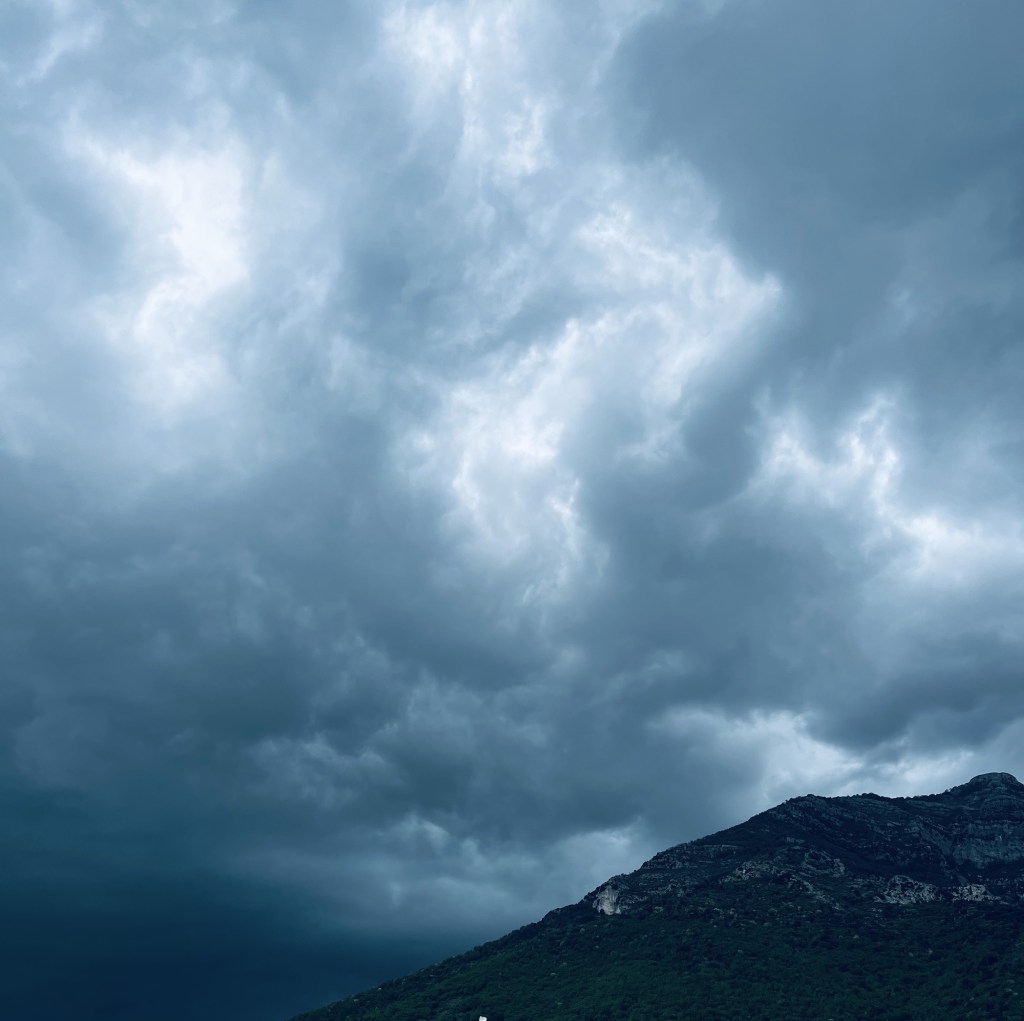
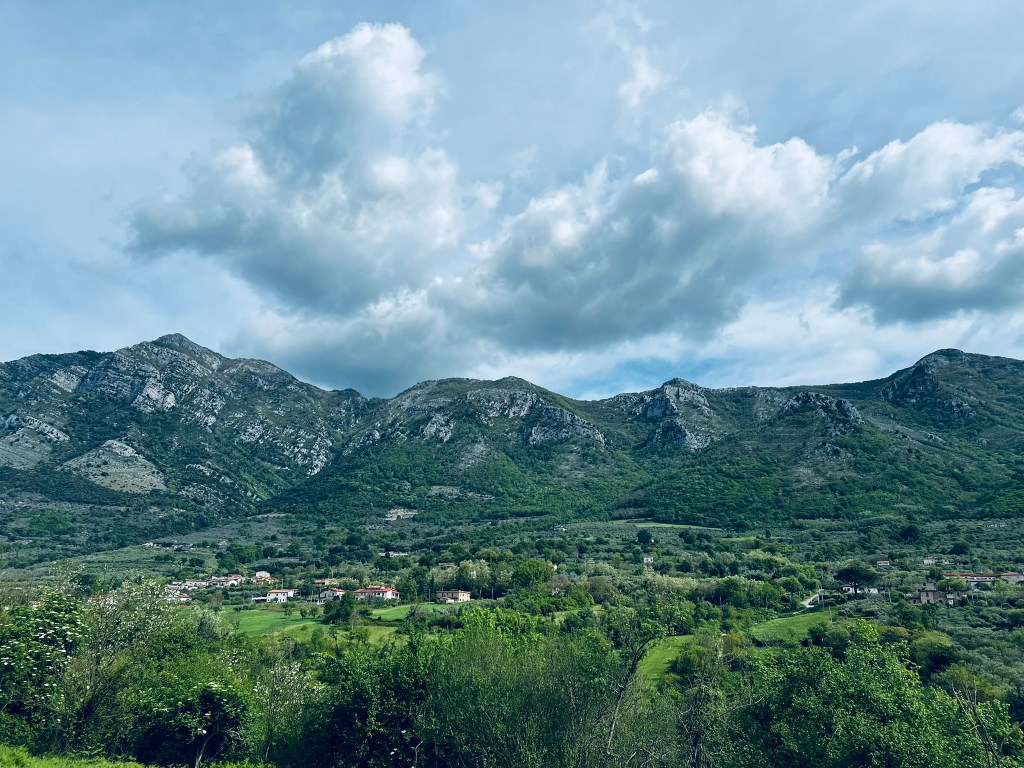
Faicchio is at about 1000 m altitude, tucked into the foothills of the Apennines that loom over the town on all sides. As the day wore on gathering clouds and claps of thunder indicated a coming storm that broke loose just as we entered our room for the night. Good timing.

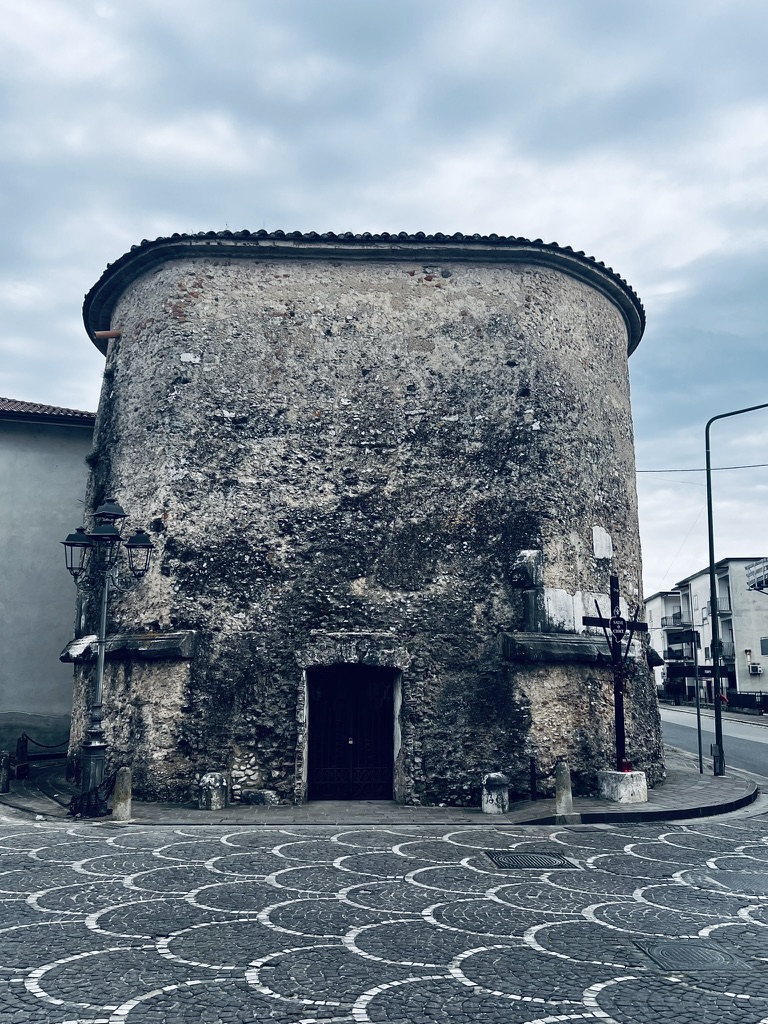
Share this:
-
Paula’s Weekly Summary Week 2 The Union is Strong
The Via Francigena continues to inspire and humble. Each day presents like a new episode of Survivor. No trespassing events to report this week.
Our daily rituals simplify our comings and goings, introducing the illusion of predictability. Mornings start at 7 am usually without the aid of an alarm. Having showered the evening before we go about our tasks like an army breaking camp. We move purposefully, stealthily reclaiming laundry that has dried on heaters or towel racks. We pack items with precision, our bags are economical in content and size, with one inexplicable exception: a 450-page hard cover book I thought important to bring. With limited clothing choices dressing is rapid. Foot preparation bears a striking resemblance to an elaborate Japanese tea service. Backpacks are restocked with water and appropriate weather gear. The organizing ritual continues: two Kleenex in left pant pocket; small Swiss army knife, right shirt pocket; telephone, right pant pocket; sunglasses on lanyard; walking stick and hat. All these essential items are checked and re-checked with serious redundancy, like a Nomar Garciaparra performance.
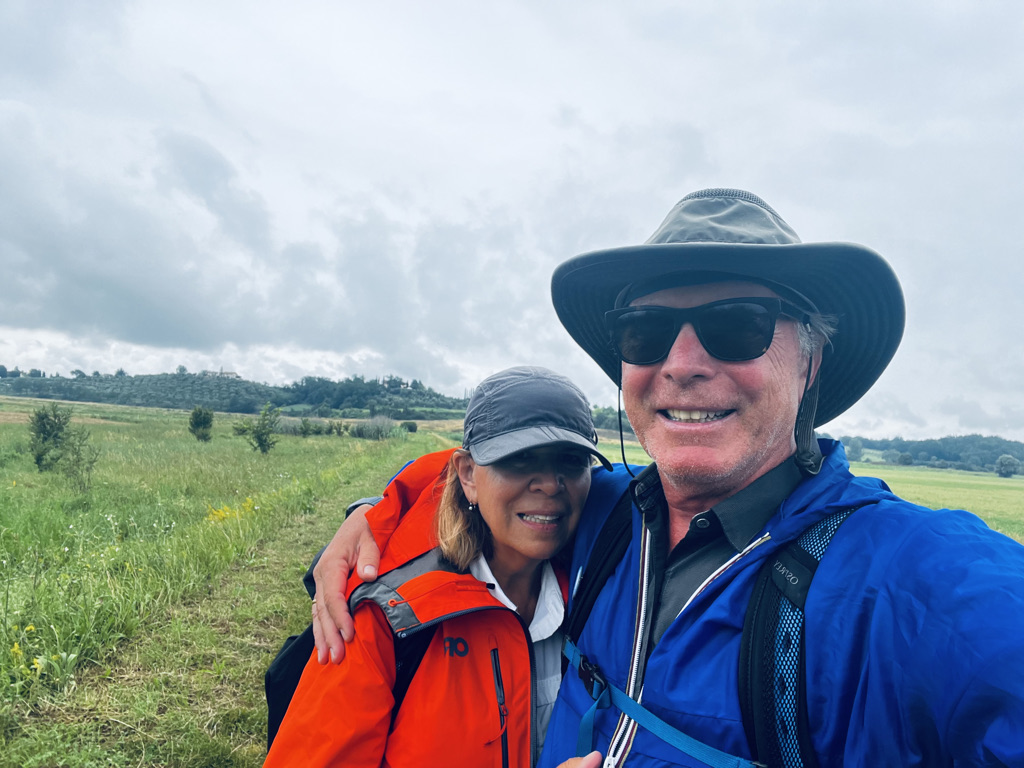
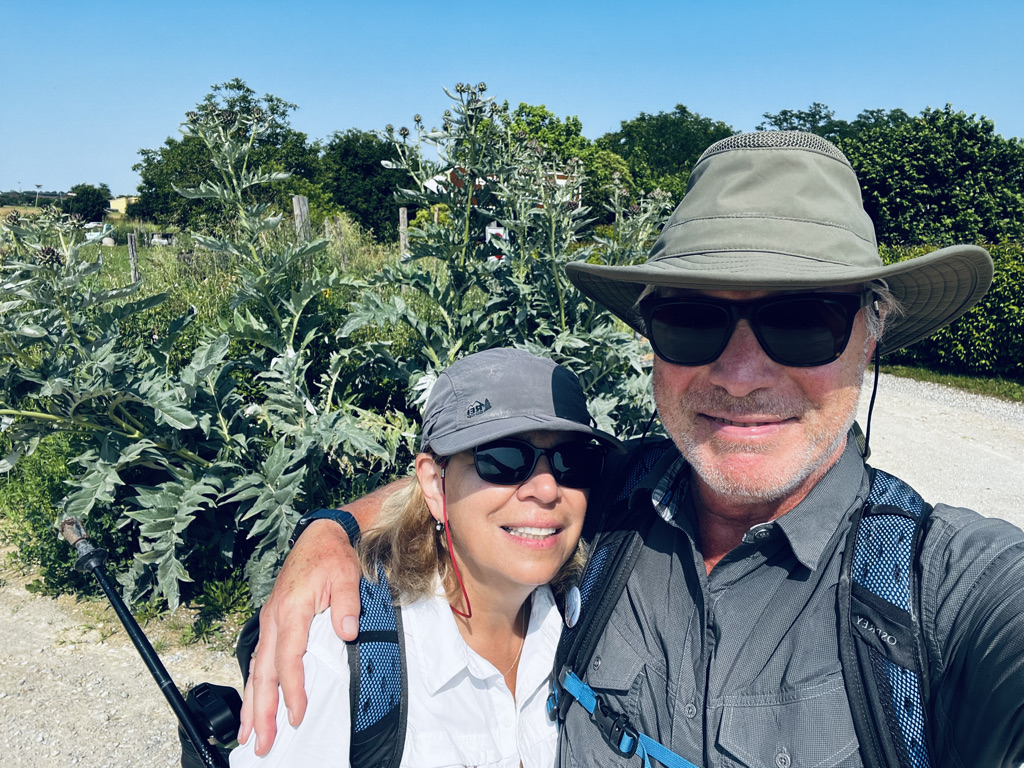
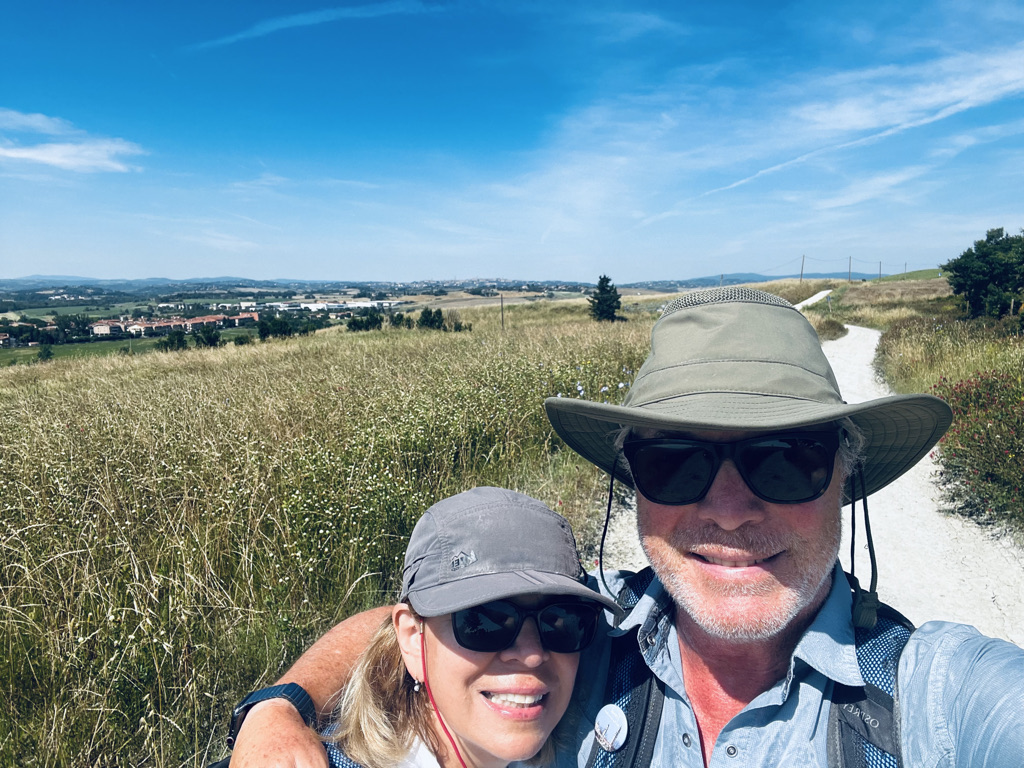
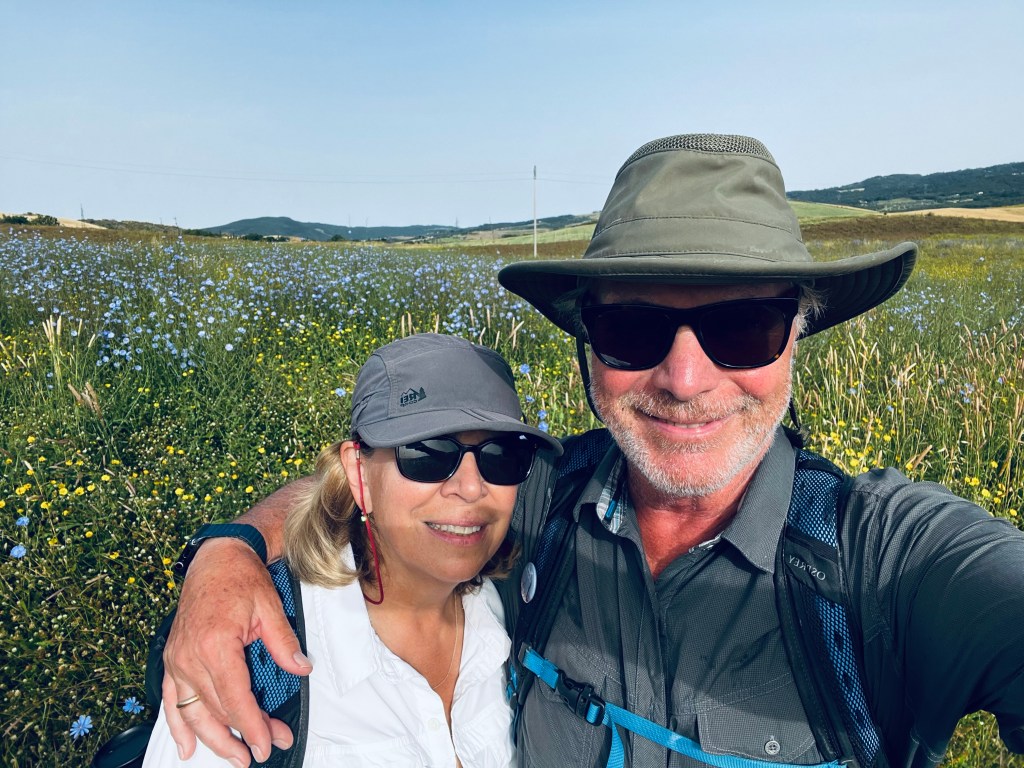
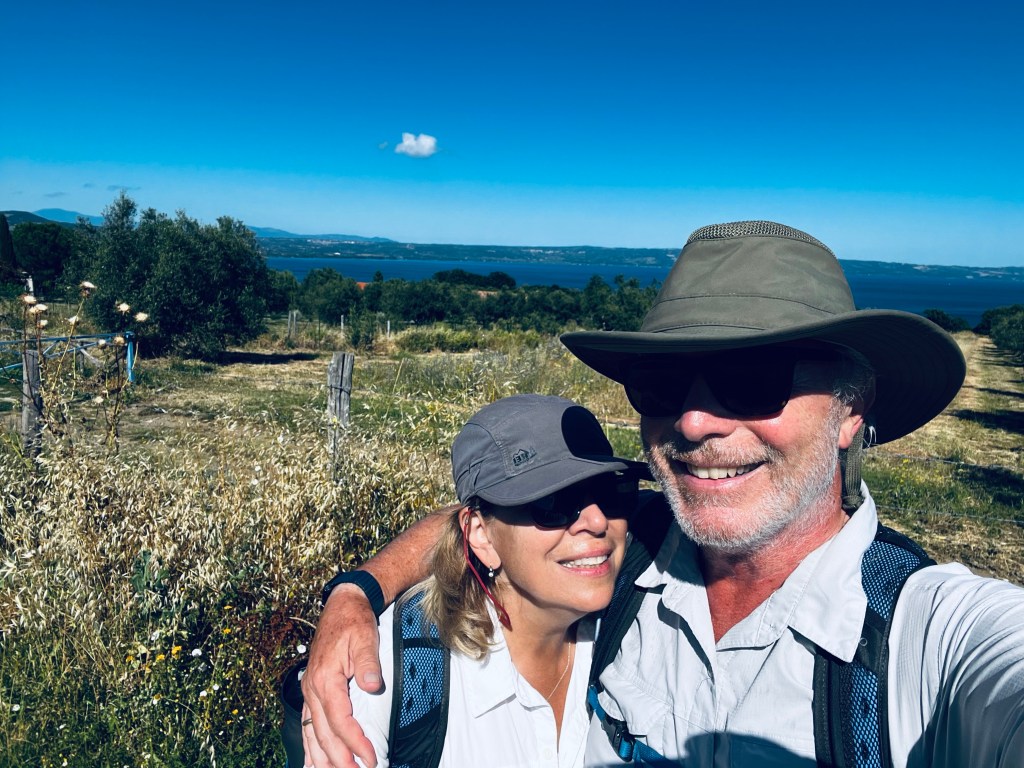
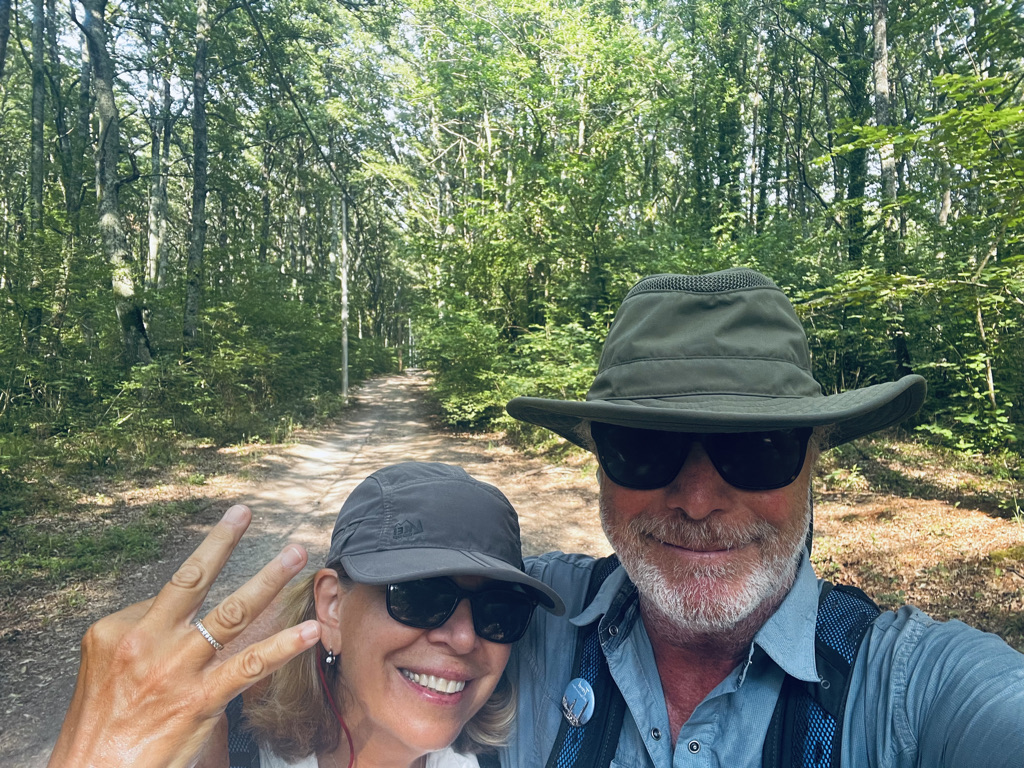
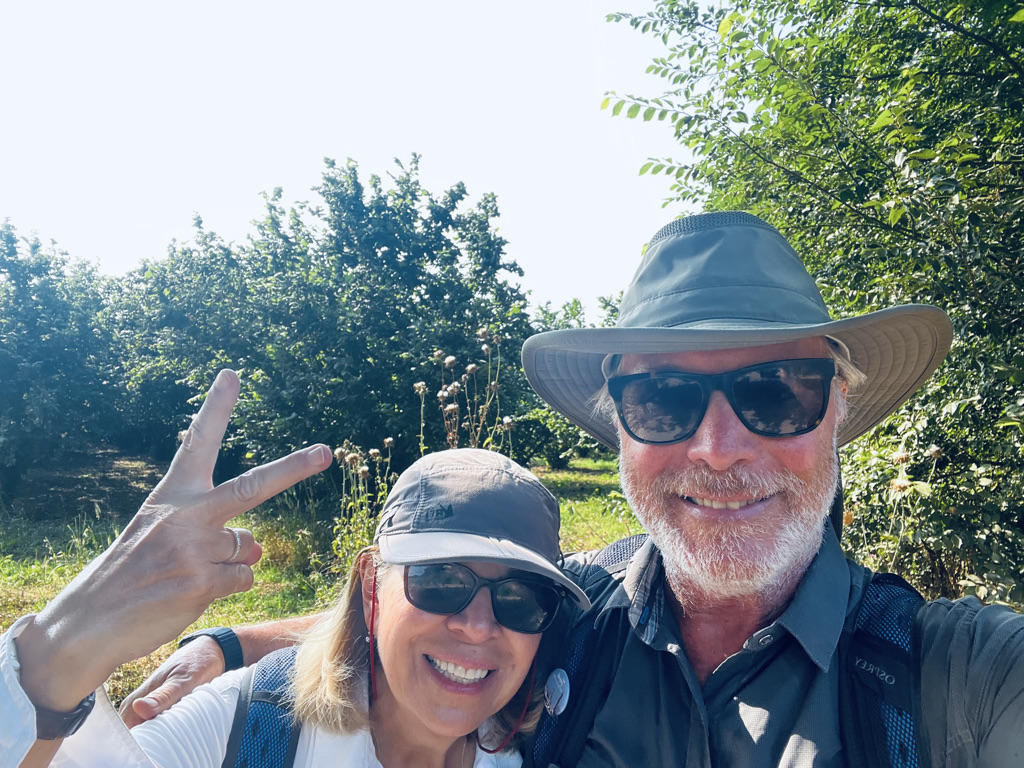
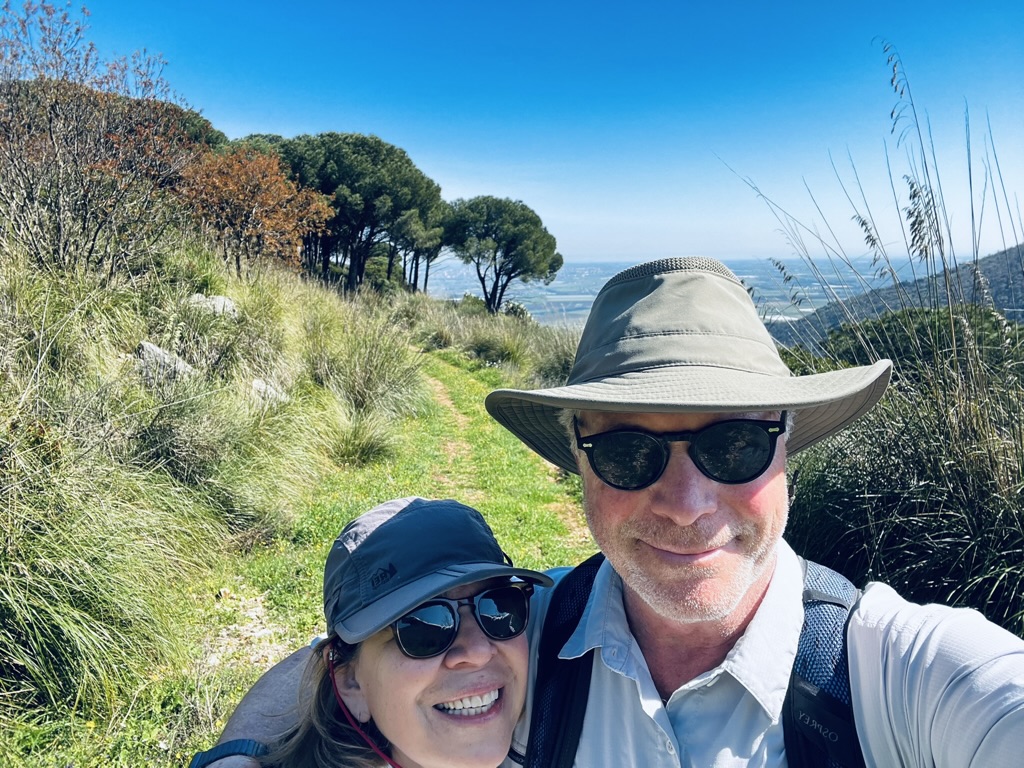
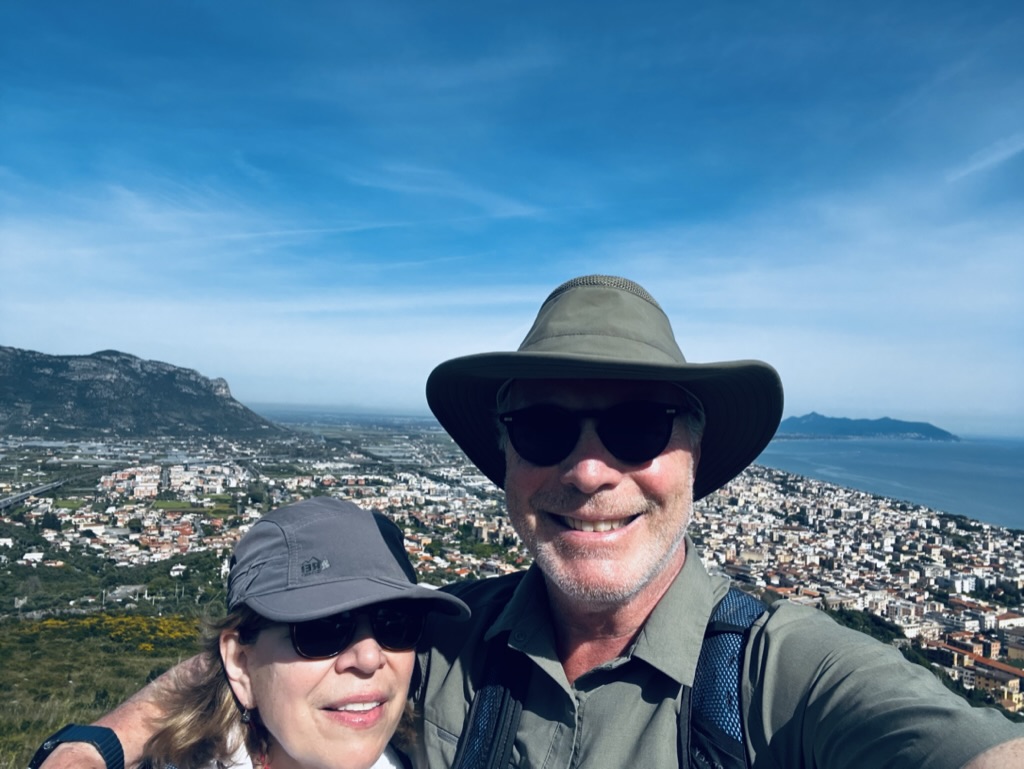
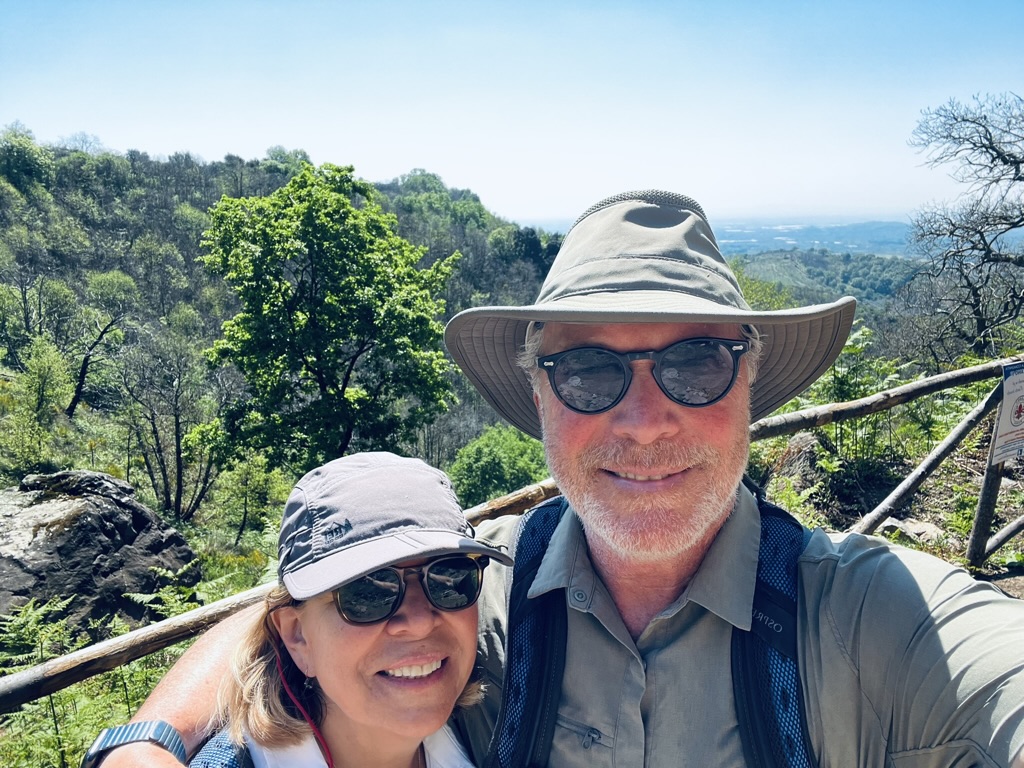
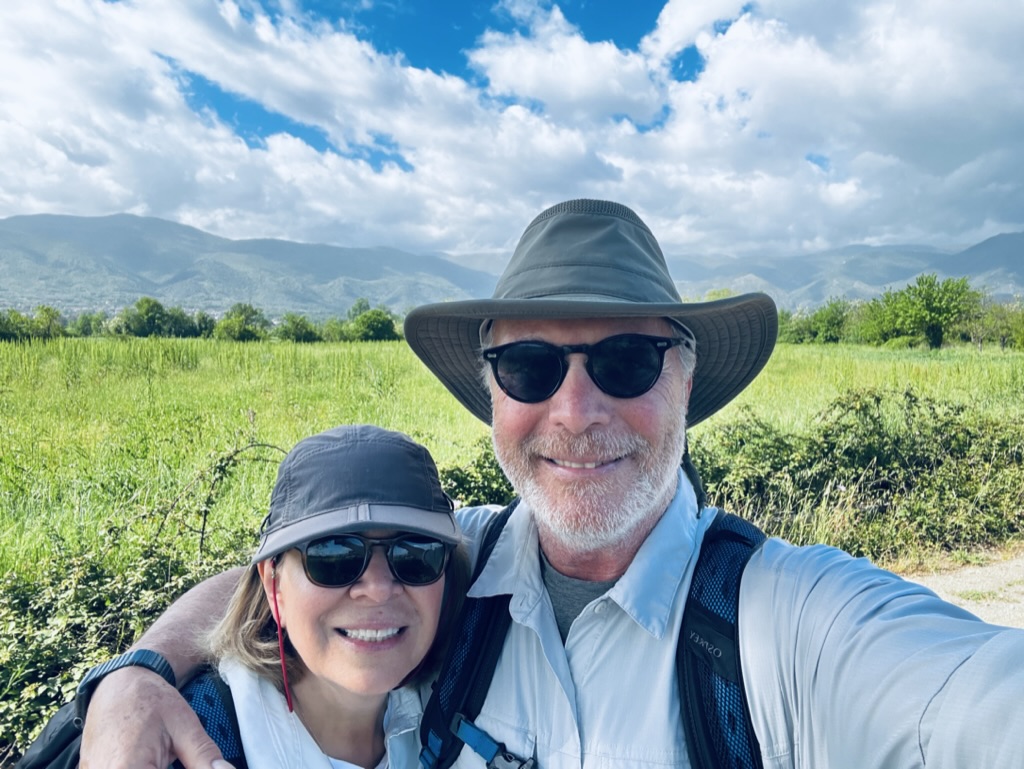
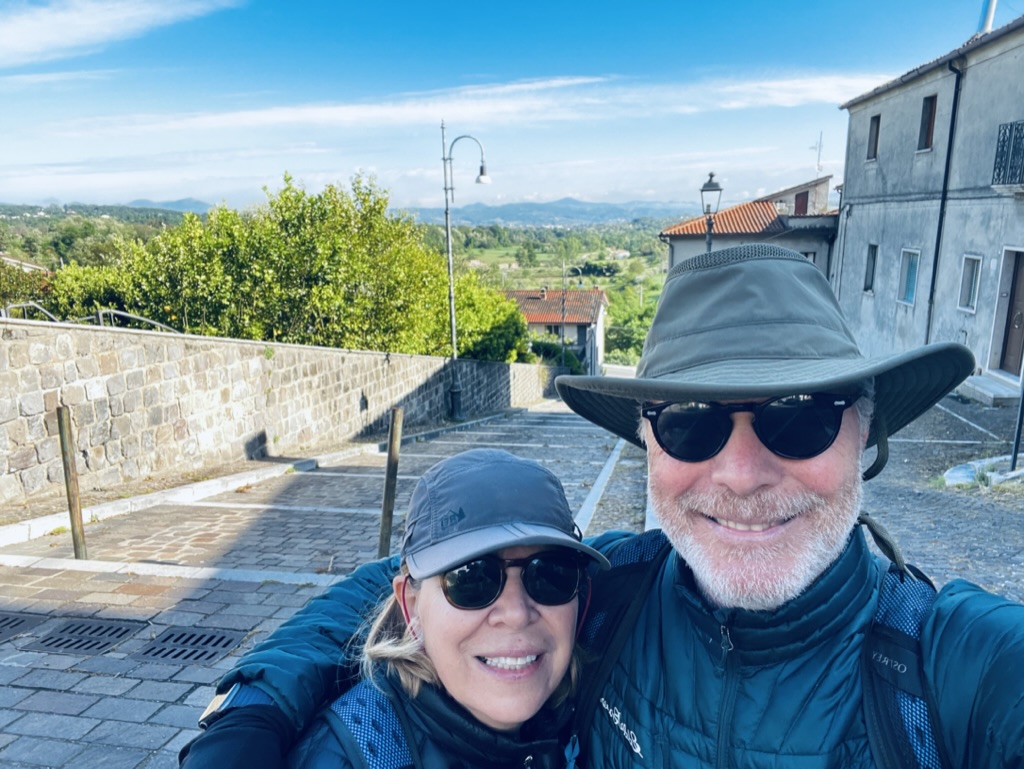
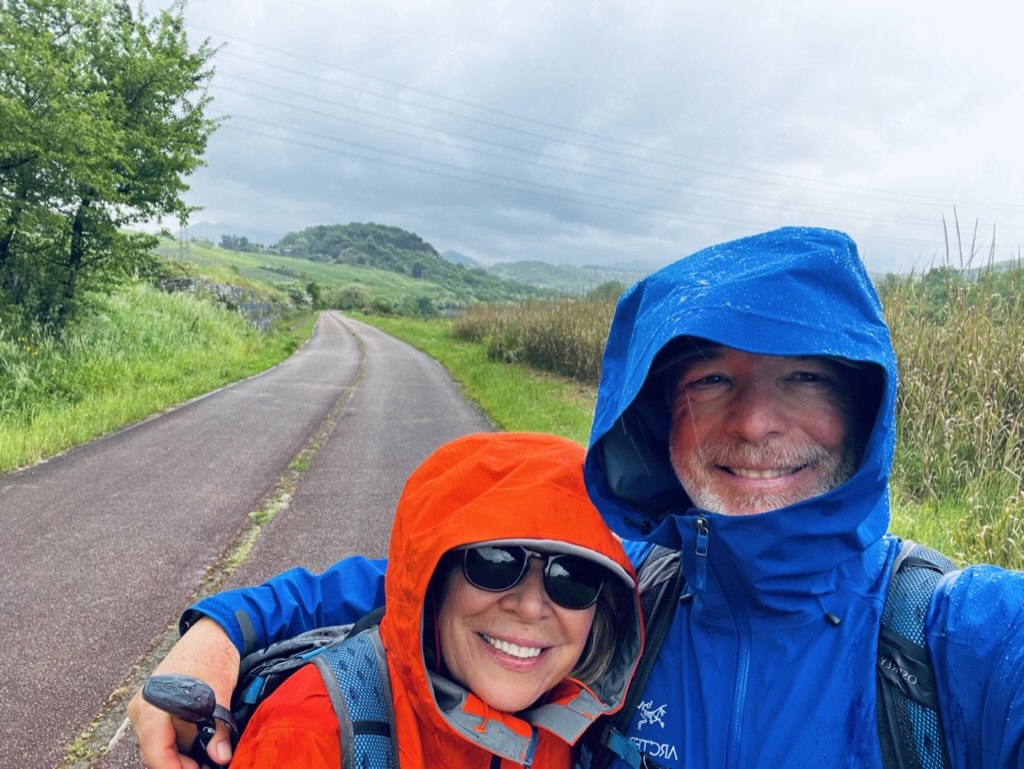
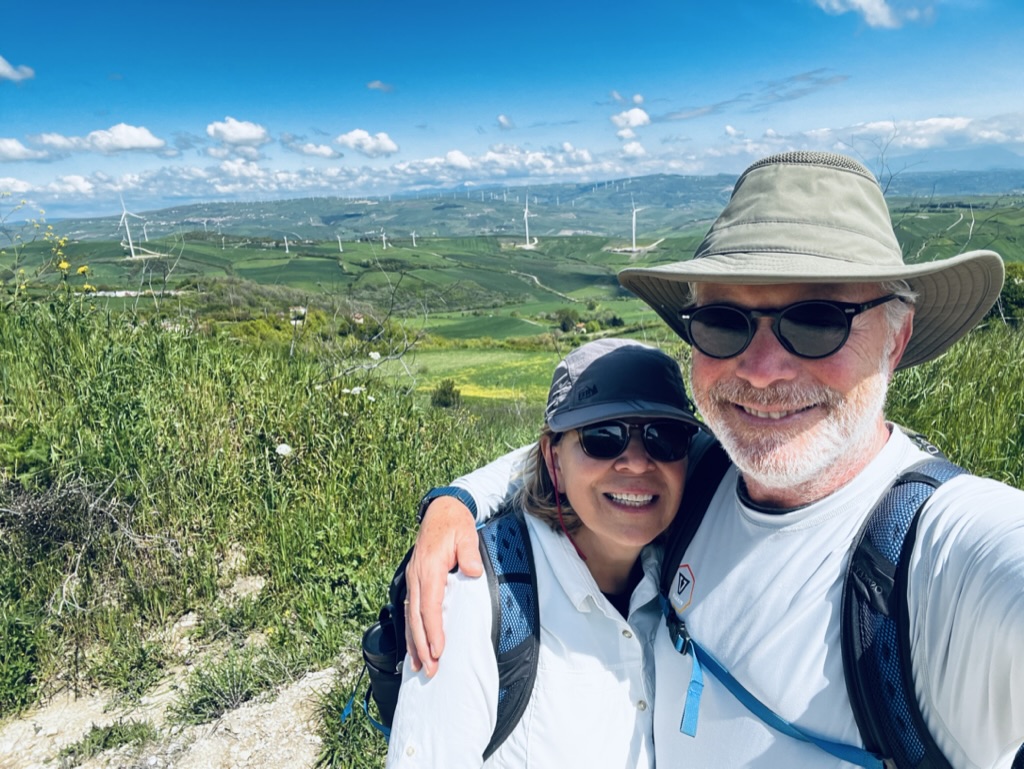
Once we hit the trail, we shout off a brief rollcall. “How are we feeling?” A 10 out of 10 answer is “Strong!” Second question: “How are the feet?” The perfect answer: “Quiet!” Next in sequence is posing for our trademark photo. You might ask “What accounts for Edward’s big smile?” I am grabbing his butt.
The Via Francigena takes us along many roads, and we are conspicuous pilgrims. I feel a responsibility to present myself as a “happy” pilgrim to those we pass. I adjust my smile and demeanor for onlookers particularly when feeling punished by the path. Perhaps not quite to the Gioconda level but think of the ecstatic expressions of martyrs while being tortured, like the flaying of St Bartholomew or St Lucy gazing at her eyeballs on a tray. I most closely resemble Perugino’s St Sebastian, his body pierced with arrows launched by joyful archers, his demeanor remains that of bemusement, like a parent watching naughty children. He is seemingly inoculated to the pain but not the inconvenience.
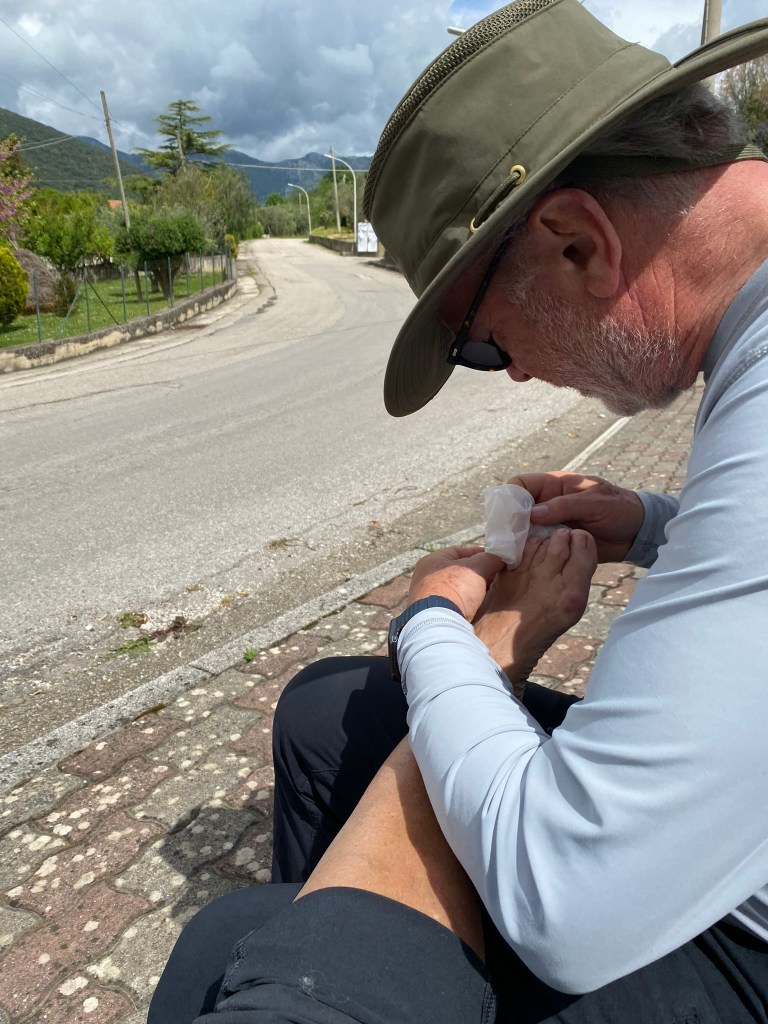
As our days come to an end, I am grateful for the level of maturity and wisdom the Wildebeest brings to this adventure. He serves as the IT guy, captain and navigator, DJ, concierge, and roadside podiatrist, all the while looking like Sir Jorah. An example: recently I was frustrated with a particularly embedded ceramic shard, the Wildebeest without a word, unsheathed his saber and completed the excavation – swoon. The fine art indulging eccentricity.
What I could really use is a style hack for my wardrobe.

Share this:
-
Pope to Puglia Day 15 and 16 Faicchio to Telese Terme – 19 km Telese Terme to Vitulano – 23 km
“Ah, America. Mi piacerebbe tanto andare in America” said the barista at the Roxy Café where we had our morning cappuccino in Faicchio. I asked her why, she answered “E un sogno!” I could not disillusion her. I could not tell her how fine life is in Italy, how beautiful the country, how welcoming the people. I told her there are beautiful places everywhere, but no one makes cappuccino as fine as in Italy.
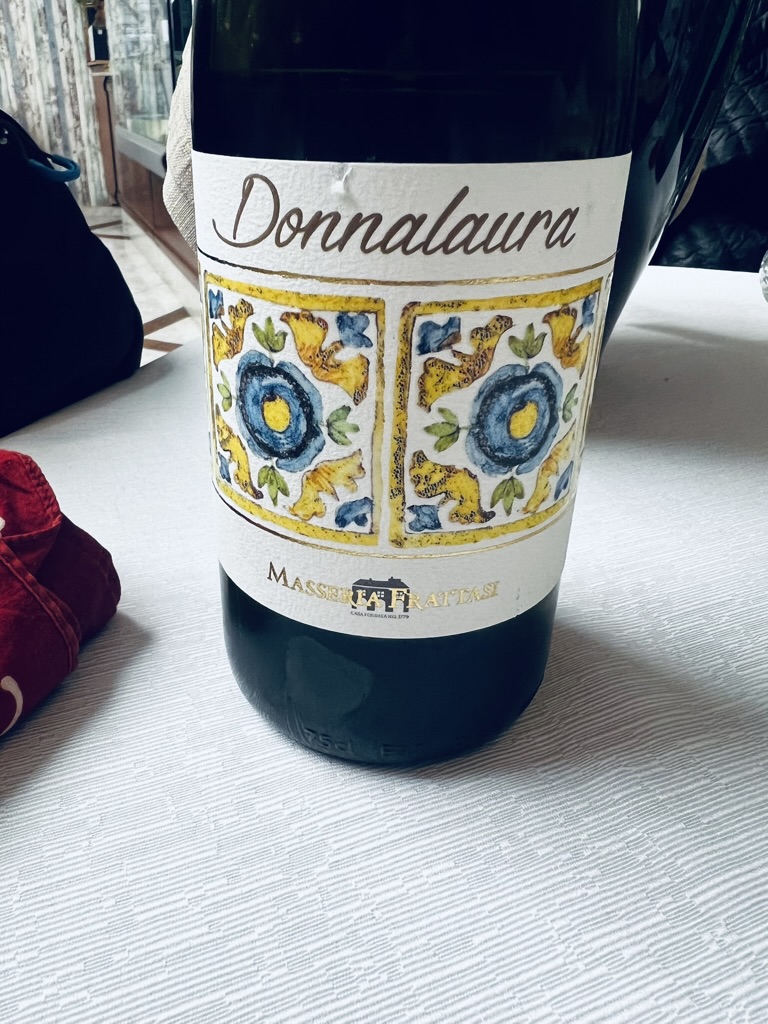
Here is how fast we travel. We reached Telese Terme in time for lunch and a “piede franco” wine, which is to say made from original roots not the transplants from the US when the phylloxera devastated vines in Europe. It was quite good. Here it is.
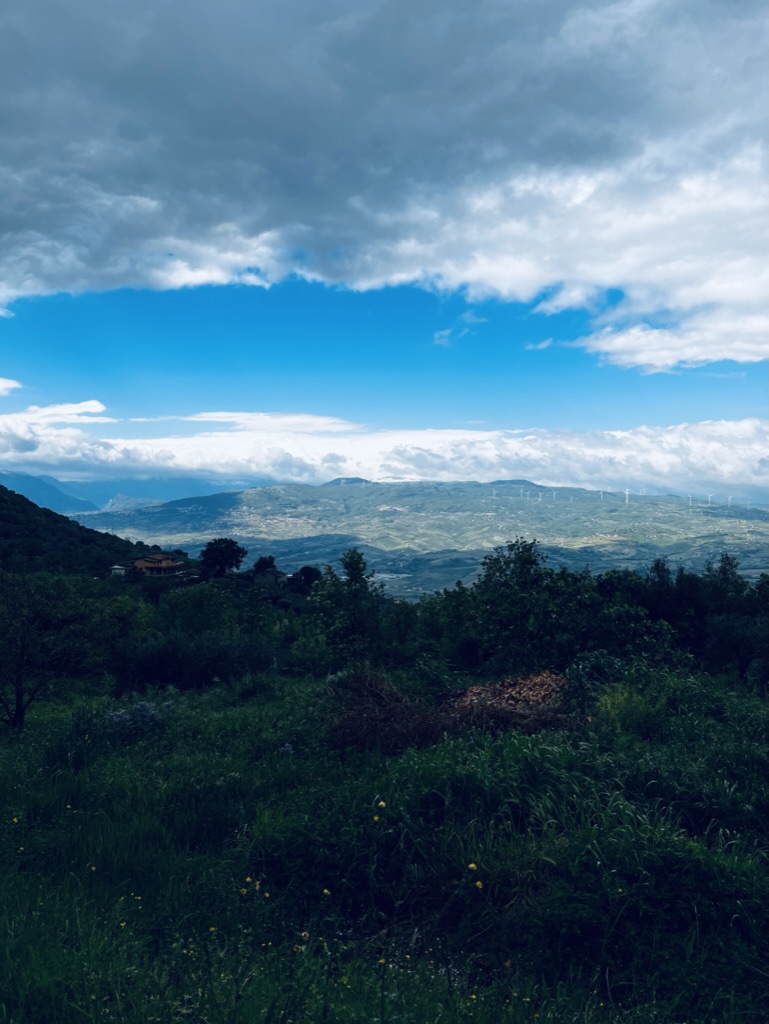
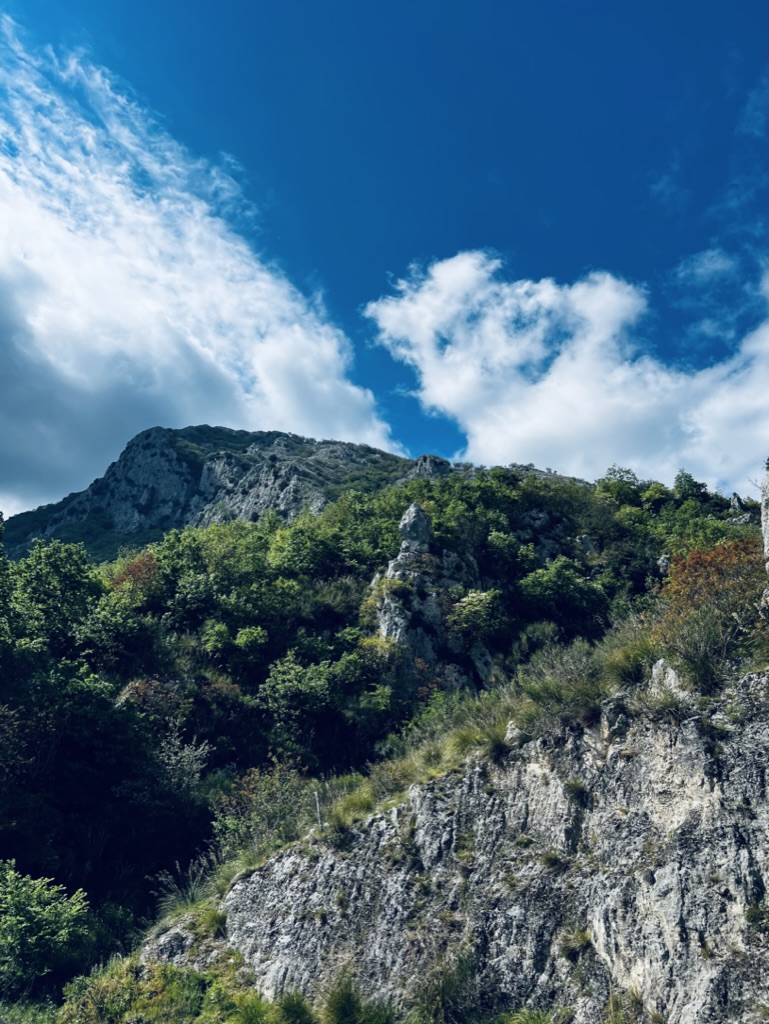
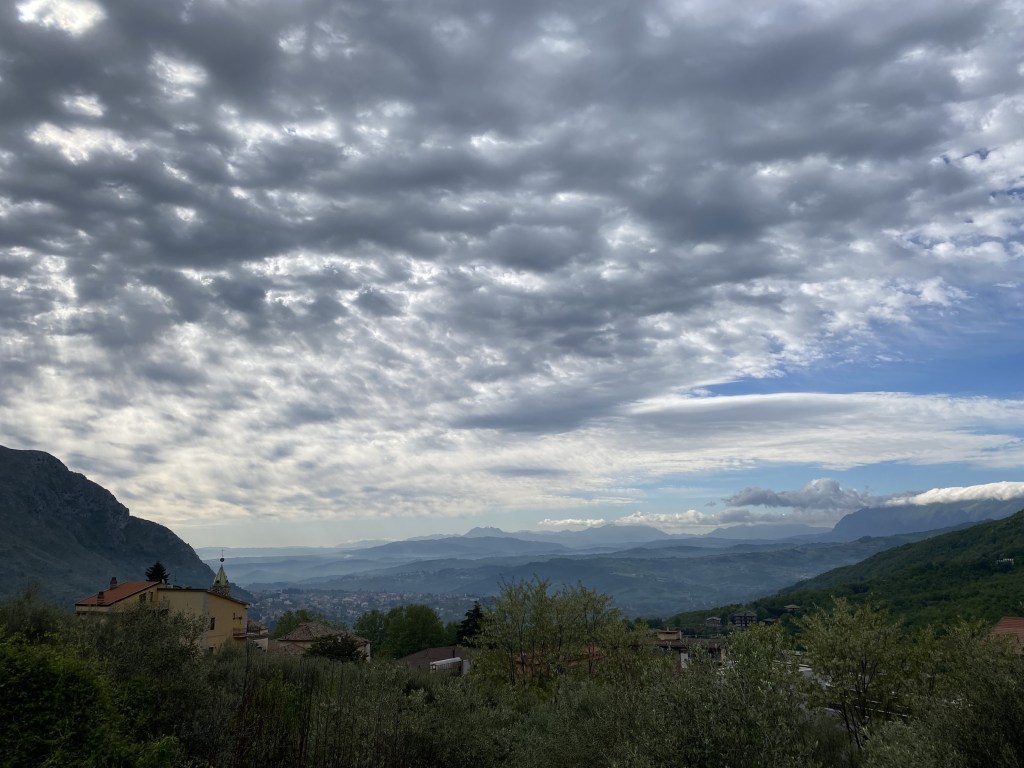
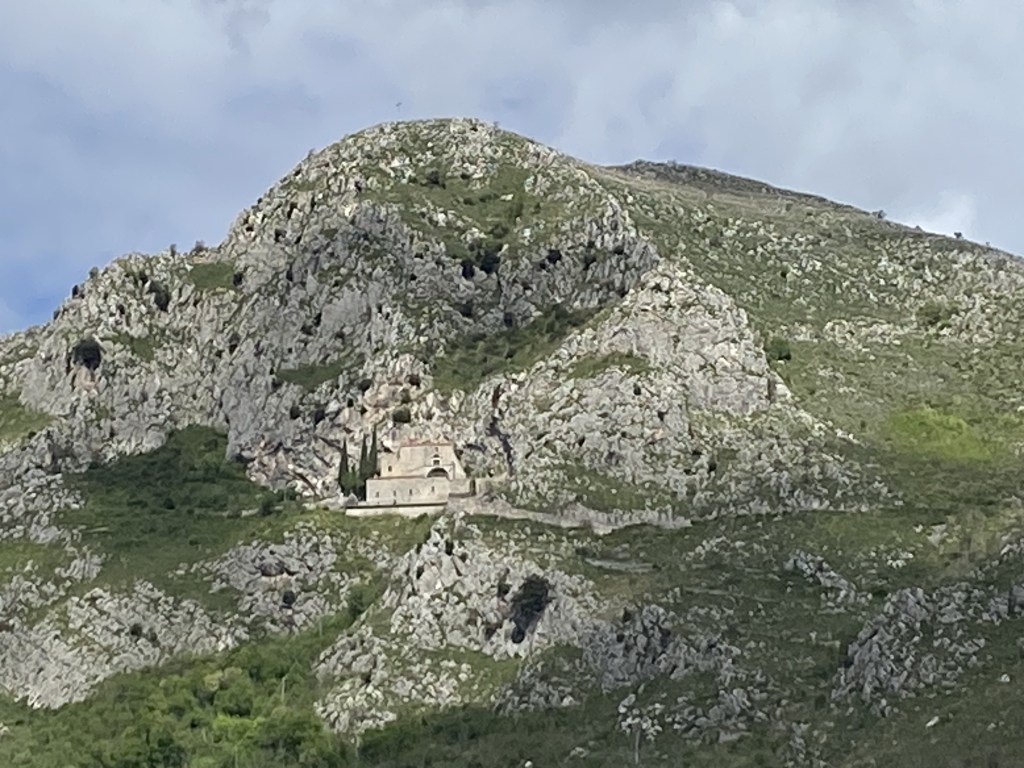
Next time someone quotes “May the road come up to meet you” I will explain they obviously have never been on a 45-degree uphill road for 8 km, walking into a headwind in the driving rain. All I wanted was for that road to back off. But we made it to Vitulano with a mixture of elation and wonder at the spectacular scenery. It was worth it.

Share this:
-
Pope to Puglia Day 17 Vitulano to Benevento – 20 km
On the way out of Vitulano, we crossed paths with a group of “Herb Tourists” hiking the mountainside for wild herbs with medicinal qualities. Herb Tourism. The troop leader is the cousin of the owner of the B&B where we spent the night and the uncle of the guy transferring our luggage. When I told him we are Americans, he exclaimed “Ahh, Americani, I have a cousin in Naples Florida.” Umberto, the owner of the restaurant where we had dinner last night, was in Kennebunkport, Maine last year. “Why Kennebunkport?” I asked. “I have a cousin who lives there.” We are part of a global community.
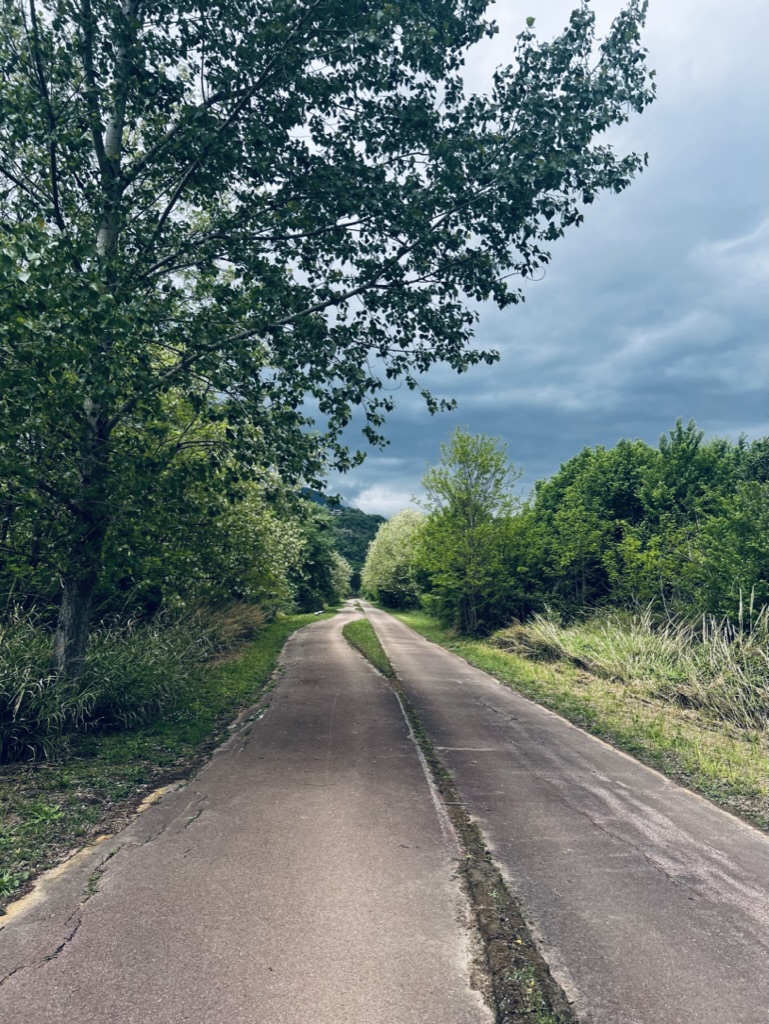
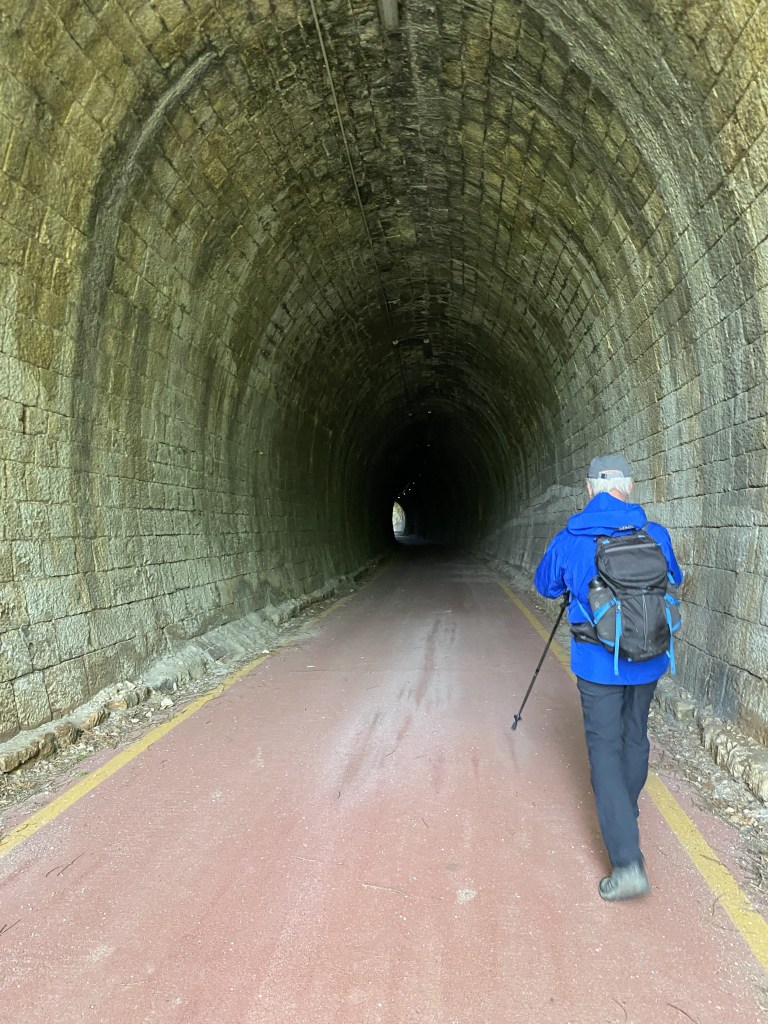
The path to Benevento included an 8 km stretch on a bike/running path, very well maintained, littered only by the white blooms the wind was blowing off the limb. Benevento is the largest city to which we have been since Rome. It is an old Roman town with a few monuments to show for it. Most important, it was the site of the Battle of Beneventum in 214 BCE when Roman legions defeated the Carthaginian armies on their way to reinforce Hannibal, who, deprived of the army he was expecting, was relegated to wandering, thus saving Rome and Western Civilization as we know it.


Share this:
-
Pope to Puglia Day 18 Benevento to Casalbore – 21 km
For a variety of reasons that have nothing to do with the sweet 18 birthday party celebration right under our window that continued until the early morning hours, we decided to hitch a ride with our luggage half way to Casalbore, so we walked only 10 km today, accompanied by the sounds of the Village People singing YMCA ringing in our ears, a song that for some reason was played over and over for said 18 year old party. The real reason we rode part of the way is that the trail is in poor condition after recent rains, including several streams we would have to forge barefoot. We opted out.
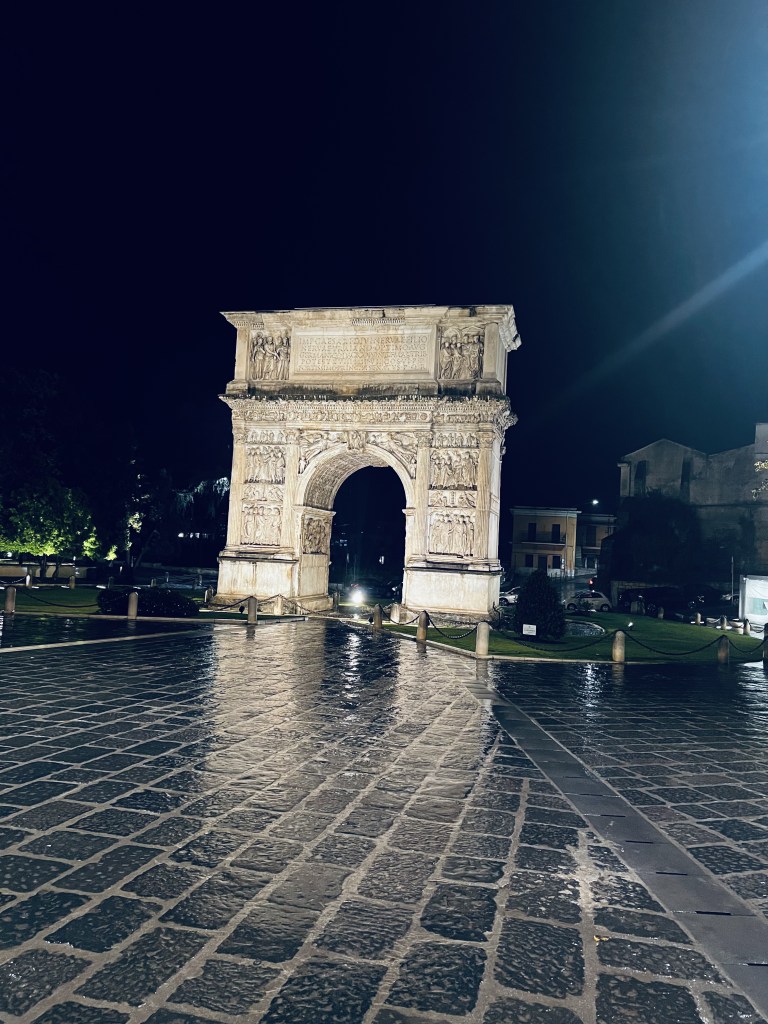
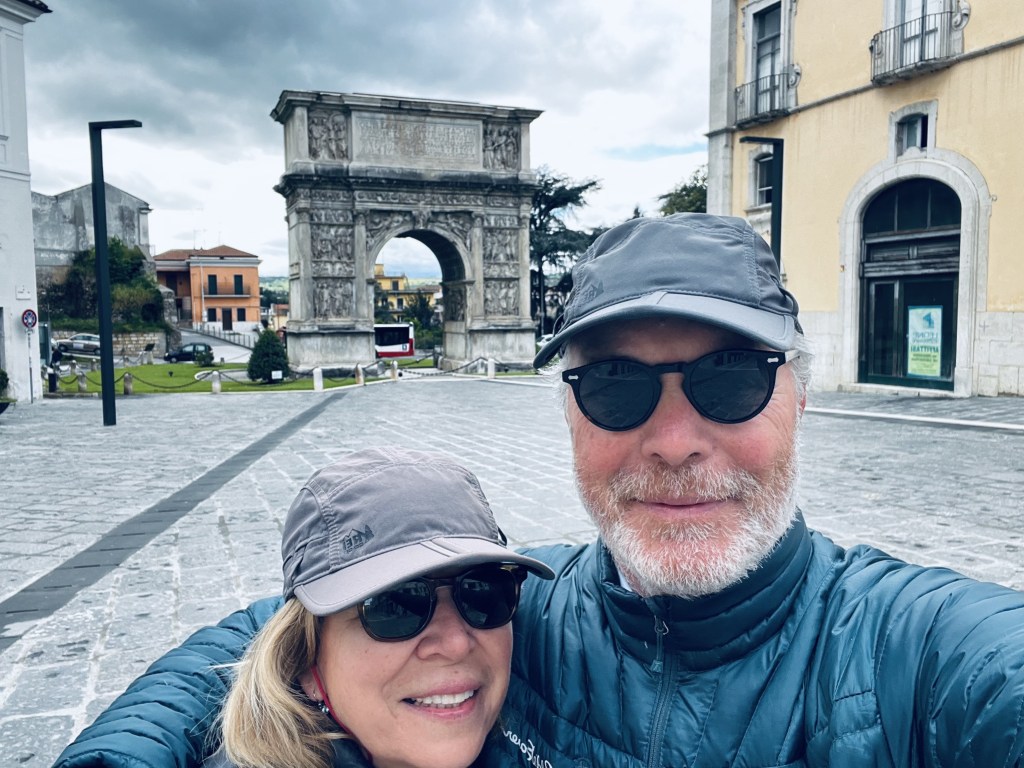
Before leaving Benevento, we revisited the Arch of Trajan, which was constructed at the entrance to the city on the Via Appia in the 1st century CE to celebrate Trajan’s victory over Dacia, a territory that included parts of present-day Ukraine. It is a stunning piece of antiquity.
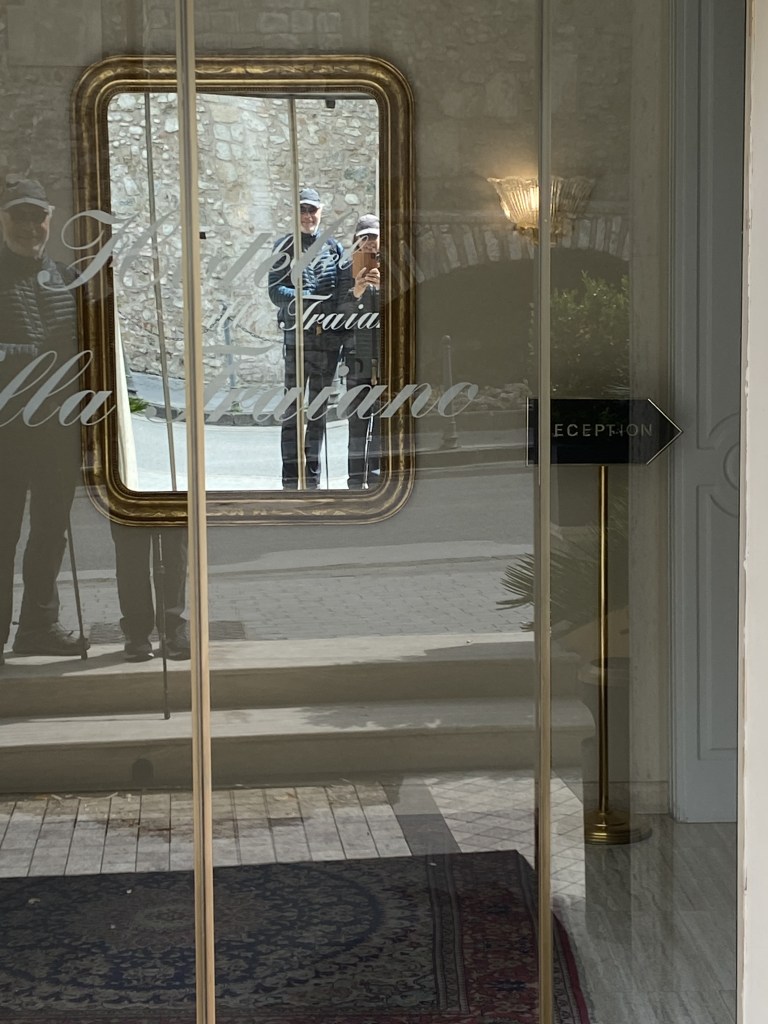
Casalbore is a very small village whose main attraction is a 12th century Norman Tower and surrounding walls that are in surprisingly good condition even though damaged during an earthquake in the 1600s. But the real attraction for us is our host, Valerio, at the Norman Towers Spa, also known as the Paradise Bar. He asked, as everyone has, how I come to speak Italian, I always answer simply “My mother is Italian” to which the invariable reply is “Where is she from?” When I told him she was from Naples, his eyes lit up. Valerio, also Neapolitan, treated us like celebrities or long-lost cousins and of course he has cousins in Western New York. He was a most generous, accommodating, enthusiastic host.
Share this:
-
Pope to Puglia Day 19 Casalbore to Celle di San Vito – 24 km
We are over the Apennines! The white road led us through fields of effervescent green spring wheat until we crested the last hill where the Tavoliere plain, the breadbasket of Italy, opened before us like a sumptuous banquet stretching to the yet unseen sea. We are in Puglia, which as a kid I knew as Le Puglie, a term no longer used, where we will be for the next 4 weeks.
We stopped at a convenient bench for our prosciutto/mozzarella panino and a fine juicy orange where we found a very considerate USB port to charge our phones. The cammino provides.
We passed through Greci, a hilltop Arbereshe town where the small Albanese community has lived since the 15th century. Arbereshe, an archaic form of Albanian, is still spoken and the street signs are in Italian and Arbereshe. Aldo, the mayor, told us the Albanians saved Europe from the Ottoman Empire and were invited by the Pope in 1495 to fight the Angevin French who claimed the Kingdom of Naples. The history of the Italian War between Charles VIII of France and the League of Venice for control of Southern Italy is so convoluted that it defies accounting. The one memorable outcome was the first known case of syphilis among French troops garrisoned in Naples.
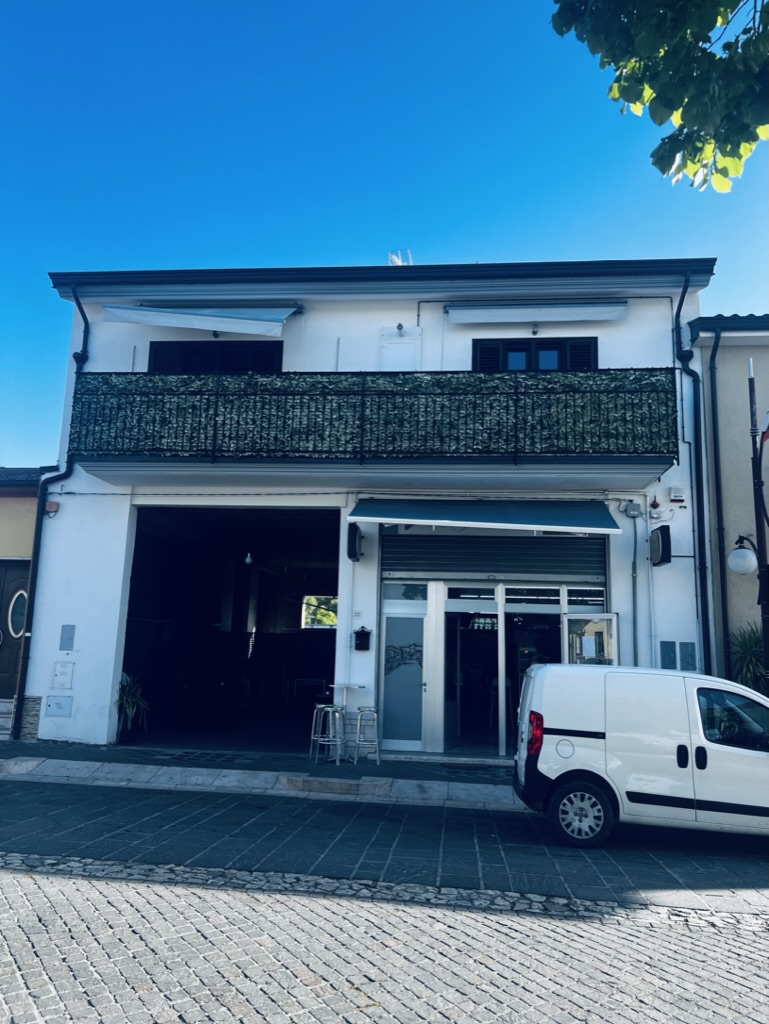
PS: Here are the “Norman Towers Spa” where we stayed last night.
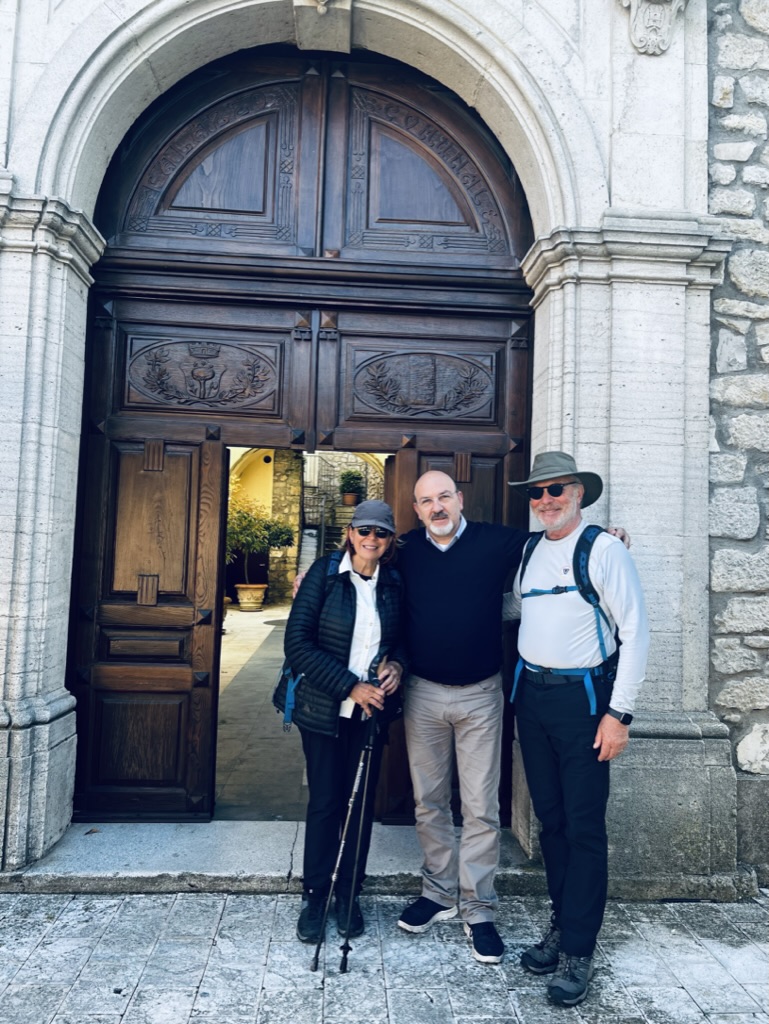
A tour of Greci with the mayor
Share this:
-
Pope to Puglia Day 20 Celle di San Vito to Troia – 0 km
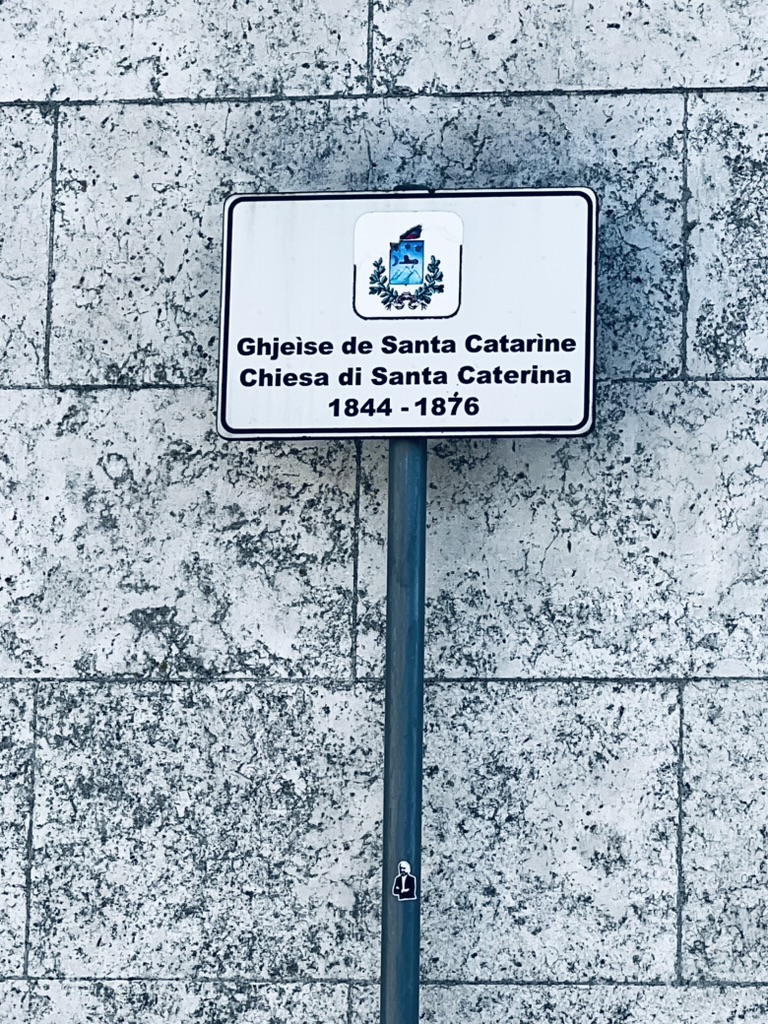
Celle di San Vito would have been interesting because it speaks an Angevin French and street signs are in Archaic French but our accommodations were unacceptable so, as the sun was setting, we persuaded our host in Troia, our next stop, to host us for one more night and to come fetch us before nightfall.
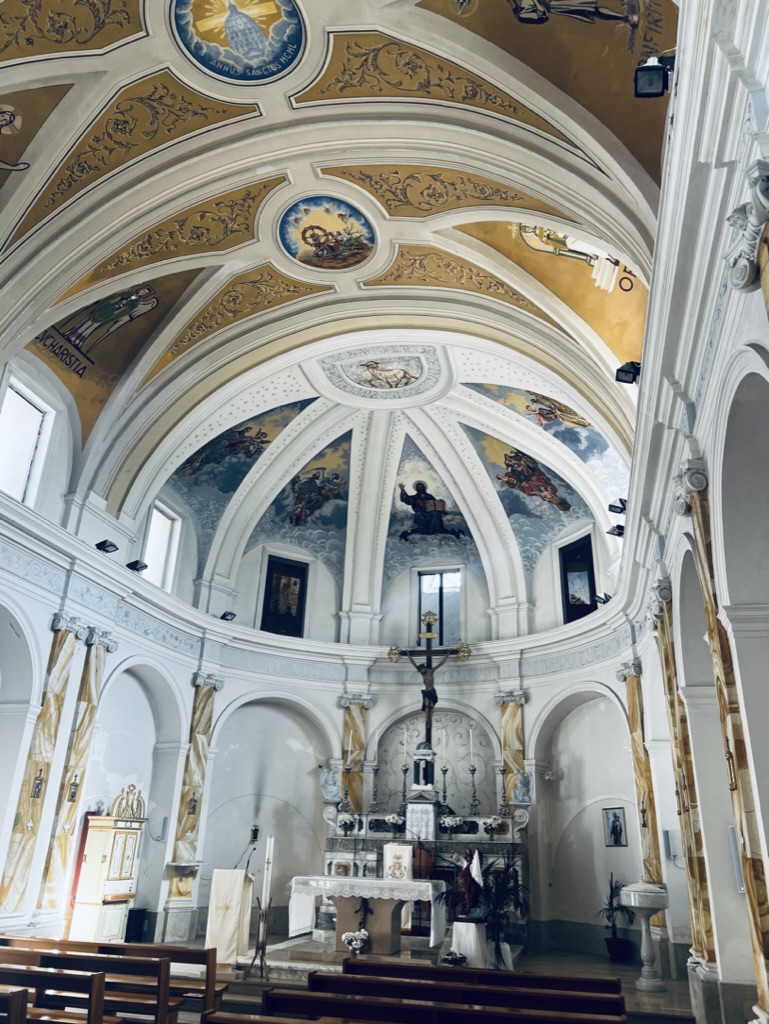
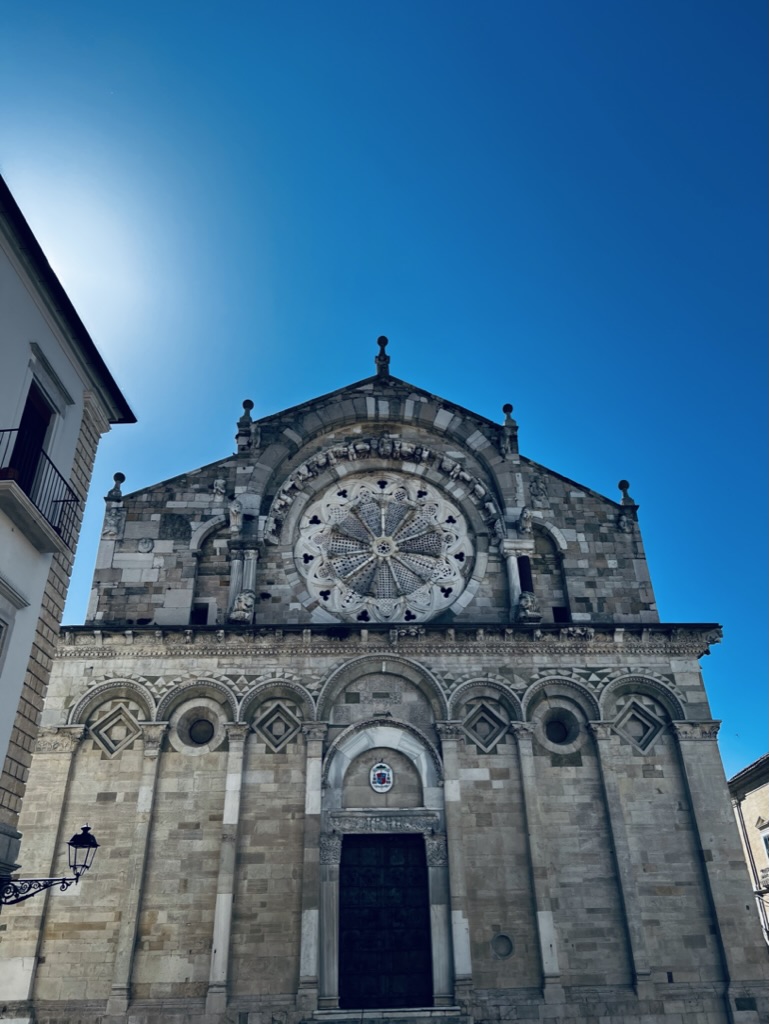
It all worked out even better than expected as we had a rest day in Troia, which we needed. We walked around, visited the imposing 11th century cathedral with Arab façade elements, walked around some more, read, and wrote at a café, had a delicious lunch and we crossed paths with other pilgrims for the first time. Martin, who is German but has lived in Pisa for 40 years, is walking from Pisa to Athens, his destination is Lesbos where he has a house. Today he covered 17 km in 3 hours in the morning and plans another 15 km in the afternoon. In sandals. We met a Brazilian couple, who are walking the Via Francigena, he by foot, she in the chase car, from Lucca to Brindisi. A global community.

Share this:
-
Pope to Puglia Day 20 Troia to Lucera – 18 km
The paneficio (bakery) was bustling this morning at 8 am with people milling about cheered by the aroma of freshly baked bread. It’s the smell of home, family, a good meal and a warm fire. While waiting for our focaccia, we said hello to two young men whom we had seen back in Benevento. We exchanged vital info – where to, they to SMDL; where from, they from Brescia in norther Italy – but otherwise they seemed to want to be left alone, which suits us fine. We surmise they are seminarians or just good friends or both.
The variable weather means constant change of outer wear from goose down jackets (it was chilly this morning and the wind was blowing) to rain slickers, to just shirts and then back to the jackets. At the beginning of one downpour, a lady stopped her car to offer us a ride. Though tucking into a warm dry car was enticing, we politely refused. We were in the mood for a walk and the endless fields of wheat and olive trees are soothing.
At Hannah’s suggestion we listened to Ezra Klein’s interview with Adam Moss, the former editor of New York Magazine, on editing and its role in the creative process. Klein is always thoughtful, but this piece is very insightful especially on the relationship between motion (running, cycling, walking) and creativity. Our walking helps us focus more intensely, even if on nothing.
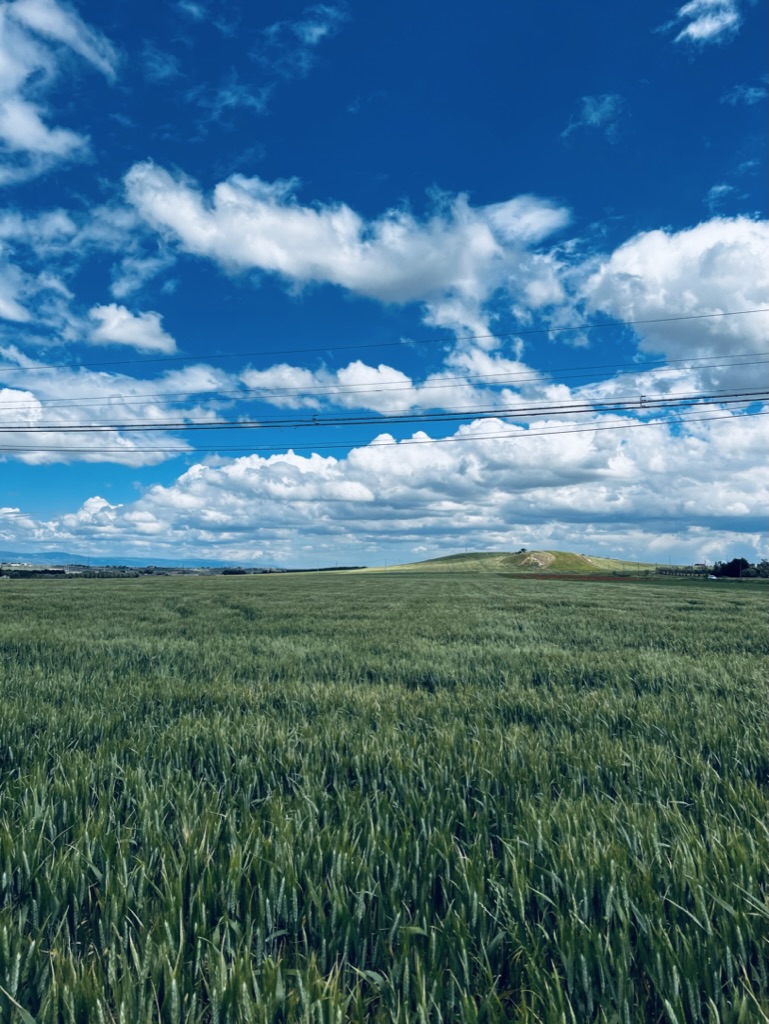
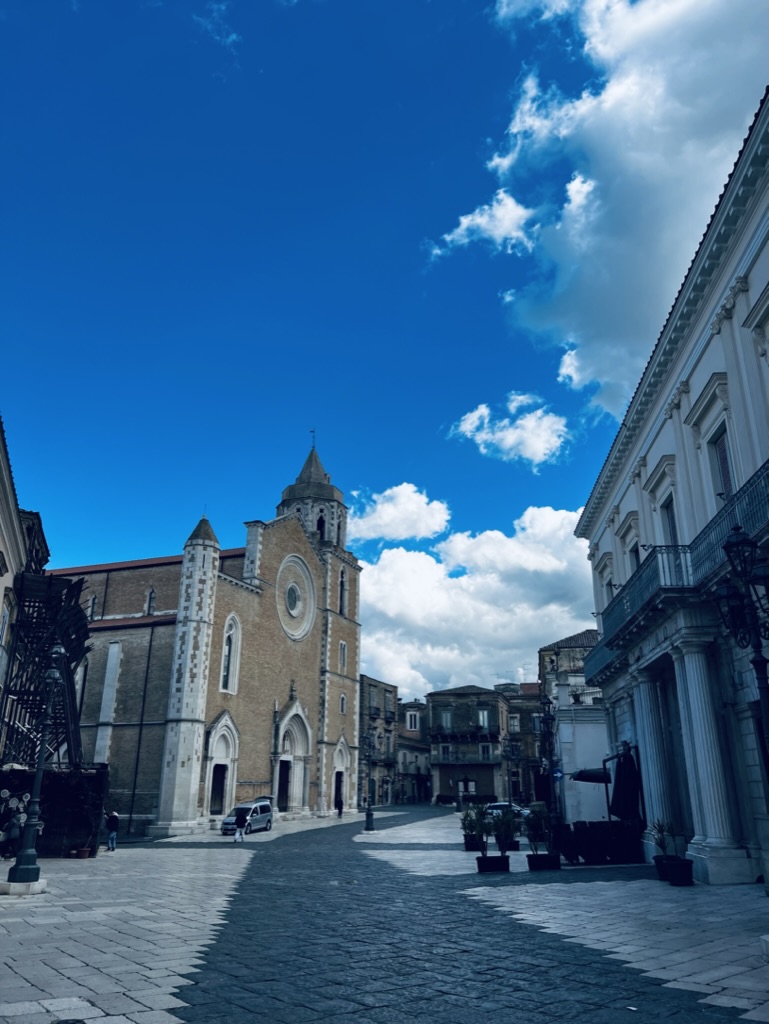
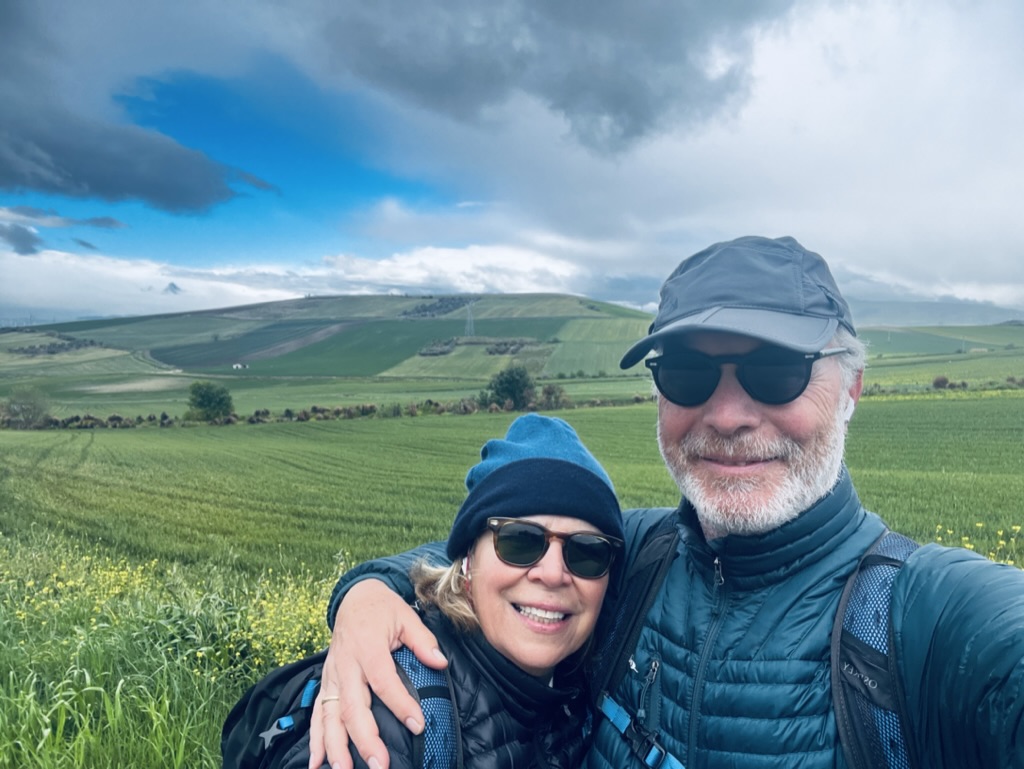
Share this:
-
Paula’s Weekly Summary Pilgrim’s Progress into Week 4
We continue to avoid criminal behavior, in fact, we have been seriously pursuing good judgement. We do not want to lose our baby-sitting privileges when we return home. Two examples of this new virtuous life: 1) when we enter heavily trafficked roads we remove our ear pods, a pair of which we share so we can listen to the same book and music; 2) I refrained from stopping in the middle of traffic to pick up a colorful bug carcass to add to my collection
At times we cannot avoid walking along busy motorways. When we step onto the pavement we transform into mythical figure with enormous antennae, oscillating eyeballs, conch-shell-like ears that enable us to hear approaching vehicles and assess size, weight, and the driver’s disposition. These assessments are communicated through a series of grunts and appropriate action is taken. Never underestimate a middle-aged woman driving a Fiat Panda.
While I have exercised restraint about collecting on busy roads, the path continues to provide a wide inventory. The rusty metal collection of barbed wire and loppy bits has grown significantly. These pieces scream to be part of a jewelry ensemble: chockers, bracelets, maybe a tiara. I could sell these pieces and include a tetanus shot with each purchase. Just an idea.
The ceramic pieces, my “progress artifacts”, nearly outweigh the rest of my suitcase. I have tried to be a more discerning collector. Pieces collected in the early hours of the day are more capricious but as the hours accumulate retrieval is challenged by all body parts. You see I’m a basic 5-to-6-hour walker. When we are going on 8 hours I start seeing Jesus on toast. Things break down. The debate goes something like this: I spot a nice shard. Head says, “I think we have that already.”
Knee, and hip weigh in “You going to bend down for that?”
Left knee “Oh no, please.”
Right knee “But it’s just white with a few dots!”
Hip, “Agh, she is going for it.”
Arm, “I got it, don’t worry.”
My body emits a sound like the deep groan of metal on the Titanic when the ship breaks in half.
I’m no prima-donna when it comes to accommodations. One of my earliest recollections regarding this fact goes back to high school. A friend and I rented a bedroom room in Ocean City through an ad. We discovered upon arrival that the “room” was a camper parked in a garage with a dog chained to the hitch. You adapt.
The criteria for choosing accommodations on our walk is primarily proximity to the Via Francigena path. These are often very limited. After 132 overnight accommodations on the Via Francigena, statistically it was likely one would be unacceptable, and it finally happened. No further details are necessary. We have had the full Kubler Ross range of room types. My favorite room on the phase resembled a chic public storage unit. No windows, a gray and black palette, and a paneled frosted path divider between the room and bathroom. It had an amazing stock of Malin&Goetz soaps. One problem, condensation when using the shower created a cascading water element on the walls creating puddles on the floor.
A clarification is in order regarding “Norman Towers Spa” in Casalbore. Some may have misinterpreted the term “spa” based on congratulations for a nice cozy respite. In Casalbore Spa means a big hot tub in a crazy tricked out room. The hot tub faced a large TV projecting a burning fireplace and was adorned by multi-colored ceiling lights. The ceramic tiles on the wall depicted Vesuvius and Niagara Falls. None of the usual spa amenities were offered, no puffy slippers, no thick towels, no lavender spray for your pillow, no music replicating dolphin chatter. The lovely owner, Valario, confided that the “Spa” was very popular with local clients of his bar.
The weather this week was challenging, cold rain and wind most days, but the past two days tendered a spectacular apology. We were treated to a dramatic display of Puglian agriculture. We walked through waist high wheat and fava beans, often without a visible path, just pushing through these gorgeous plants. Acres of flowering fennel that looked like fluffily green moss was our next host. We meandered among bent and twisted olive trees, which resembled menacing characters in children’s fairy tales.
But today was a gift. After our GPS failed and no signage, we were marooned in an endless field of asparagus without horizon. African men, sitting close to the ground in hundreds of electric, canopied go-carts straddled the rows of the plants, cutting asparagus shoots with a simply paring knife. We took great interest in them, and they took great interest in us. After a while the carts stopped, men got out, took off their shoes, knelt and bowed touching the ground for mid-day prayer. We learned that the workers were from all over Africa, some from Ghana, some from Mali, some from Zimbabwe. One harvester asked me “Where are you from? What is your name? Where are you going? How many kms did you walk today? How old are you?”
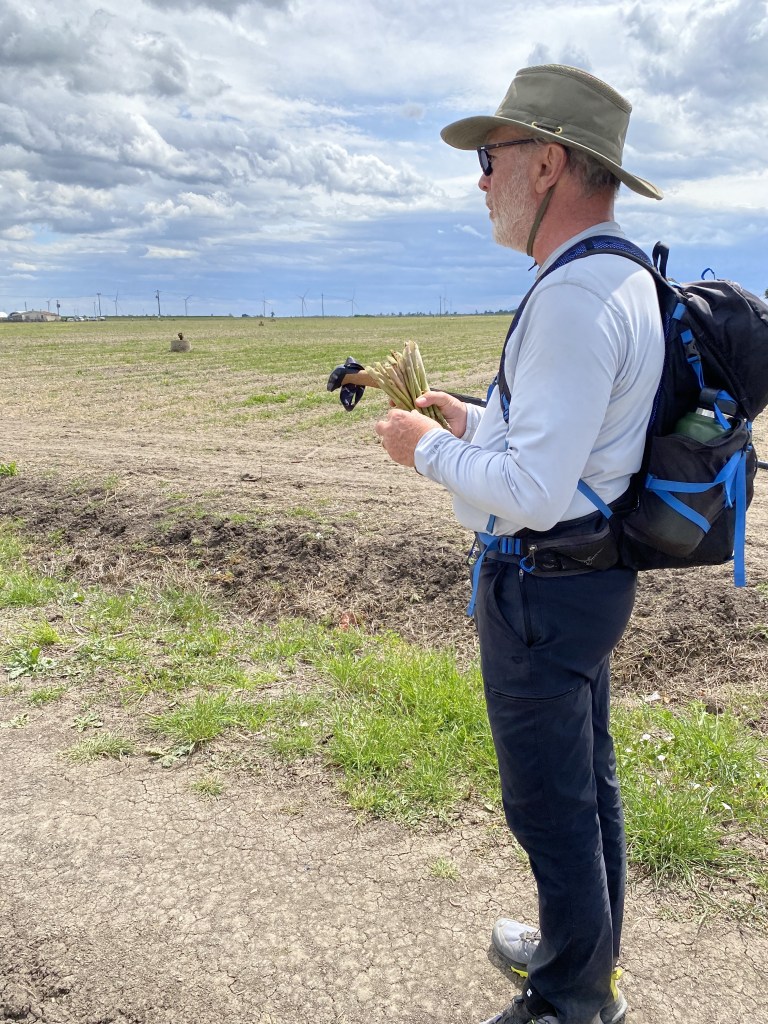
We were still confused about where we were until we spoke to Angelo, who gave detailed direction and an armful of freshly cut asparagus which we savored as we found our way back on the path.
Share this:
-
Pope to Puglia Day 22 and 23 Lucera to San Severo – 28 km San Severo to Santa Maria di Stignano – 22 km
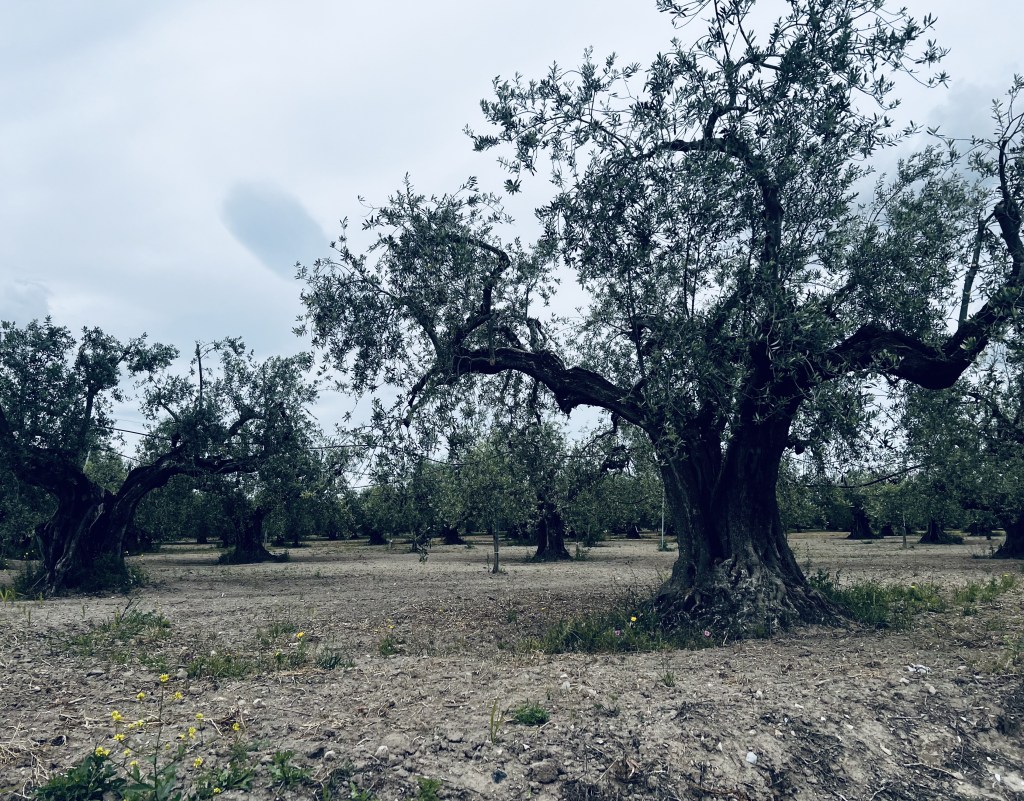
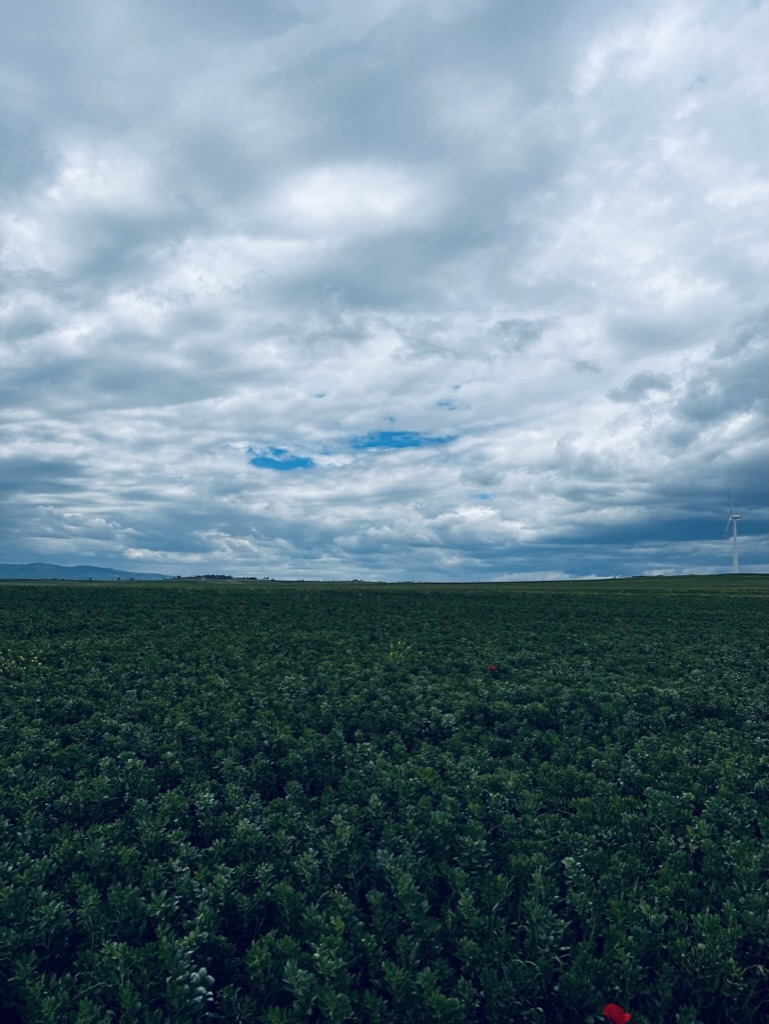
The valley opens before us like a puddle spreading from an overflowing bathtub. Row after row of olive trees and vines for most of the 28 kms to San Severo which is a small but charming town that was sealed tight for the 25th of April, a national holiday celebrating Italy’s victory over the Germans in WW2. We settled for a pizza place that happened to have very good food. After San Severo luxuriant fields of fava beans, wheat and asparagus, the latter being worked by people from Africa, many from Ghana, on hundreds of electric carts. Ghanaians gathering greens from golfcarts on the Gargano.
The Gargano massif, which we will climb tomorrow to San Giovanni Rotondo, looms 4000 ft over us, a challenge to our stamina and endurance.
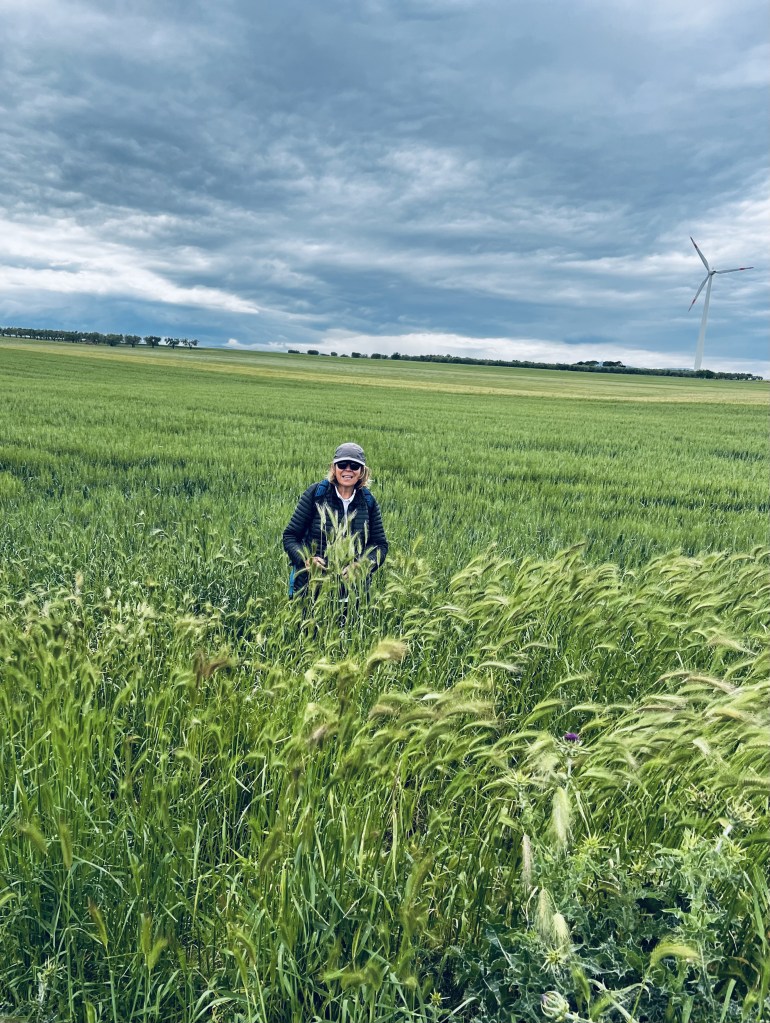


Share this:
-
Pope to Puglia Day 24 Stignano to San Giovanni Rotondo – 22 km
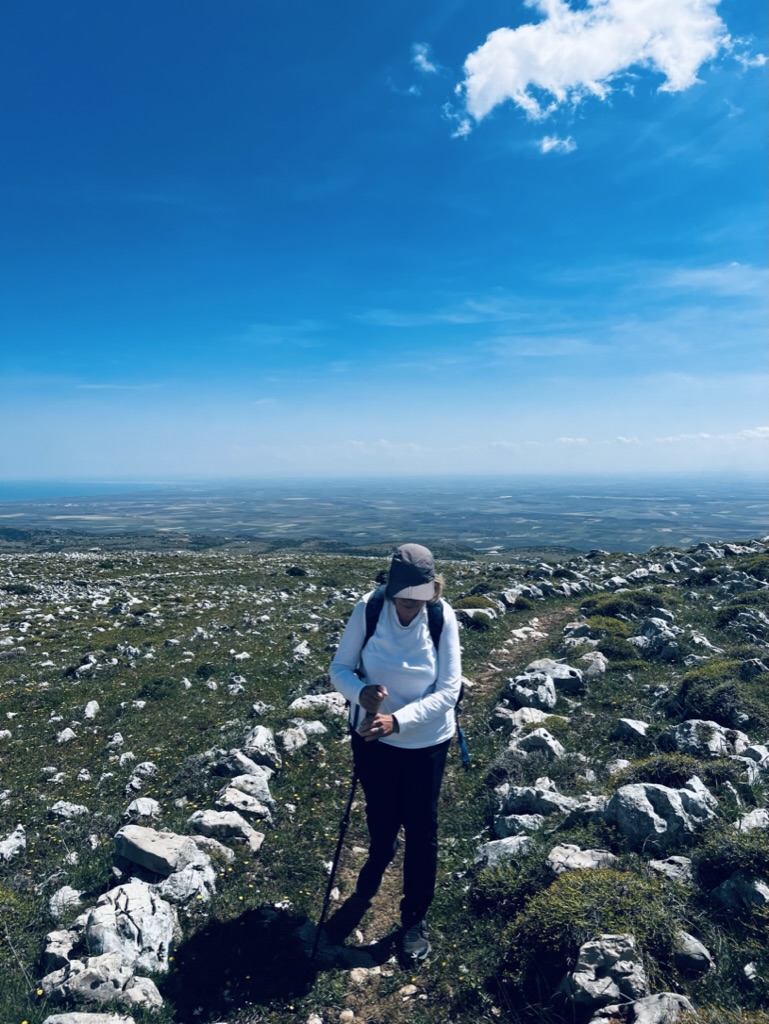
In San Marco in Lamis, Antonio delivered a 15-minute master class on the history of the area. The Longobards, who were probably from Saxony, swept down into Italy in the 6th century because they heard about the temperate climate, good food, fine wine and the thermal baths. They Christianized one of their pagan gods to become St Michael, the Archangel, who is often depicted with blond hair, sword aloft ready to strike a serpent. The road we are walking, called the Via Sacra Longobardorum, has been travelled for over a thousand years by pilgrims on their way to the cave of St Michael at Monte Sant’Angelo, where we will be tomorrow. In Catholic teaching this cave is one of the three pilgrimages needed for salvation, the other two being St James of Compostela and Jerusalem. Armed with that perspective we set off for what turned out to be one of the most magnificent walks of our entire journey through pine forests, cow pastures, fields of wildflowers, up 3800 ft to a crest from which the Adriatic Sea was shimmering in the distance. It was breathtaking.
Our stop this evening is the town of San Giovanni Rotondo, where Padre Pio lived most of his life. It is packed with religious pilgrims who flock to his sanctuary for divine intervention, apparently on a par with Lourdes. Stores hawking religious figurines and relics line the streets, busloads of supplicants crowd the sanctuary, a sense of subdued hysteria permeates the area. We retired to the historic center where the heart of a prosperous medieval Italian town beats unabated.

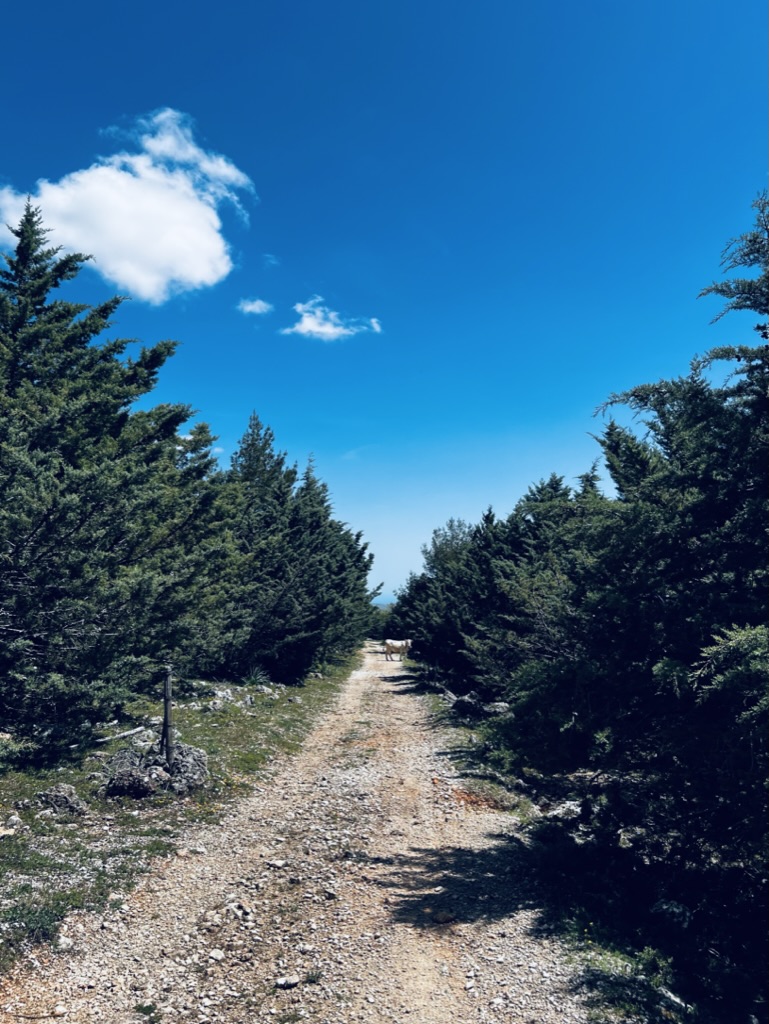
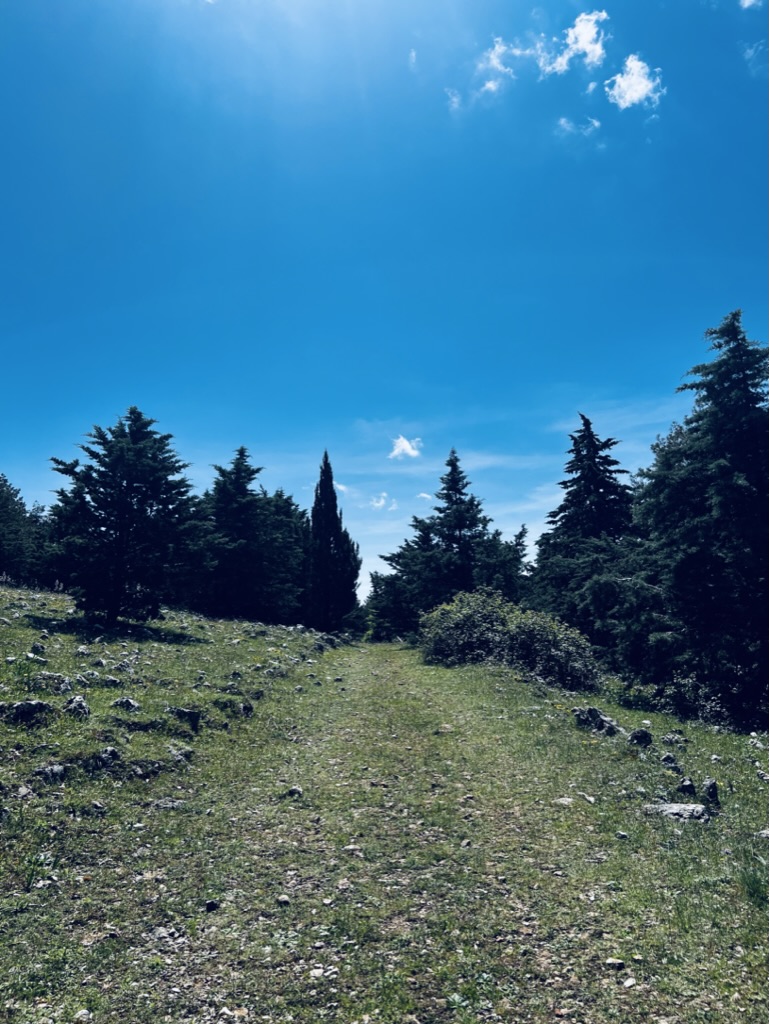

Share this:
-
Pope to Puglia Day 25 San Giovanni Rotondo to Monte Sant’Angelo 12 km
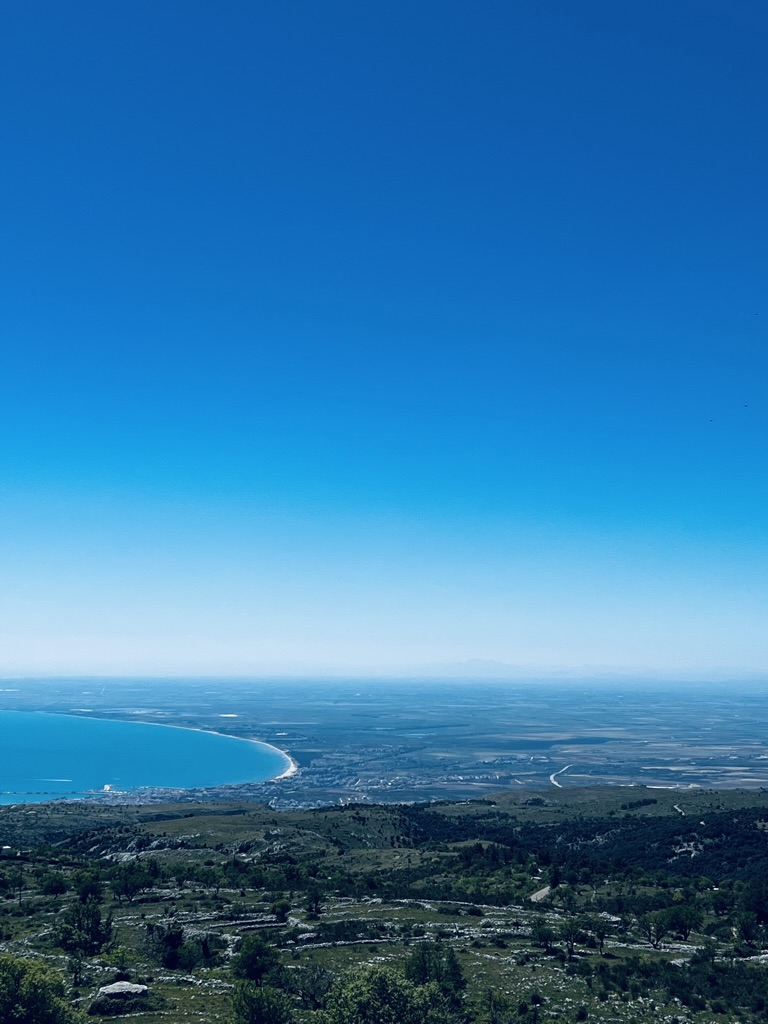
Today we crested the Gargano, the last mountain range we cross on the Via Francigena. Since we started in Canterbury we crossed 4 ranges: the Jura, the Alps, the Apennines (2x) and now the Gargano. We walked 1,421 miles and climbed 158,579 ft. We have another 400 miles to go before we reach the tip of the heel of Italy at Santa Maria di Leuca, most of it flat by the Adriatic. Reaching this point was emotional for both of us. I could not have imagined doing this six years ago as I lay recovering from by-pass surgery. I could not have hoped for a better companion, Paula, the love of my life.
And so here we are, surrounded by some of the most stunningly beautiful scenery, in a town that celebrates the apparition 1,700 years ago, of an Archangel who was dedicated to fighting evil. We are most grateful.
PS: In a long series of unpredictable coincidences in our travels, I note that yesterday, at the end of his master class on the history of the Via Sacra Longobardorum, Antonio introduced us to his grandson, Edoardo, who, he explained, was named after Edoardo Di Filippo, the famous Italian playwright. It just so happens that our daughters went to school and became close friends with Tomaso Di Filippo, his great grandson.
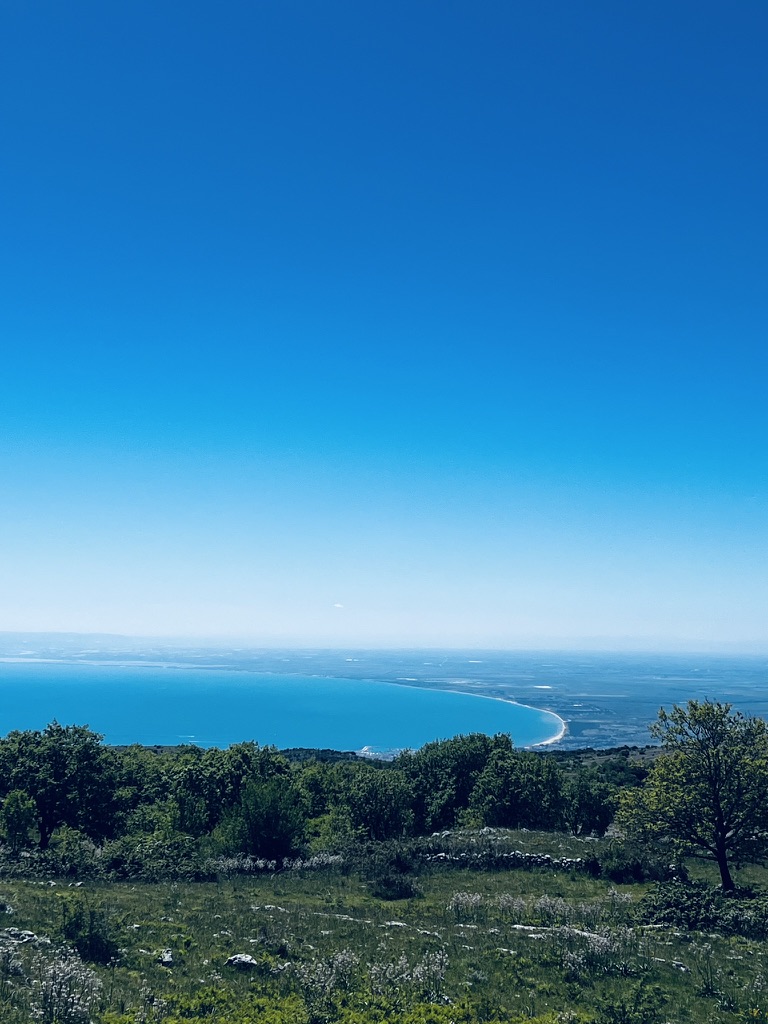
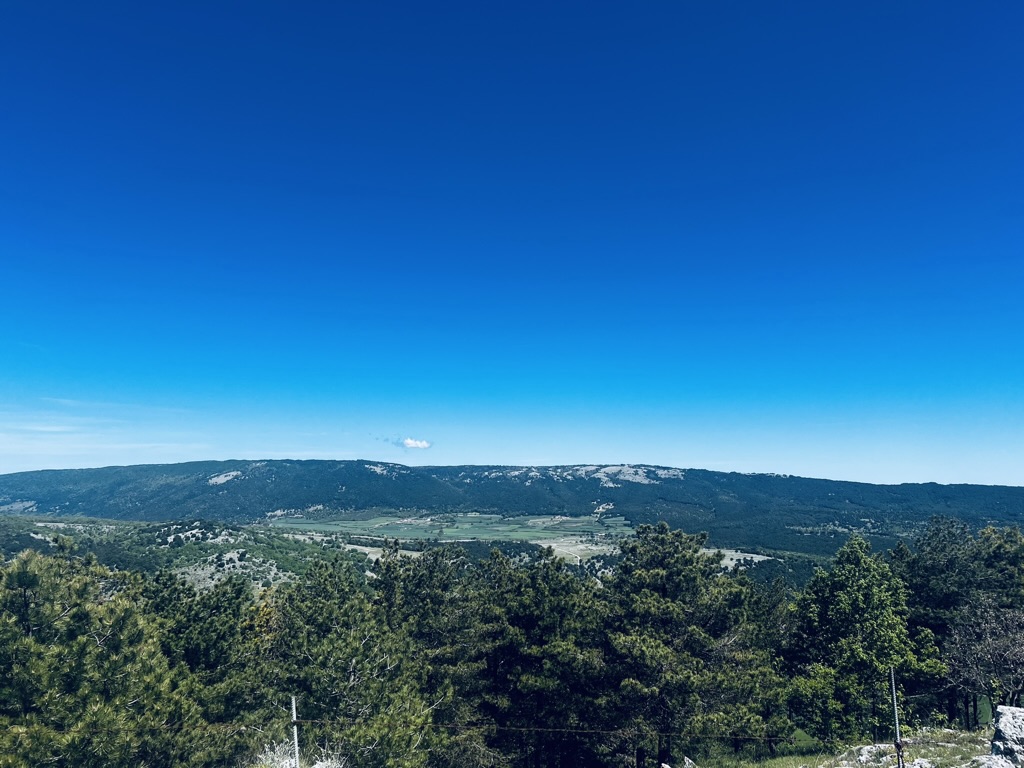

Share this:
-
Pope to Puglia Day 26 and 27 Cerignola to Canosa di Puglia – 20 km Canosa di Puglia to Andria – 25 km
We left the mountains to return to the “tavaliere”, the flat-ish plain between the Apennines and the Adriatic, and the main Via Francigena route. Our path over the last 2 days mostly has been through olive groves and vineyards. Miles and miles of them. The olive trees, gnarly and knobby, hardly resembling trees at all, many of them hundreds of years old, persist stubbornly through wars, earthquakes, storms and scorching hot weather, on rocky arid ground, to produce a delectable elixir. A great paradox of nature.
Before leaving Monte Sant’Angelo, we visited the grotto where, legend has it, in 492 CE the Archangel Michael appeared to a local shepherd proclaiming that anyone who visited the grotto would have all sins forgiven. So, we have that going for us.
Puglians are unusually welcoming. Many stop to ask us the usual questions: where you are going, where are you from, where are you staying tonight, etc. But some want to develop a relationship. On the way to Canosa we crossed paths with Francesco, on a tractor, straight out of central casting for a movie about harvesting. He explained the virtues of Puglian olives: “The best olives in the world are the Coratina olives from this area. Tuscans blend Coratina olives with theirs to give their olive oil flavor and the afterbite. And we have the best wines.” He has cousins in Florida. He shut off his tractor, ready to talk for the rest of the day, but we pushed on. On our way to Andria today we were stopped by Riccardo, also riding a tractor, and obviously trying out for a movie about harvesting. He wanted to make sure we were ok, invited us to refill our water bottles with water from his 500 m deep well. It was pretty good. He insisted I wash out my arm, which I scraped during a maneuver I will not bother to explain here, with the clean fresh water from deep in the ground. He told us about his 14-year-old daughter who wants to go to America. We could have had dinner with him if we asked.
As we walk, we are listening to, Paula enduring, the history of the crusades by Zoe Oldenbourg in which we learn about Bohemond, a Norman leader who became legendary for his physical appearance (he was extraordinarily handsome according to Anna Komnene, the Byzantine emperor’s daughter), strength, courage, military genius, and knowledge about Byzantium. He is buried in Canosa where his Norman-structured octagonal mausoleum is found. By the time we got there it was closed. We enquired at the tourist office where Daniella cheerfully called the local priest who has the key. The priest, Don Filippo, agreed to come over to open the Mausoleum for us immediately. I love this culture of the generous spirit.
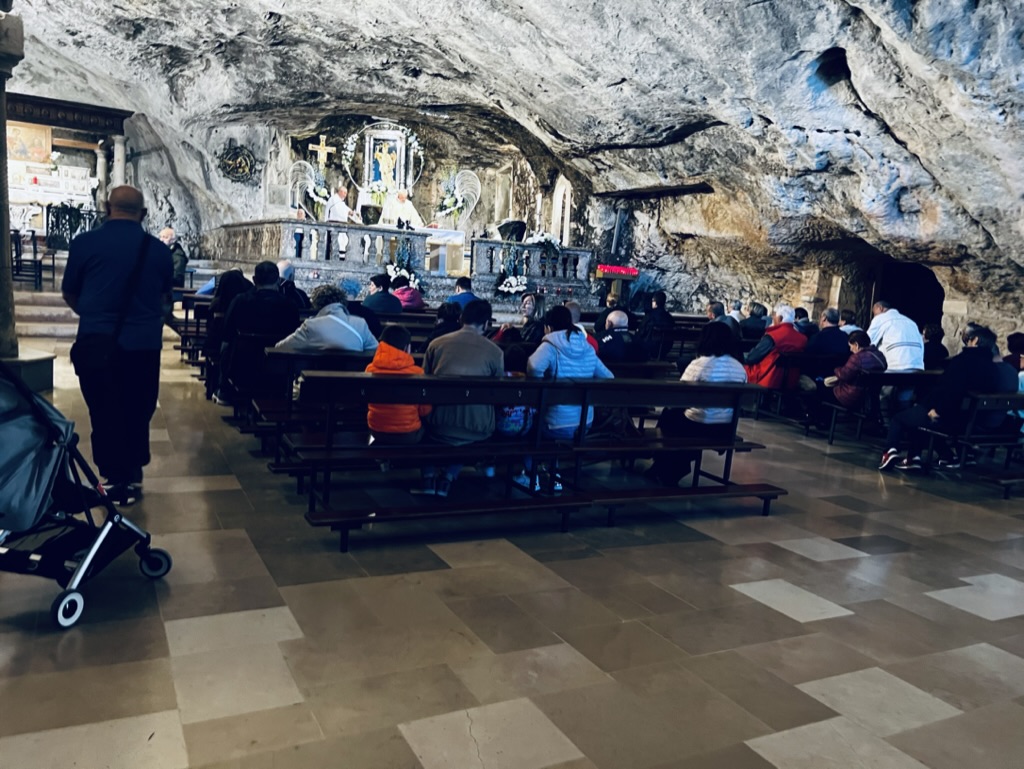

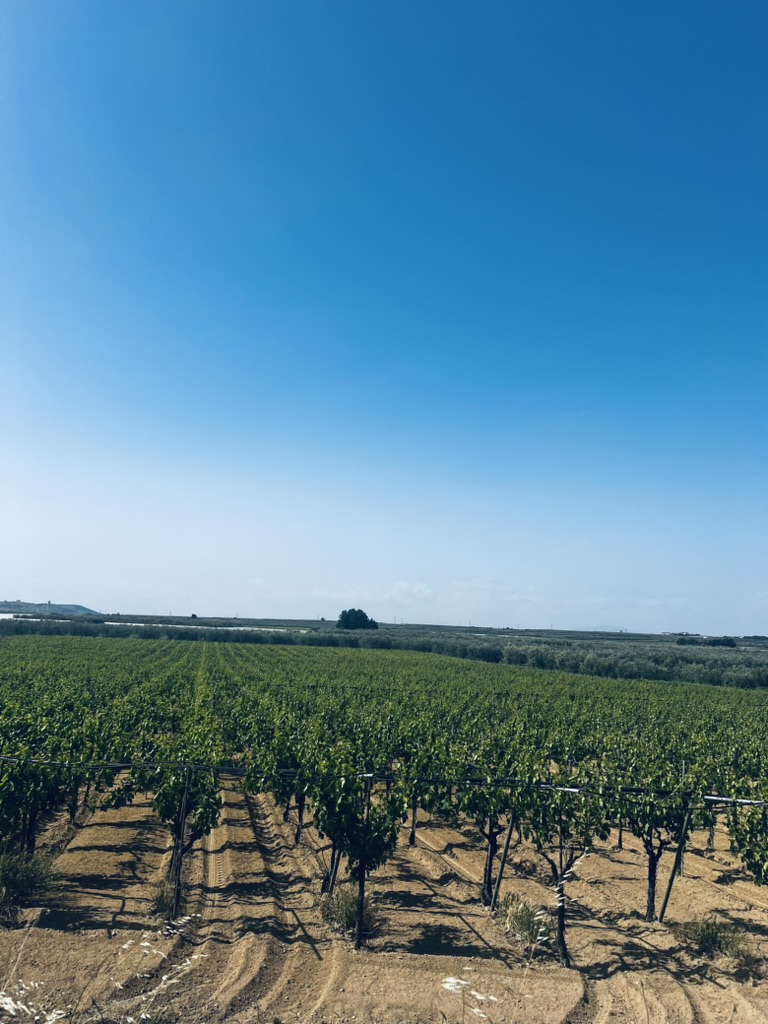

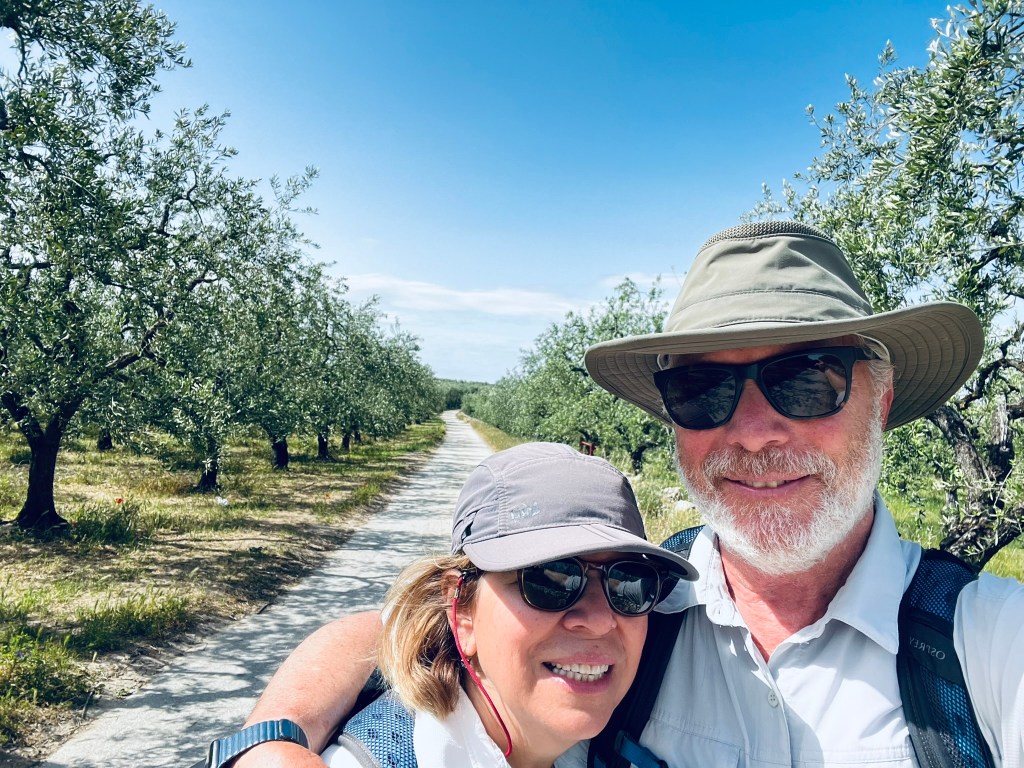
Share this:
-
Paula’s Weekly Summary: Pilgrim’s Progress into Week 5
The mountains are behind us, a lasting memory of beauty and testament to endurance. Some of you have mentioned being reminded of the Sound of Music and Julie Andrews as we described our ascent. Trust me, Julie Andrews isn’t going to get your ass up that mountain. You need the heart thumping, foot stomping, leg warmer 1980’s music of Donna Summer and Gloria Gaynor. Bad Girls all the way.
While we were cresting what seemed to be an endless climb challenged by obscure or non-existent signage, I heard in the distance what I thought was the pounding of a drum circle. As we grew closer, I realized it wasn’t drums it was bells, cowbells which were proportioned to the size of the cow s. They were creating an opera worthy of Philip Glass.
The cows, literally a herd, were standing astride the Via Francigena path. We stood, looking at each other, the cows glaring with an attitude of pure entitlement, chewing. I returned their look with confusion, wildebeest and zebra meet cow what is the protocol? We surrendered the path, bovine 1, human 0. Finally, we reached the summit and glimpsed the full array of our 24-day journey, mountains, plains, sea.
Following the ascent, down we go to San Giovanni Rotondo, the home of Saint Padre Pio. It was like being dropped into a CPAC convention, I was met with familiar nods of recognition – they think, that I think, like they think. Exit.
We are now in a labyrinth of olive trees and grape vines. We’ve been in Puglia only a couple of days but have noticed a greater level of intimacy in our interactions with Puglians. People stop us, curious tainted with a level of concern. “Do you want a ride?” “Do you need water?” A man stopping to warn us that the people in the next town are all crazy. An elderly lady noticing our walking sticks asked “But, where are you going, where will you sleep, are you hungry?” Edward answers in his perfect Italian, camouflaging our nationality. I prefer to be exposed as an eccentric American rather than a mascaraed as eccentric Italians, so I throw in a couple of “Gee, that is crazy” or “Oh, that is great” forcing the next question “Where are you from?” And their response “oh I have a cousin in New York.”
As we leave the forest and the trees and the vines, I, perhaps, over-romanticize the small scenes we have walked through almost every day: the butcher folding the paper around my sandwich with the precision of military corners; the blue and pink ribbons tied with pride to gates and doors announcing the birth of a baby; the greetings exchanged between young and old with two kisses; sitting on a log or stone wall for lunch; the pilgrims pedicure, culling calluses on curbsides. I can even romanticize the dinner, when no other option existed, in a wedding venue, just us 2 and the chef proudly serving his pasta specialty, fish head stuffed with meat. Recently I observed a nonna in the center piazza dragging her grocery trolly while yelling in her phone “cipolle, pane, pomodori e basta!”, the trolly like a large hare being pulled by its ears, while directly around her four cars making their bespoke version of a U-turn. Then there are the dogs barking everywhere. Some behind gates, some behind doors, on balconies, in cars, or chained to their dog houses. The little ones bark way beyond their weight class, the older ones stay reclined lifting only their heads to bark an alert. There was a pair, a Mutt and Jeff duo, that followed us for nearly an hour. The small ones are my favorites, hidden behind stone walls, barking madly, the top of their heads momentarily visible as they jump, apparently hoping to leap the wall. There was even a dog sitting on a lap at a restaurant yesterday that raised its head long enough to offer a few earnest barks. There is an old Lebanese saying, “The dogs bark, but the caravan moves on.”
The wildebeest and Zebra are lopping on.
Happy Easter to those of you, like me, who follow the Julian calendar.
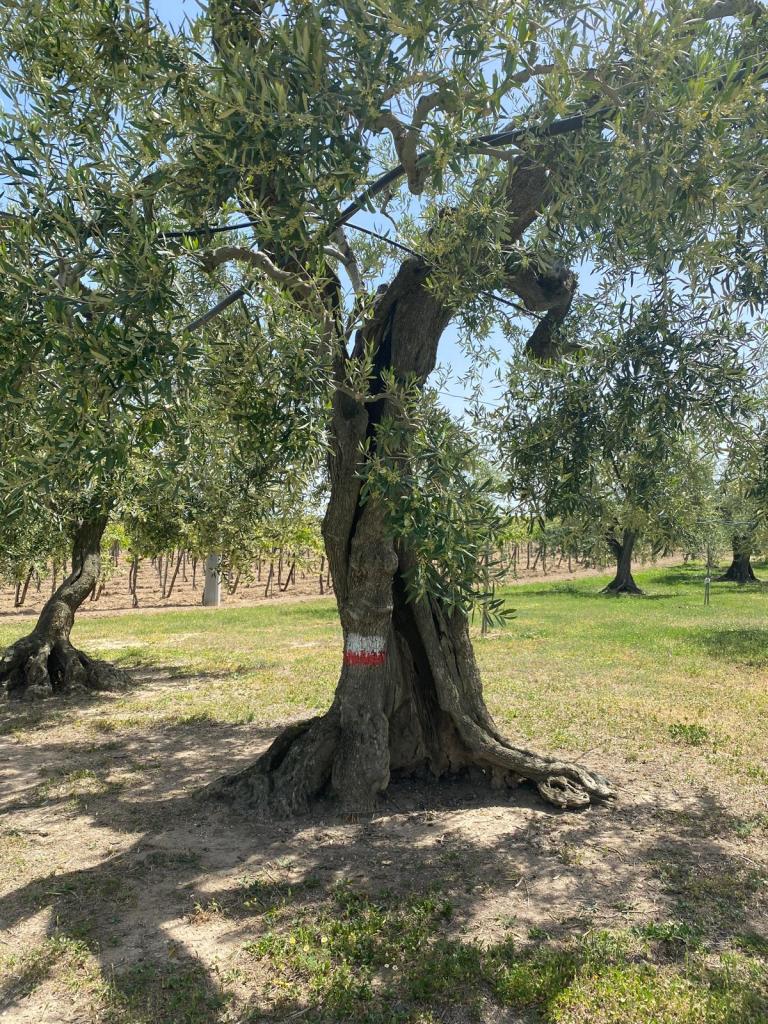
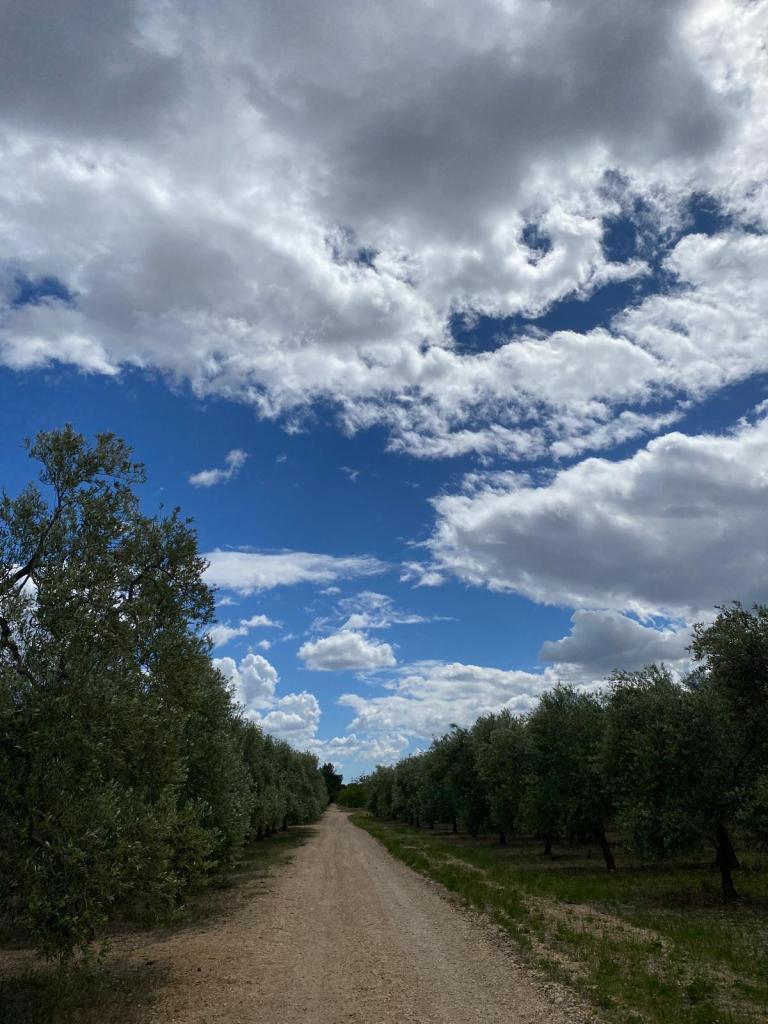

Share this:
-
Pope to Puglia Day 28 Andria to Ruvo di Puglia – 29km
A long day on the Via Traiana, the old Roman road that connected Benevento to Brindisi, as straight a road as the Romans knew how to build. We walk through olive groves of century-old trees serenely splayed like reclining royalty on manicured fields. After a while, the monotony of tree after tree becomes soothing, a visual mantra, and the intermittent shade refreshes even under the hot sun.
We stopped in Corato, a hub of olive oil production, for our usual lunch – a sandwich and orange, in Corato’s lovely center square. This was supposed to be our stop for the day, at km 14, but our intrepid navigator, yours truly, decided to combine 2 phases. So, after our brief respite, we soldiered on for another 15 kms. The time went by quickly, urged on by gathering storm clouds that unleashed wind and rain just as we reached our destination. We tucked into a trattoria for a simple dinner before retiring for the night.
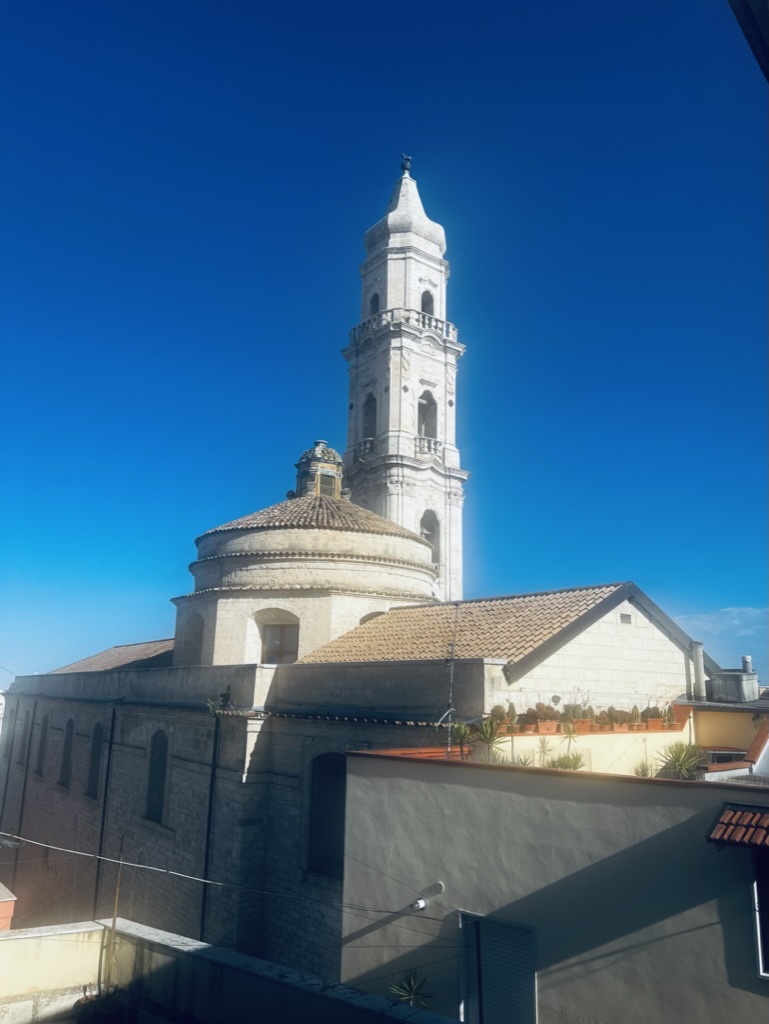
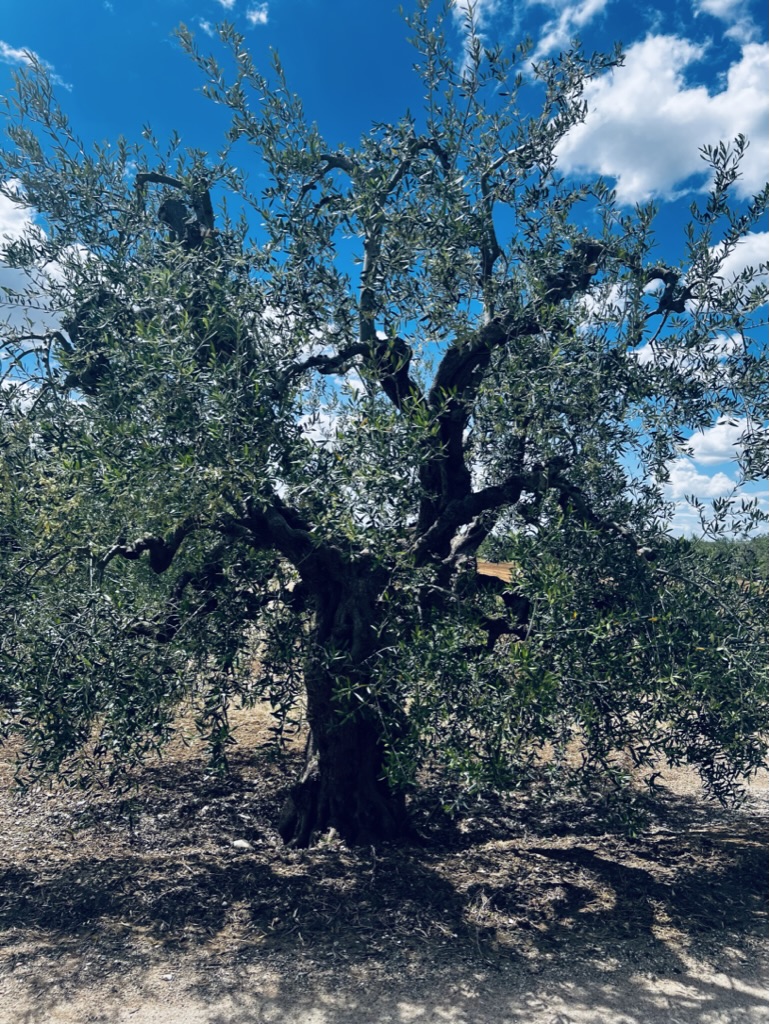
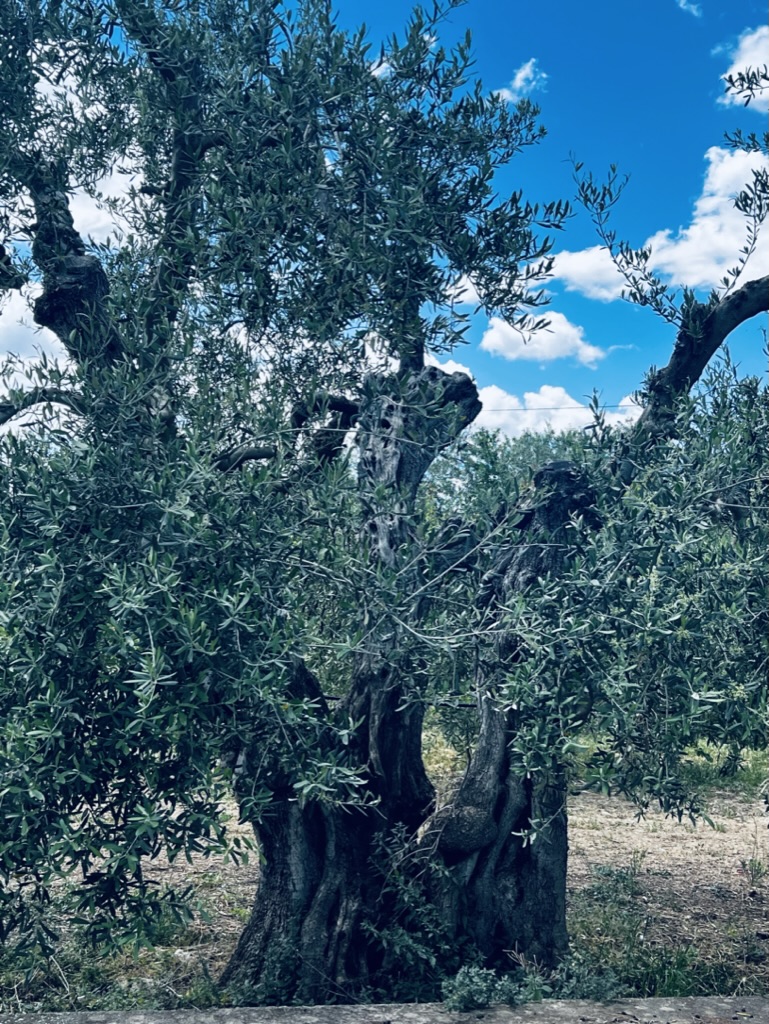
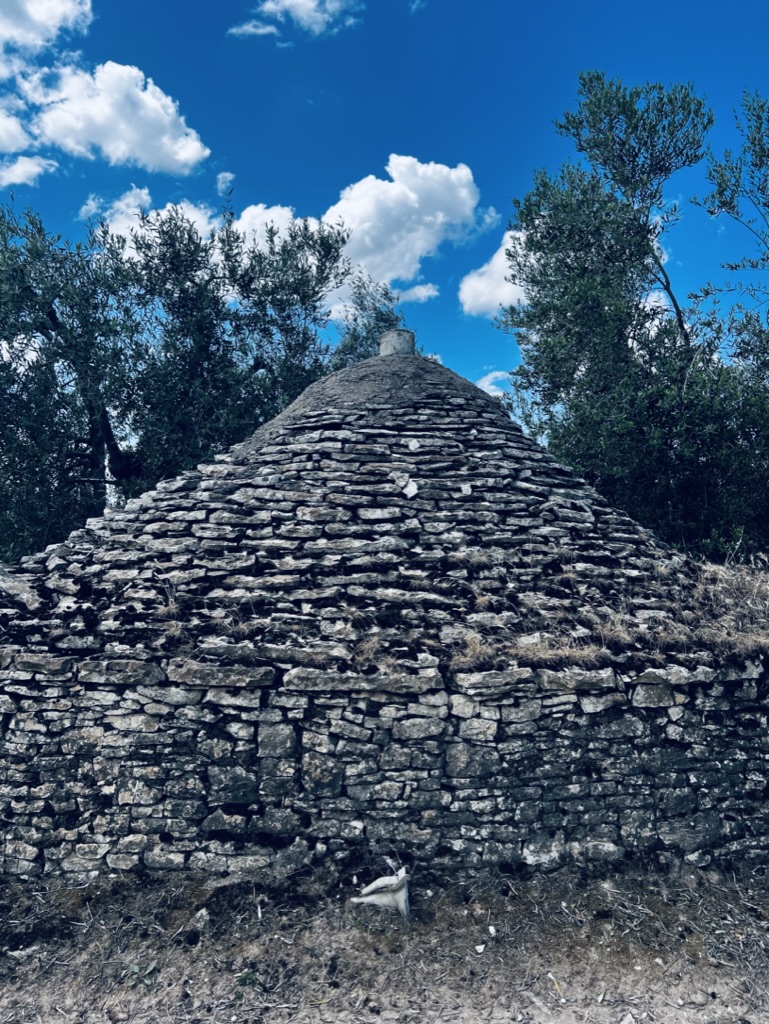
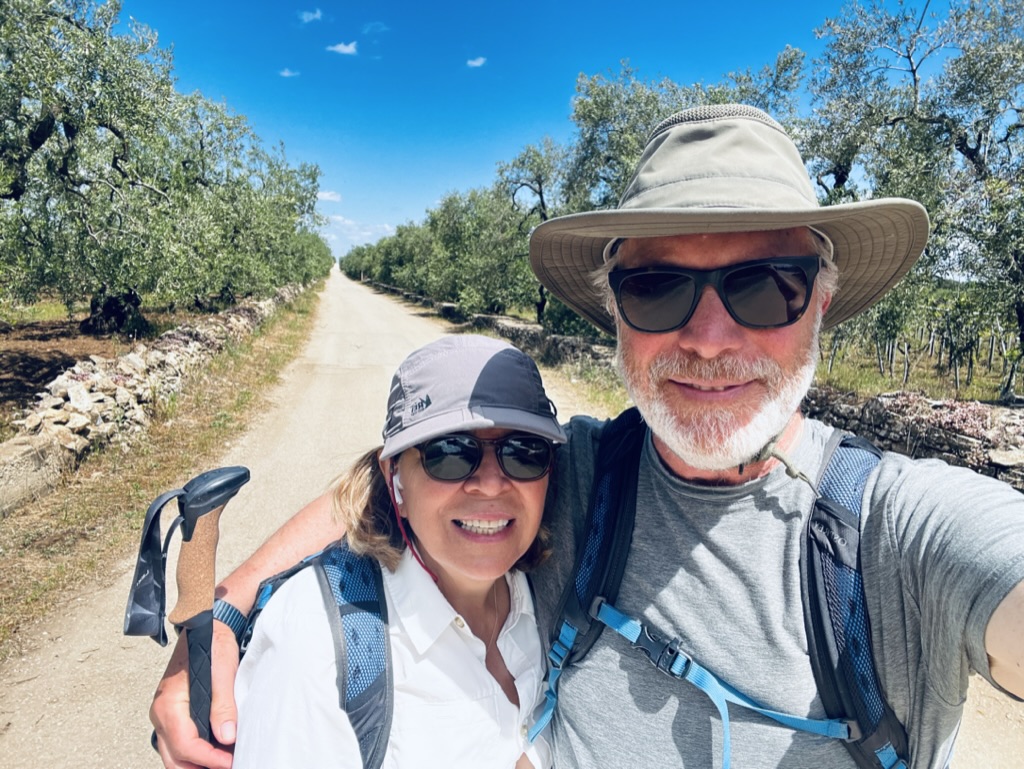
Share this:
-
Pope to Puglia Day 29 Ruvo di Puglia to Bitonto – 26 km
More olive tree grand dames along the straight and flat-ish Via Traiana. We arrive in Bitonto early enough to pause for an aperitivo in the piazza by the Duomo, a magnificent 12th century Romanesque church with impressive arcades supporting an extensive loggia along its entire length. The front façade projects structural dignity though the details are worn by the elements over time, a process with which we are becoming intimately familiar. Like other towns we passed through in the last week, Bitonto’s historic center preserves its original medieval configurations, without the open sewage. It renders a level of proximity and even intimacy to city dwelling that is hard to resist.
Tonight, we rest in a small B&B, an old structure that is decorated with 18th century elements from which we expect Vincent Price to greet us. But we had an excellent dinner, including Linguini Vongole Lupini and a fine Verdeca so we will sleep well.
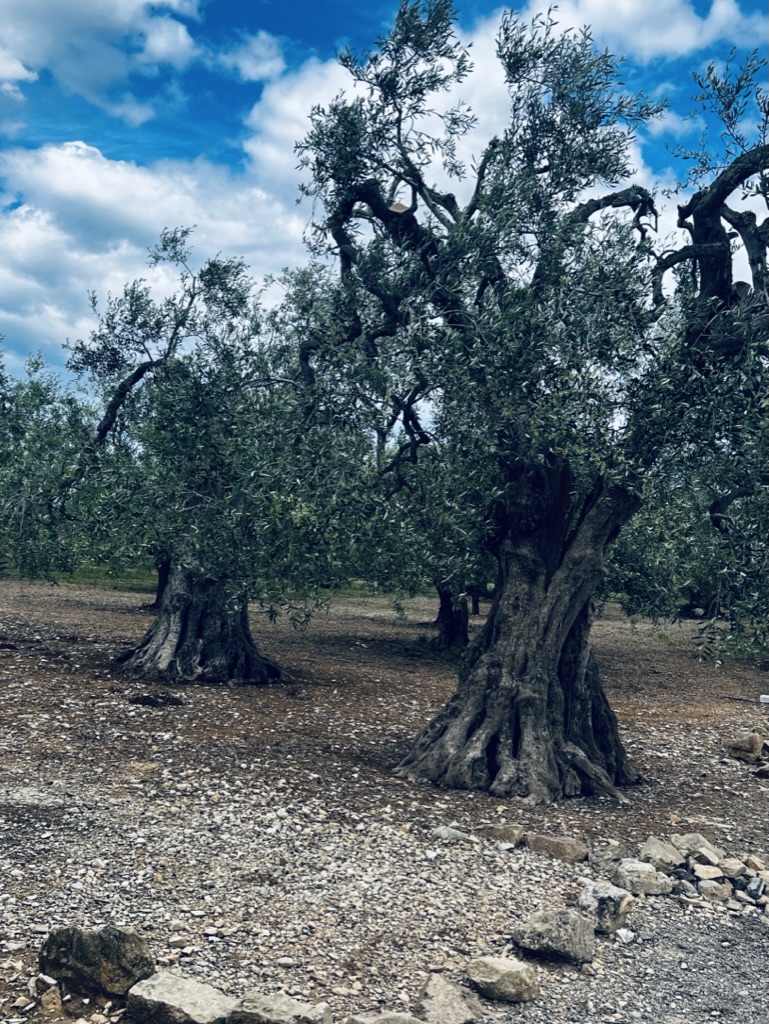

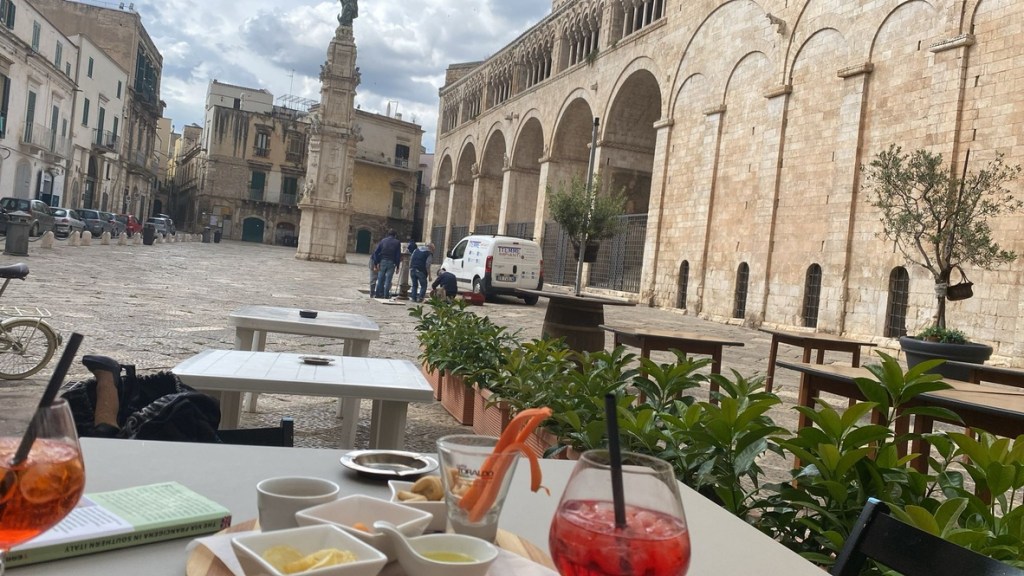
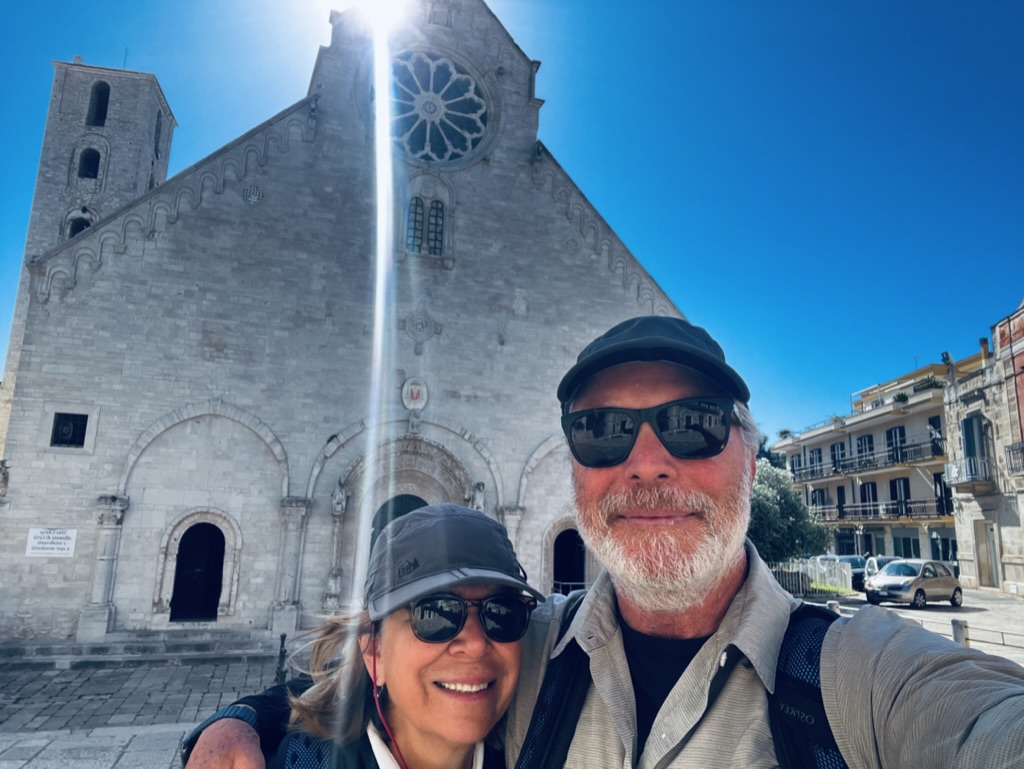
Share this:
-
Pope to Puglia Day 30 and 31 Bitonto to Bari – 24km Bari to Mola di Barin – 25 km
As we approached Bari, the olive trees started resembling what they would look like if Botero sculpted them, still knobby and gnarly but more rotund. We finally reach the Adriatic Sea once again to walk along an 8 km seaside promenade to the center of Bari, a city whose verve, energy and vitality is a welcome change of pace from the olive tree garden of Eden we strolled through for the last 5 days and yet the abrupt re-entry into a great urban center is disquieting at first. But we adjust: seaside restaurant, live DJ, fritti misti, pasta vongole, Verdeca.
Bari is gearing up for the feast of St Nicholas on May 9 when they celebrate the removal of the saint’s relics from Myra to Bari in the 11th century. St Nicholas is the patron saint of repentant thieves, so it was ok to steal his remains. Bari is in full party mode, until 2 am under our window. Even to our weary ears it sounded like fun.
The walk from Bari to Mola di Bari was along the seaside boardwalks that line the Puglian coast. It was a beautiful day; families were enjoying perhaps their first outing of the spring/summer. The picnic lunch followed all the customary protocols: table and chairs, tablecloth, glasses and plates and silver wear. Like at home, only on the beach. The food smelled delicious. We refrained from stopping for lunch today, so we are off to a seafood restaurant tonight.

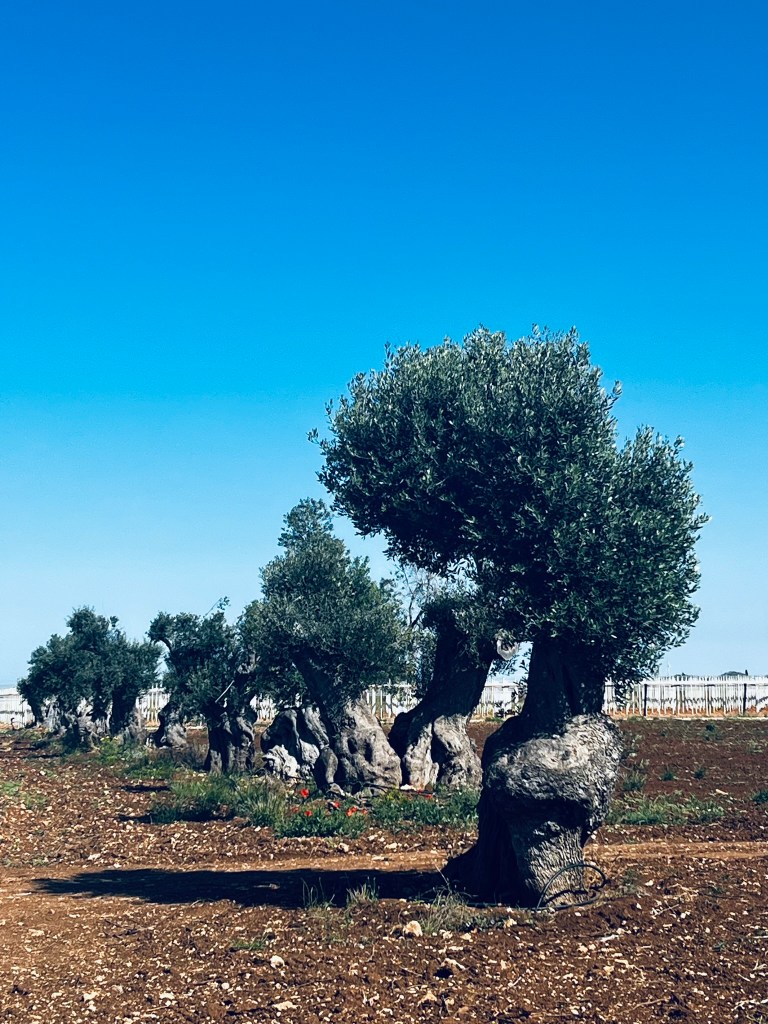

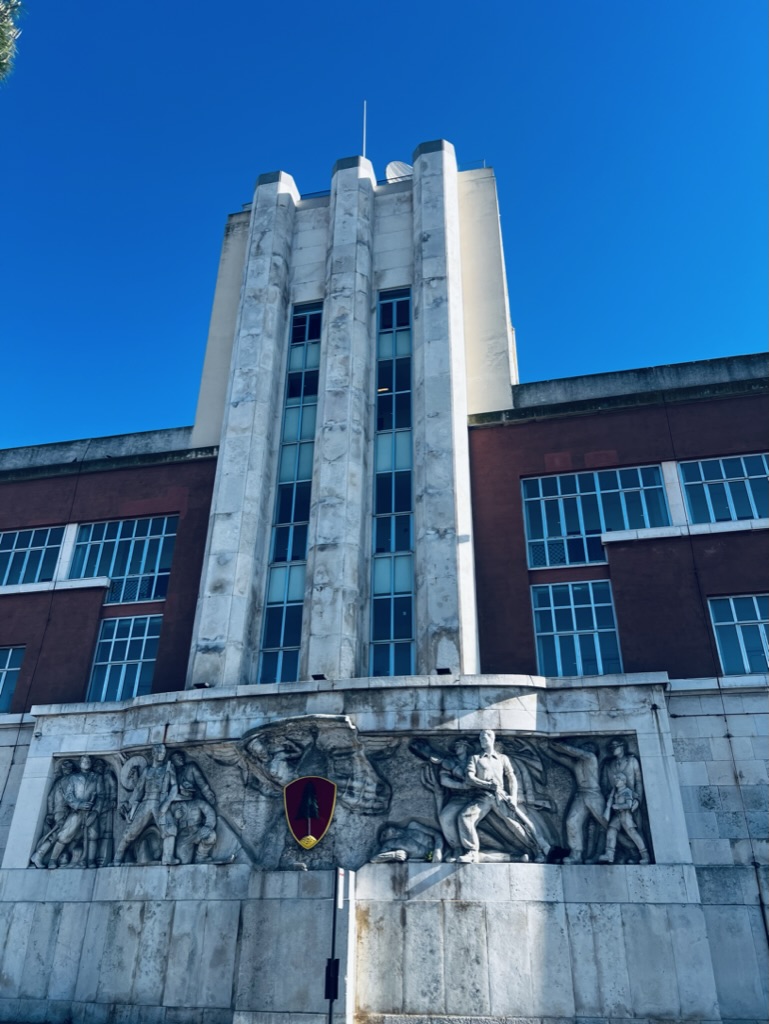
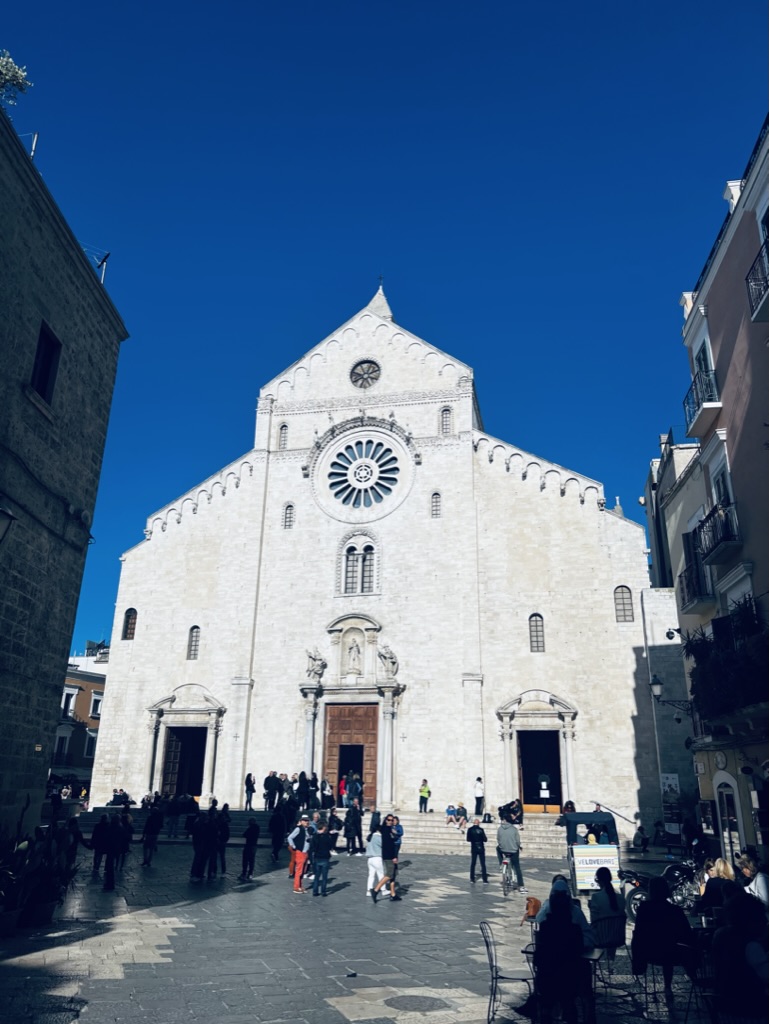
Share this:
-
Pope to Puglia Day 32 Mola di Bari to Monopoli – km 0
After 10 days of pounding gravel, asphalt, and dirt our feet and legs pleaded for a day of rest, so we moused around Mola di Bari before boarding a train for the 20-minute ride to Monopoli. Before leaving Mola, Francesco gave us an unsolicited tour of the Cathedral including a lengthy account of ceremonies on 22 July observing the feast of Mary Magdalene which include carrying the statue of the Madonna Dolorosa around the city to the chants of Jacopo of Todi’s Sabat Mater. Not to be missed, he said.
The train was packed with about 1000 of a mostly Polish tour group that de-boarded in the small town of Polignano, for which we thanked them profusely.
Monopoli is the pinnacle of whitewashed fishing villages etched into the rocky Adriatic coastline. Calling it charming just doesn’t do it justice. It is dripping with the palpable quintessence of a seaside village in our dreams.
But we awake to reality. Tomorrow is another 20km day so we must do laundry, re-pack our bags, hang damp laundry to dry and plan the next stage.

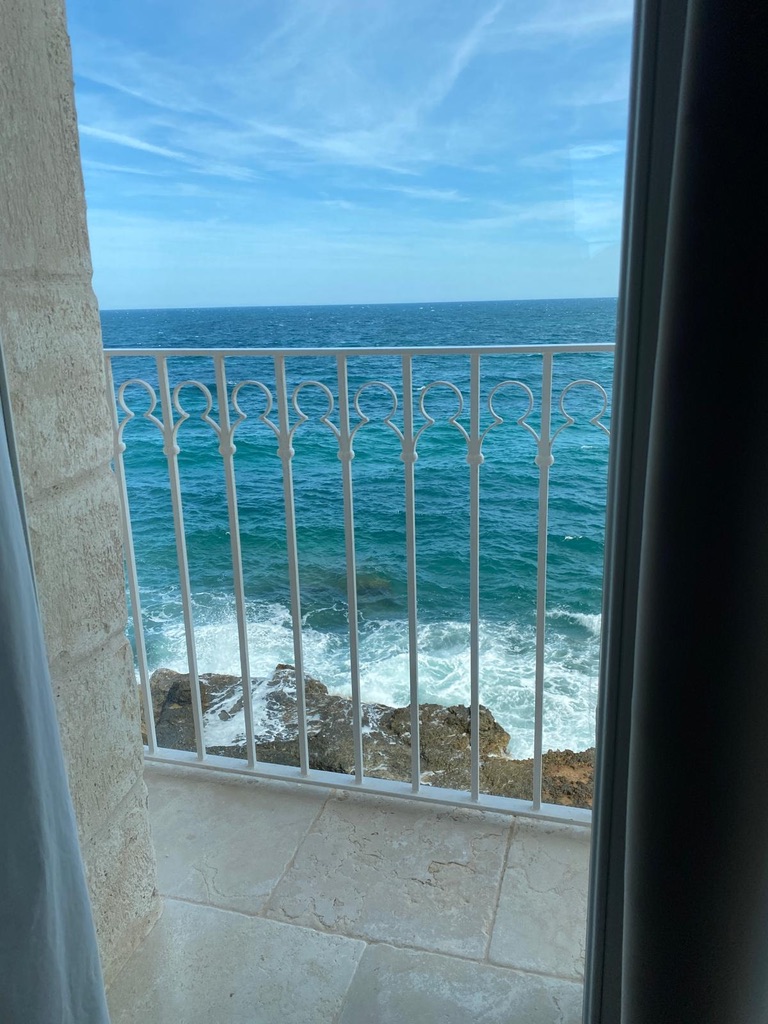
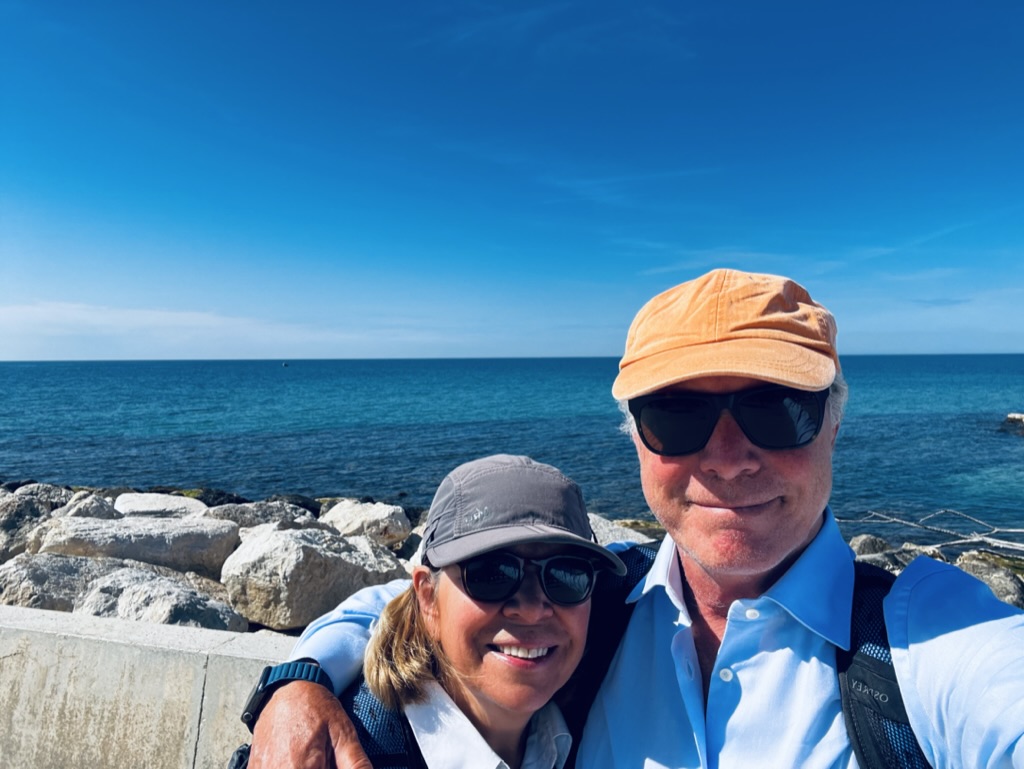
Share this:
-
Pope to Puglia Day 33 Monopoli to Torre Canne – 24km
Sails have replaced olive trees, rocky outcroppings, and cliffs instead of straight dirt roads, sandy beaches in hidden alcoves in place of stone walls. The Puglian Adriatic coast isn’t like the dramatic mountains cascading into the water of the Amalfi coast; rather, it is flat and accessible, the crystalline blue water melding with low lying flat tufa home to hundreds of mussels. We lunch, consisting of an orange, in one of those alcoves where we rest our feet in the cool water while crabs delivered a crustacean pedicure.
Most seaside locations are still shuttered, only a few Northern Europeans and intrepid Americans in the water, but the rows of sunbathing chairs carefully lined up to the edge of the water suggest a tsunami of vacationers will soon wash ashore. We selfishly appreciate the quiet before the storm.
Aside from the occasional Angevin castle or Norman tower and the ever-present Puglian Romanesque churches in the small fishing villages, there aren’t any exceptional cultural sites along the coast. We visited a Roman archeological site, mostly granite blocks suggestively strewn about. The sea is the thing.
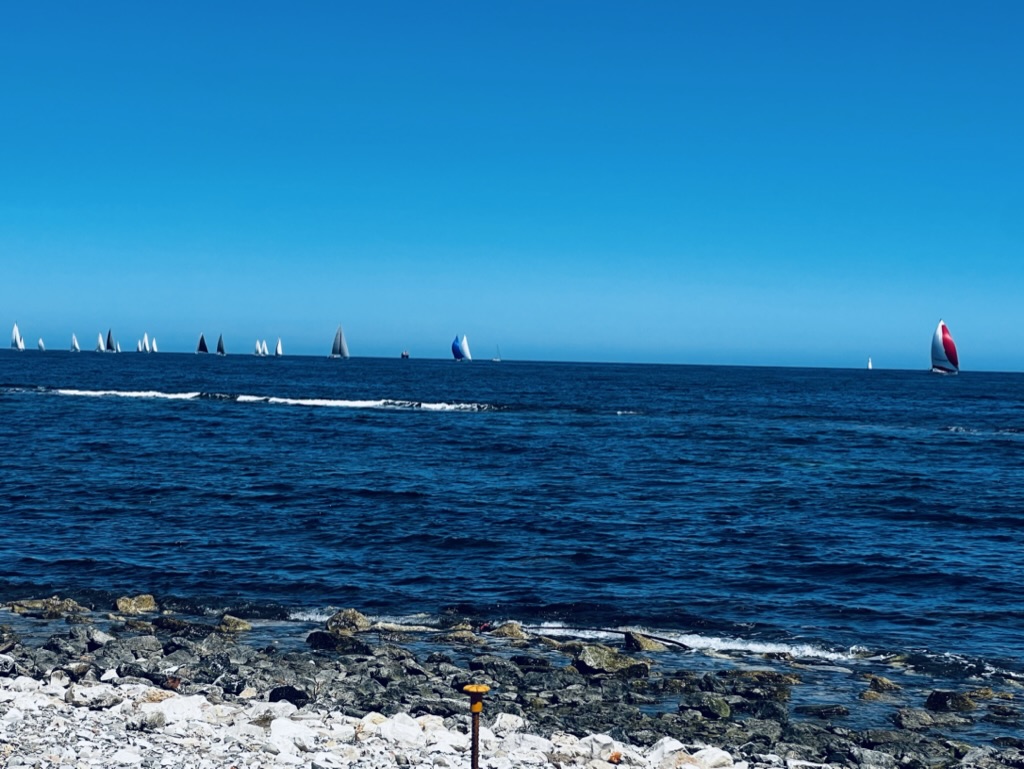
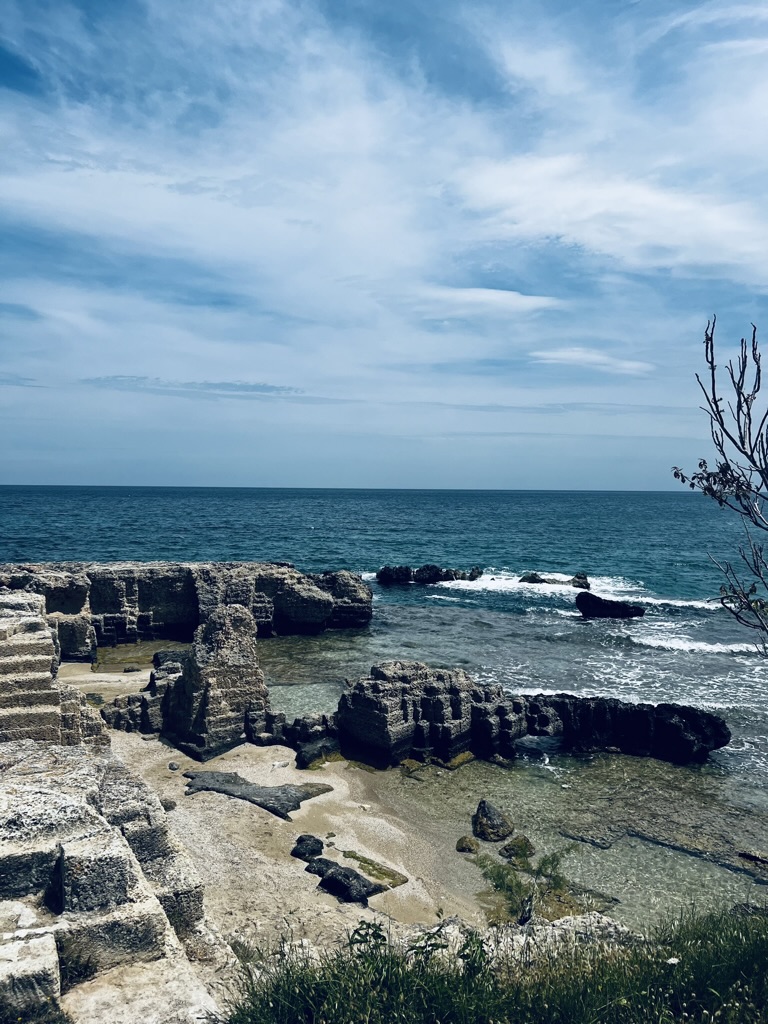
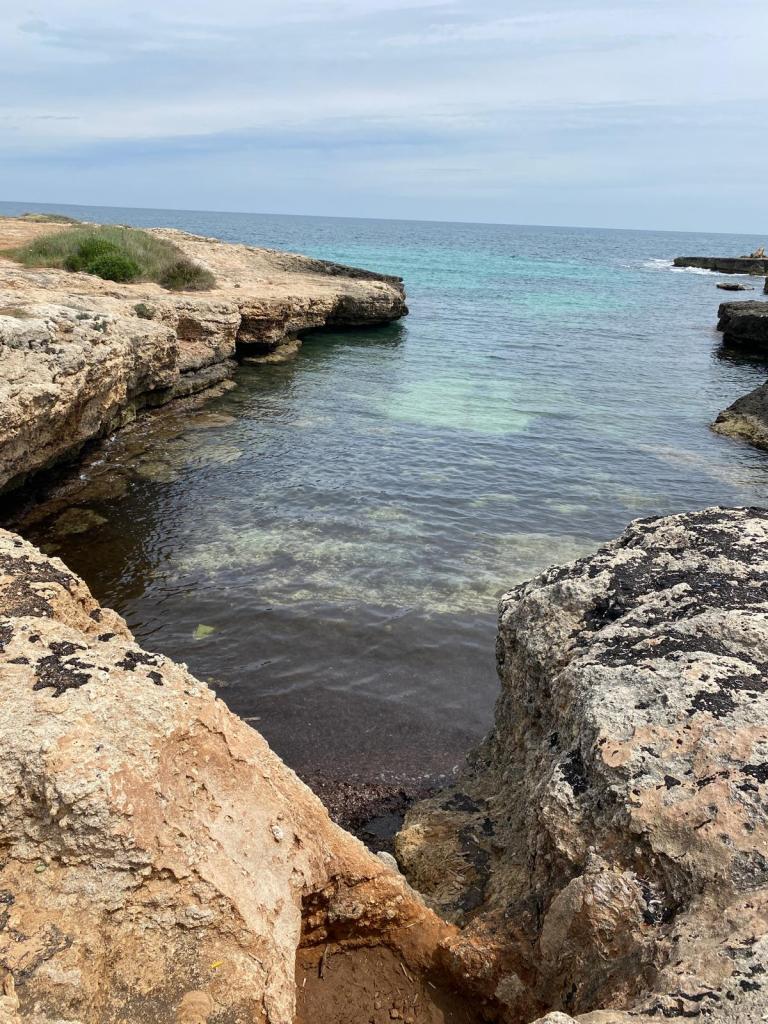
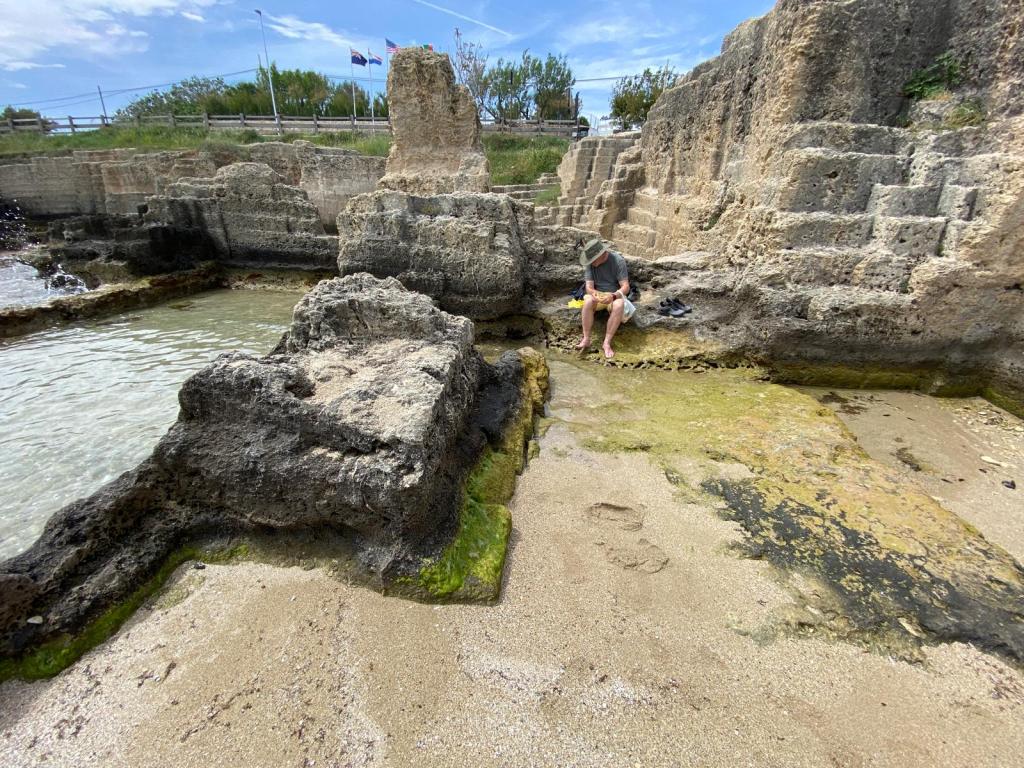
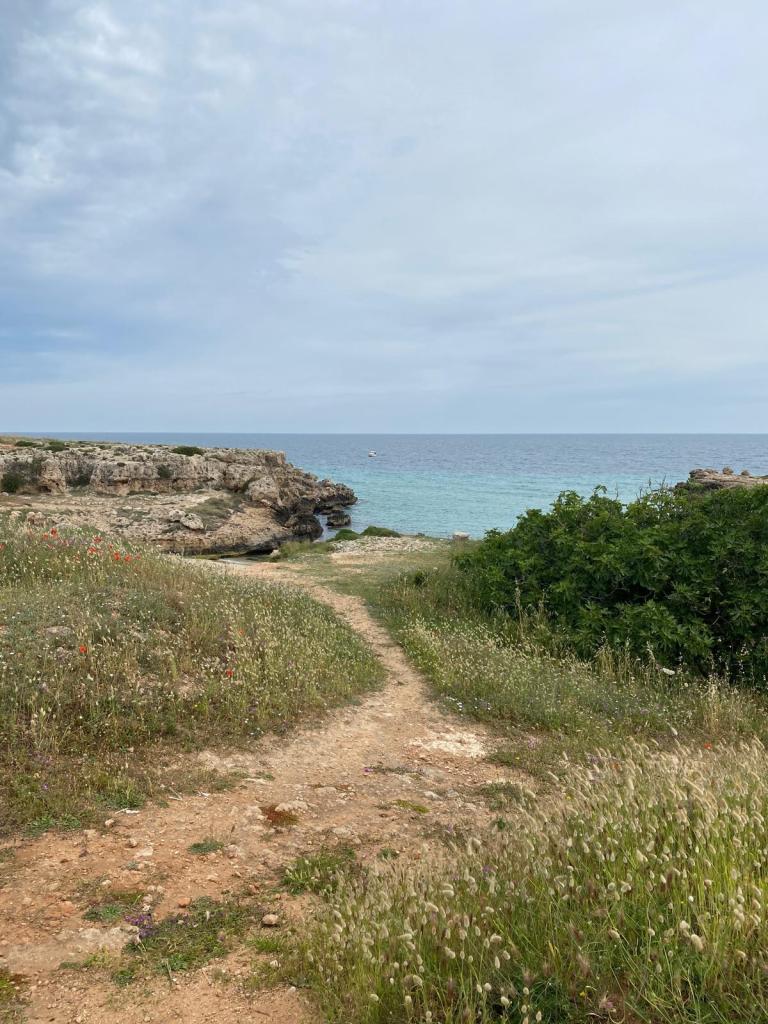
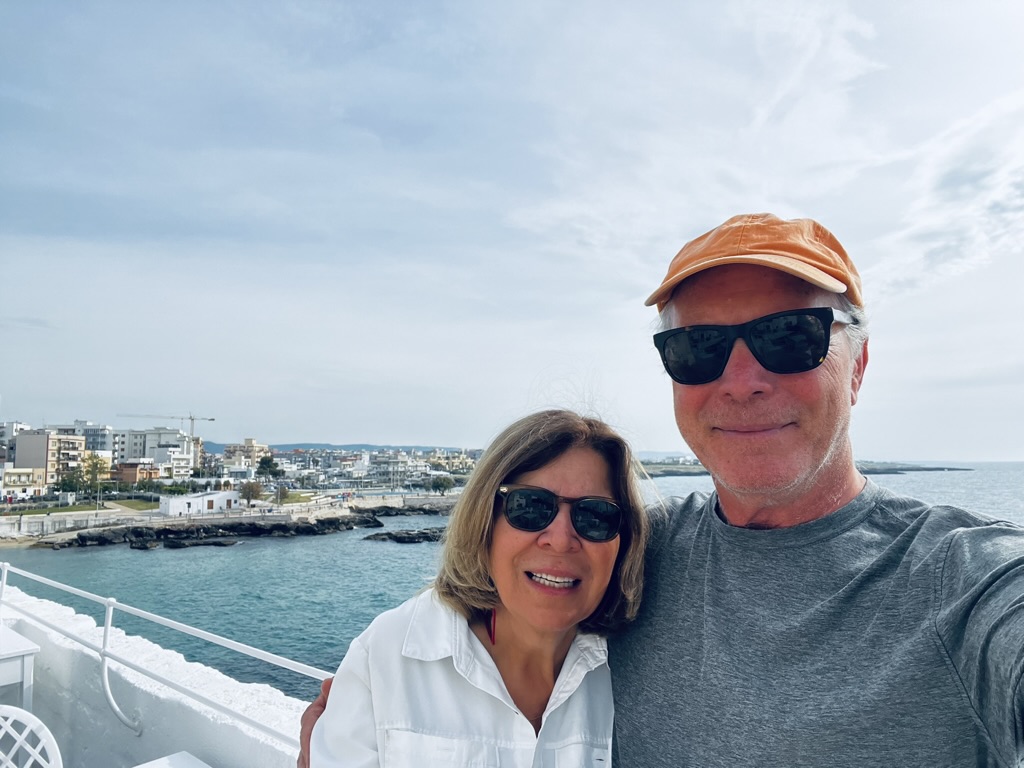
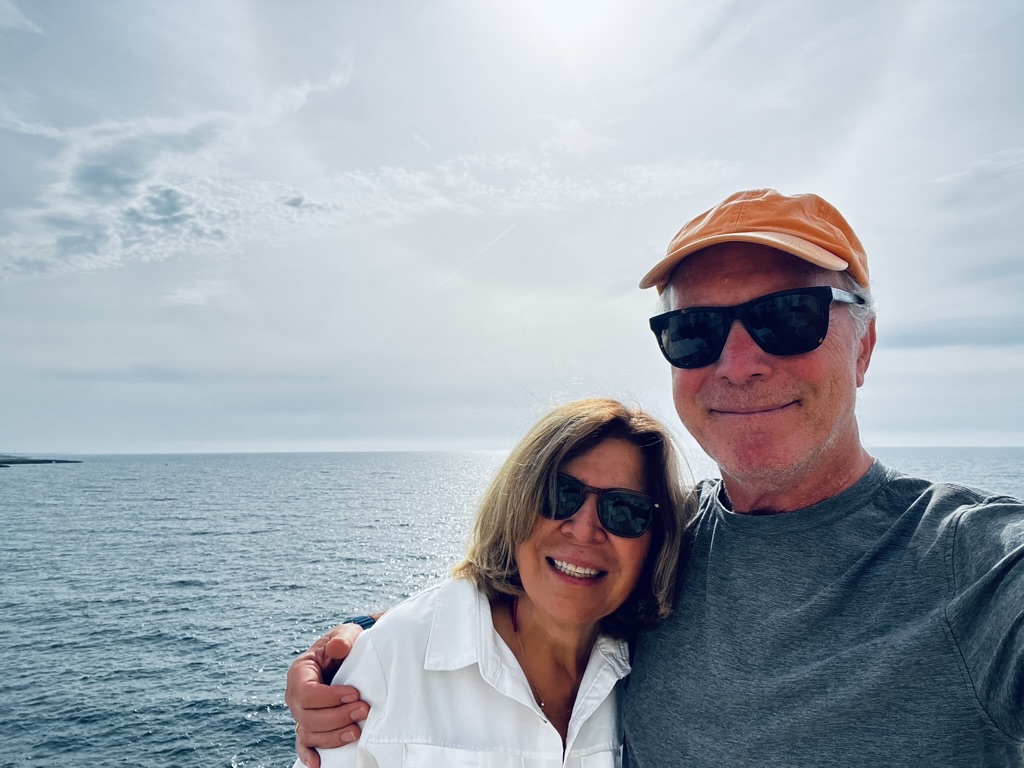
Share this:
-
Pope to Puglia Day 34 Torre Canne to Torre Santa Sabina – 24 km
We’ve come to love the beaches tucked in coves defined by tufa slabs sculpted by the clear cerulean sea. We don’t go swimming but will take our various breaks sitting on a slab admiring the perfect serenity of water lapping the beach by the sound of an egg hitting a hot skillet.
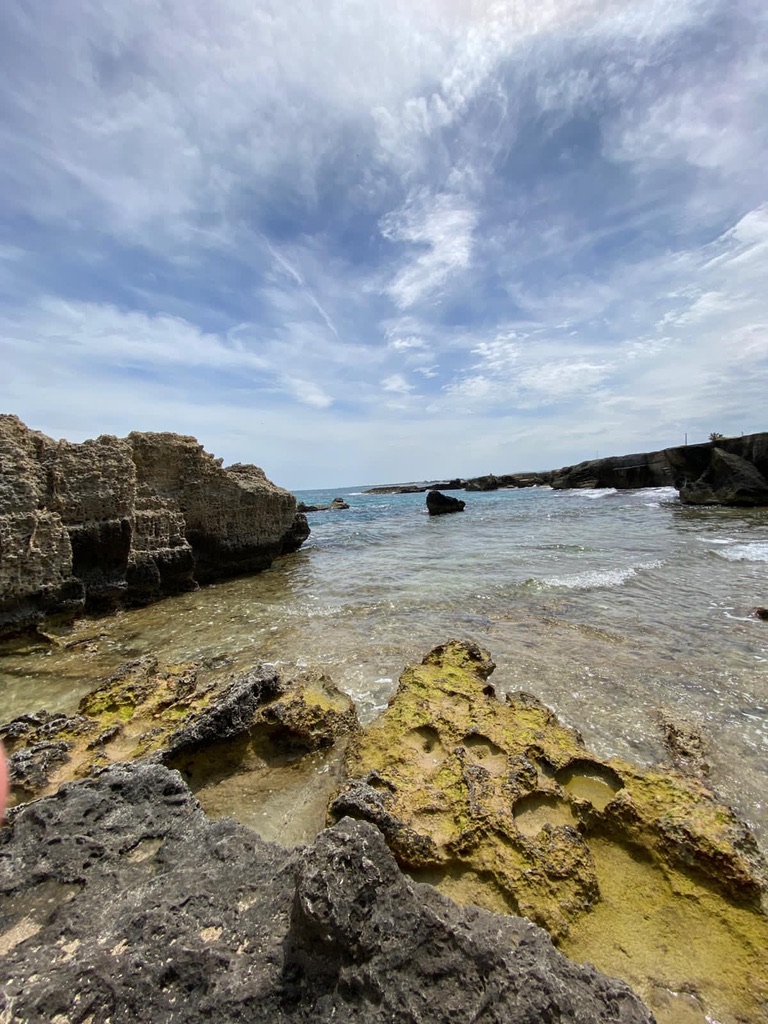
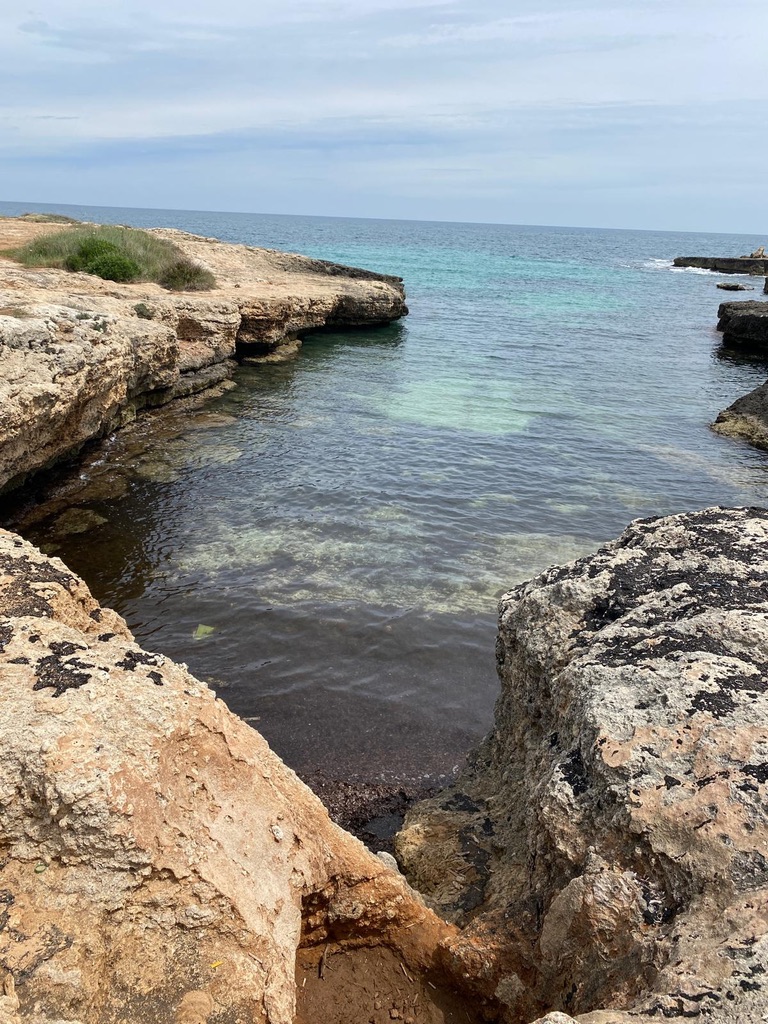

Share this:
-
Pope to Puglia Day 35 and 36 Torre Santa Sabina to Brindisi – 31 km Brindisi to Torchiarolo – 26 km
Even though our legs are strong, and we are accustomed to walking for 7 hours, 31 kms is taxing, but we made it to Brindisi with energy to spare for a fine fish dinner by the water. Brindisi, an old port city, is where the Via Traiana and the Via Appia end and is the jumping off point for innumerable invasions and excursions, throughout most of European existence. It was the capital of Italy for a brief period in 1945 under the Badoglio government, a distinction that merits little attention.
More interesting is the Church of San Giovanni Battista, a precise replica of the Holy Sepulcher in Jerusalem, which was built by our friend Bohemond when he returned form the first crusade. Maria, the docent, explained that Pilgrims enter for free. She was kind enough to deliver a history of the 12th structure which was neglected for 200 years after an earthquake in 1743 collapsed the roof. After WW2 there were plans to tear down the rest of the ruins to build high rise apartments but through the efforts of one individual the structure was saved, restored and now is one of the most important attractions. Brindisi is also where Frederick II took his second wife, Isabella Queen of Jerusalem, when she was 14. They had 2 children before she died 3 years later.
The walk from Brindisi to Torchiarolo took us through olive groves that have been devastated by the Xylella bacterium creating a post-apocalyptic landscape whose depressing effect is mitigated by resilient farmers who uproot the trees and plant new groves that are now flourishing. A controversy has emerged about how the bacterium was introduced, one theme being that it came from California when scientists at the University of Bari brough it over for research. The Chinese have not been implicated, yet.
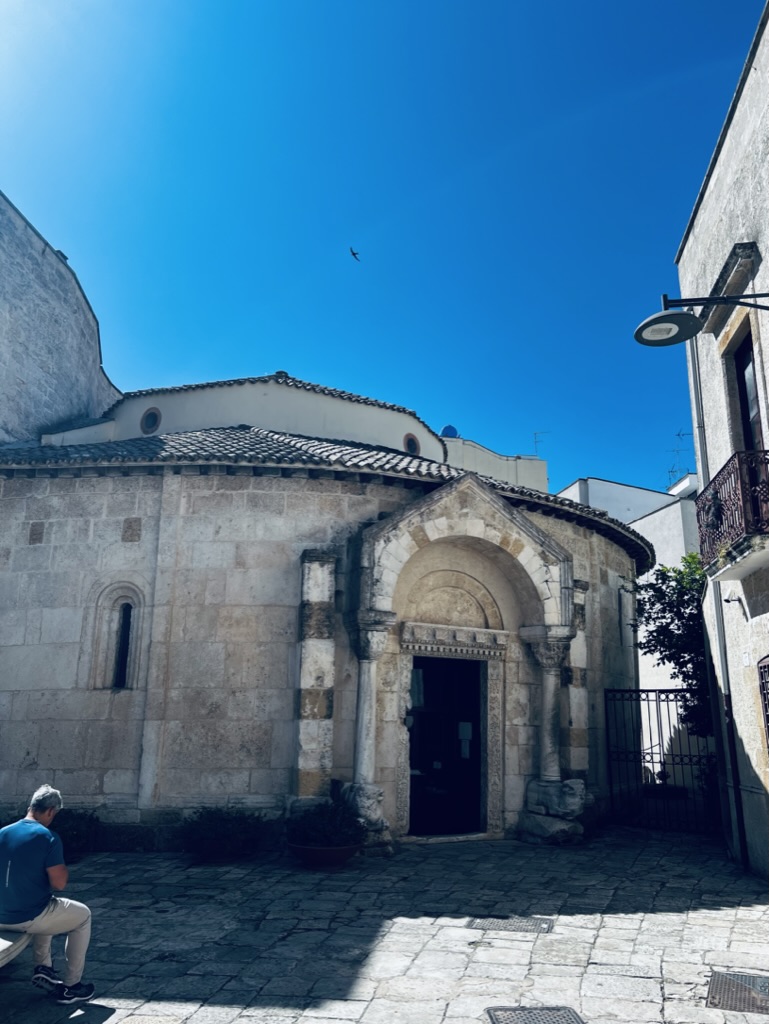
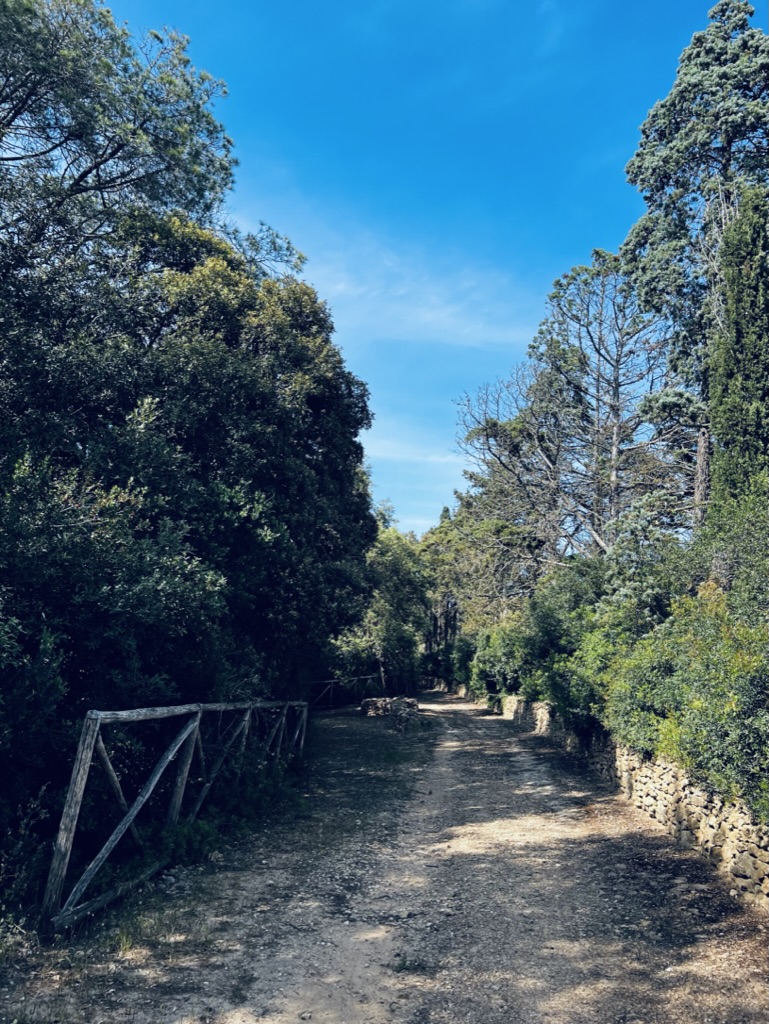
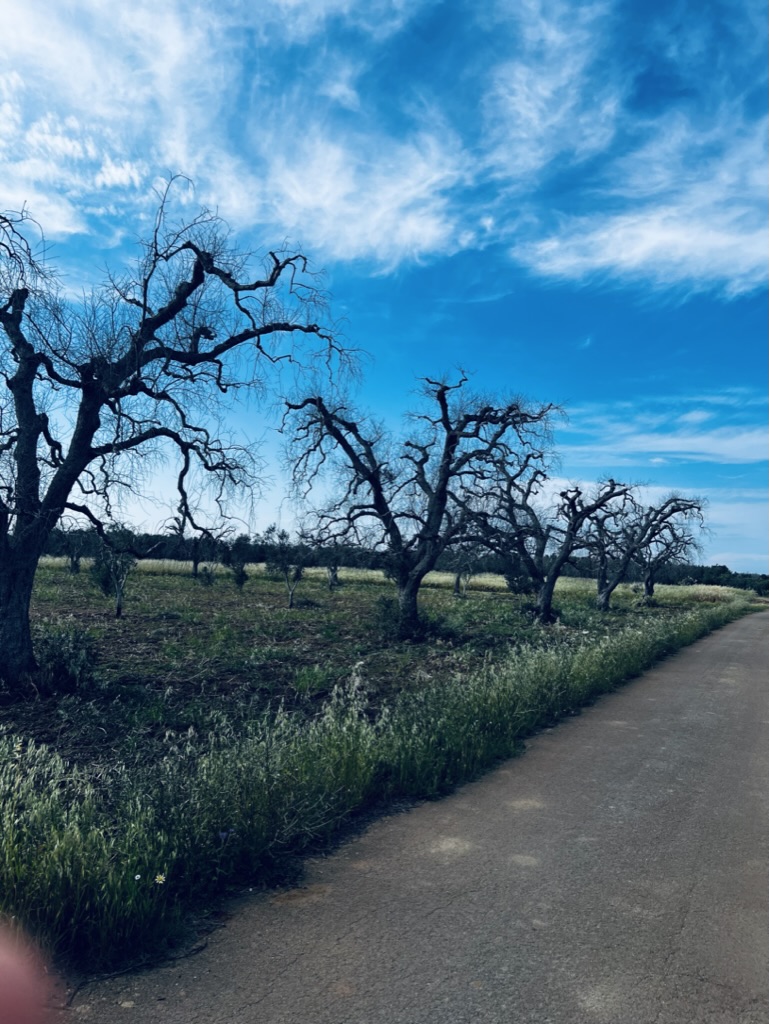
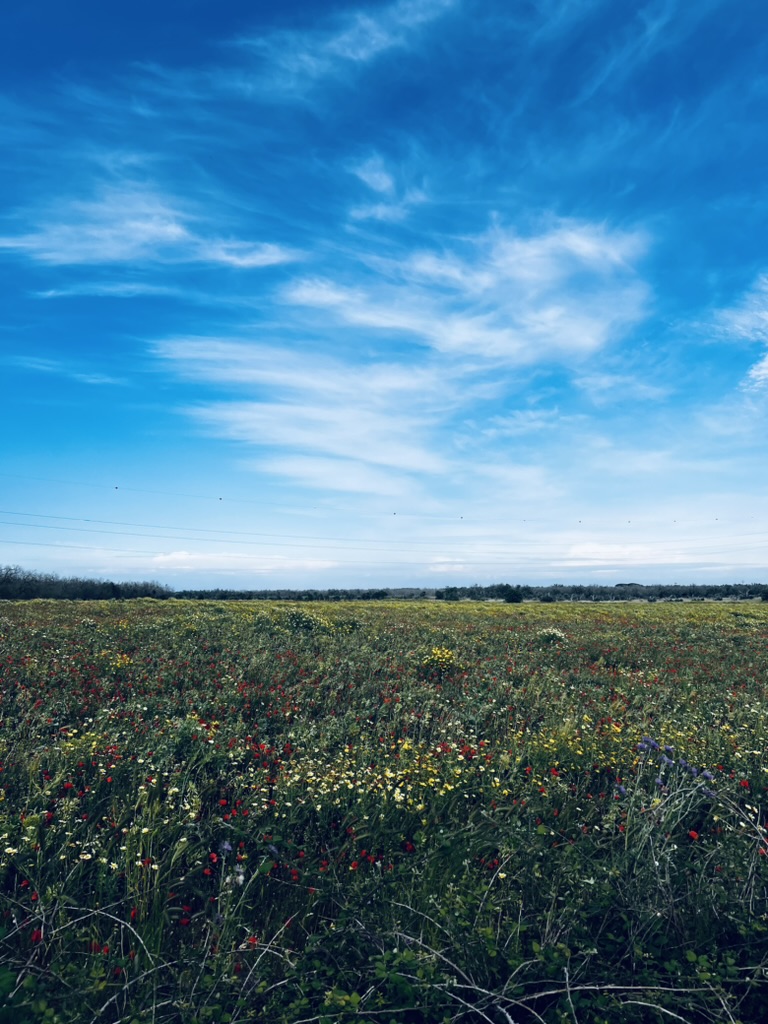
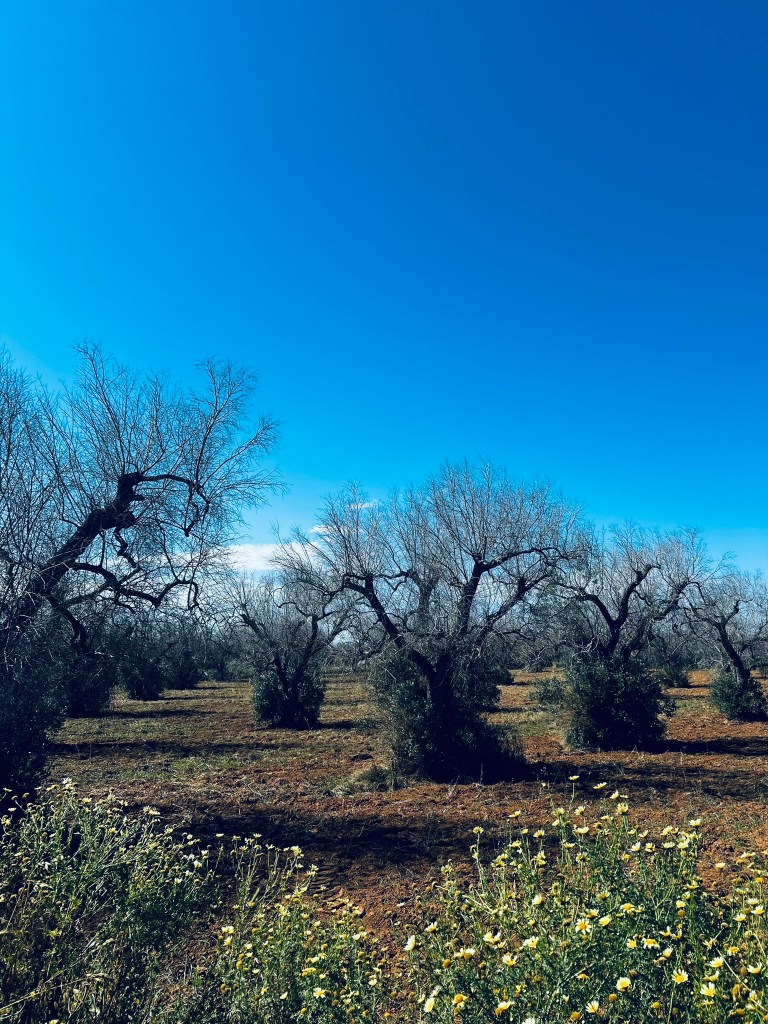
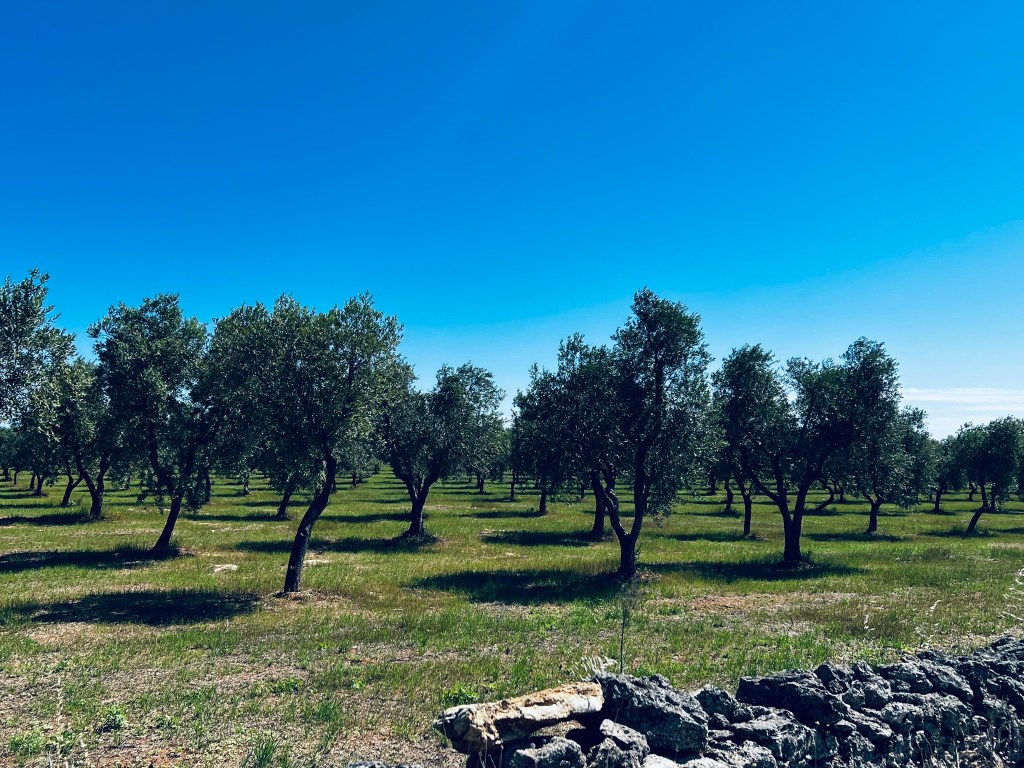
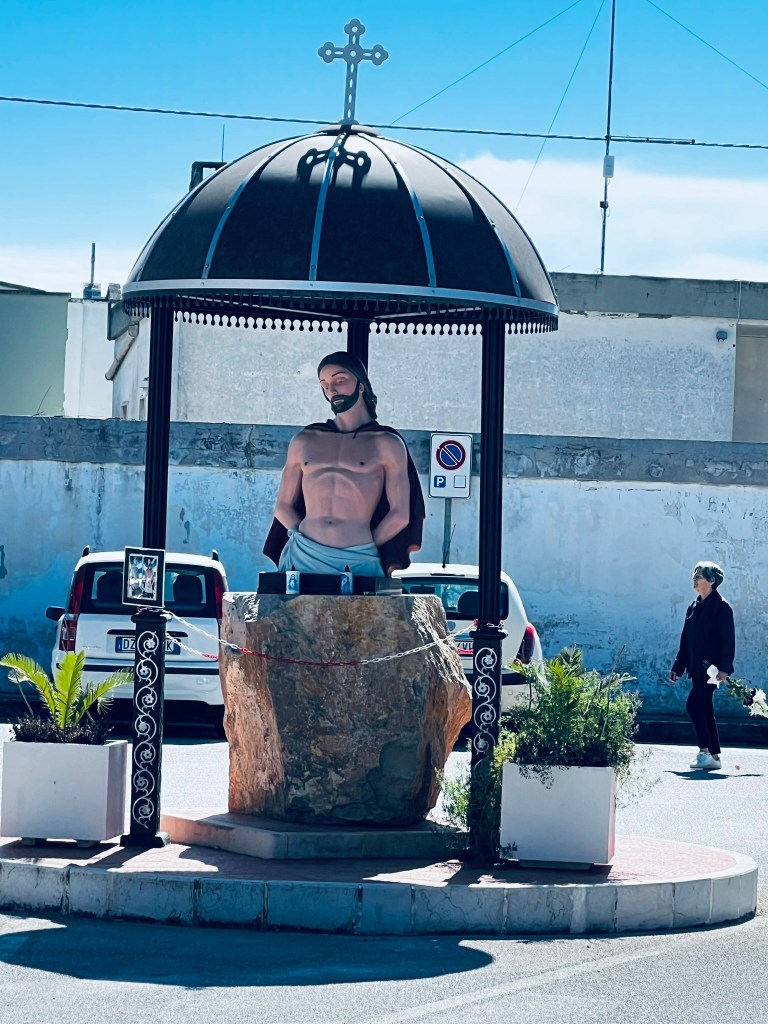
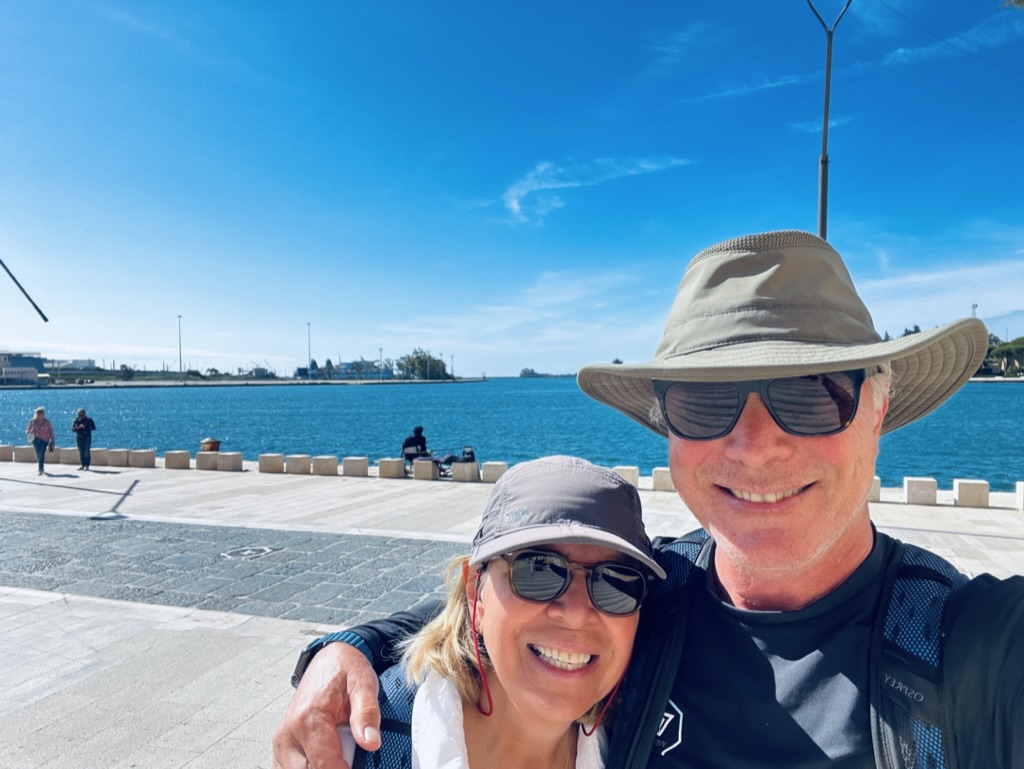
Share this:
-
Day 36 and Day 37 Torchiarolo to Lecce – 24 km Lecce to Martano – 14 km
Lecce is a beautiful town with an overabundance of Roman archeological sites, Baroque architecture, and the crowds that these justifiably attract. We loved it and plan to return to it soon for a more in-depth appreciation than we could grant it with only a 12 hour stay. We were able to spend some time at the Duomo, the Cathedral of the Assumption of the Virgin Mary, early in the morning, before any other tourists. Pilgrims get in for free. While the main church is a riot of gilded ornament, the crypt under the length of the church, that dates to the 11th century, is sparse but not severe and we could see the foundations of the original church dating to the 7th and 8th century. We had the place to ourselves and took advantage of it.
The walk to Martano was uneventful but marred by the devastated olive groves. We decided to cheer ourselves up by listening to the original Broadway recording of Hair. So relevant to our time. We desperately need an Age of Aquarius.
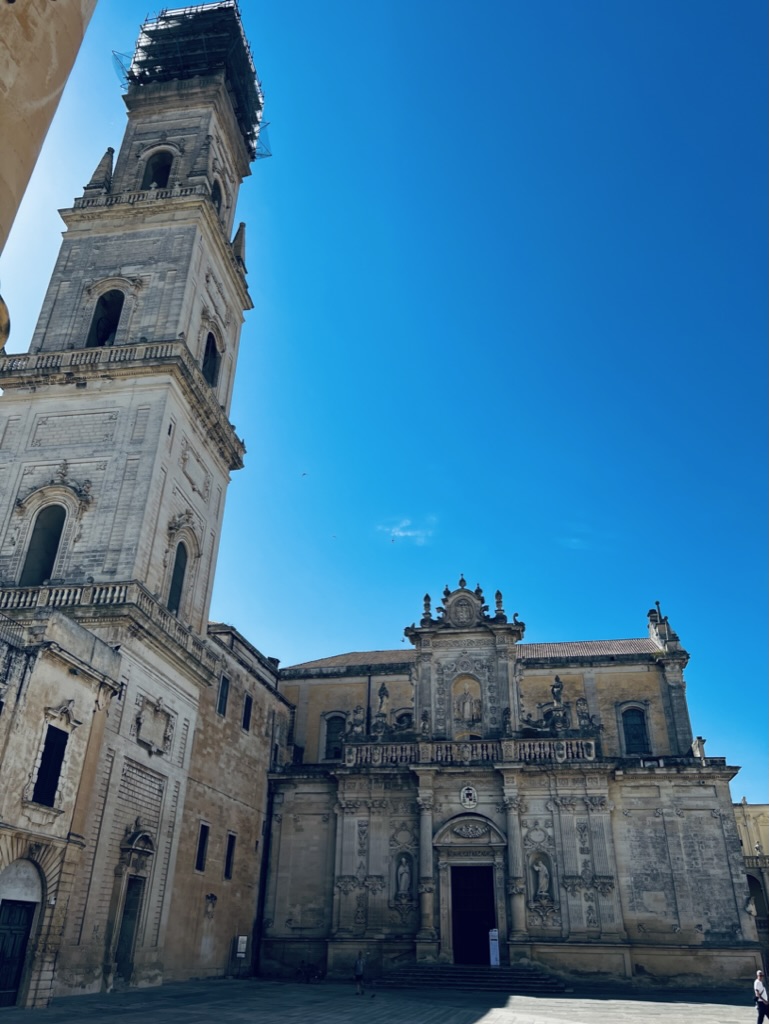
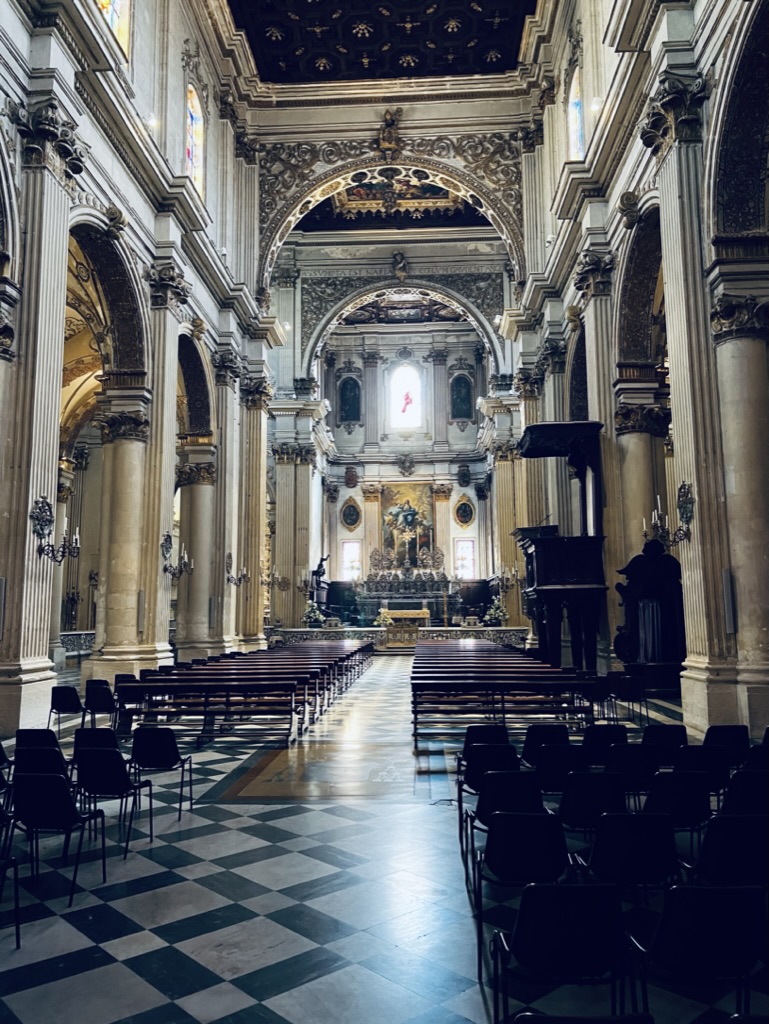
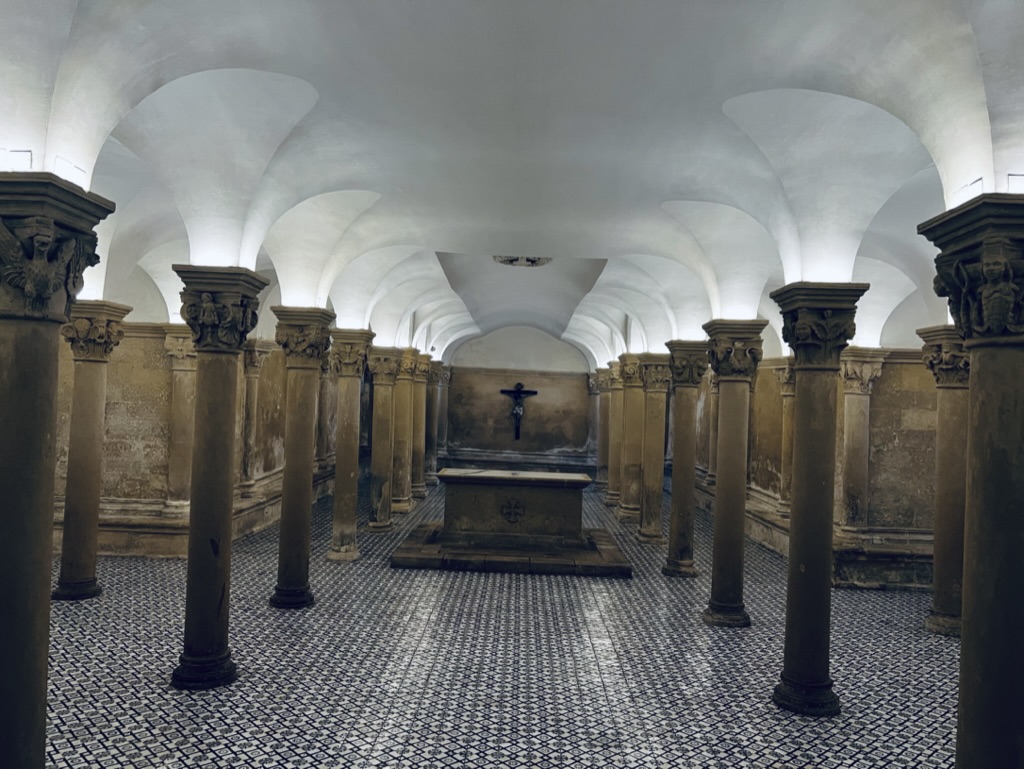
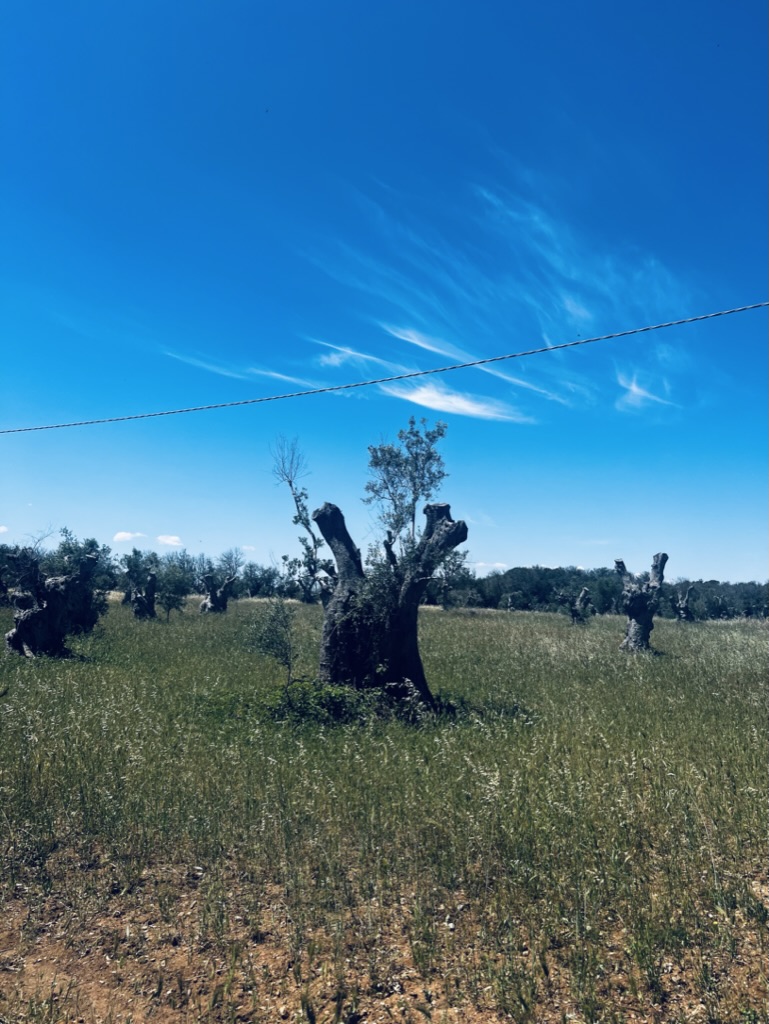
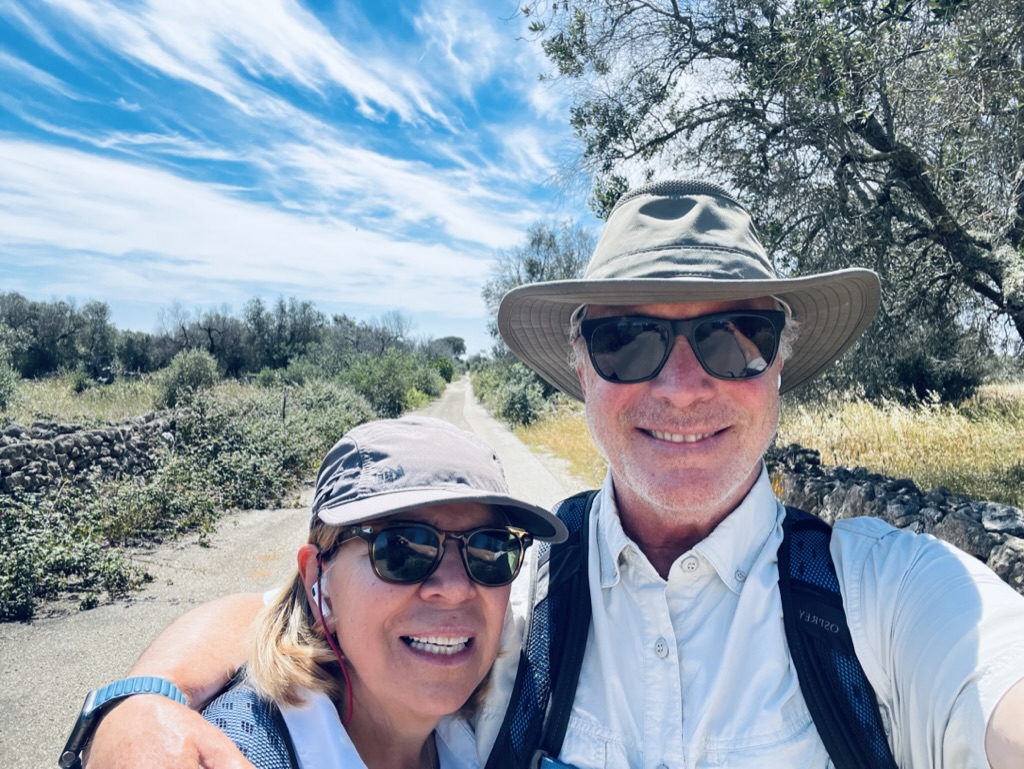
Share this:
-
Pope to Puglia Martano to Otranto – 12 km
We are back by the sea at the small town of Otranto, population 5,000 that swells up to 100,000 during the high season. It is a stunningly beautiful town with a broad, marble boardwalk along the shore, lined with restaurants and gelaterie, the length of its harbor. It is home to a significant Romanesque Basilica and an Aragonese castle. The 11th century basilica sports an elaborate tree of life mosaic on the floor of the main nave representing the history of Otranto in gory and suggestive detail. The docent in Lecce recommended we visit the crypt, that dates to the single digits, it did not disappoint. On our way back to the hotel after dinner we were drawn by the sounds of a Kyrie Eleison. We tucked into the side entrance of the basilica to listen to the choir ensemble practice. The acoustics were magnificent.
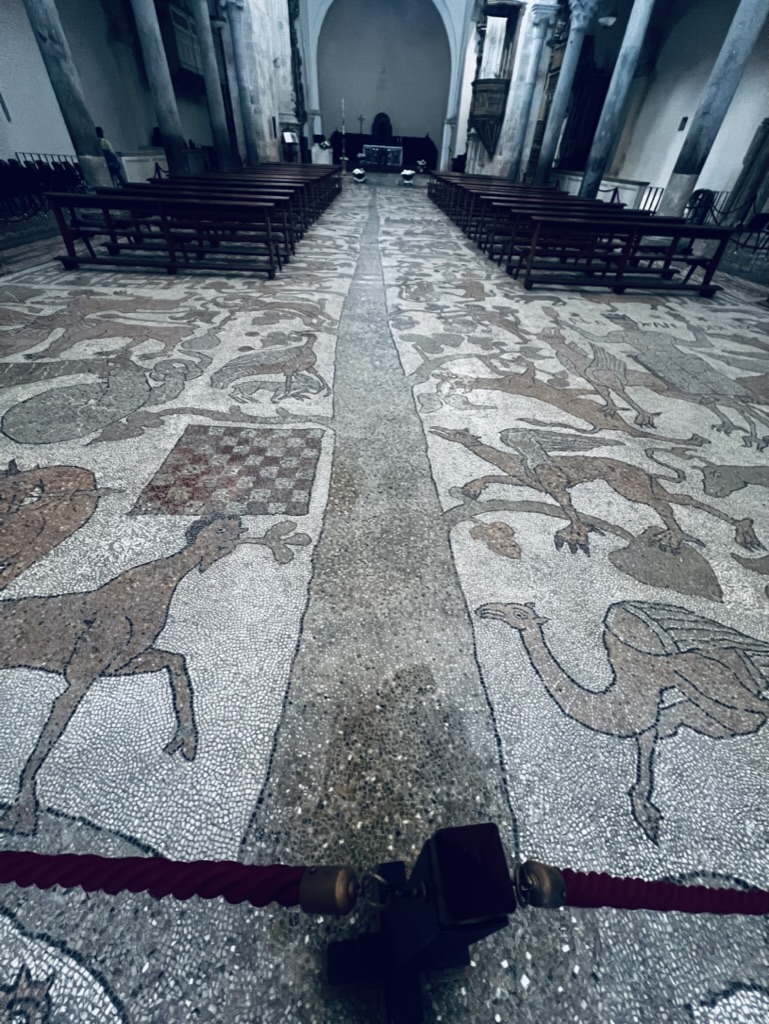

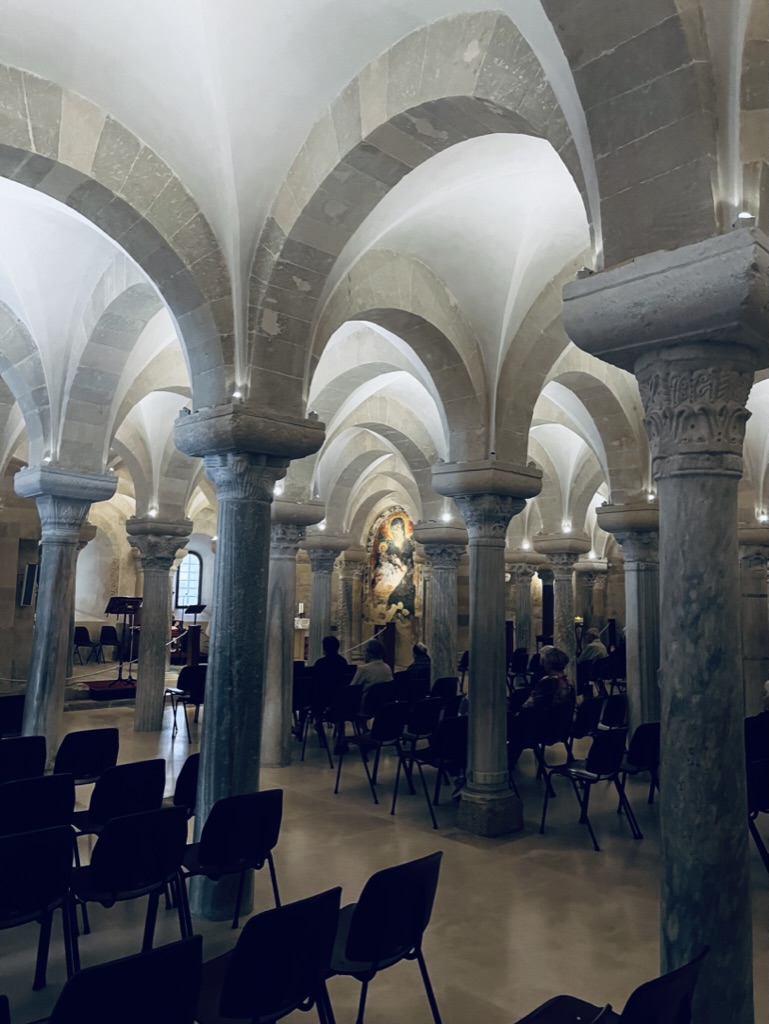
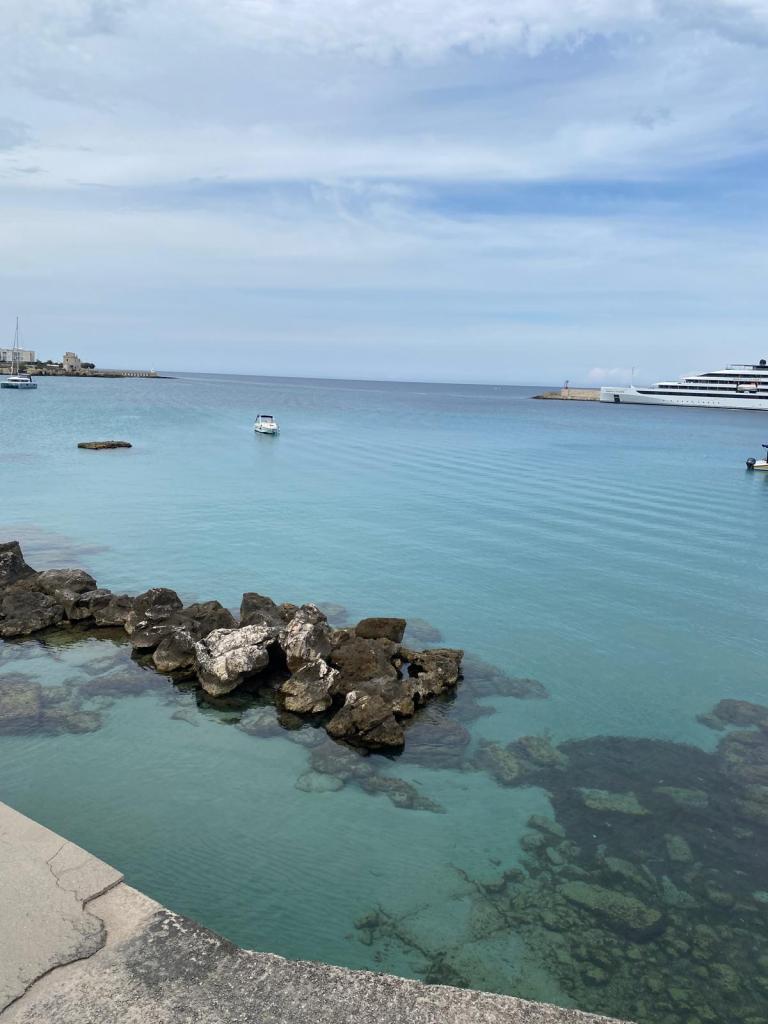
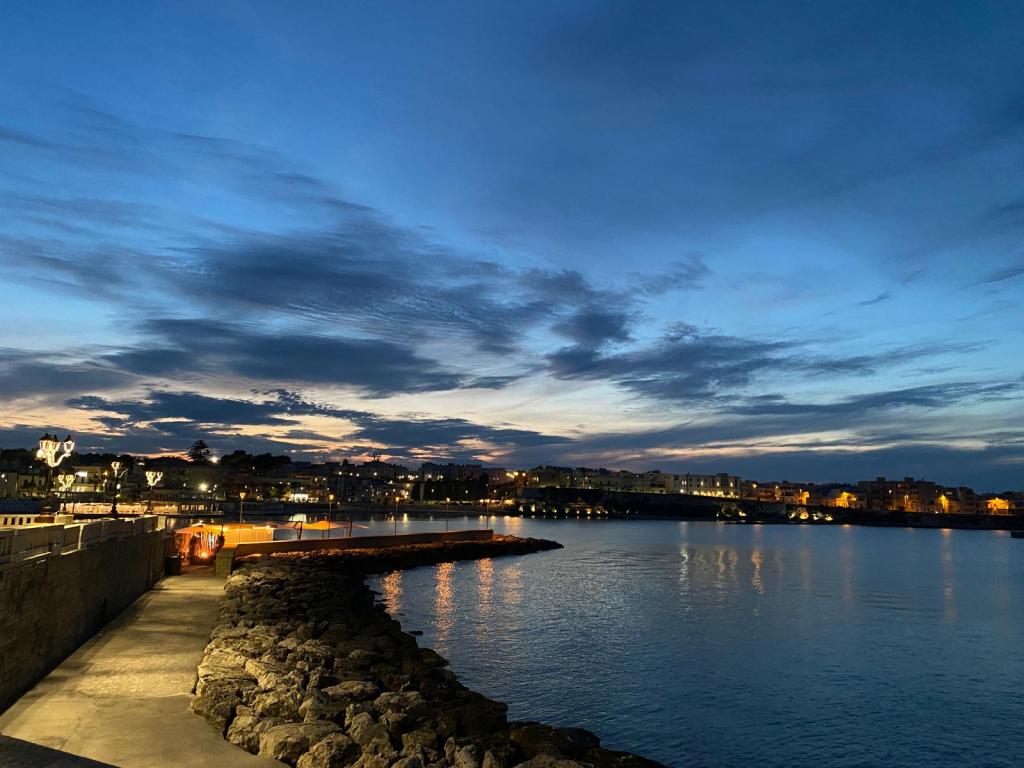
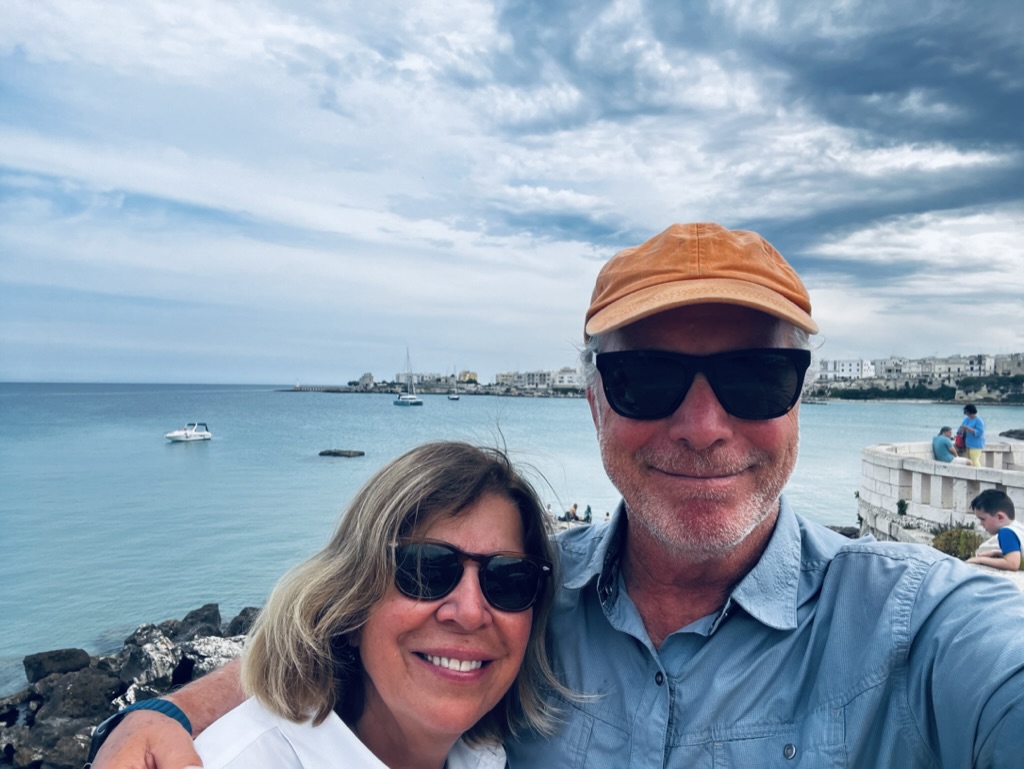
Share this:
-
Pope to Puglia Day 38 Otranto to Vignacastrisi – 26 km
We left the Aragonese castle behind. A beautiful blustery, wet day, first along the coast, now marked by steep cliffs, and then back in olive groves and vineyards and thorough small towns (less than 1,000 inhabitants) with extraordinary churches. This is the last of our 20+ km days, a distance that at the beginning of the walk would have been debilitating, today it was a breeze. Human progress.
The landscape is littered with Masserie, the old, fortified manor homes, many dating to the 16th century, surrounded by vineyards, olive groves, cultivated fields and animal pastures. Many of them are now abandoned, the economic system that supported them eliminated, but some have been converted into attractive resorts. We stayed in one, Masseria San Domenico, back in Savelletri, that was one of the best hotels/resorts we have ever frequented. It is another example of the resiliency of Italian culture. Not to mention the most exquisite dinner we are having in Vignacastrisi, population 1,700, at a restaurant that anywhere else would be a 3-star Michelin. Such is life.
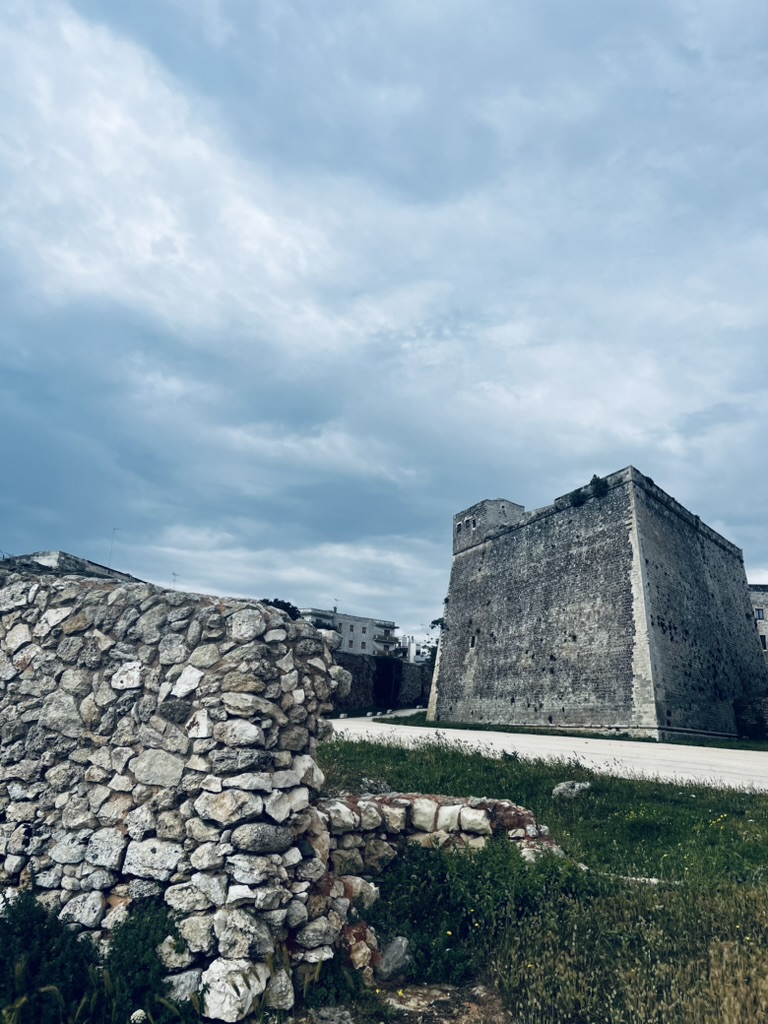
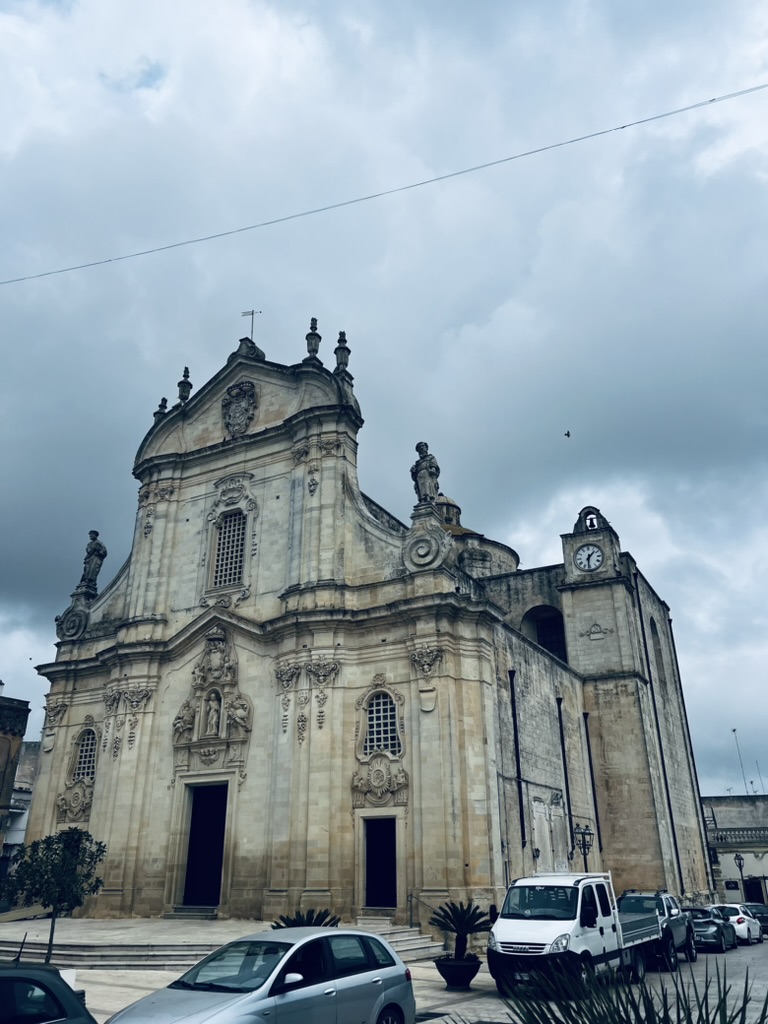
Share this:
-
Pope to Puglia Day 40 Vignacastrisi to Tricase – 14 km
A beautiful walk high up on the cliffs overlooking the sea.
We went to the fruit vendor to buy a couple of oranges for today’s short trip. The store advertised dried figs. The fig trees we pass are full of figs, not yet ripe. As the lady was carefully selecting and bagging the oranges I asked her when fig season began. “Around the feast of St John” she answered automatically. When she saw my puzzled look, she added “Around the first of June.”
It is difficult to overstate how deeply religion is integrated into everyday life in Italy. Crucifixes and portraits of Pope John or Father Pio everywhere, the road is sprinkled with small devotional chapels of all kinds, some more unusual than others, and seasons are defined by the rhythms of a religious calendar. Small poor towns boast magnificent churches, feast days are devoutly observed and celebrated. The log of church attendance may lead one to believe this is a secular country, but church attendance is no substitute for the weaving of religious practice into the fabric of everyday life.
Tomorrow is the last day of our Via Francigena walk. We are bracing for an emotional arrival at St Maria di Leuca.
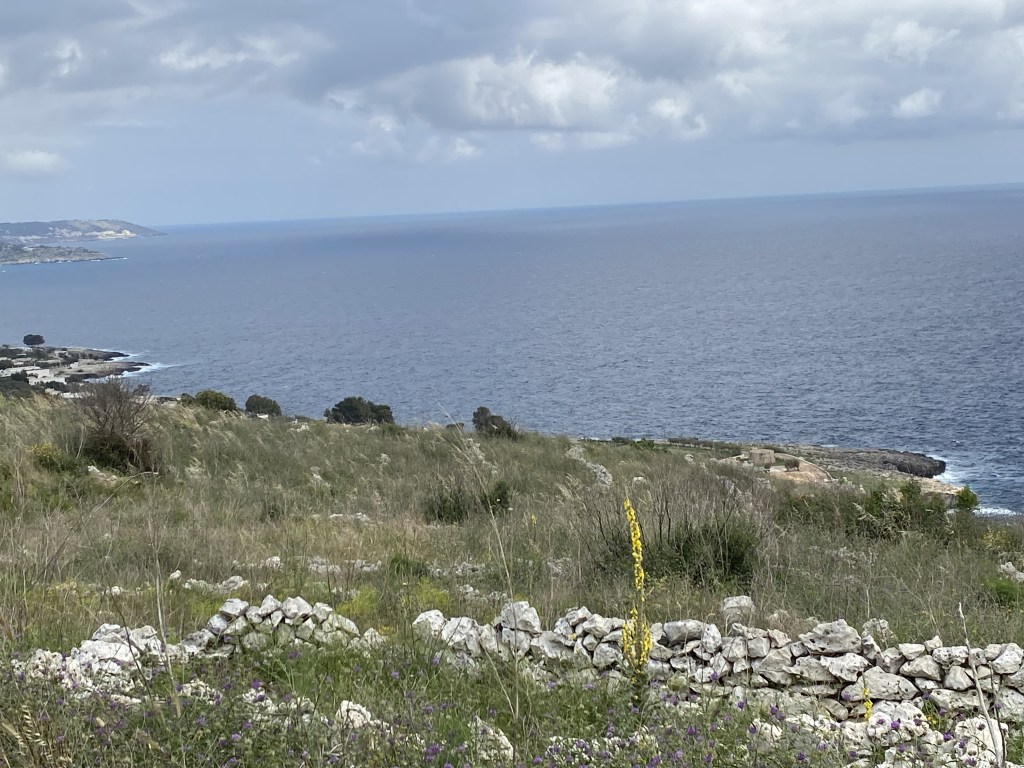
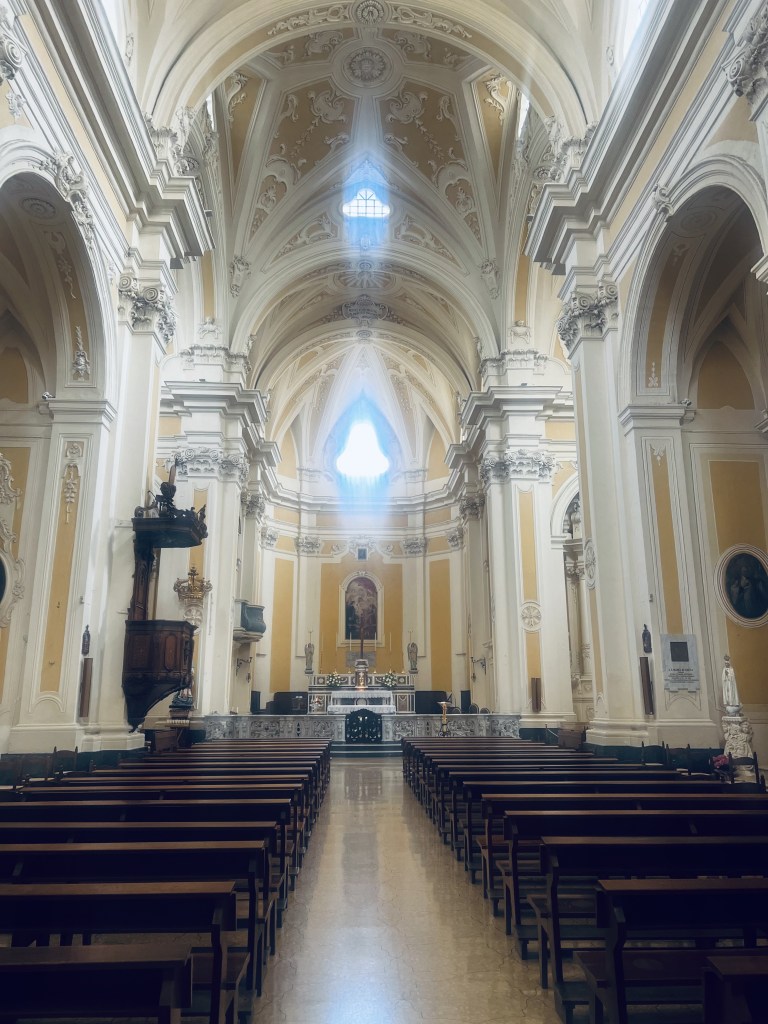

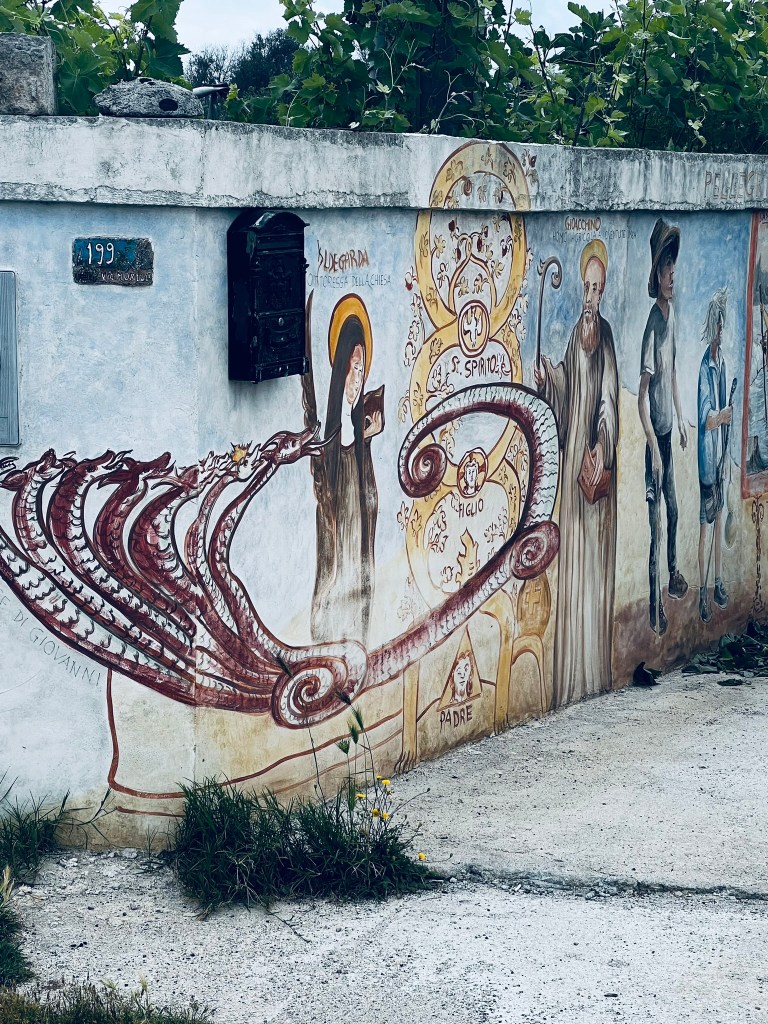
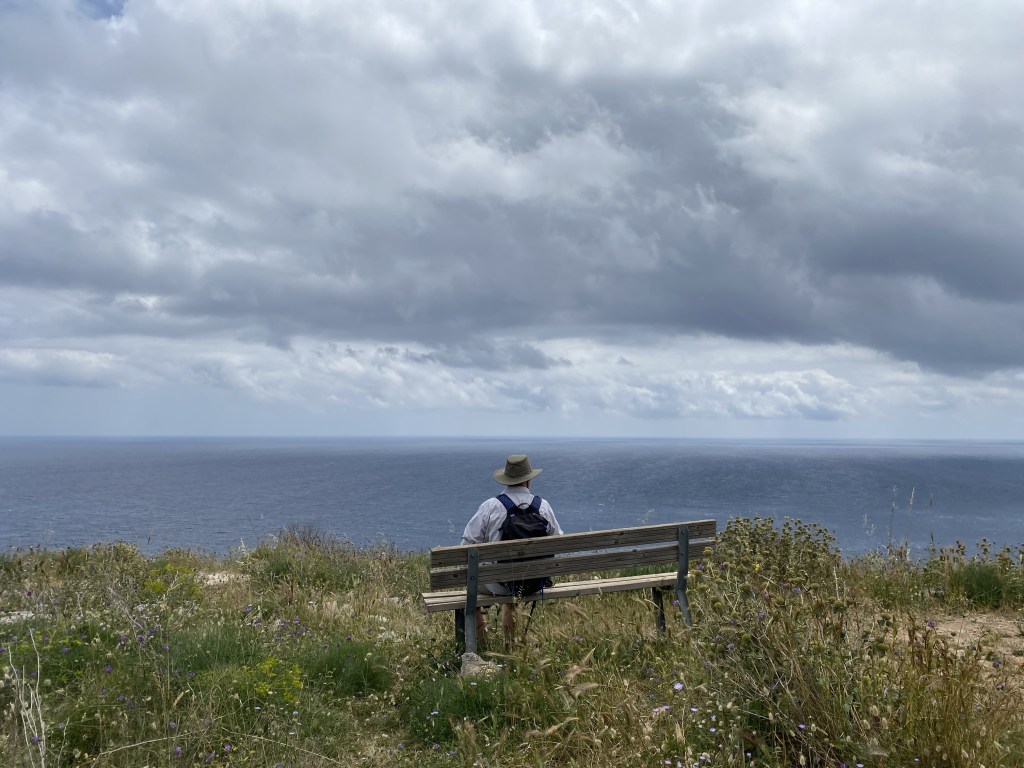
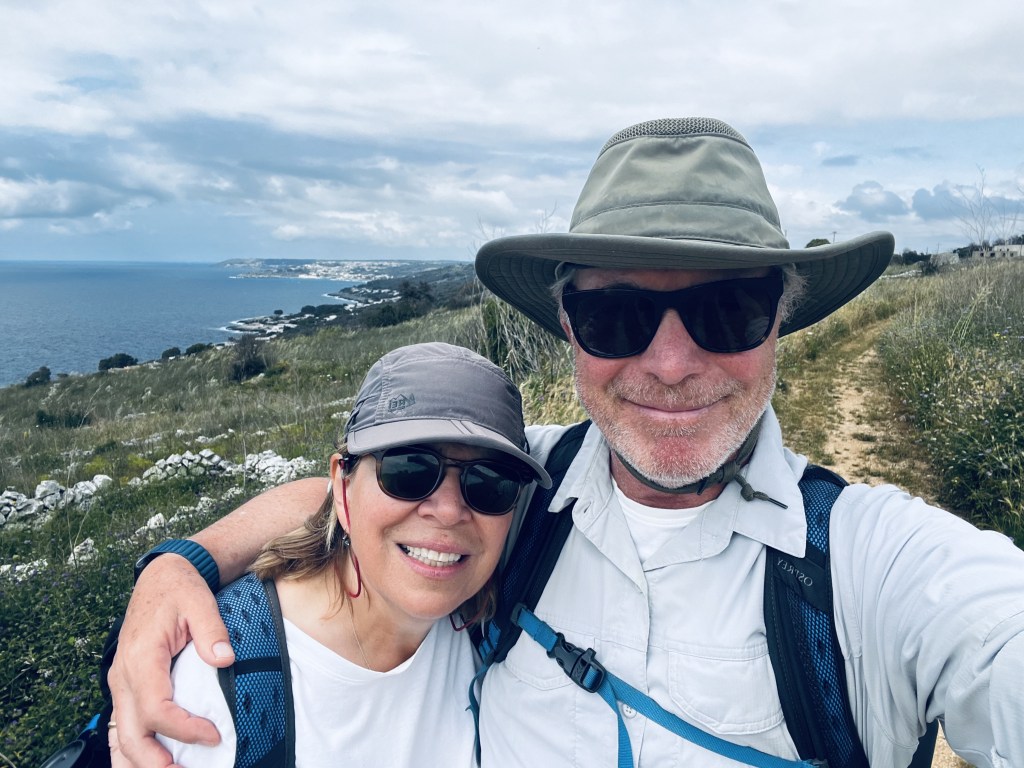
Share this:
-
Paula’s Weekly Summary: Dispatch from the Back End of Week 6
This adventure with my dear friend the Wildebeest is coming to a close. What began 40 days ago, seems now like a dream from a different lifetime. The details are growing more elusive, like watching passing scenery from a train window.
My daughter warned that asking friends to endure, yet another, journal marathon of our walk was asking too much. Maybe so, but our dispatches provide us with important details and reminders. Many of the specifics are already forgotten or confused. The record allows us to fact check our memories and each other. While you may be solving Wordle, we are trying to remember places and event as recent as yesterday. A daily occurrence goes something like this:
Edward, “Do you remember that guy in that town with that thing?”
Paula, “Oh yeah, his name was Rocco, and he was holding a cat and drinking a beer.”
Edward, “Right by which town was it? “See what I mean.
Our journey has been intimate and personal. Sharing this adventure with you has created an unexpected and thrilling dynamic. Thank you. Your comments and incredibly generous compliments have been a regular source of joy and encouragement.
Some Trip highlights:
Best listening:
Hamlet, Forger Theatre Audio Production.
Brooke Gladstone – On the Media – Every week.
Ezra Klein Interview with Adam Moss on Editing.
Best Purchases along the way:
multiplugs.
small black gauge duct tape.
Padre Pio refrigerator magnet.
Apple watch replacement wrist band at the Bari Apple store.
Trip miracles:
BoA shipping replacement debit card to tiny town in middle of nowhere in 5 days; Amazon delivering new boots to a different small town in the middle of nowhere in 3 days; clothes pins.
My ceramic chard collection in now complete. I plan to turn over the mountain of treasures to Isla, my 2-year-old granddaughter, who is a puzzle prodigy. I will not be surprised if she returns it with a recreation of Pangea. The rusted metal treasures are too dangerous for toddlers but will be displayed in a public location. Details to follow.
When we set out, we had no thesis to prove, no demons to slay, no angels to entice, no need to confirm beliefs or redemption to seek. Just taking a long walk with a friend who shares your eccentricity. However, lessons were learned, and human kindness was confirmed. We experienced the joy of the ordinary, and the thrill of accidental discoveries. These were our regular rewards.
To be a Zebra traveling with a Wildebeest life is safe and secure. He eats the bottom half of the grass stalk; I eat the top. His exceptional sight, when coupled with my exceptional hearing, places us in a world organized and complete in our reciprocity.
So now – after the boots and the blisters, after the Advil, the sunscreen, after the long talks, the lengthy lunches on logs, after the wrong turns and the helpful strangers, after the endurances and the water bottles, after the climb and the descent, after the inexplicable joy of enduring kindnesses, we return to those we love.
#16sumers
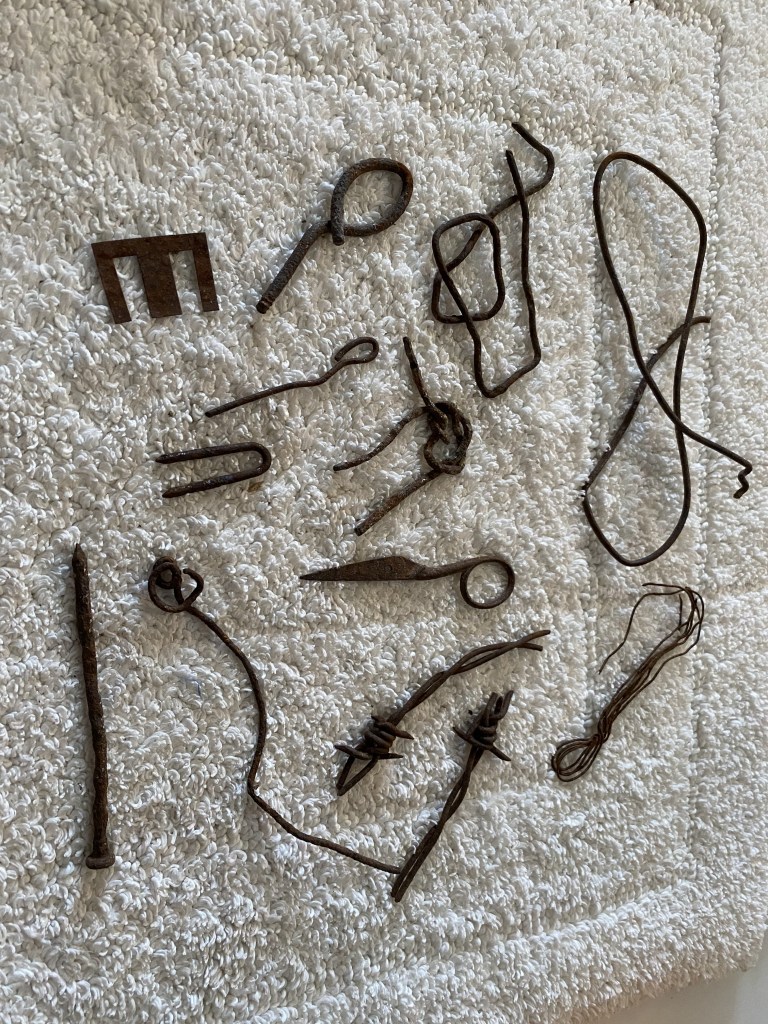

Share this:
With Edward and Paula
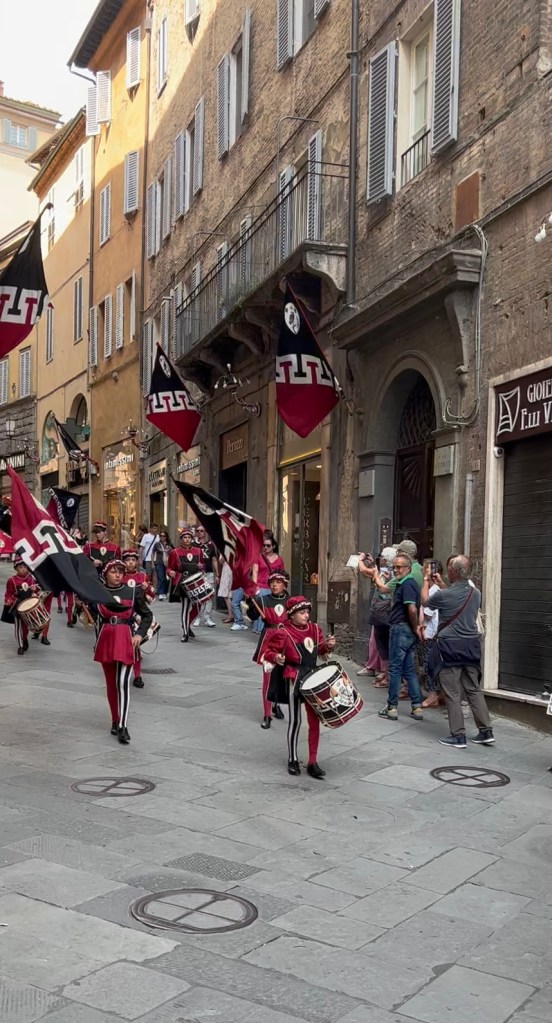
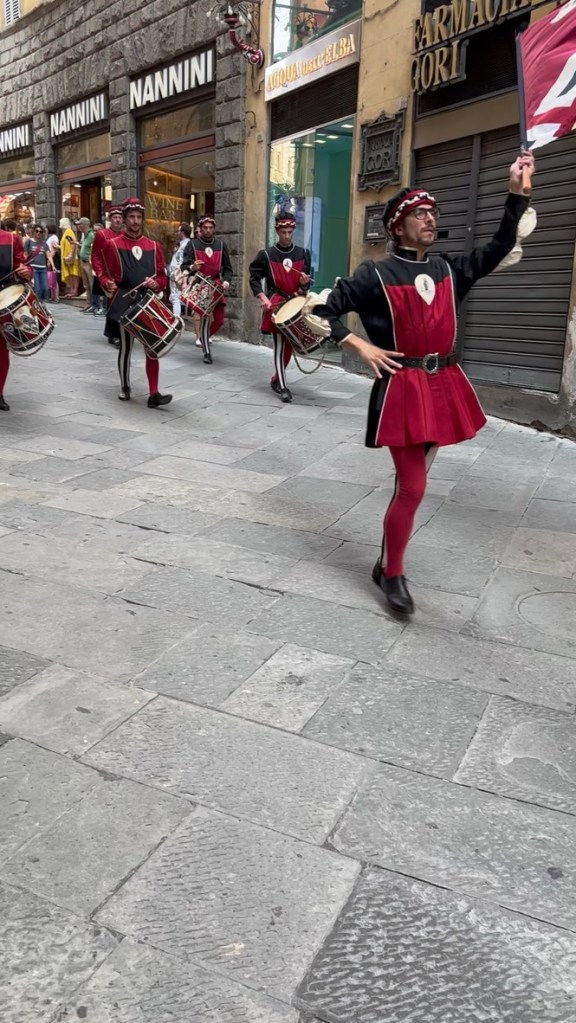
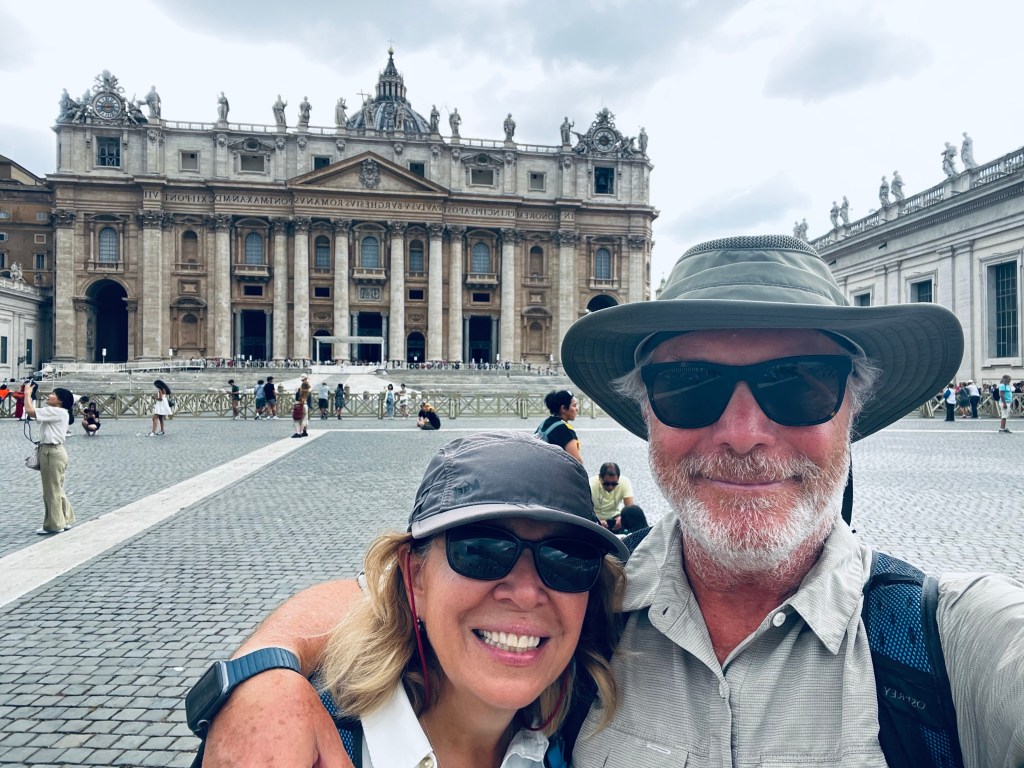
 Walking the Via Francigena