Stage 51 and 52: Aigle to St Maurice – 25 km; St Maurice to Martigny – 21 km

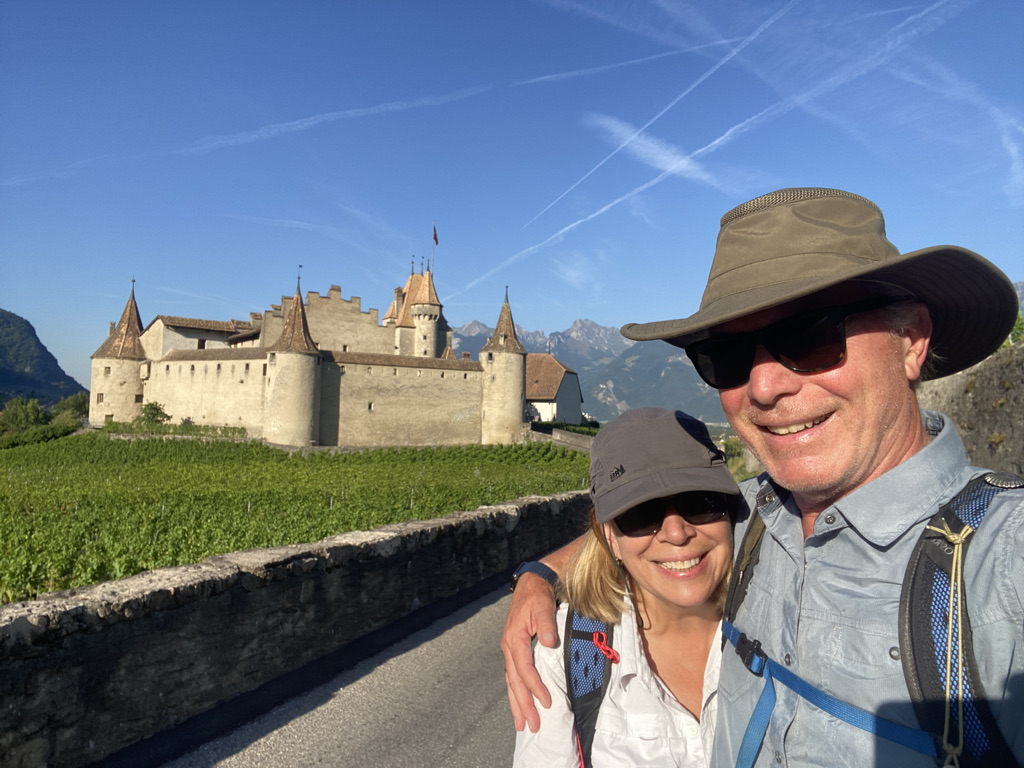
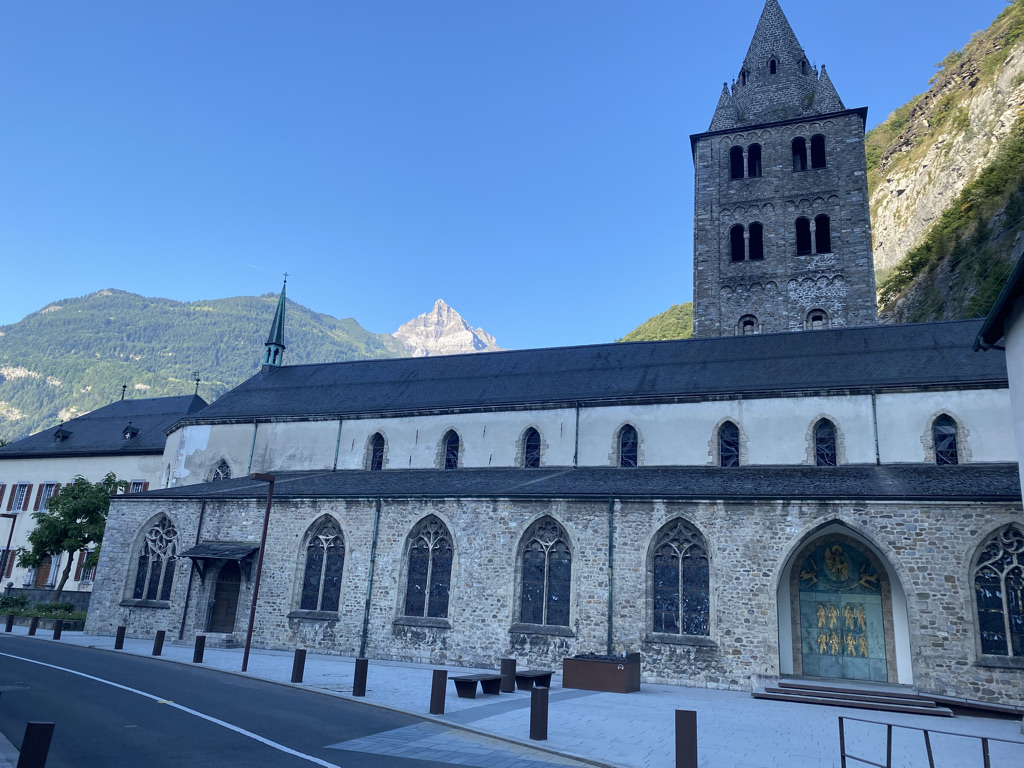
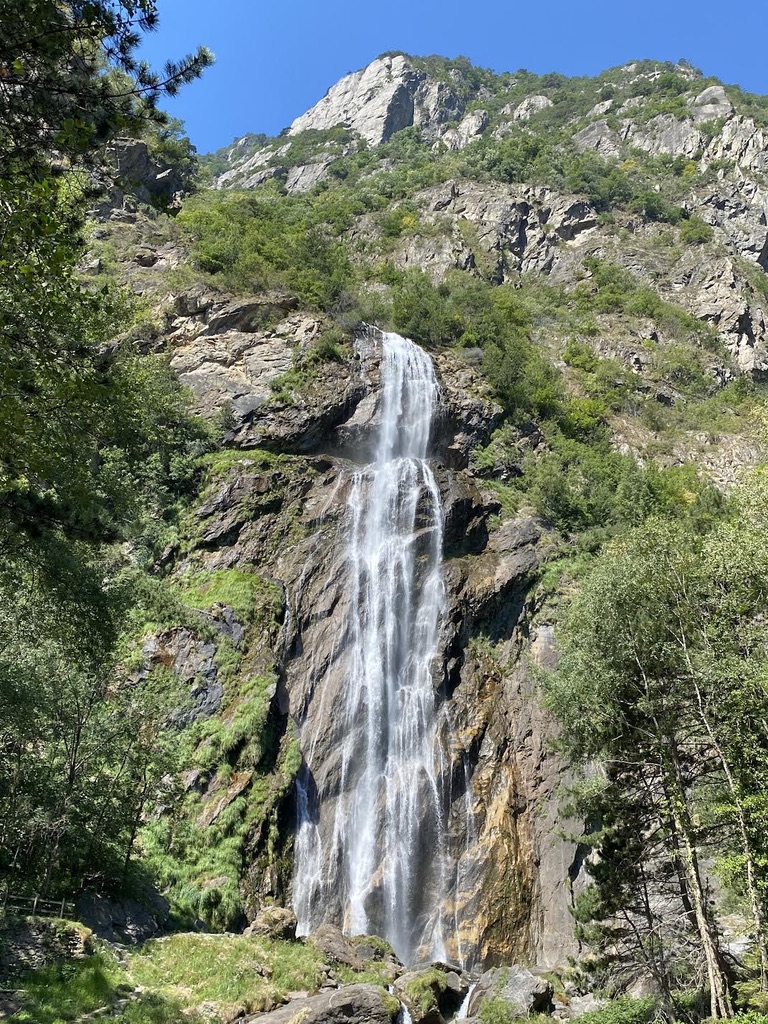
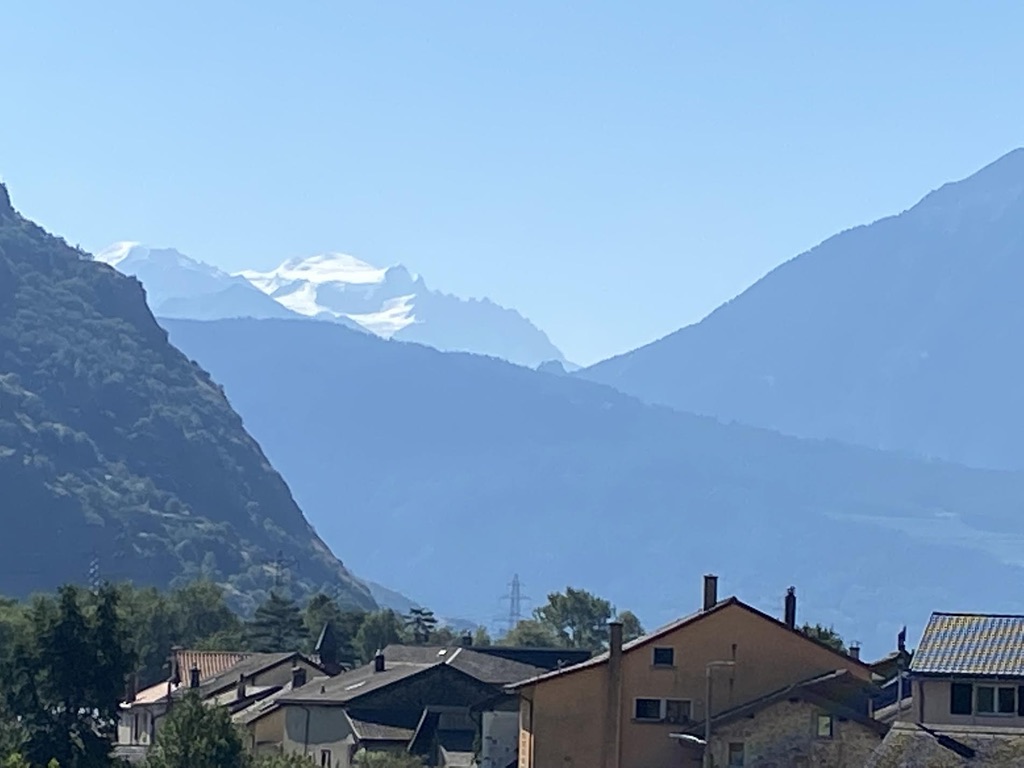
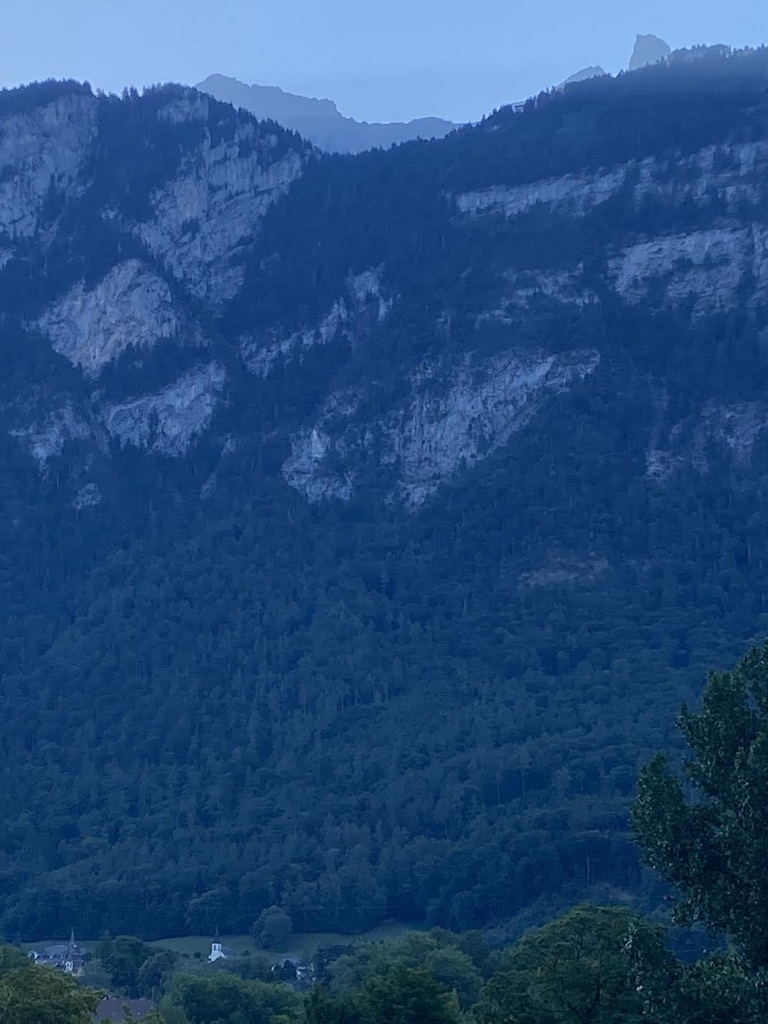
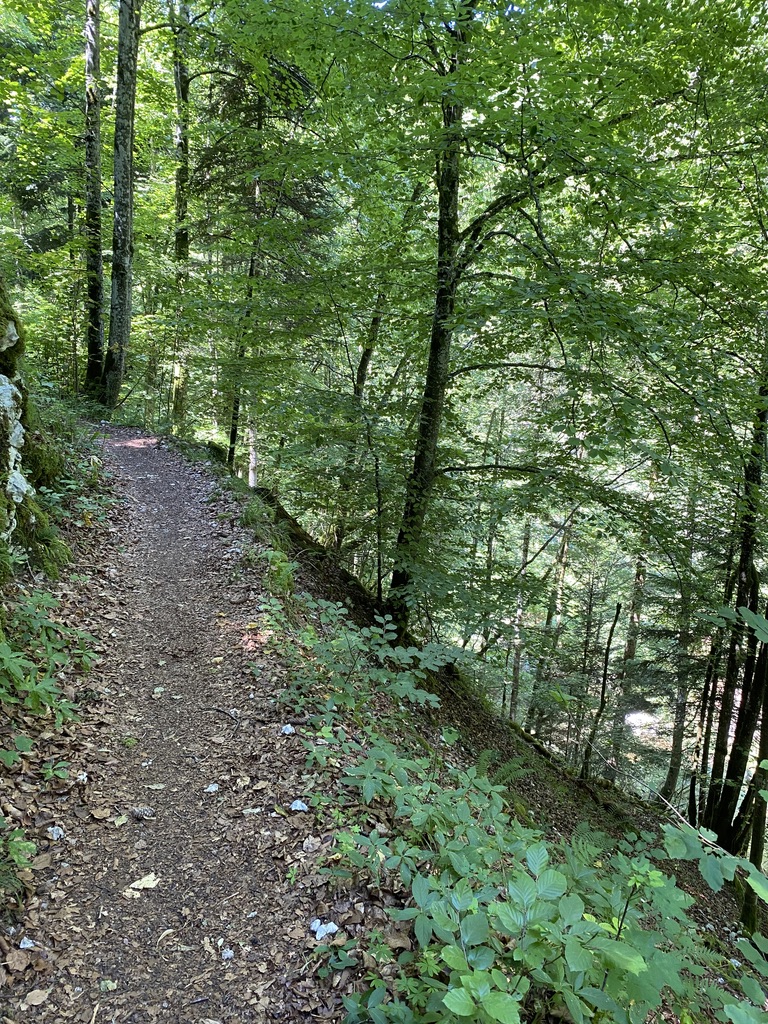
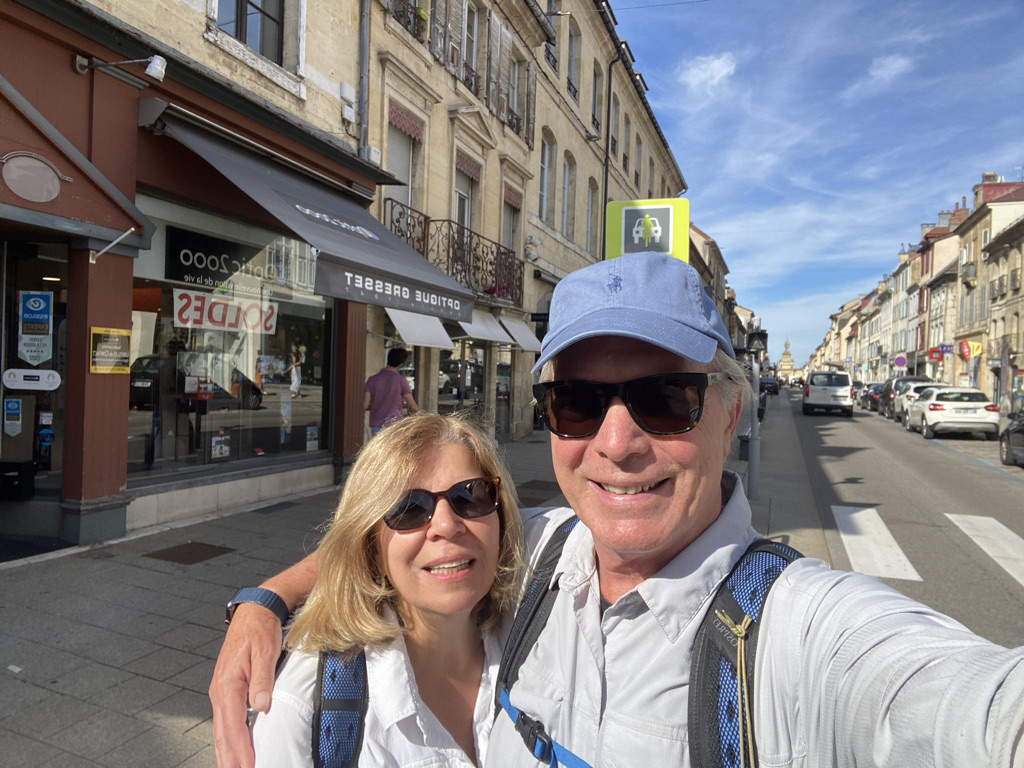
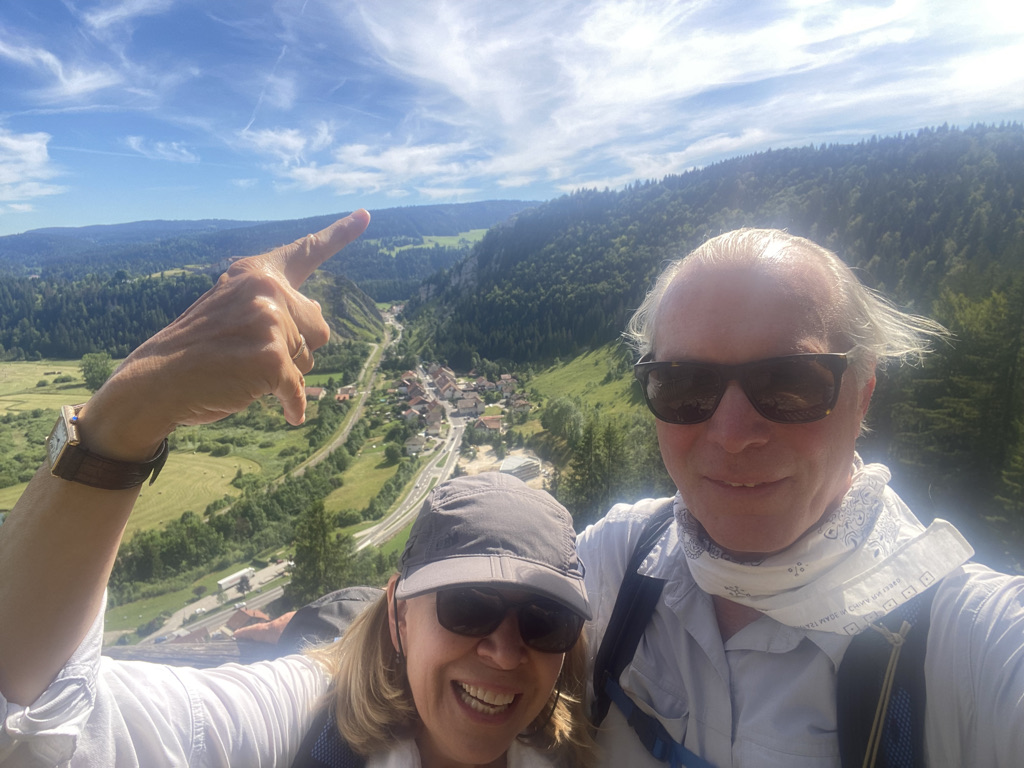
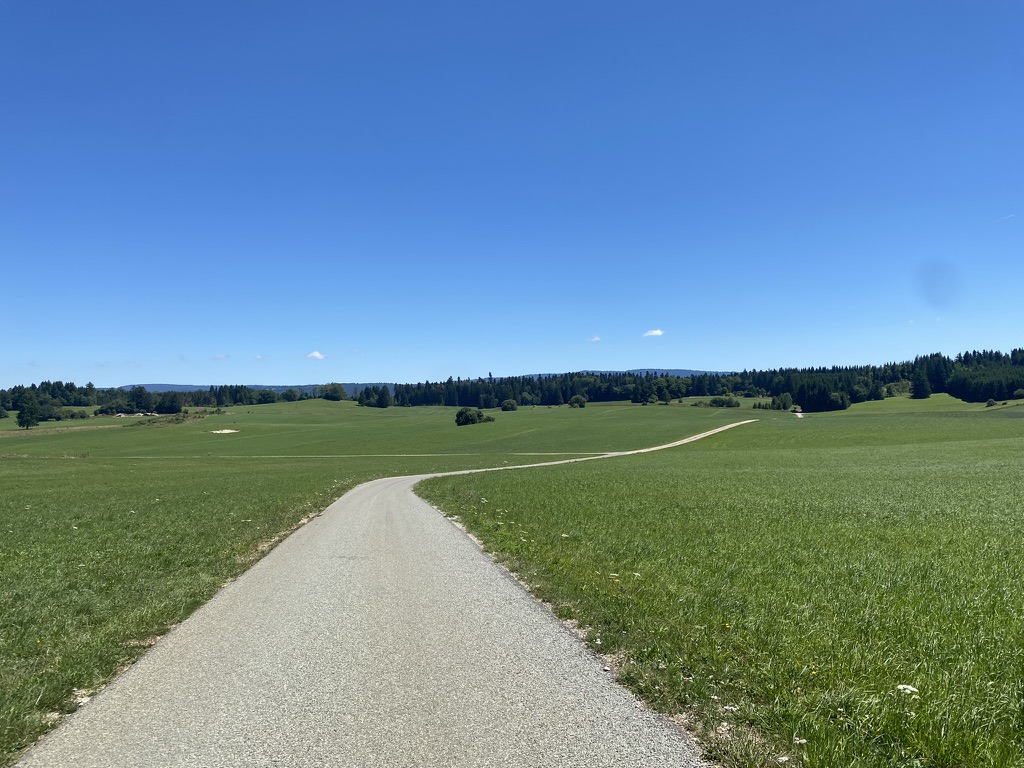
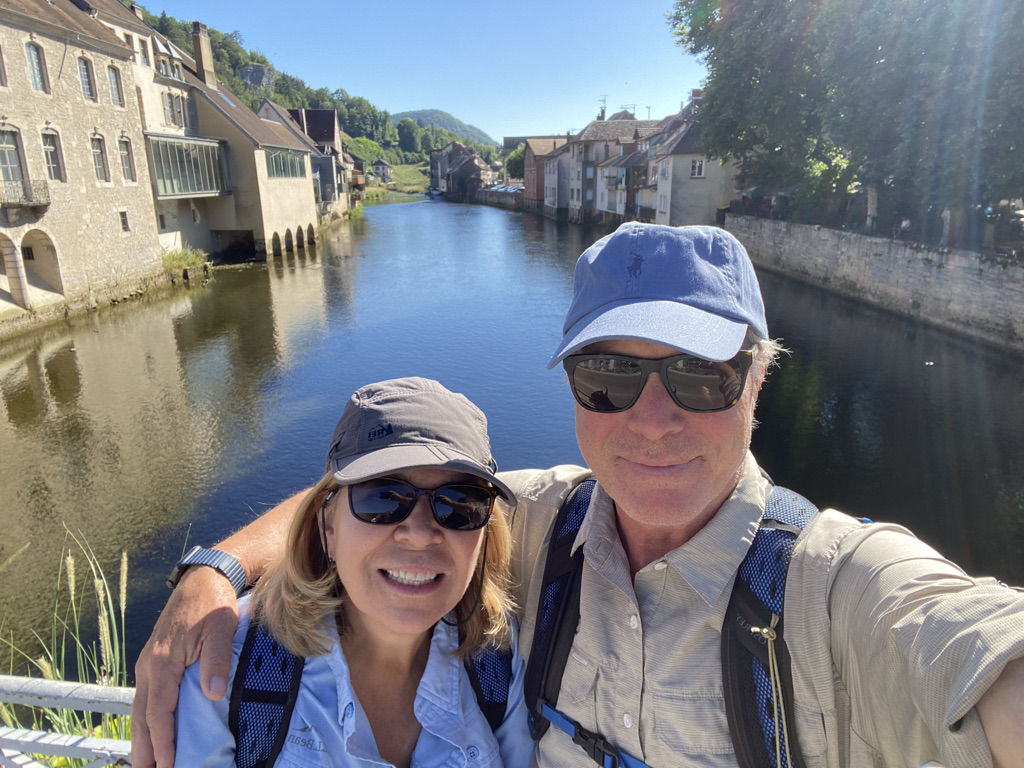
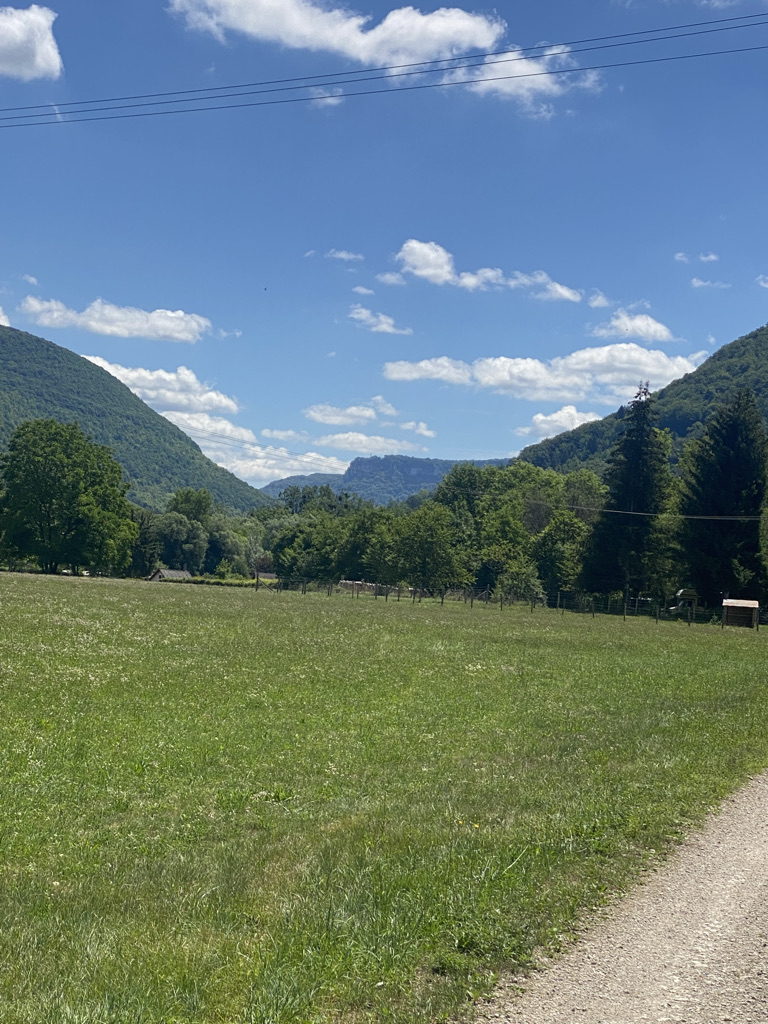
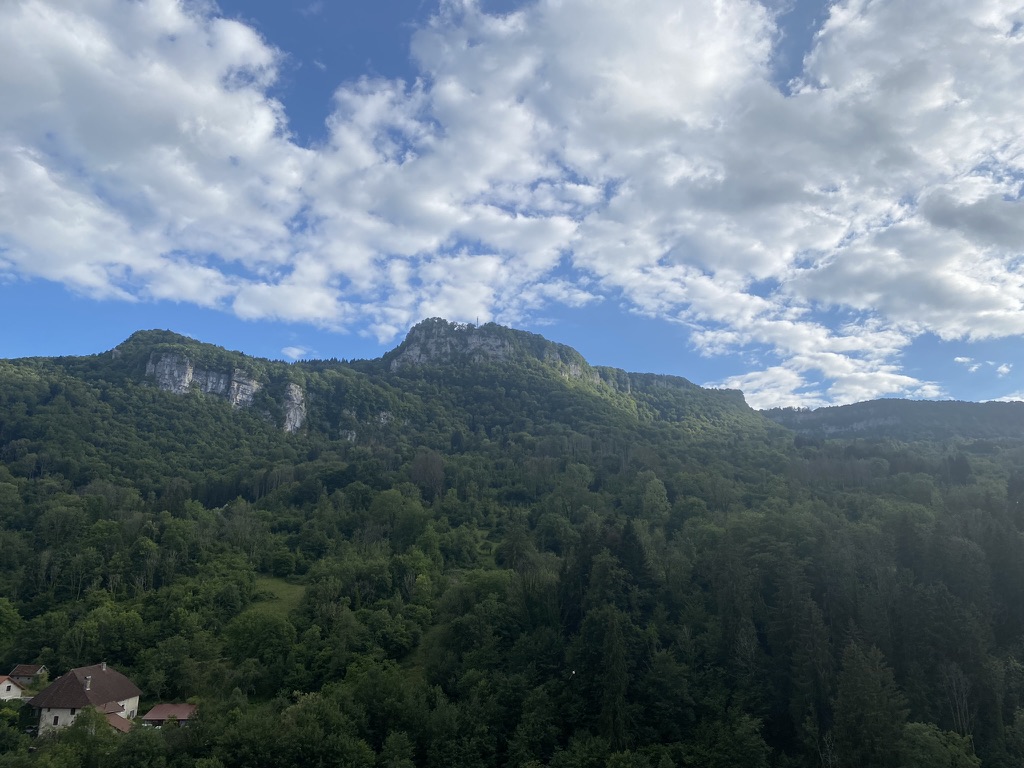
These are very pleasant segments along the Rhine, one of Europe’s great rivers, which at this point is a disturbed, agitated pale green mass of water restlessly fighting its banks from which it will not be set free for another 1200 km when it reaches the sea.  The walls of the valley close in until we reach Martigny, where there is no other choice but to go up, which is what we start doing for the next 3 days until we cross into Italy. We passed the Aigle and St Maurice Castles, the Pissvache water falls and we had our first glimpse of the snowcapped Mount Blanc massive, dwarfing in size and height surrounding peaks. We avoid the crushing mid-day heat by starting very early in the morning and try to wrap the day up before it becomes debilitating.  Onward and upward.

Stage 50: Vevey to Aigle – 25 km

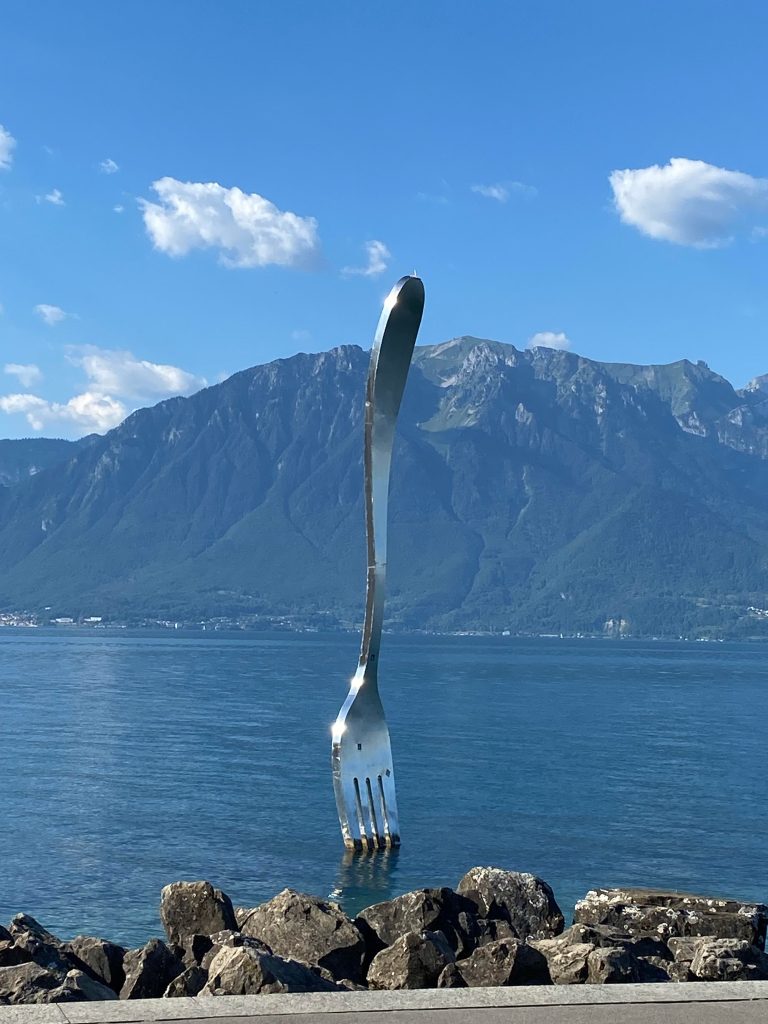
In Vevey you will find the Alimentarium museum dedicated to food and nutrition. In front of the museum is the Fork, a sculpture by Swiss artist Jean-Paul Zaugg. Paula fell in love. We leave Lac Leman to walk up the Rhone valley in the shadow of the towering Swiss Alps.  We are filled with anticipation of our upcoming climb up and over the Gran San Bernardo Pass.  Our legs are strong, walking for the past 8 weeks is good training for the climb and we are able to scale 2000 and 3000 feet with reasonable effort, nonetheless walking up 8000 feet seems daunting. All will be revealed soon enough.  We do hope altitude will reduce the heat. Walking in 92 degrees under a pounding hot sun is exhausting.

The Tourist Office, there is one in every town, where we sometimes have our “Pilgirm’s Passport” stamped, asks us to fill out an information sheet which we are glad to do and we get to see who else is walking. There are surprisingly few walkers.  In Aigle we saw an entry by Hellen, the English lady we first met in Guines, who apparently passed through a couple of days ago.  There is a Canadian duo a week ahead of us. No sign of the father/daughter.  Half a dozen entries before June.  One of the questions on the sheet is to check the purpose of the journey with options like Religious, Health, Adventure, Tourism and Other.  We check Other because we haven’t settled on the purpose of our walk in terms of what we want to get out of it other than a good walk.

One of the benefits of walking every day is that it clears your mind.  Our inboxes are still inundated with hourly and daily alerts about the latest political and economic emergencies but our walk helps us set them aside.  The only insight, if it can be called that, is that the world fundamentally changed since January 6, domestically, and February 24, internationally.  We perceive current affairs through the prism of those 2 events.   Not a great comfort but it is what it is. Keep walking.

Stage 49: Lausanne to Vevey – 21km

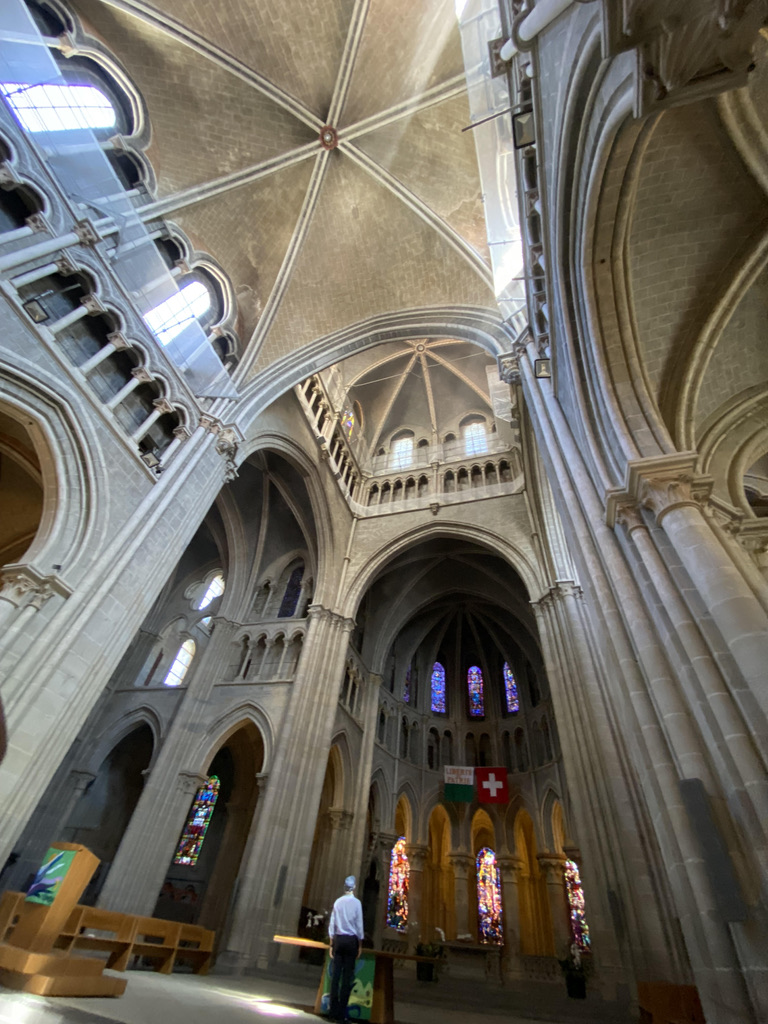
Lausanne is a remarkable town, blending sheer luxury with history and Swiss efficiency.  The Cathedral of Notre Dame dates back to the 12th century but its internal decorations were covered over during the Reformation only to be restored in the 20th century when tourism reformed the Reformation. Every night, 24x7x365 since the 1500s between 22:00 and 2:00 am a “Nightwatchman” selected by the town, climbs the bell tower to announce the hour. The current Nightwatchman is retiring in 2024 to be replaced by a young lady, first woman to hold the position in 600 years.  Progress.

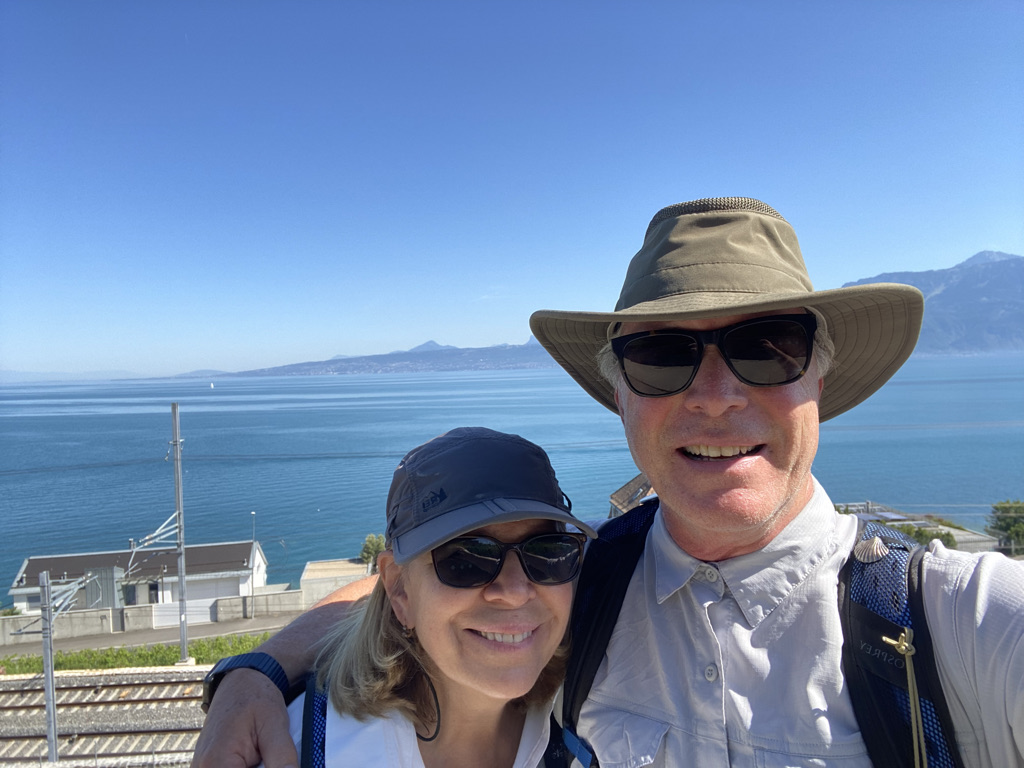
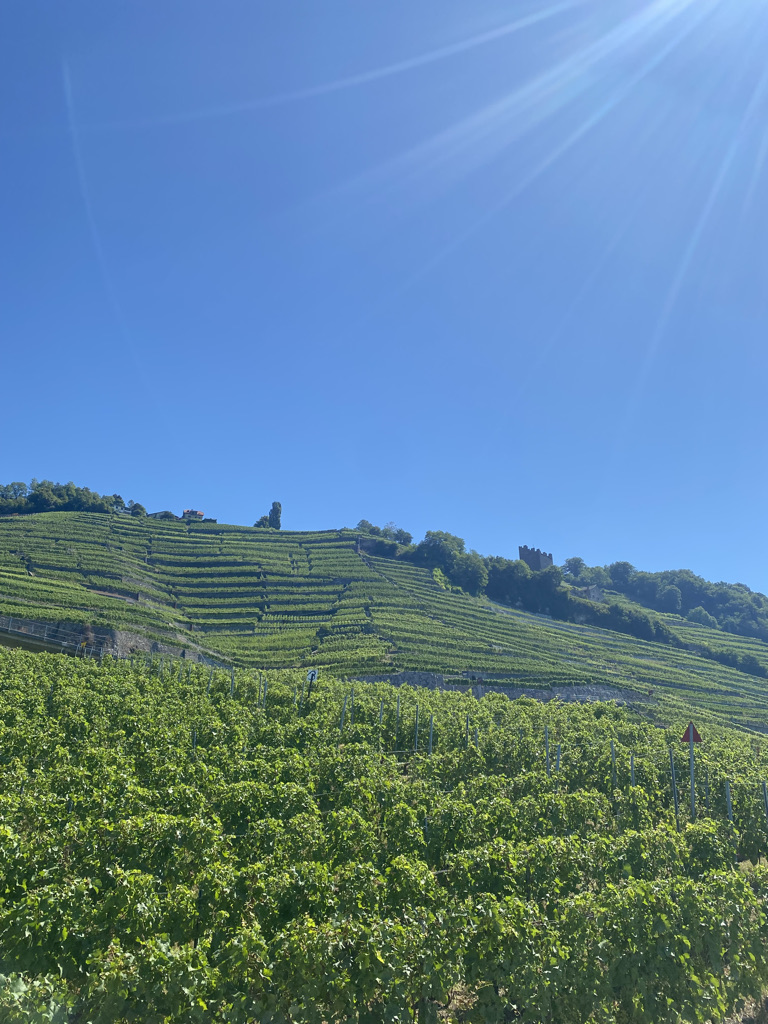
We left Lausanne rested and rejuvenated to wander from one medieval village to the next along Lac Leman (Geneva) on the Montreaux Riviera. The path takes us up through the vineyards that hug the lakeshore in neatly terraced rows of Chasselas vines, grapes already golden in the summer heat.  The vineyards were planted by Cistercian monks (remember them?) and then nationalized during the Reformation.  Foundation stones of the 13th century Abbeys along the way are still visible.  Also visible, but through a haze due to the extreme heat, are some of the tallest peaks in the Alps including the Matterhorn like a jagged finger sprouting up through the mist.  We arrive in Vevey, the thermostat pushing 95 degrees, to welcome cool beverages in the shade.  

Sequin to Sackcloth Tour – Week 8!

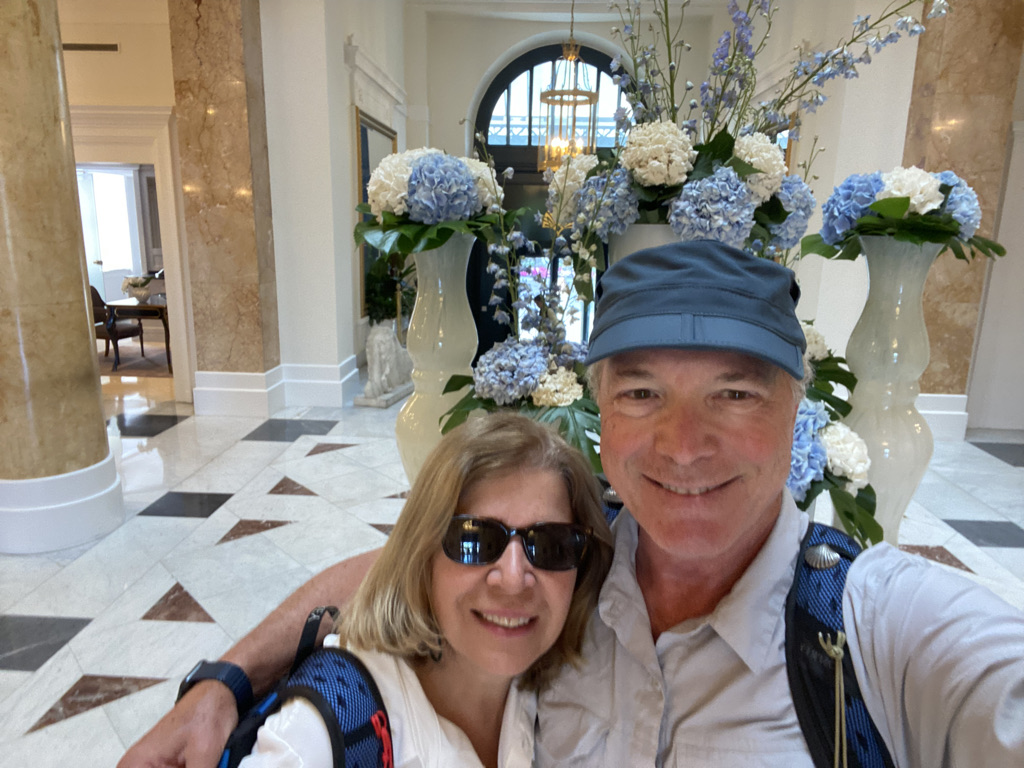
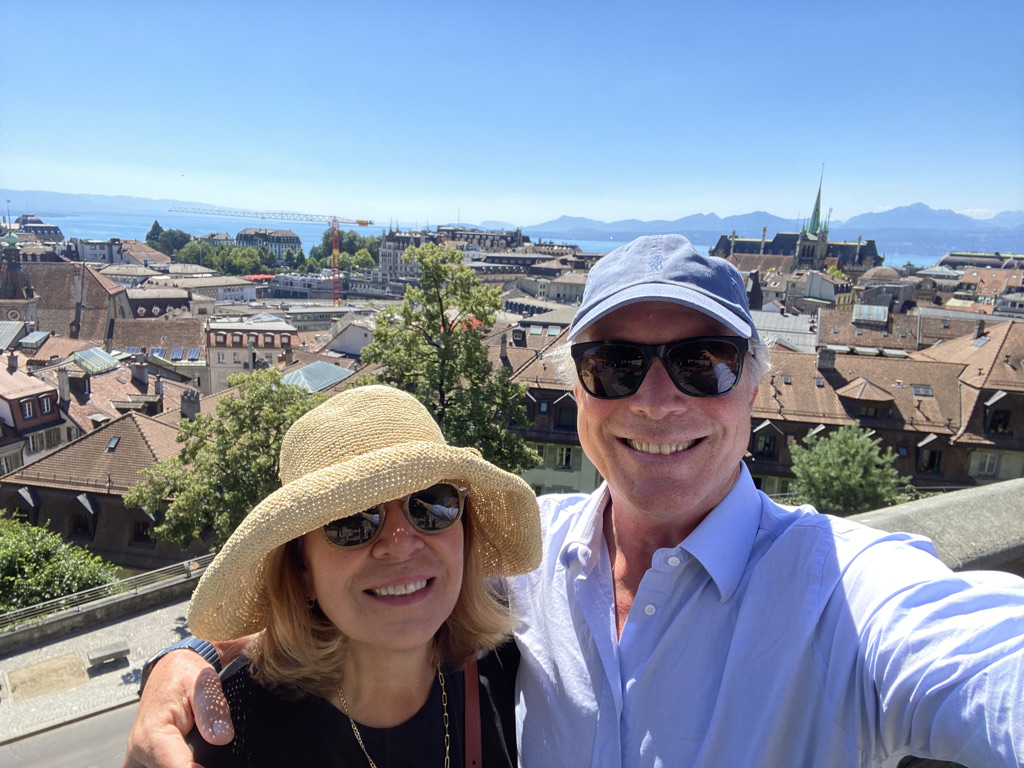
We arrived at Lausanne, on Lake Geneva, in the shadow of the Alps. A stunning location and a wonderful reward for 49 days of foot travel. As a special treat, Edward reserved two nights at the spectacular Beau Rivage Palace, an anniversary and a get ready for the Alps, present.

We entered the opulent lobby, dust still rising from boots and sweat on the top of our hands and were greeted by the lovely hotel staff. The hotel guests, seated in the lobby, reacted to our arrival with eyes bulging and mouths gaping like New Yorker cartoons The bellman, given the luggage task, handled our bags like they were a ripe wheel of Camembert. As we go to our incredible suite he seems uncomfortable with my leering at his beautifully starched white shirt. Once settled, we phone the concierge and ask a question I am sure he has been asked a 1,000 times, where is the nearest laundromat.

There is no learning curve to adapting to luxury — we are back!!

It’s been an incredibly challenging week. Uphill, our ascents, are exhausting, the descents are excruciating!  The paths are often narrow and winding with unstable surfaces. I, again, follow Edward trying to match his choreography  but he is often well ahead. He has this weird tendency to speed up when the terrain is tricky.  All my body parts with ee’s are checking in – teeth clinched, knees questioning and feet gripping the earth.

I am using motivational language, like *!#***?!%*** and stronger, but adding for punctuation a screamette of “EDWARD!” 

Some of you may remember our African Parrot, Ernie. This was during our years in Amsterdam. Ernie was 2 feet tall and had a strong personality. We would let him walk around the house. He would strut, swaying side to side, toenails clicking on the floor going room to room calling “EDWARD.” Failing to locate Edward his calls would grow in urgency and resolve “EDWARD!!” The shrill of my calls as I bounce down the hills, I can hear Ernie in my tone. 

However, Edward is not alarmed, not from a lack of concern, but he differentiates my battle cry from a plea for help. He moves forward, ever my role model.

The luxury of this adventure never escapes us. It is only possible through a bounty of resources, physical, emotional, and material. On two separate occasions our hosts have remarked how expensive it must be to take months off work and book accommodations and meals for such an extended period. 

We are humbled by our experiences and most grateful. 

Stage 49 Orbe to Cossonay – 32 km

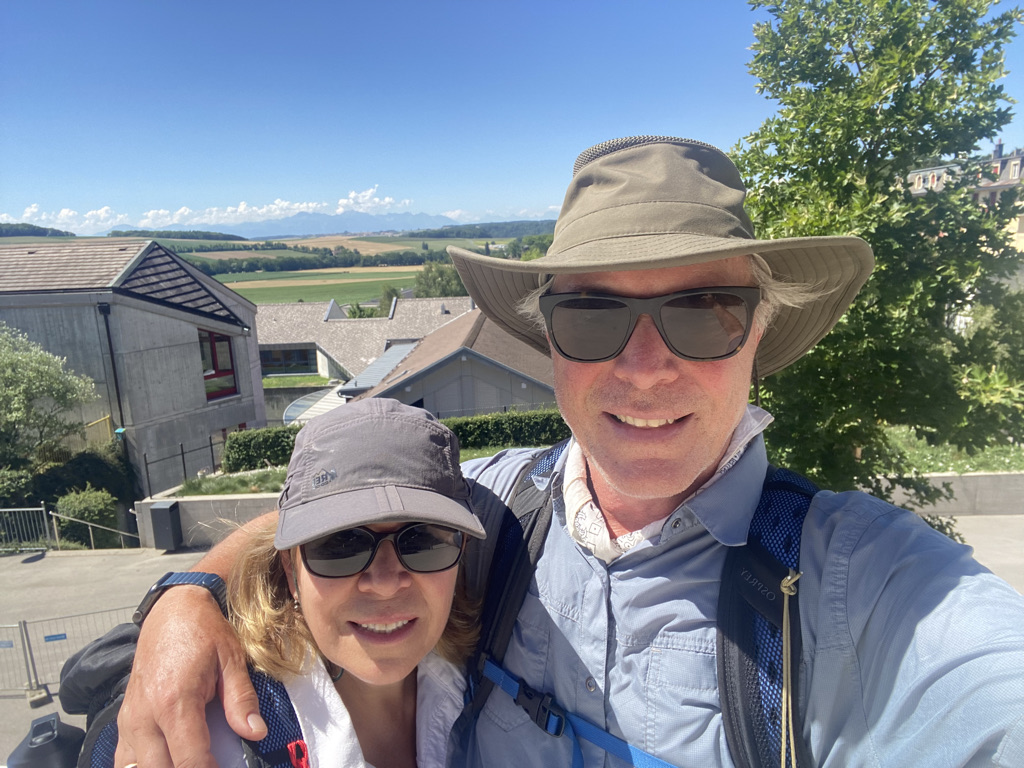
An amble along another river and through corn and sunflower fields.  The first view of the Alps.  Every town, no matter how small, has a café/bar, restaurant, an open church and some expression of local pride.  Francigena, which means Out of France in latin, should add, Finally!

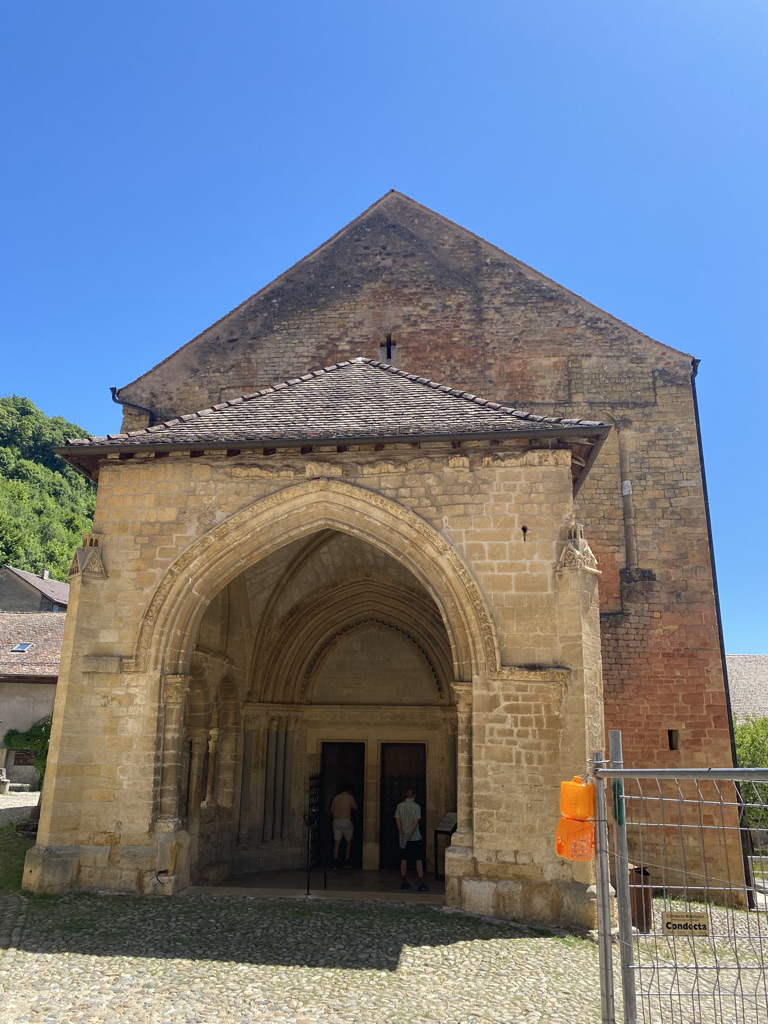
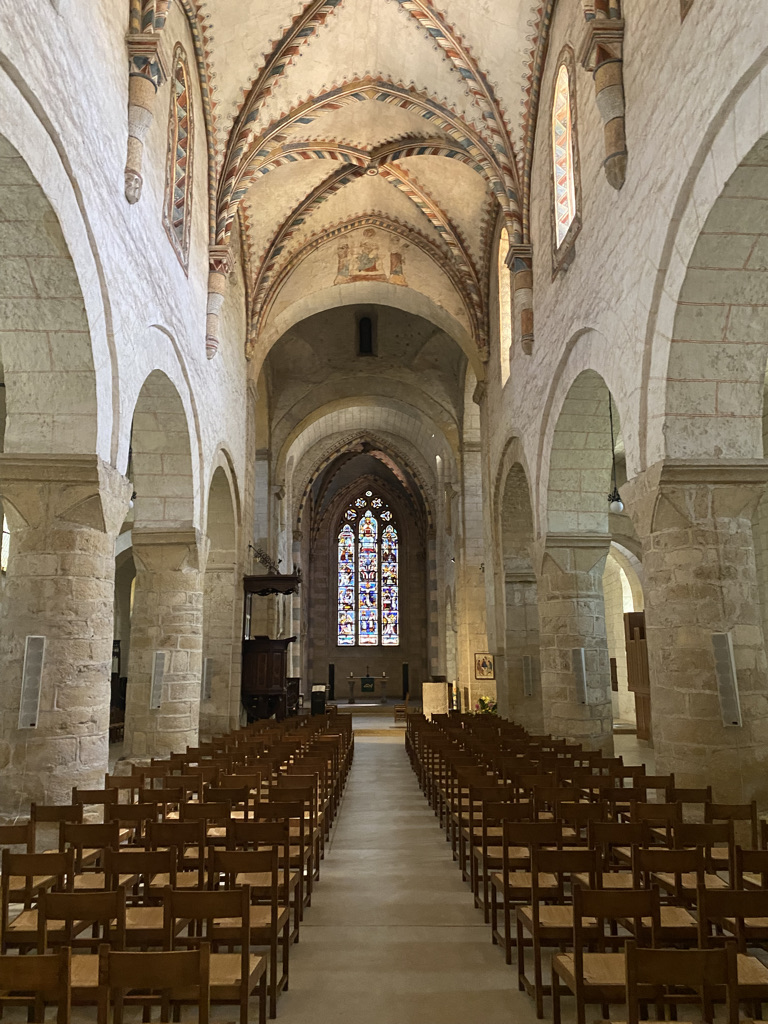
We passed through Romainmotier where we paused to visit the remnants of the 5th century Abby. The structure, combined with 10th and 14th century extensions,  is impressive, but as Abbeys go it wasn’t much, 20 hermits lived there at its peak in the  14th century. Sigeric stayed there in 990 where, presumably, he was wined and dined as the representative of the King of England would be. We have no record of what he did because Sigeric did not keep a diary of his journey other than the name of places he stayed.  Thus passes the glory of the world.

Stage 48 – Jougne to Orbe – 28 km

Our original itinerary had us going from Jougne to Yverdon les Baines but that would have pulled us 10 km off the Francigena trail so late Sunday we decided to scrap it, made a reservation in Orbe and arranged for luggage transfer to the new destination.  .

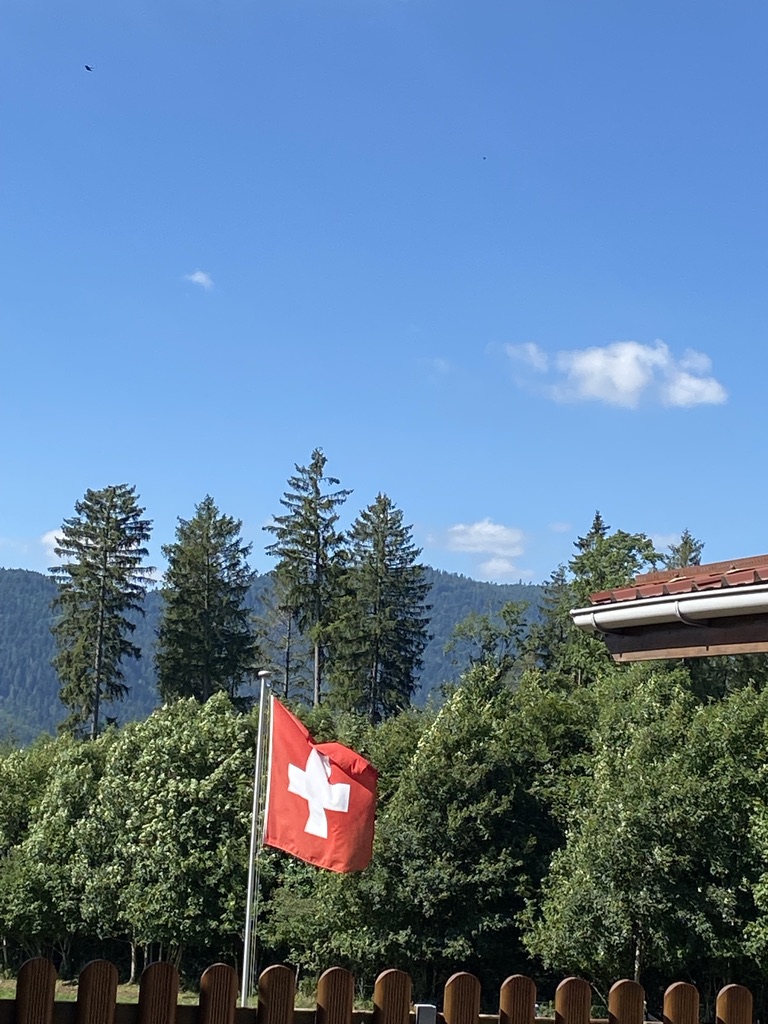
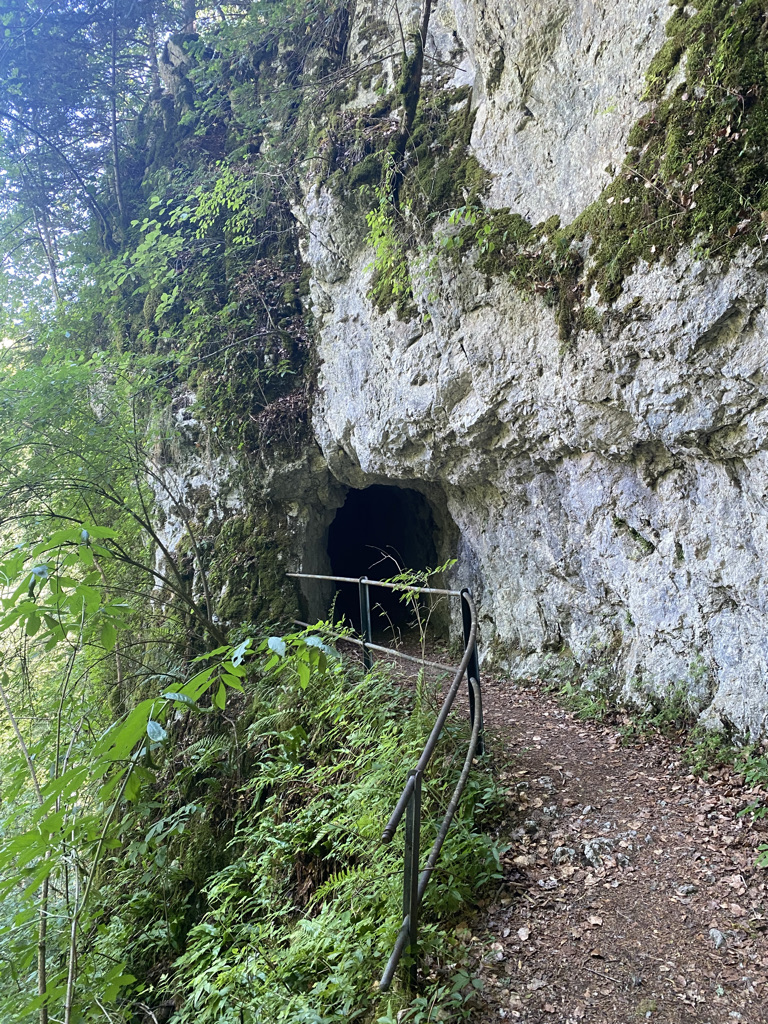
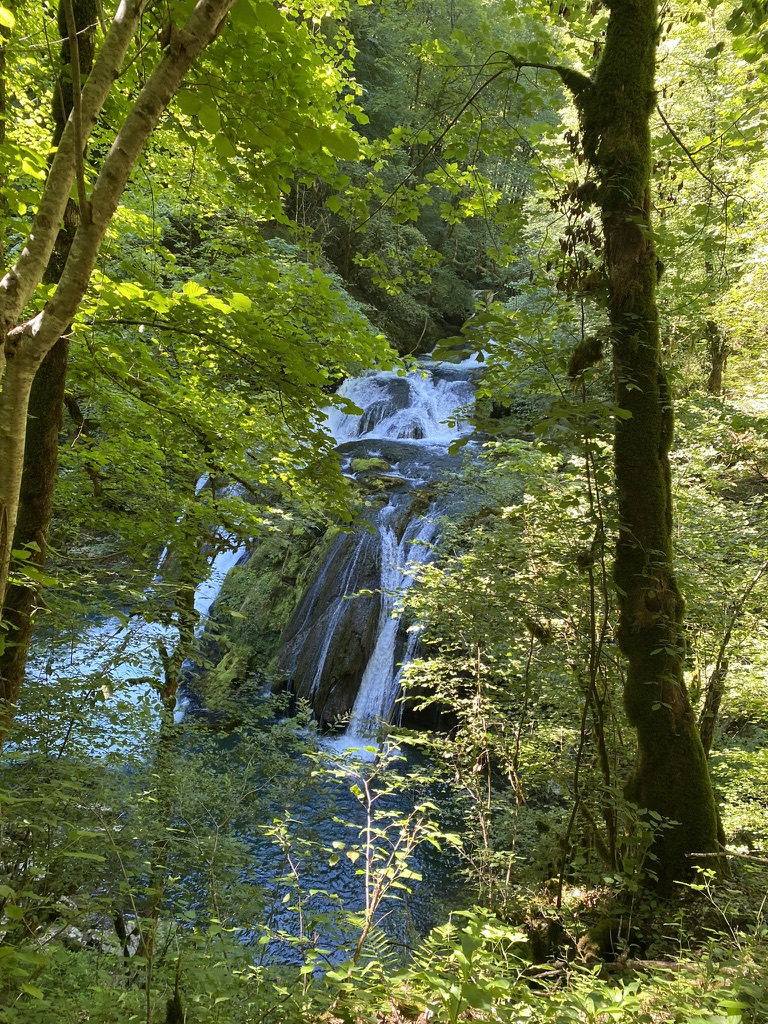
We left Jugne early Sunday morning with the sounds of LaLaLand, the last song played at the Bastille Day party the night before, swirling in our heads.   Stopped at the Boulangerie for our daily provisions (2 ham and cheese sandwiches and 2 bottles of water)   and walked down the river Orbe.  We walked 17 miles along the Orbe gorge. It was a dramatic walk through tunnels carved into the limestone, rushing waterfalls and cool pools of still water. At some point we crossed from France into Switzerland.  National borders do not manifest in nature. A dad was walking the dog with his 3 children. “Est ce la frontier?”, Paula asked.  One of the kids answered “Yes that is Switzerland.”  

The Border

Pontalier to Jougne – 19km

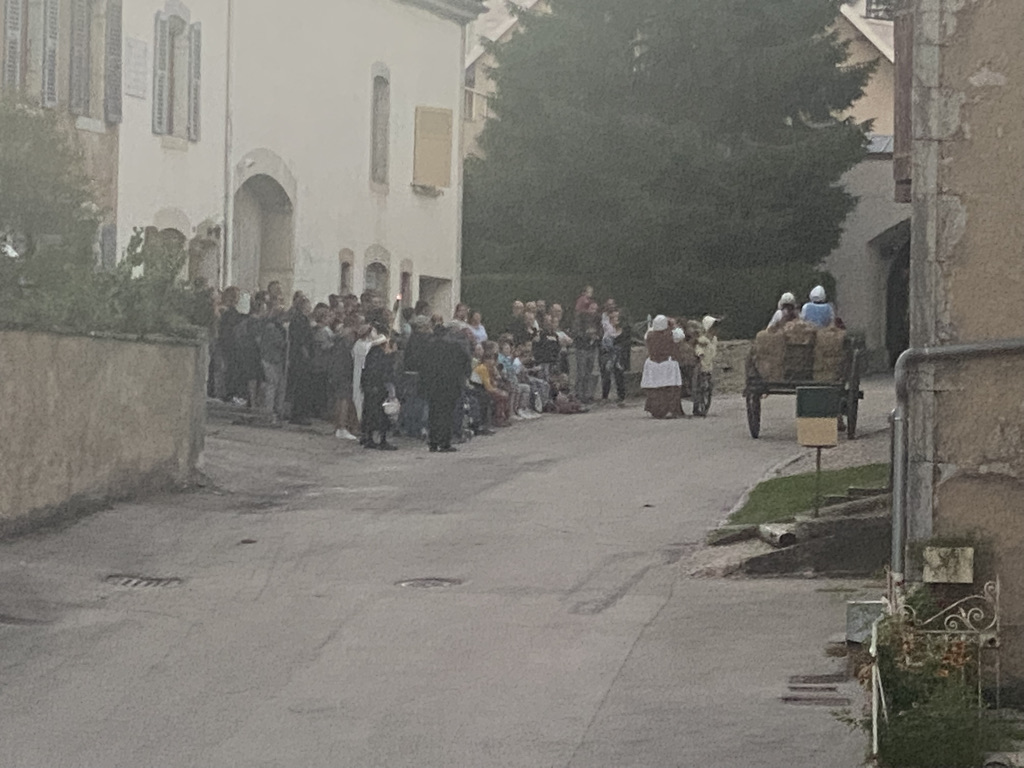
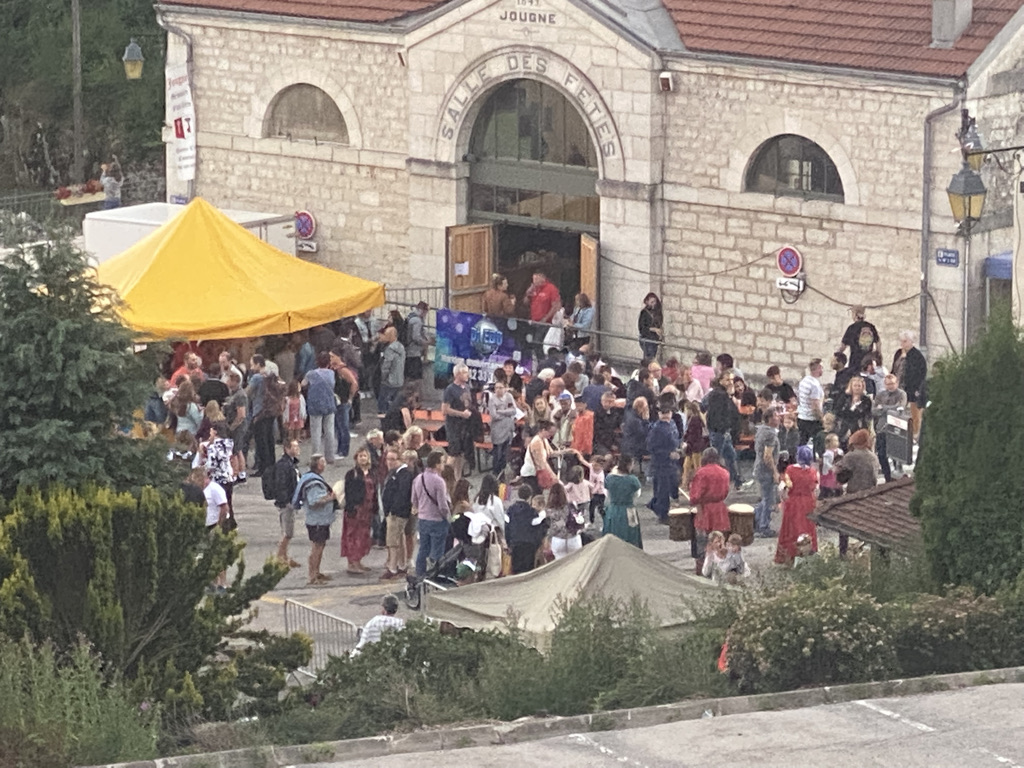
Pontalier was where Pernod, the original absinthe spirit, was made. It brought to mind Hemingway sitting in the bar in Pamplona stoned out of his mind first thing in the morning before the bullfight.   Pontarlier is a funky place.  We followed the Absinthe route to Jougne, without hallucinogens, us up the Joura mountains with some significant elevation gain but stunningly beautiful landscapes and vistas. Fortunately the weather is holding in the mid-70s and with gentle breezes it make walking easier.  Nonetheless we arrive in Jougne looking forward to a relaxing evening and early bedtime.  Not to be. Jougne decided to celebrate Bastille Day 4 days early.  The whole town turned out to the main square, directly in front of our hotel, to re-enact medieval rituals, think Renaissance Weekend, costumes and all, and to watch a respectable fireworks display at 11pm.  And then the DJ kicked off the music and light segment that lasted until 2 am. 

Sequin to Sackcloth Tour – Week 7!

640 miles from Canterbury, next stop Switzerland, 2.8 km, Last night in France!

No one likes to admit they were wrong, including me, well, the father daughter are not in the witness protection program. However, that was definitely the better story! She, the daughter, was studying in France, he is a lawyer from Minneapolis. They opened up to a guest house owner and he shared their story. I still think there is something shady to uncover.

This last week has brought about new vocabulary: “elevation gain” and “comfy hotels.” On the hotel front, I am talking 3 and 4 stars. While we aren’t at the ferns and fountains in the lobby level, a couple had elevators. As a result of these upgrades, I was able to resume my small soap collection, with 108 hotel (term used loosely) reservations, these little gems were to be my souvenirs of our journey. However not all our accommodations offer such luxuries, so I had to suspend this hobby temporarily. I bought one souvenir: a collapsible measuring stick made by the prisoners in Clairvaux.

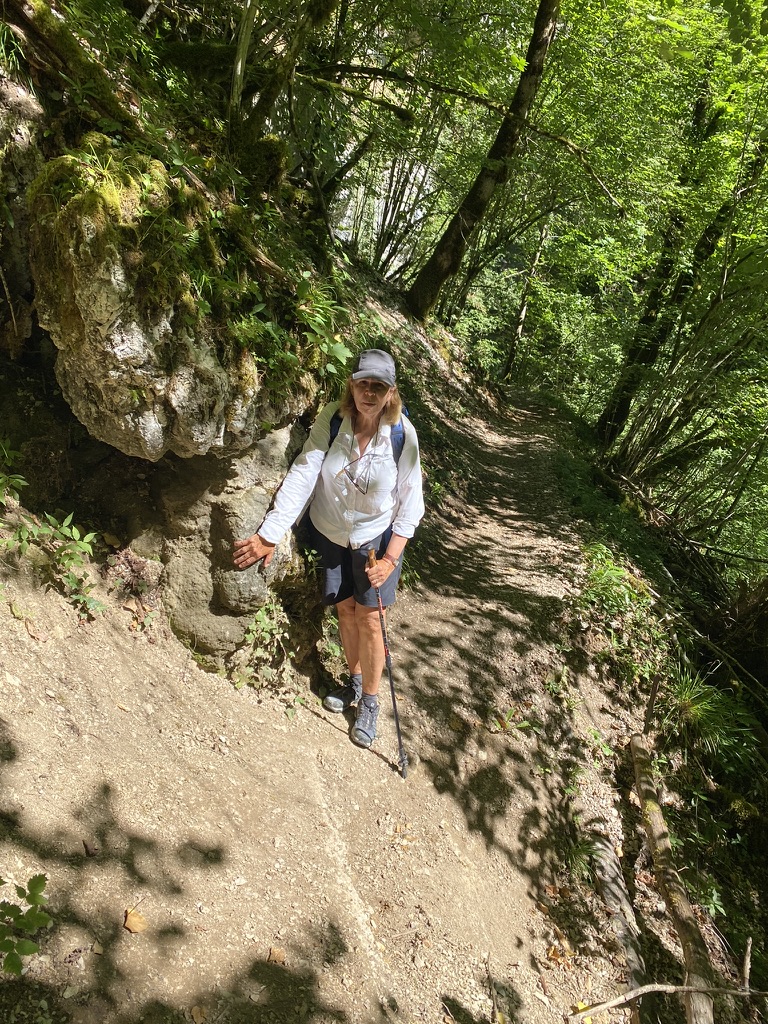
“Elevation gain” has become an important part of our discussions as we plan for what lies ahead of each day. I guess I wasn’t focusing on the words mountains and alps, just on the walking part, and have been quite shocked by the walks at an angle. I have been using a strategy – watch Edwards feet as he climbs and do the same. It goes from ballet to some weird gymnastics, he is a machine, moving rhythmically, and gracefully and voila, we get to the top! Then coming down is an entirely separate choreography, not pretty!!

A highlight of the week was the town of Basancon, the birthplace of Victor Hugo. His quote “He who opens a school door, closes a prison” remains powerful and true. 

It was a double day and, as you now know, it means clean laundry and a full bottle of wine. We had a lovely lunch in the town square.

Our waiter, Adrian, shared that he had worked internationally and was very interested in sharing his knowledge of the town. For example, were we aware that the town was spared bombing during WW2 as a result of a love affair between a Nazi general and a Basancon beauty.  When he learned that our next town was Onans, he became particularly animated. In addition to being his birthplace, it is the birthplace of Gustavo Courbet, the 19th Century French Painter who he greatly admires. Here is a sample of our conversation:

Adrian: “ You of course know Onans is the birthplace of the famous painter Gustav Courbet?”

Me: pausing….hmm  hmm “Onans really?”

Adrian: Worry and urgency in his voice “you do know?”

Me: Thinking, that name sounds crazy familiar…”Yes”

Adrian: Unconvinced “ You know the very famous painting of the naked woman with her legs very far apart. The title “Origin of the World.”

Me: confused but intrigued….“oh yes of course!” Longer pause….awkward fumbling of the menu.

Adrian looking for more convincing confirmation…

Me: wanting to move along “I’ll take the fish of the day.”

Another conversation later in the evening with Edward.

Paula: Edward, what made us think we could do this?”

Edward: “Well, you said you wanted to do this, and I said are you sure, and you said yes. And I said ok we will do it.”

Paula: “ Oh right.”
Mouthier-Haut-Pierre to Pontarlier – 25km

Mouthier-Haut-Pierre turned out to be a beautiful little town.  Tucked into the Loue valley, with 5000 ft limestone walls on either side, it seemed to have found a way to survive and prosper.  It started as a monastery in the 800s which eventually became a priory of the Cluny Abbey in the 1100s.  The monks living there developed an extensive wine making industry which collapsed in the 19th century by the phylloxera infestation.  The town has now embraced cherries from which they make Kirsch and various cherry brandies.  

We walked up the Loue valley for 4 km along paths at some points no more than 6 inches wide, limestone wall on one side, 1000ft or more drop on the other, until we reached the source of the Loue with its impressive waterfalls.  This part of the walk is not for the faint of heart.   The rest of our walk was on a high plateau until the decent into Pontarlier.  More on that tomorrow.

Ornans to Mouthier-Haut-Pierre – 14km

We left Ornans late in the morning after visiting the Gustave Courbet museum.  Courbet, who was born in Ornans in 1819, is celebrated all over town and this small but well curated and managed museum is a testament to the town’s pride in its favorite son. Courbet’s  major work is landscapes and portraits but he is best known for his somewhat mystical “Origin of the World” that was not exhibited publicly until 1995.  We left the museum rejuvenated, art as nutrition.  The walk to Mouthier-Haut-Pierre took us up the River Loue deep in a canyon with 1200 ft limestone walls on either side.  The area is wild and remote though the little villages that dot the canyon have the requisite Meirie, Church with steeple and monument to the fallen. Tomorrow, we climb the east side of the canyon, last picture below.

Ornans
The Canyon
Tomorrow’s climb