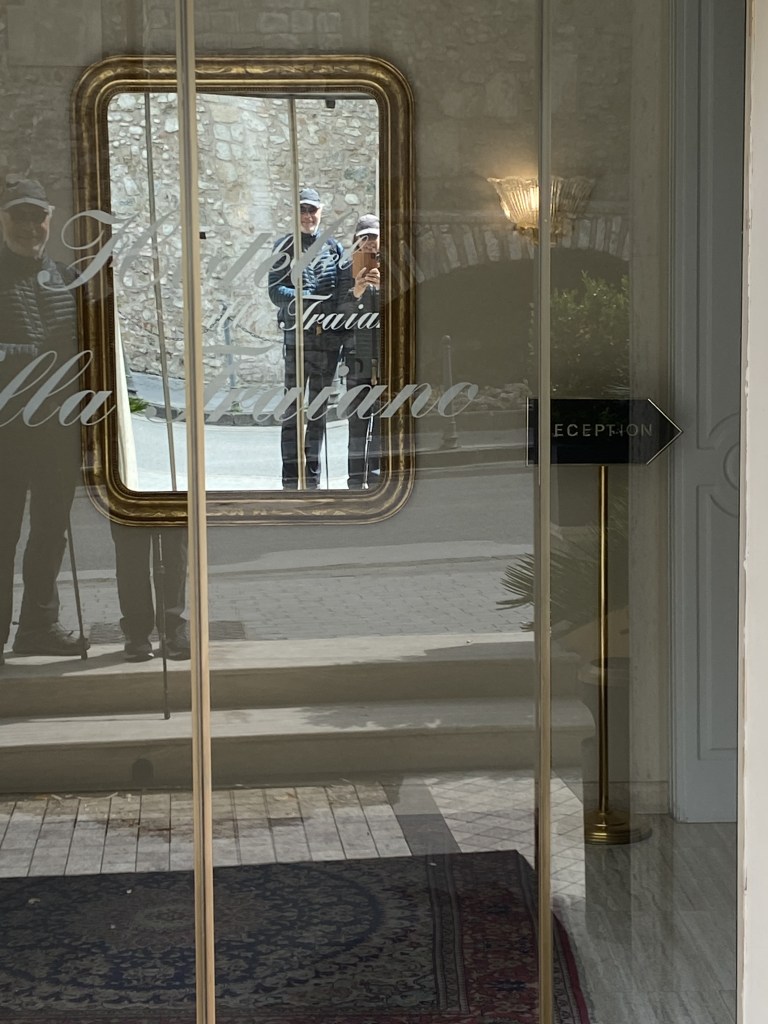
Celle di San Vito would have been interesting because it speaks an Angevin French and street signs are in Archaic French but our accommodations were unacceptable so, as the sun was setting, we persuaded our host in Troia, our next stop, to host us for one more night and to come fetch us before nightfall.
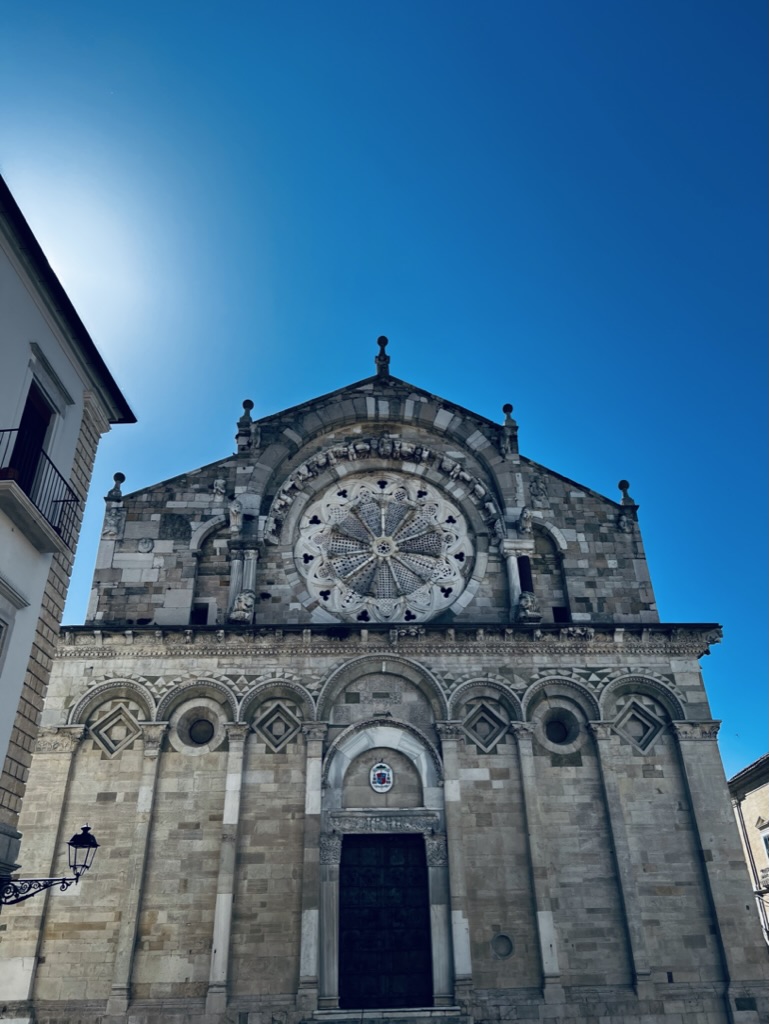
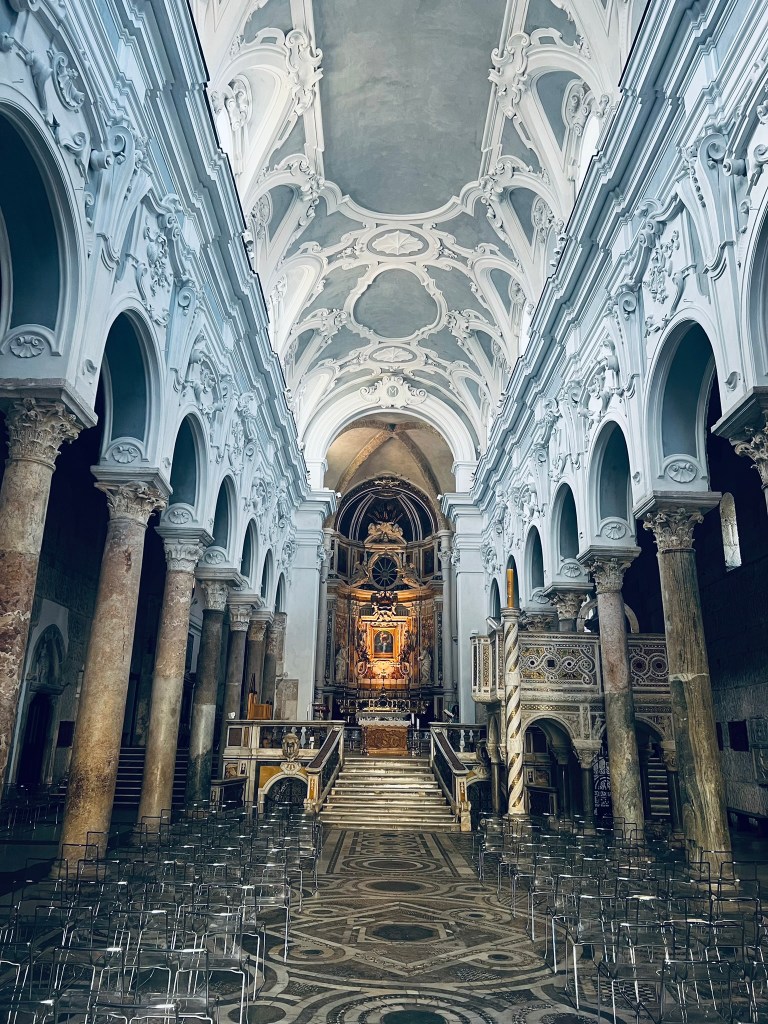
It all worked out even better than expected as we had a rest day in Troia, which we needed. We walked around, visited the imposing 11th century cathedral with Arab façade elements, walked around some more, read, and wrote at a café, had a delicious lunch and we crossed paths with other pilgrims for the first time. Martin, who is German but has lived in Pisa for 40 years, is walking from Pisa to Athens, his destination is Lesbos where he has a house. Today he covered 17 km in 3 hours in the morning and plans another 15 km in the afternoon. In sandals. We met a Brazilian couple, who are walking the Via Francigena, he by foot, she in the chase car, from Lucca to Brindisi. A global community.
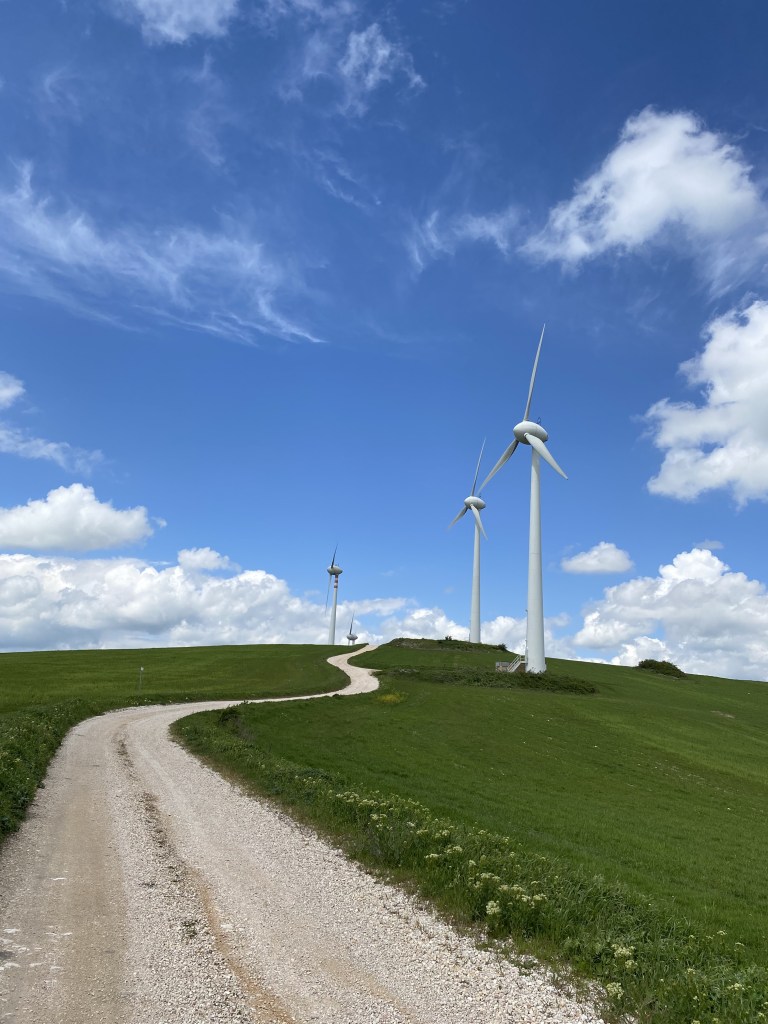
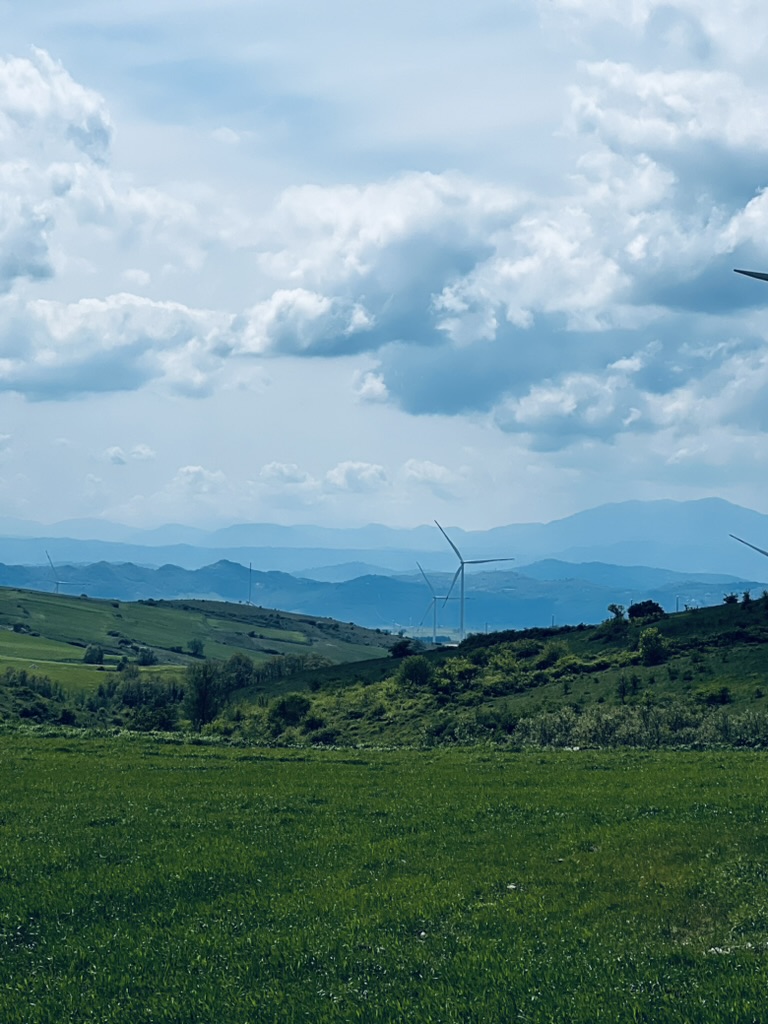
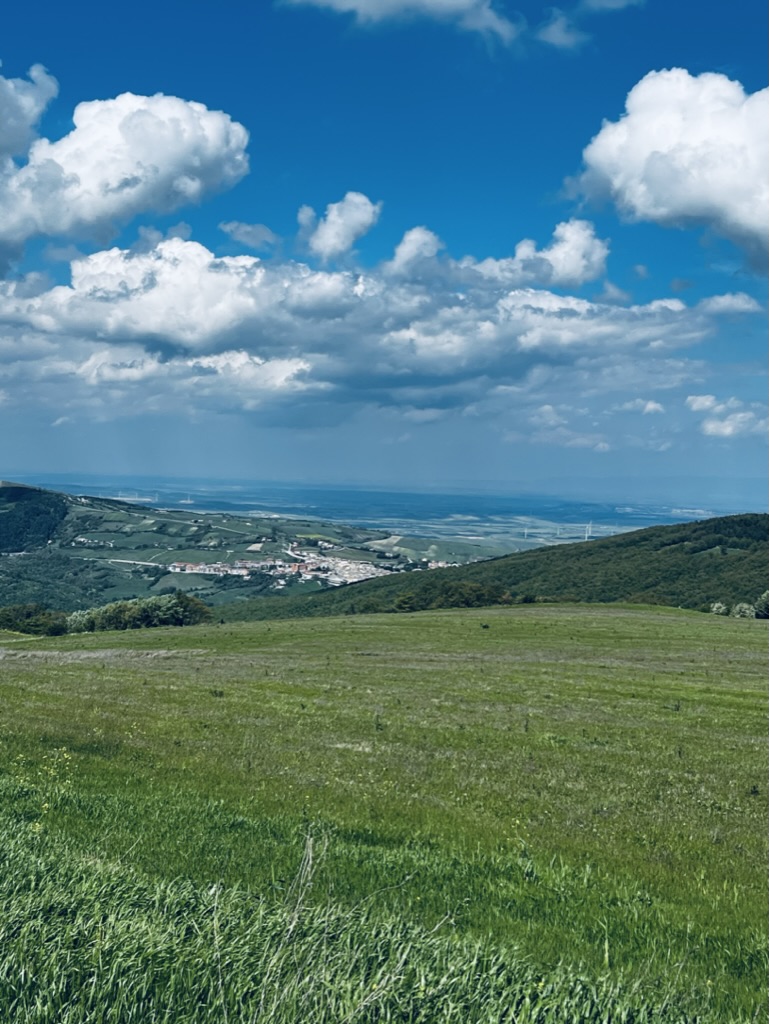
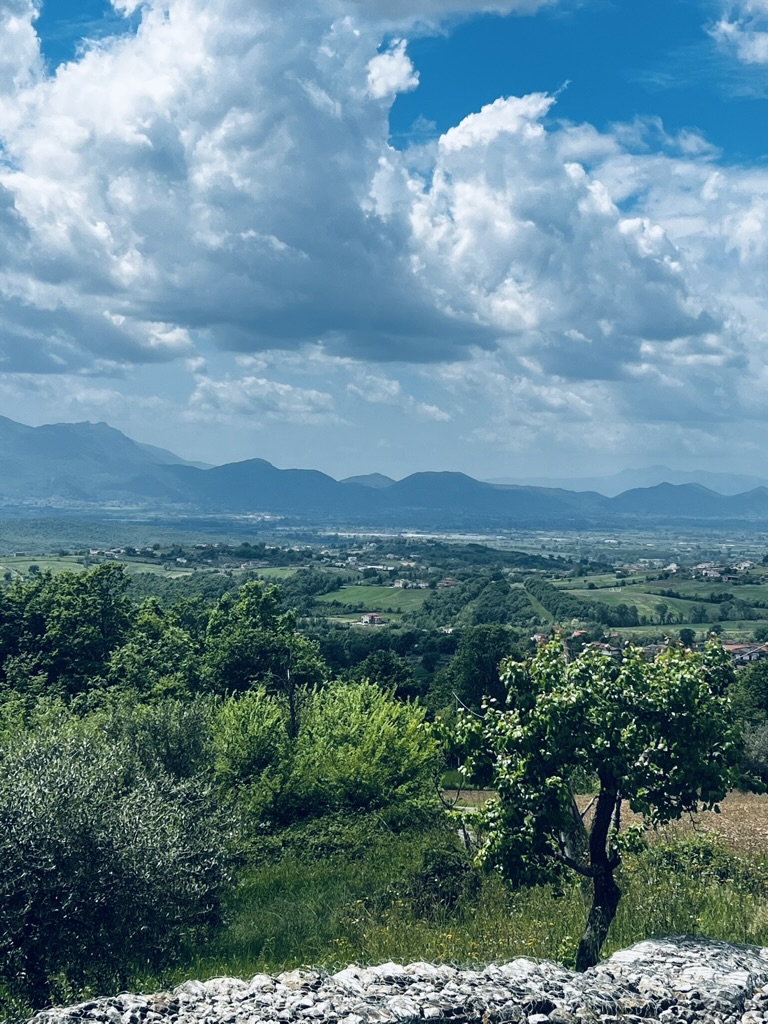
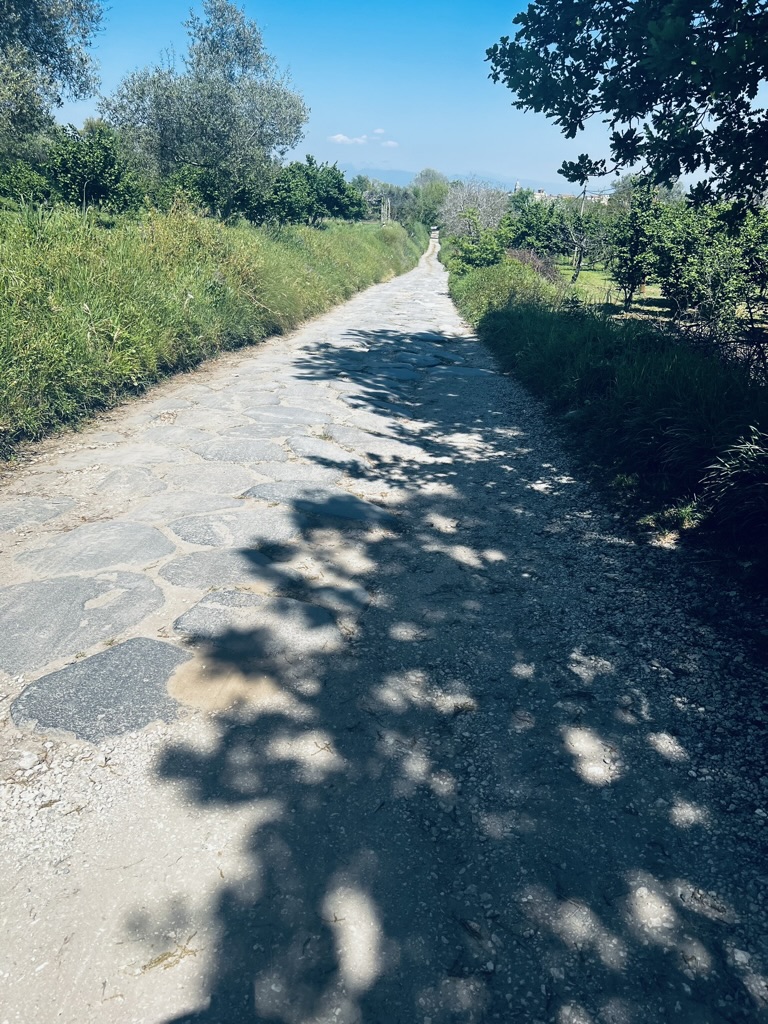
We are over the Apennines! The white road led us through fields of effervescent green spring wheat until we crested the last hill where the Tavoliere plain, the breadbasket of Italy, opened before us like a sumptuous banquet stretching to the yet unseen sea. We are in Puglia, which as a kid I knew as Le Puglie, a term no longer used, where we will be for the next 4 weeks.
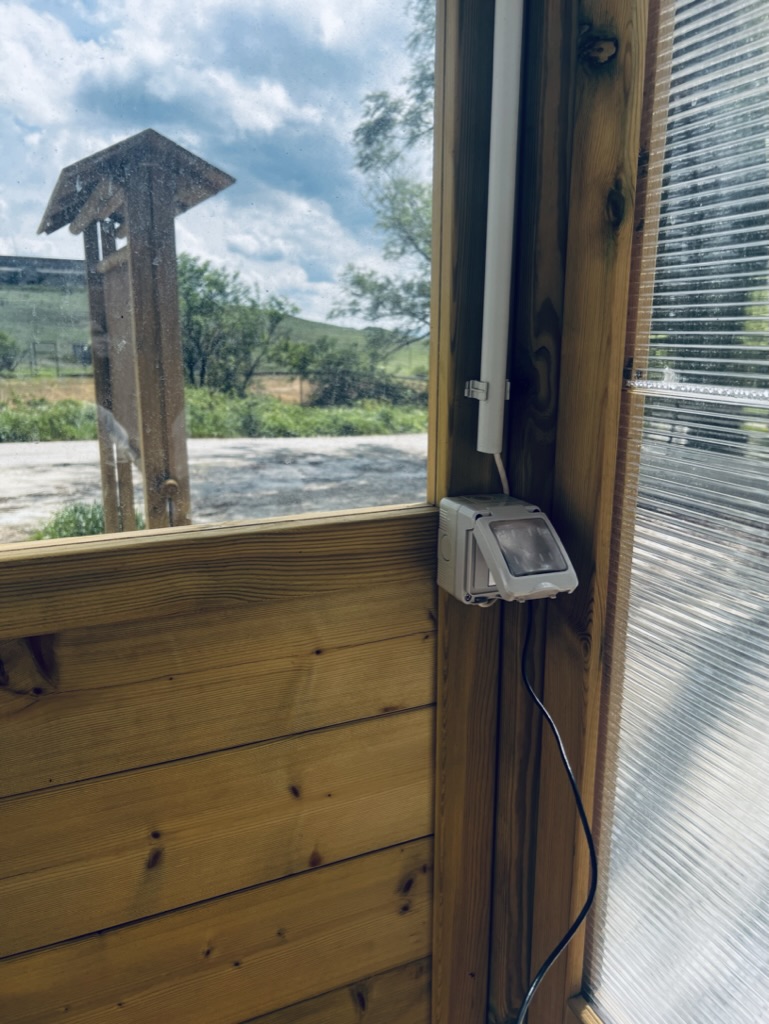
We stopped at a convenient bench for our prosciutto/mozzarella panino and a fine juicy orange where we found a very considerate USB port to charge our phones. The cammino provides.
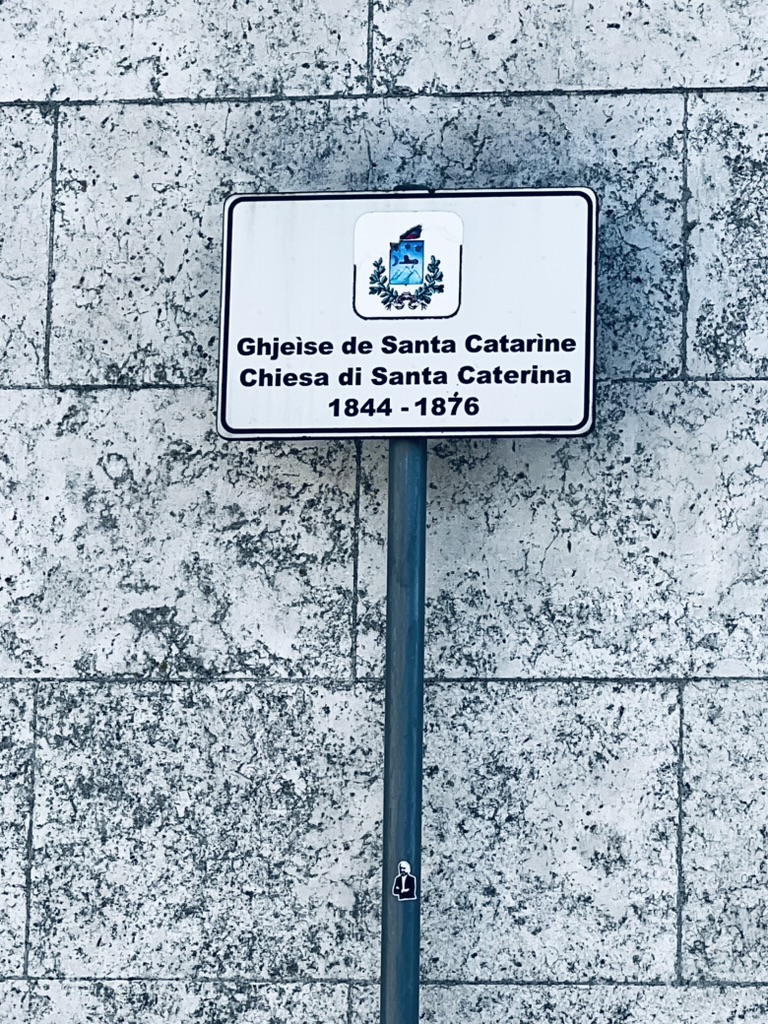
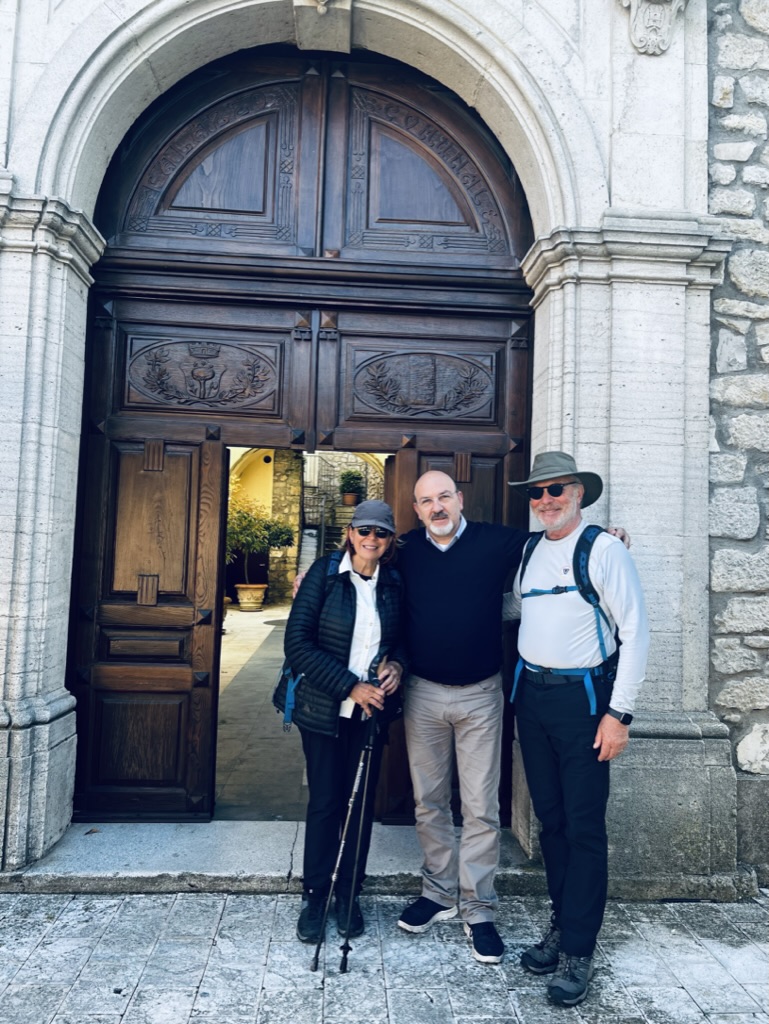
We passed through Greci, a hilltop Arbereshe town where the small Albanese community has lived since the 15th century. Arbereshe, an archaic form of Albanian, is still spoken and the street signs are in Italian and Arbereshe. Aldo, the mayor, told us the Albanians saved Europe from the Ottoman Empire and were invited by the Pope in 1495 to fight the Angevin French who claimed the Kingdom of Naples. The history of the Italian War between Charles VIII of France and the League of Venice for control of Southern Italy is so convoluted that it defies accounting. The one memorable outcome was the first known case of syphilis among French troops garrisoned in Naples.
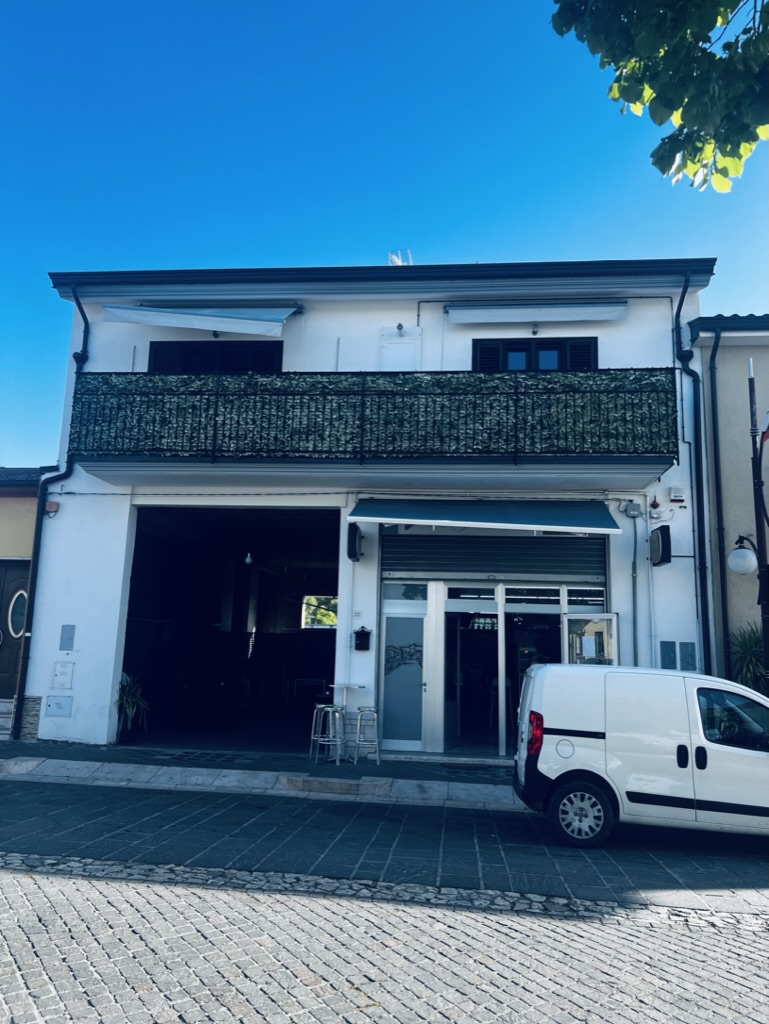
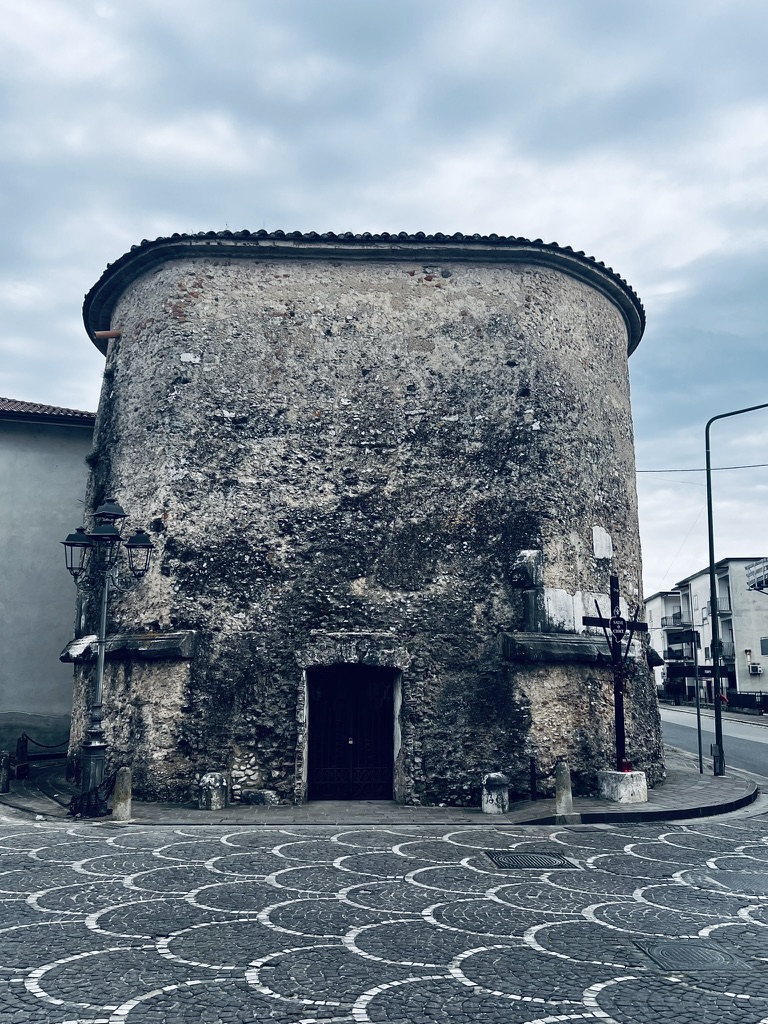
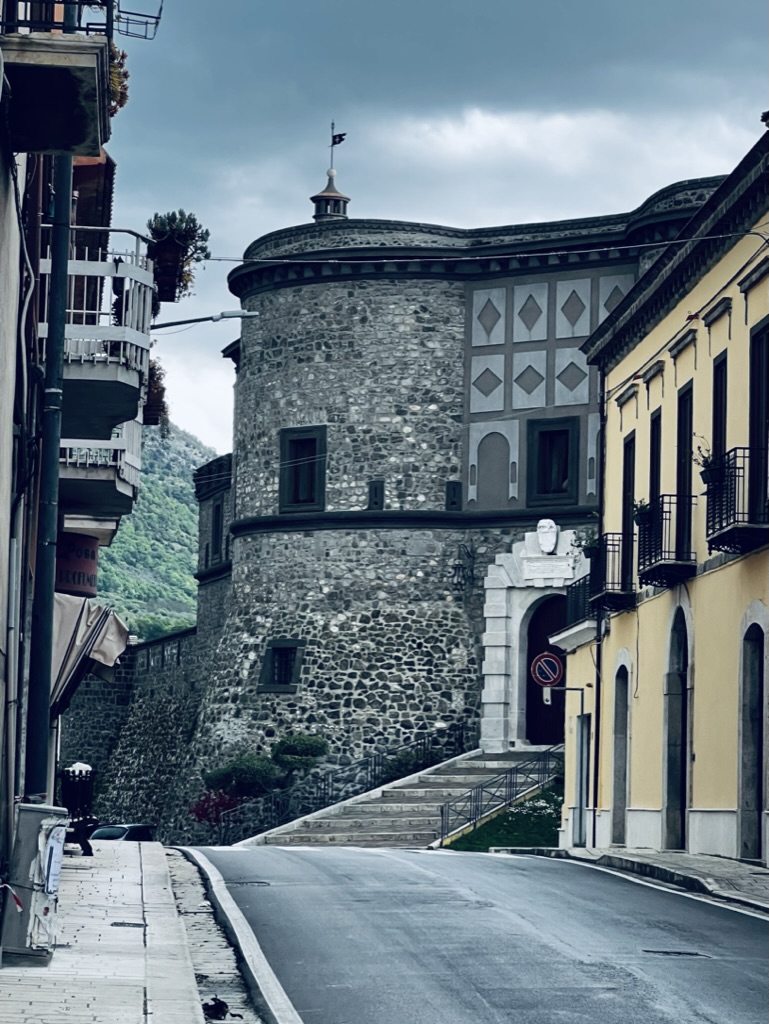
PS: Here are the “Norman Towers Spa” where we stayed last night.
For a variety of reasons that have nothing to do with the sweet 18 birthday party celebration right under our window that continued until the early morning hours, we decided to hitch a ride with our luggage half way to Casalbore, so we walked only 10 km today, accompanied by the sounds of the Village People singing YMCA ringing in our ears, a song that for some reason was played over and over for said 18 year old party. The real reason we rode part of the way is that the trail is in poor condition after recent rains, including several streams we would have to forge barefoot. We opted out.
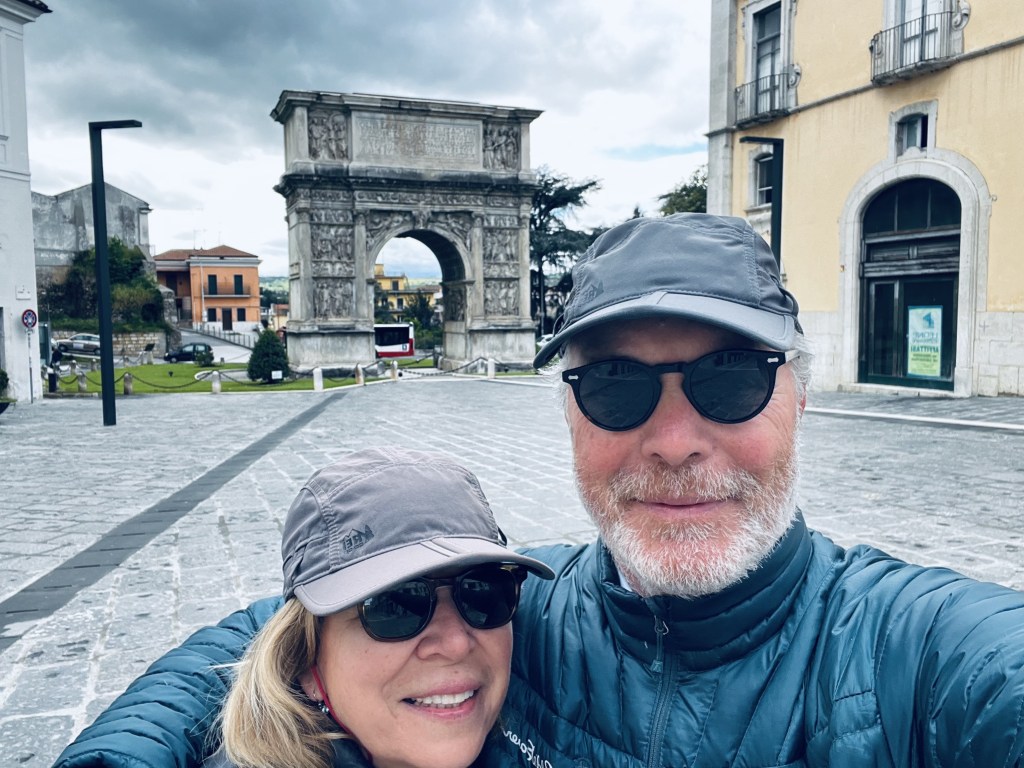
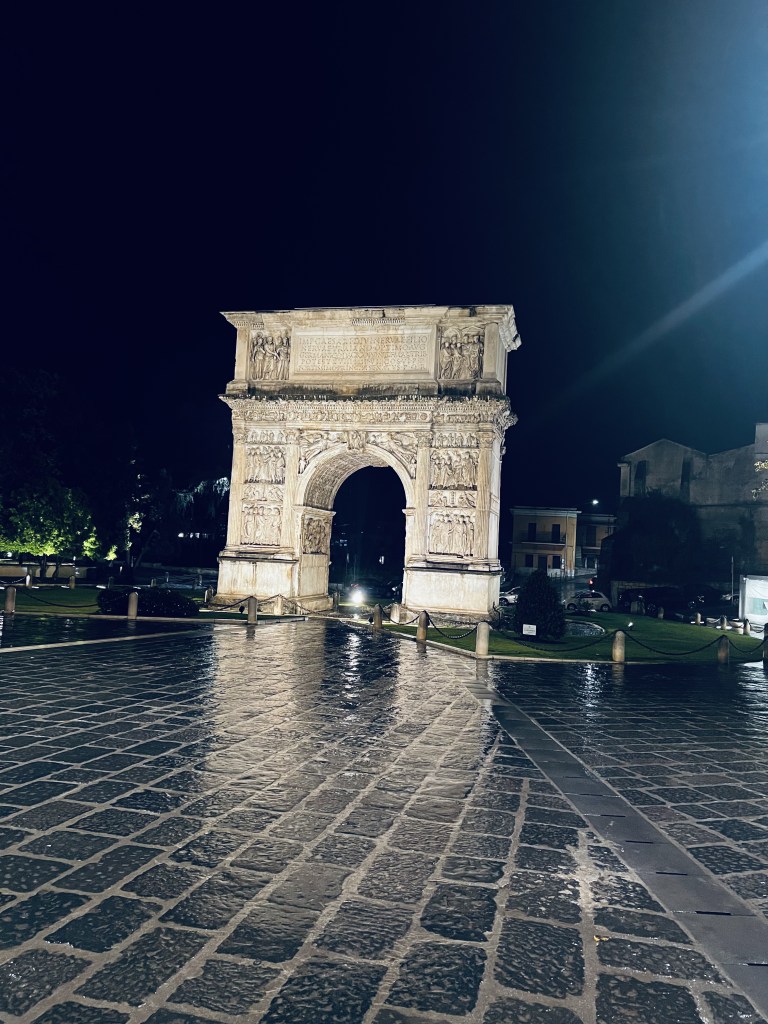
Before leaving Benevento, we revisited the Arch of Trajan, which was constructed at the entrance to the city on the Via Appia in the 1st century CE to celebrate Trajan’s victory over Dacia, a territory that included parts of present-day Ukraine. It is a stunning piece of antiquity.
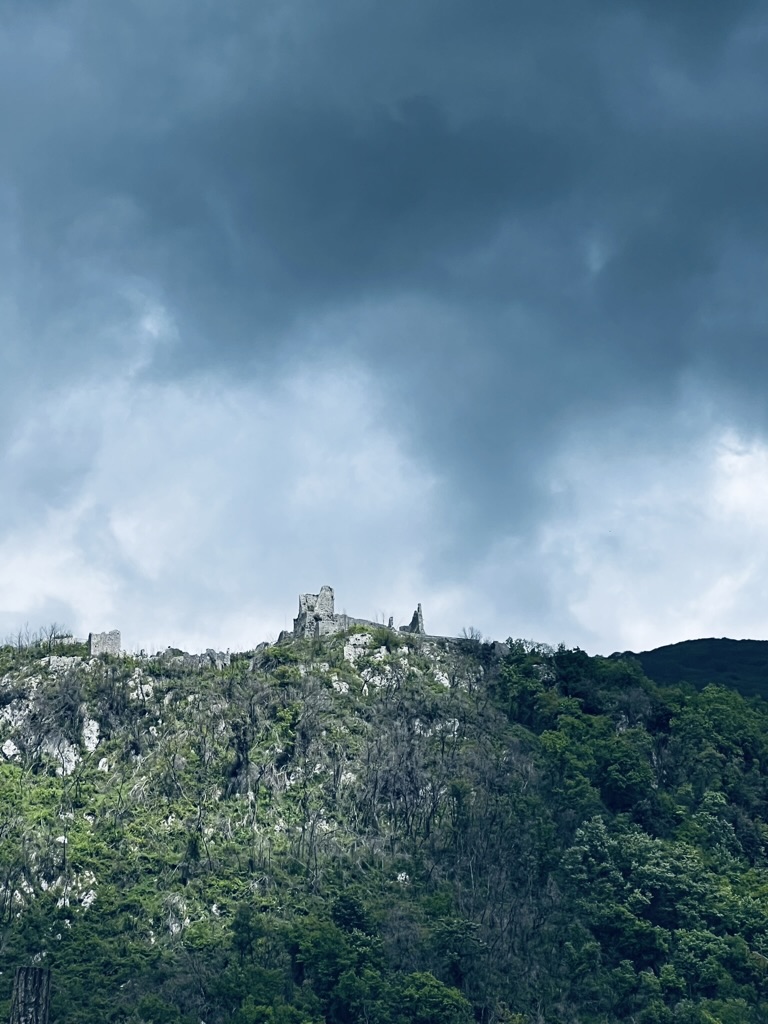
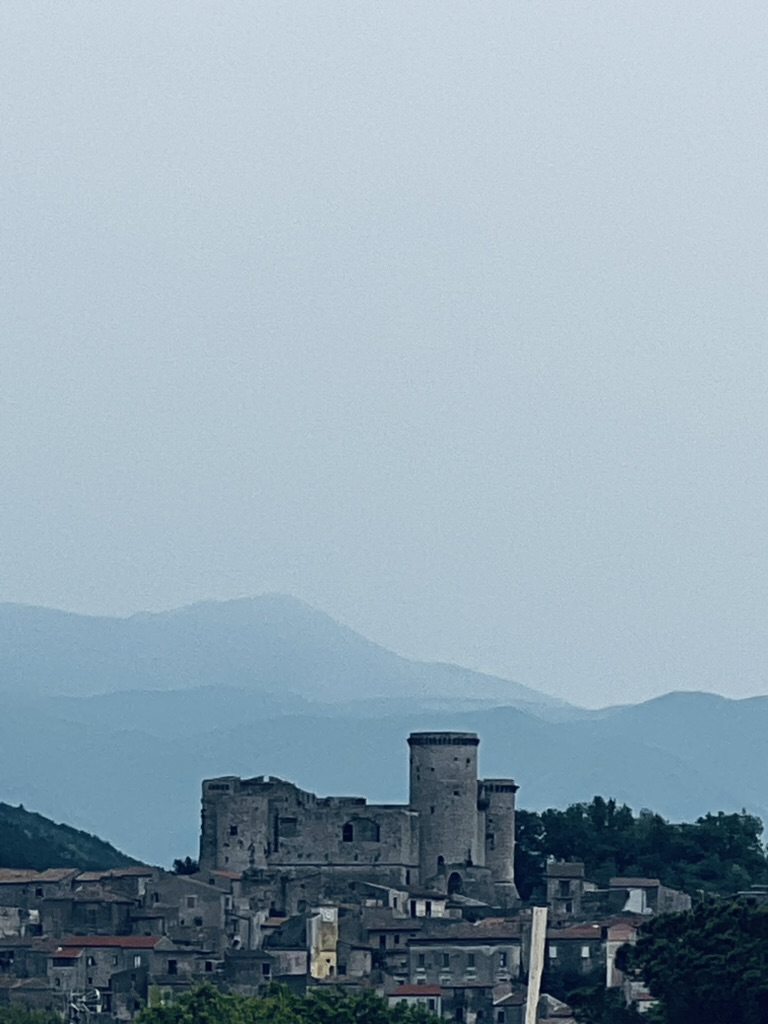
Casalbore is a very small village whose main attraction is a 12th century Norman Tower and surrounding walls that are in surprisingly good condition even though damaged during an earthquake in the 1600s. But the real attraction for us is our host, Valerio, at the Norman Towers Spa, also known as the Paradise Bar. He asked, as everyone has, how I come to speak Italian, I always answer simply “My mother is Italian” to which the invariable reply is “Where is she from?” When I told him she was from Naples, his eyes lit up. Valerio, also Neapolitan, treated us like celebrities or long-lost cousins and of course he has cousins in Western New York. He was a most generous, accommodating, enthusiastic host.
On the way out of Vitulano, we crossed paths with a group of “Herb Tourists” hiking the mountainside for wild herbs with medicinal qualities. Herb Tourism. The troop leader is the cousin of the owner of the B&B where we spent the night and the uncle of the guy transferring our luggage. When I told him we are Americans, he exclaimed “Ahh, Americani, I have a cousin in Naples Florida.” Umberto, the owner of the restaurant where we had dinner last night, was in Kennebunkport, Maine last year. “Why Kennebunkport?” I asked. “I have a cousin who lives there.” We are part of a global community.
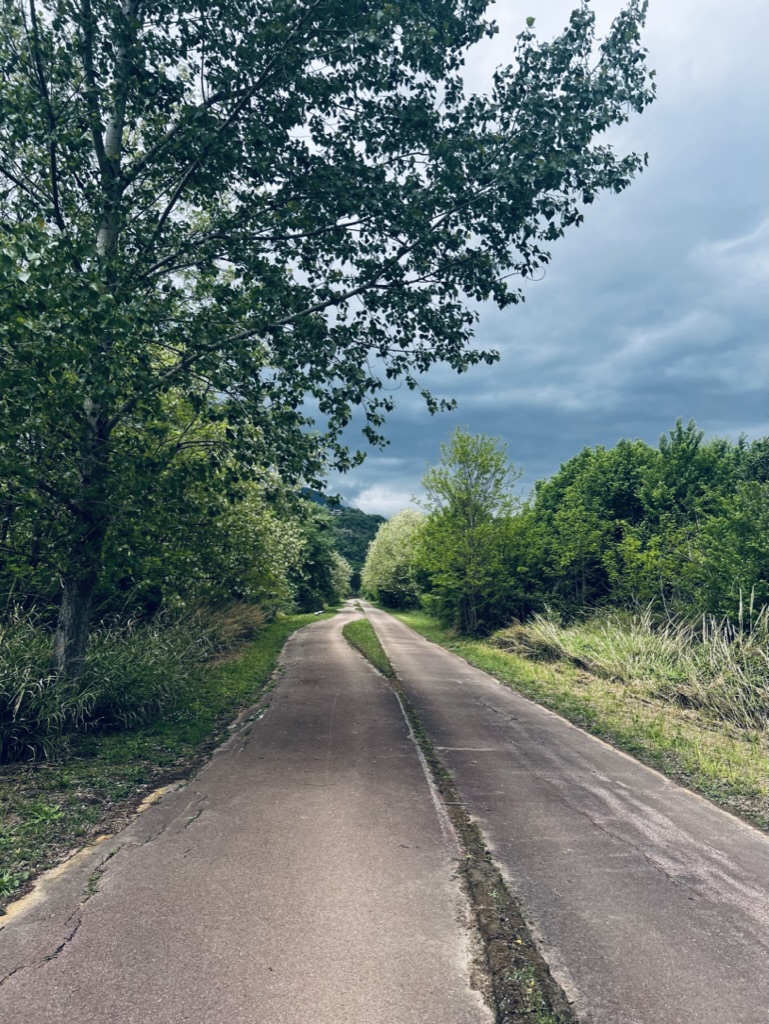
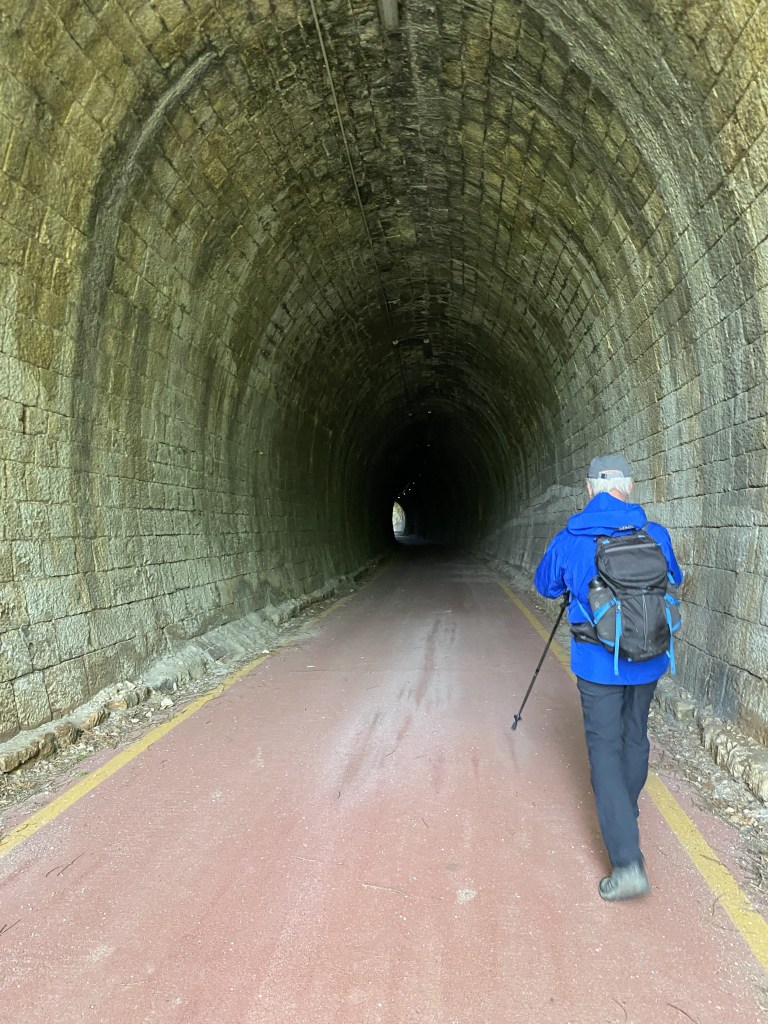
The path to Benevento included an 8 km stretch on a bike/running path, very well maintained, littered only by the white blooms the wind was blowing off the limb. Benevento is the largest city to which we have been since Rome. It is an old Roman town with a few monuments to show for it. Most important, it was the site of the Battle of Beneventum in 214 BCE when Roman legions defeated the Carthaginian armies on their way to reinforce Hannibal, who, deprived of the army he was expecting, was relegated to wandering, thus saving Rome and Western Civilization as we know it.
“Ah, America. Mi piacerebbe tanto andare in America” said the barista at the Roxy Café where we had our morning cappuccino in Faicchio. I asked her why, she answered “E un sogno!” I could not disillusion her. I could not tell her how fine life is in Italy, how beautiful the country, how welcoming the people. I told her there are beautiful places everywhere, but no one makes cappuccino as fine as in Italy.
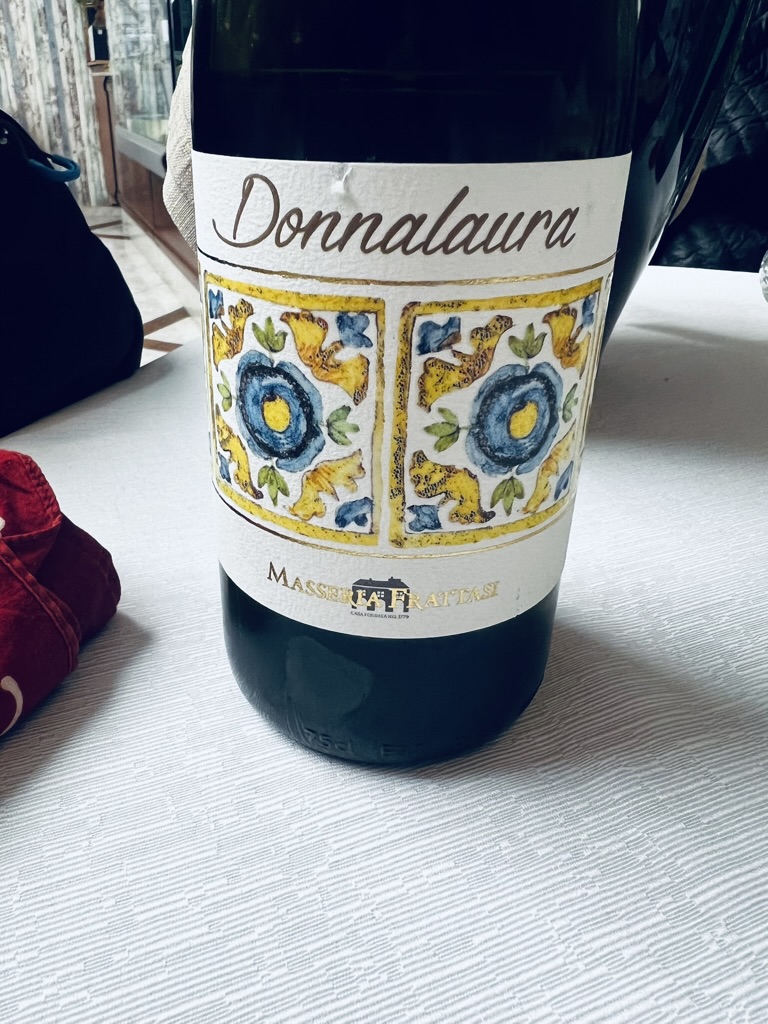
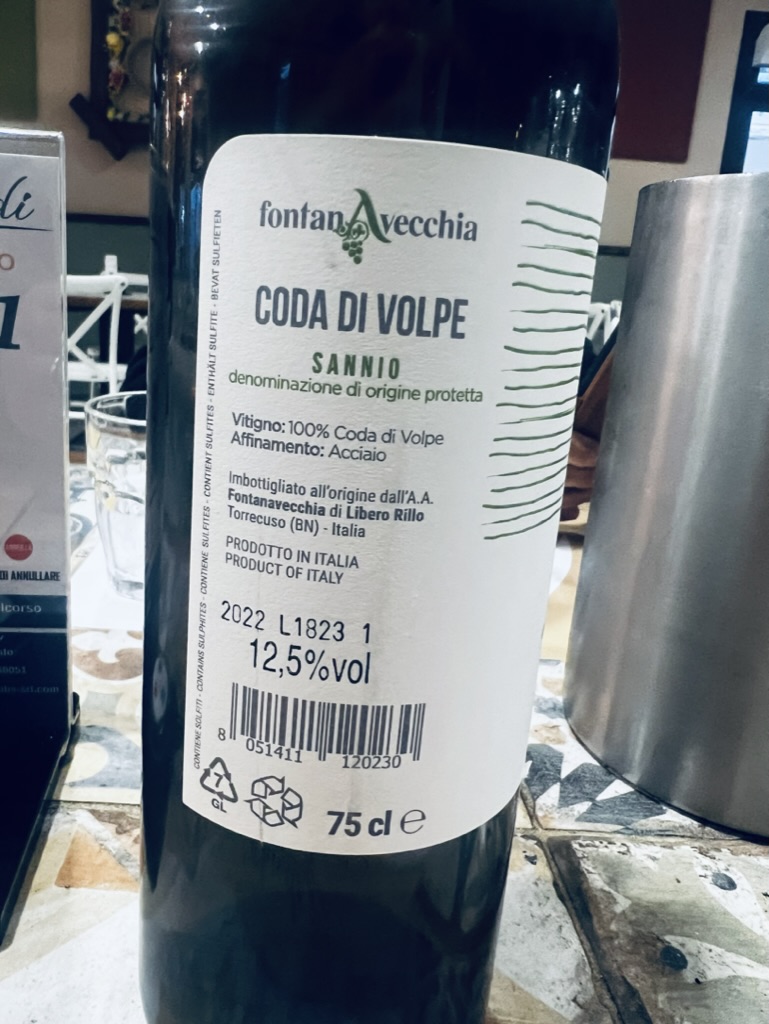
Here is how fast we travel. We reached Telese Terme in time for lunch and a “piede franco” wine, which is to say made from original roots not the transplants from the US when the phylloxera devastated vines in Europe. It was quite good. Here it is.
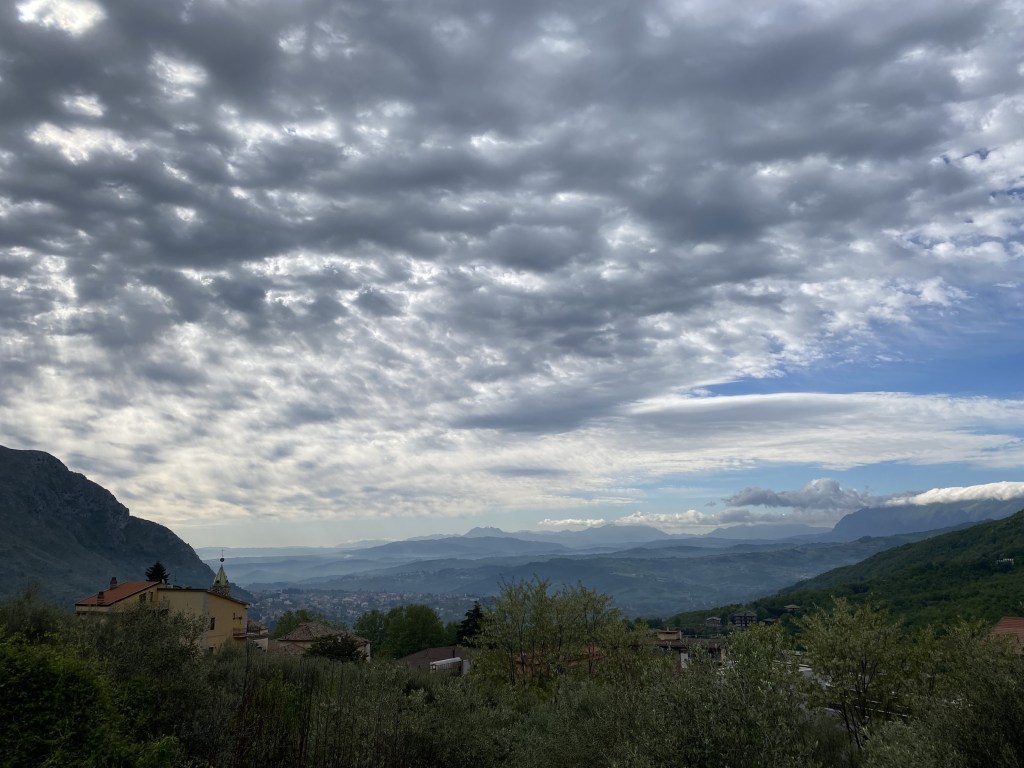
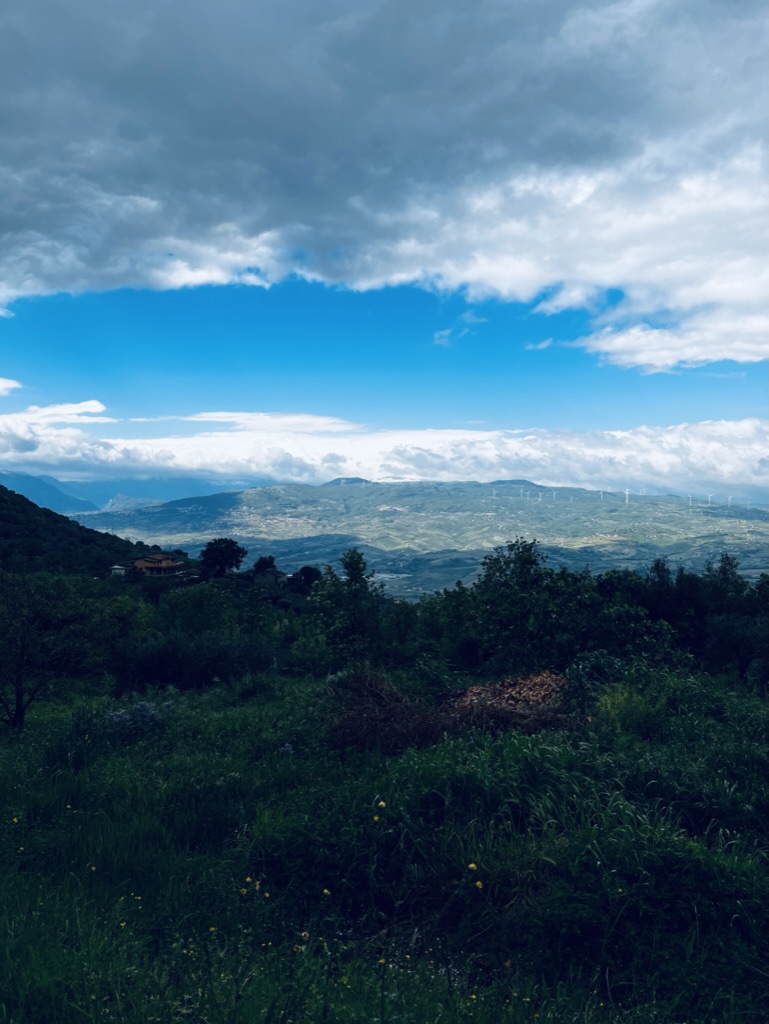
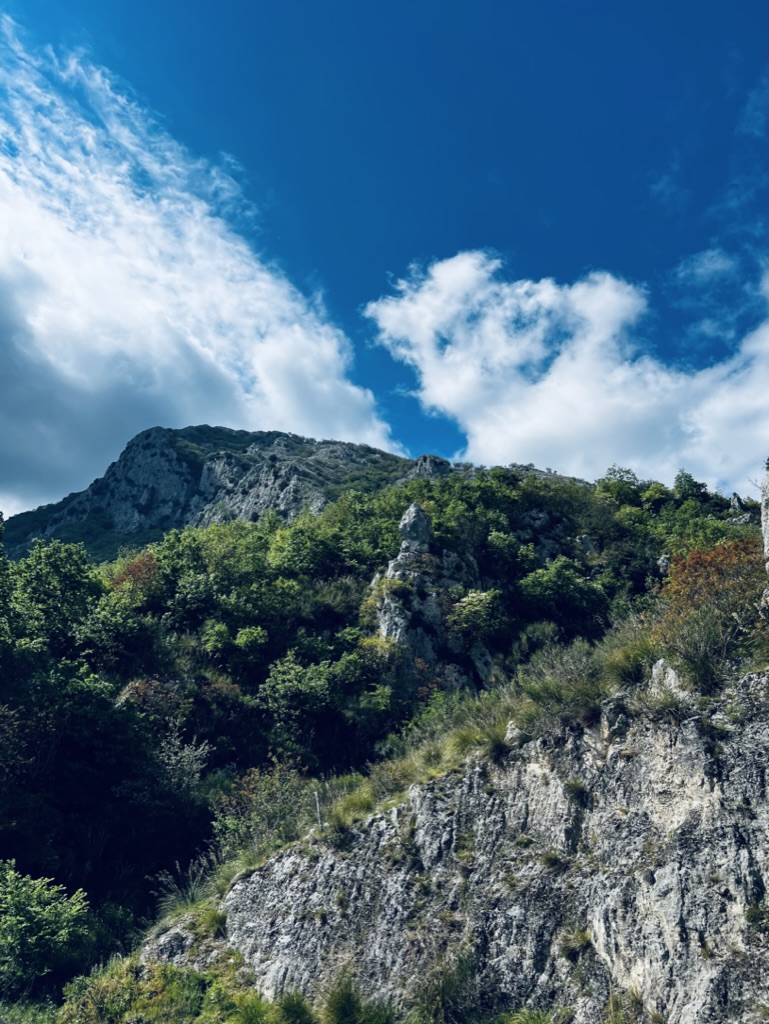
Next time someone quotes “May the road come up to meet you” I will explain they obviously have never been on a 45-degree uphill road for 8 km, walking into a headwind in the driving rain. All I wanted was for that road to back off. But we made it to Vitulano with a mixture of elation and wonder at the spectacular scenery. It was worth it.
The Via Francigena continues to inspire and humble.Each day presents like a new episode of Survivor. No trespassing events to report this week.
Our daily rituals simplify our comings and goings, introducing the illusion of predictability. Mornings start at 7 am usually without the aid of an alarm. Having showered the evening before we go about our tasks like an army breaking camp. We move purposefully, stealthily reclaiming laundry that has dried on heaters or towel racks. We pack items with precision, our bags are economical in content and size, with one inexplicable exception: a 450-page hard cover book I thought important to bring. With limited clothing choices dressing is rapid. Foot preparation bears a striking resemblance to an elaborate Japanese tea service. Backpacks are restocked with water and appropriate weather gear. The organizing ritual continues: two Kleenex in left pant pocket; small Swiss army knife, right shirt pocket; telephone, right pant pocket; sunglasses on lanyard; walking stick and hat. All these essential items are checked and re-checked with serious redundancy, like a Nomar Garciaparra performance.
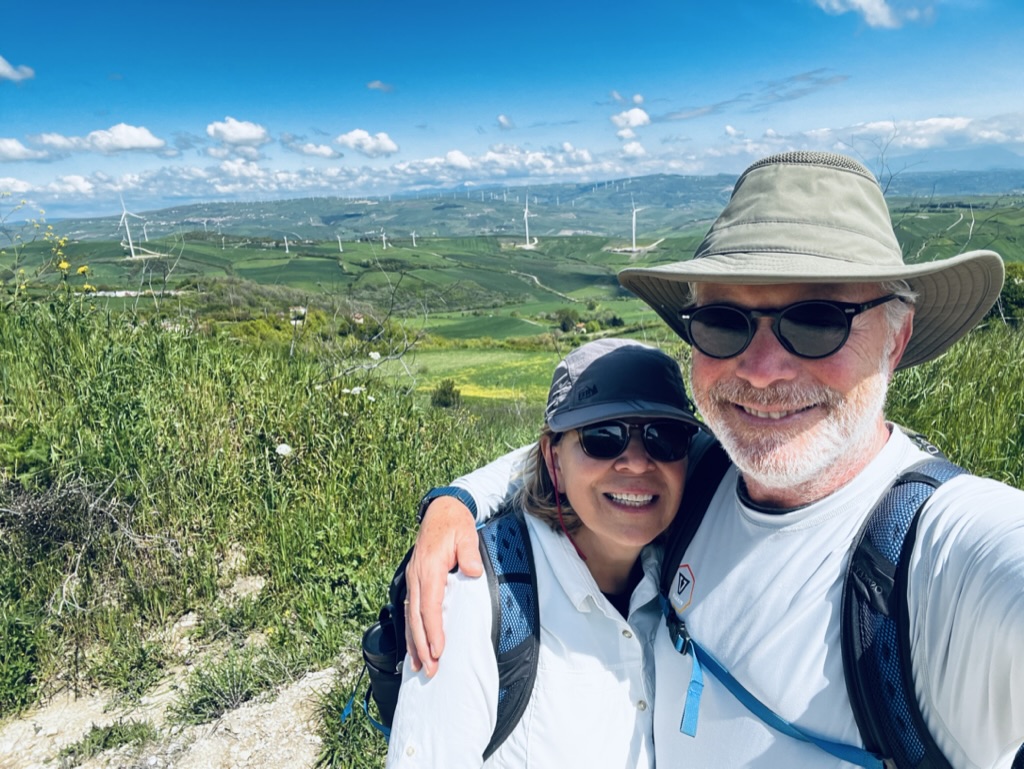
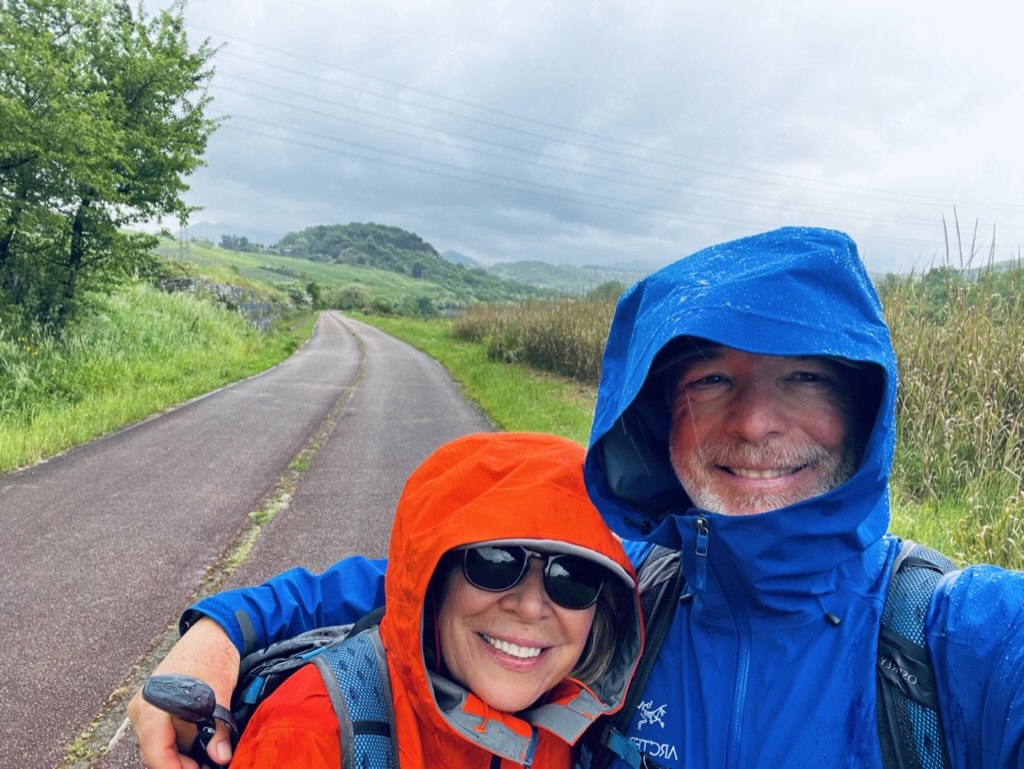
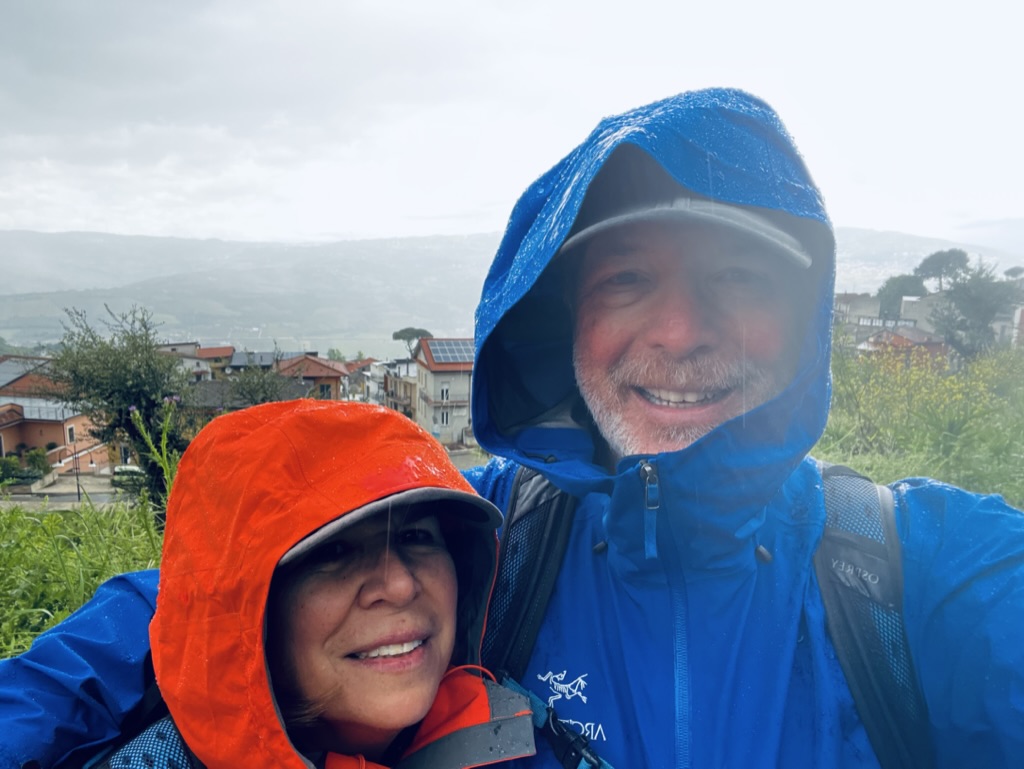
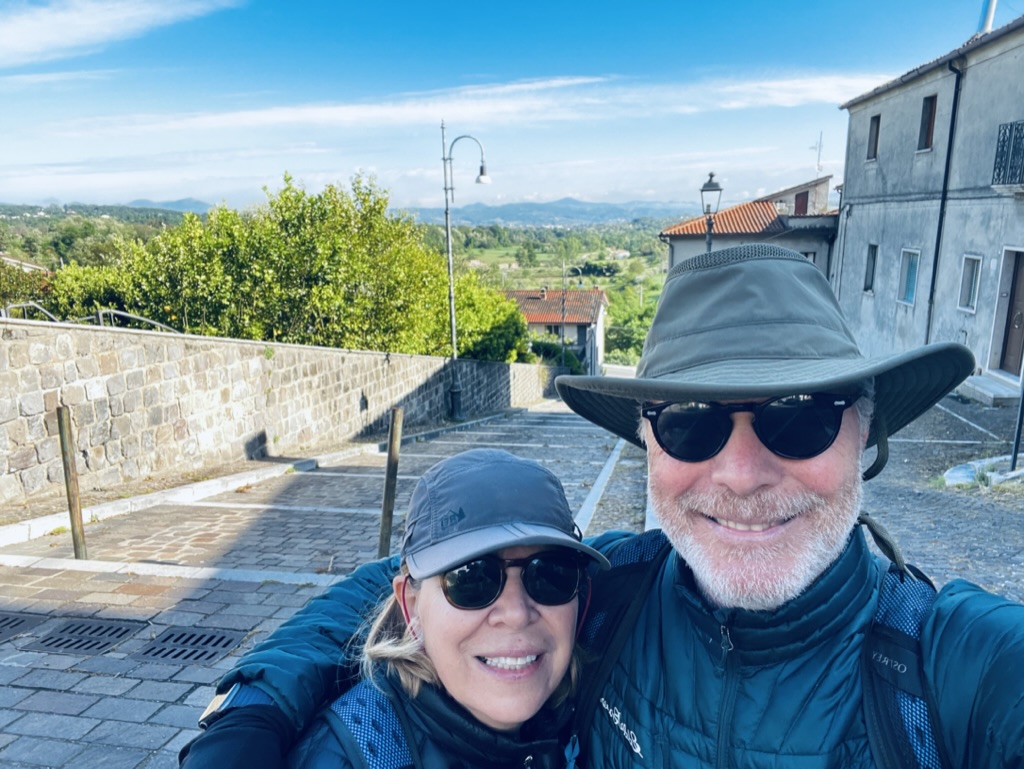
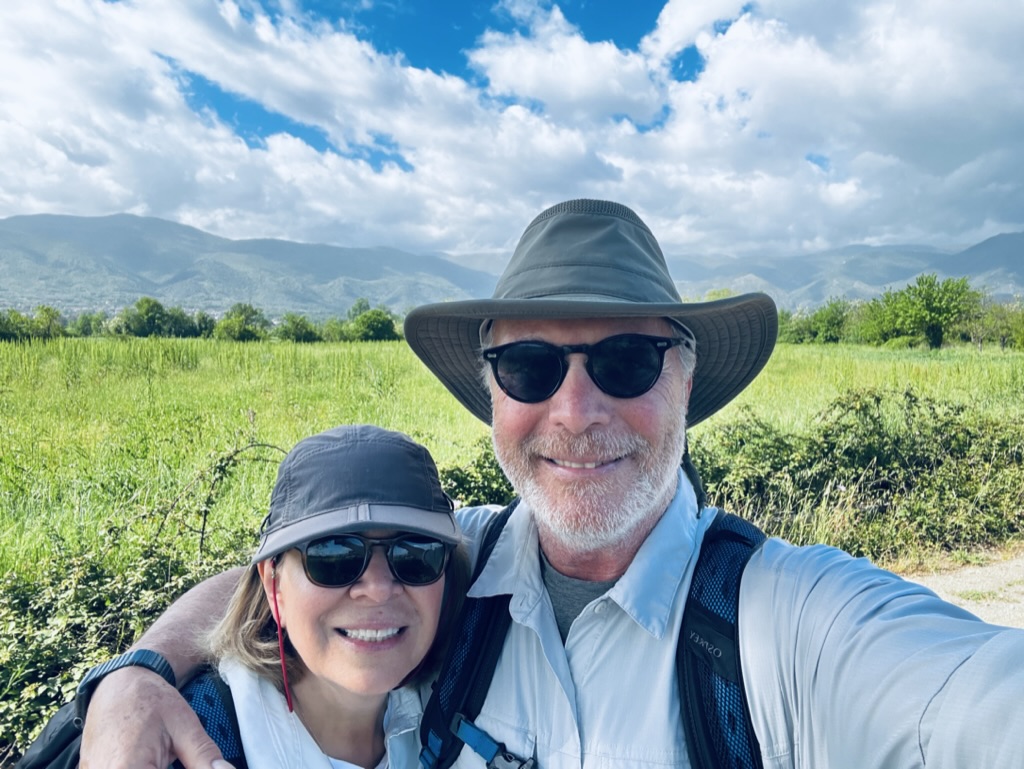
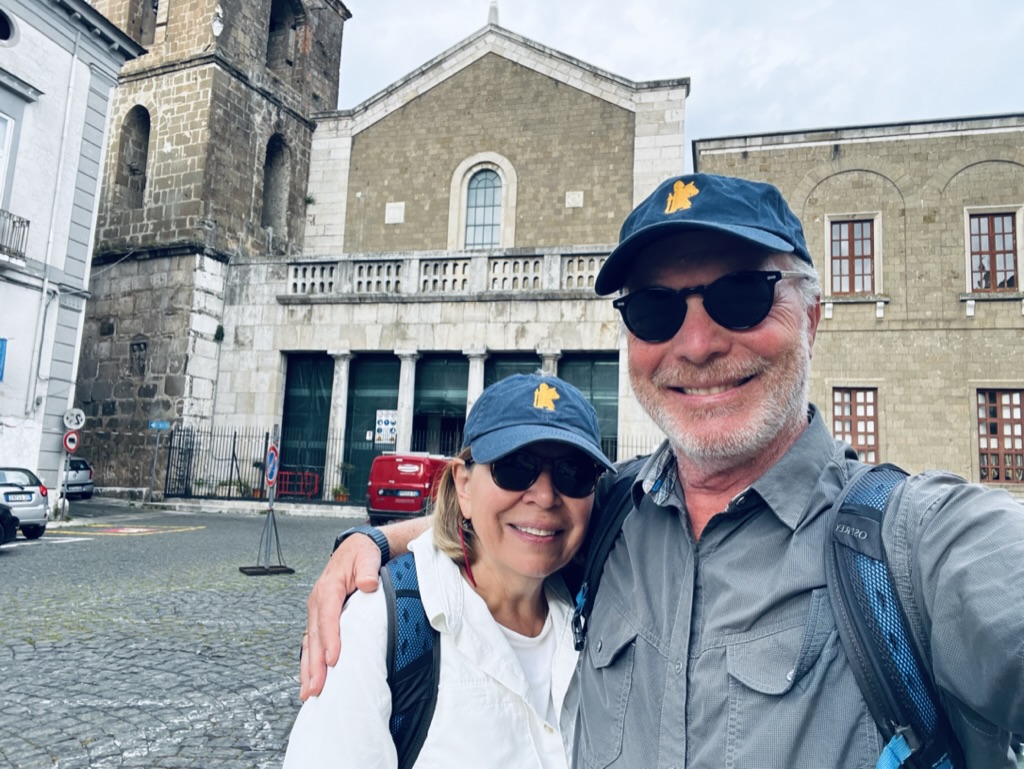
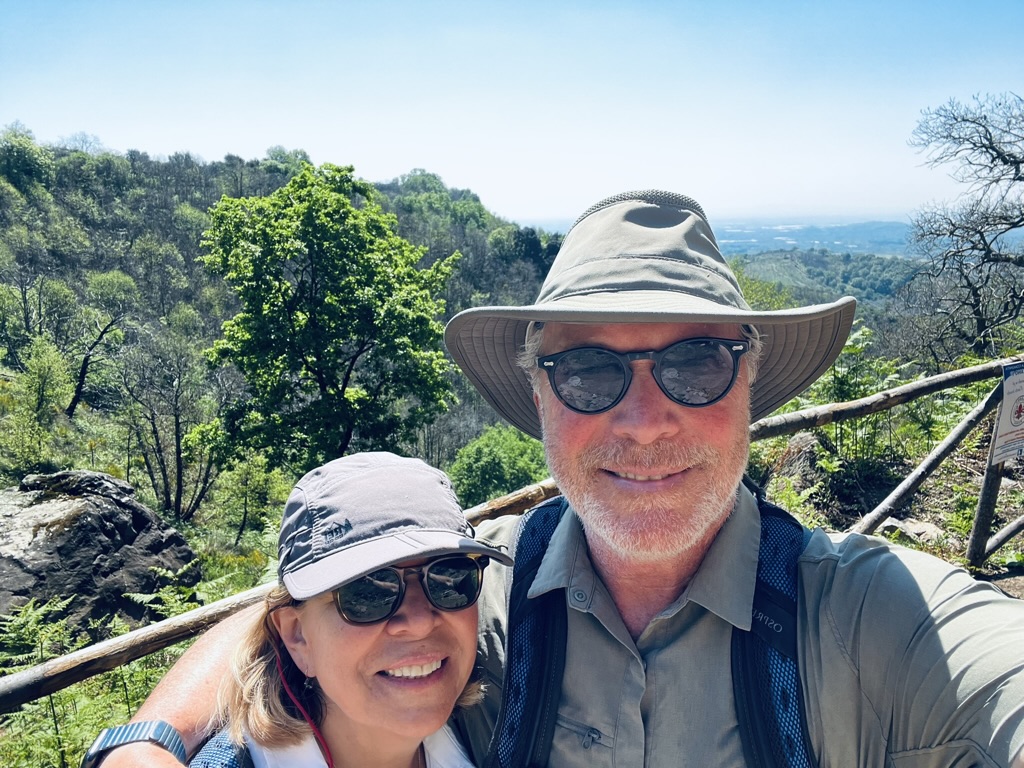
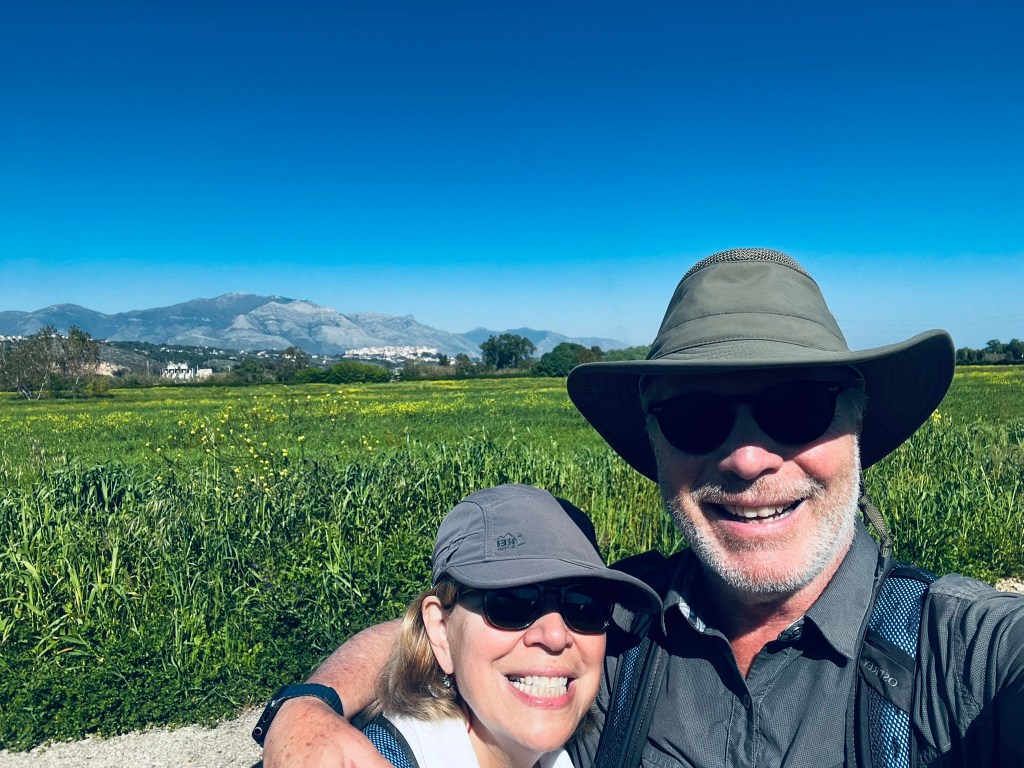
Once we hit the trail, we shout off a brief rollcall. “How are we feeling?” A 10 out of 10 answer is “Strong!” Second question: “How are the feet?” The perfect answer: “Quiet!” Next in sequence is posing for our trademark photo. You might ask “What accounts for Edward’s big smile?” I am grabbing his butt.
The Via Francigena takes us along many roads, and we are conspicuous pilgrims. I feel a responsibility to present myself as a “happy” pilgrim to those we pass. I adjust my smile and demeanor for onlookers particularly when feeling punished by the path. Perhaps not quite to the Gioconda level but think of the ecstatic expressions of martyrs while being tortured, like the flaying of St Bartholomew or St Lucy gazing at her eyeballs on a tray. I most closely resemble Perugino’s St Sebastian, his body pierced with arrows launched by joyful archers, his demeanor remains that of bemusement, like a parent watching naughty children. He is seemingly inoculated to the pain but not the inconvenience.
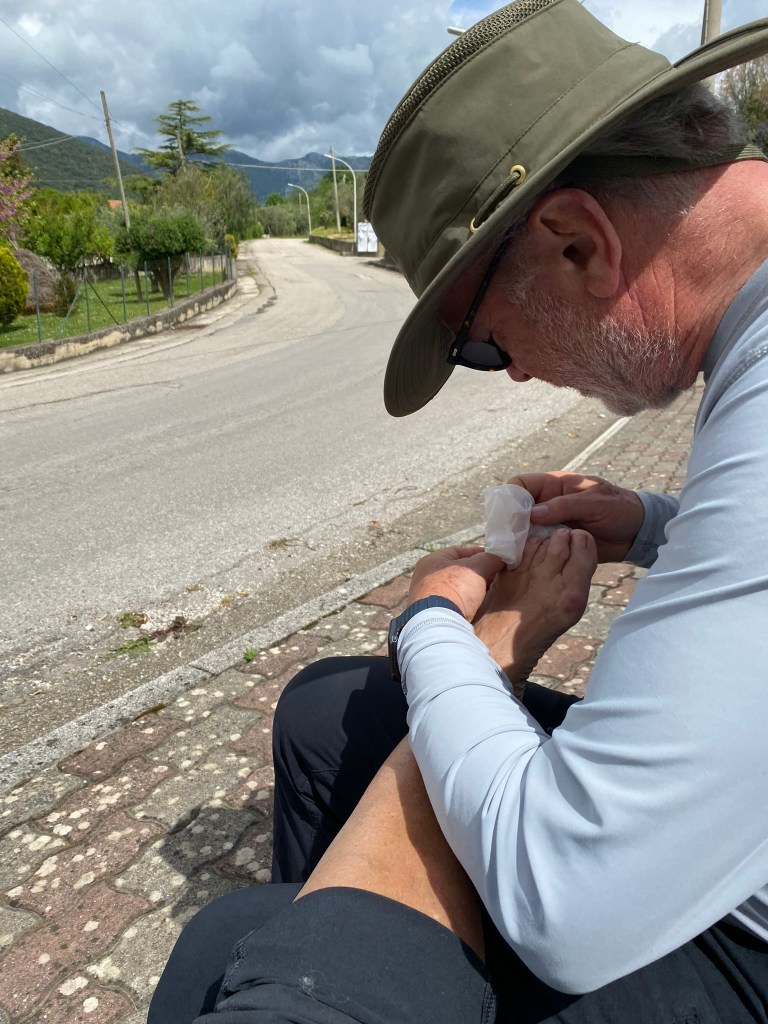
As our days come to an end, I am grateful for the level of maturity and wisdom the Wildebeest brings to this adventure. He serves as the IT guy, captain and navigator, DJ, concierge, and roadside podiatrist, all the while looking like Sir Jorah. An example: recently I was frustrated with a particularly embedded ceramic shard, the Wildebeest without a word, unsheathed his saber and completed the excavation – swoon. The fine art indulging eccentricity.
What I could really use is a style hack for my wardrobe.
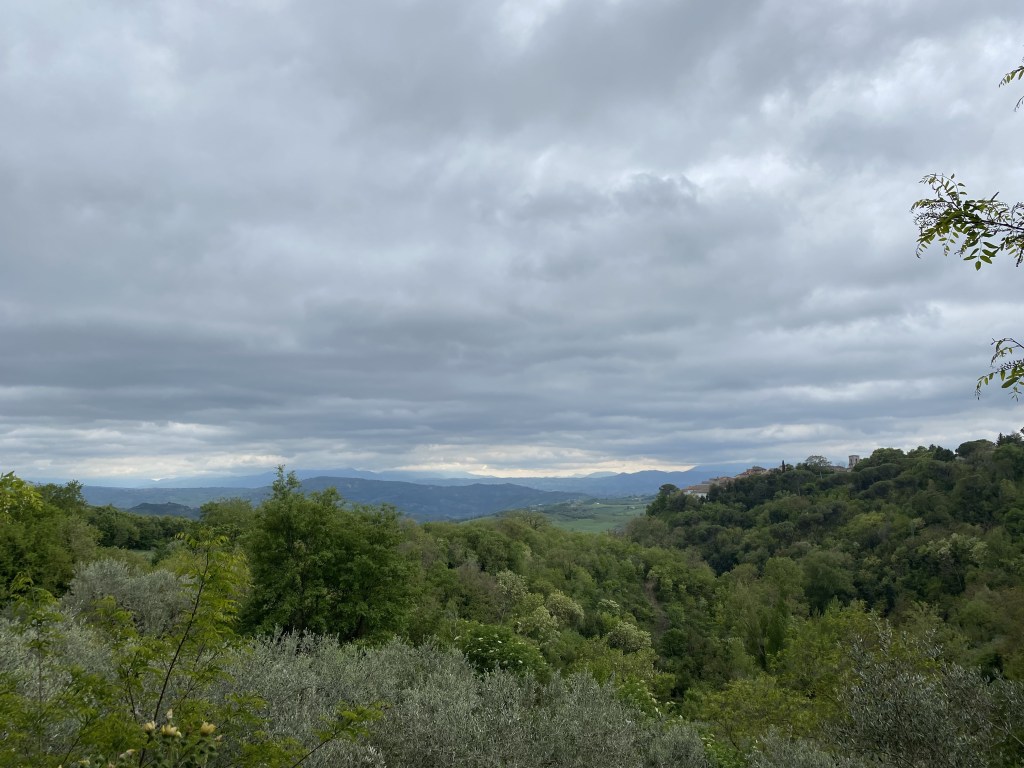
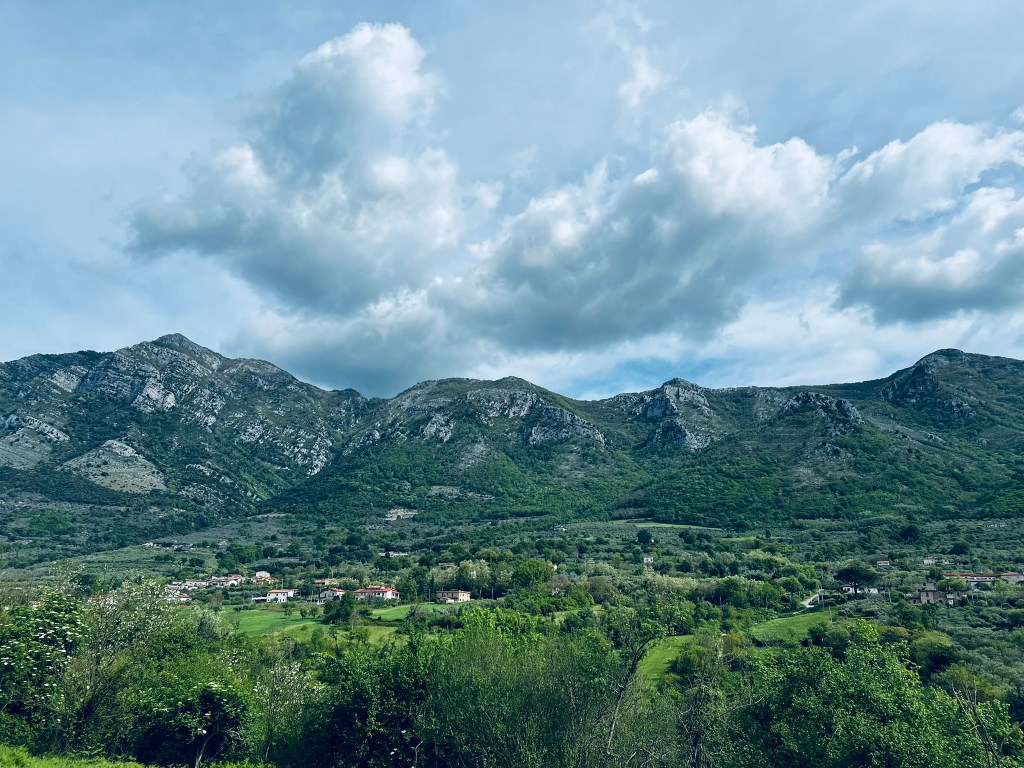
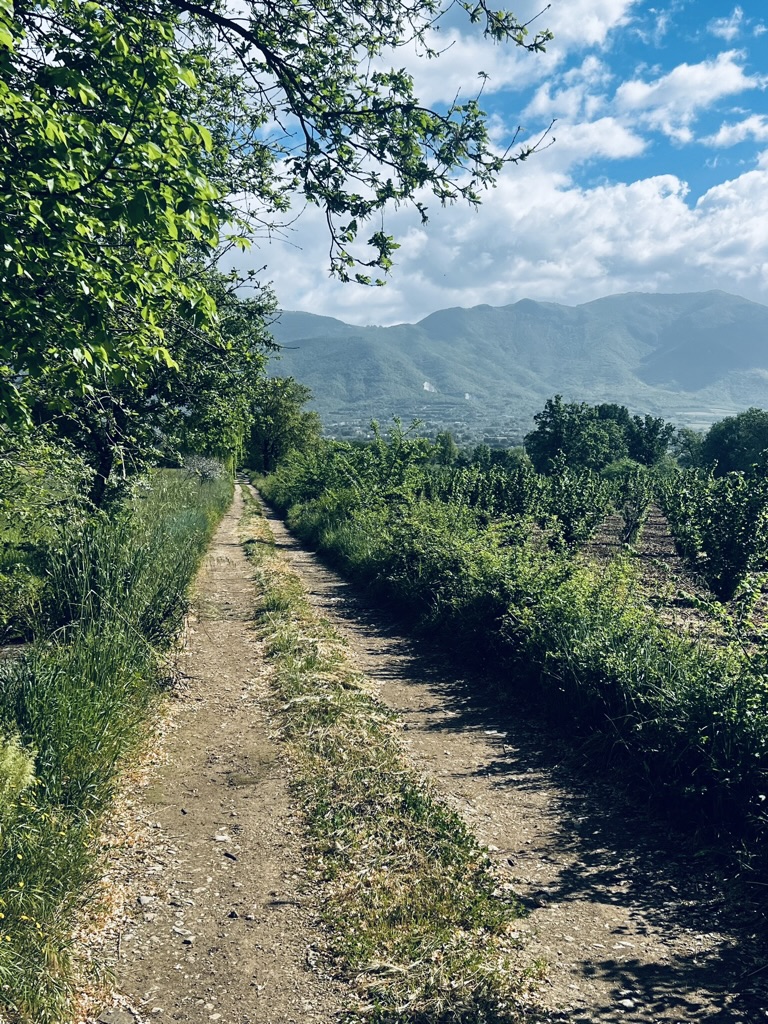
We swept down to the valley from the Irpinian hills toward the Matese and Vitulano mountains and the Apennines. We found rich farmland, olive groves, some vineyards and heard the grinding sound of tractors tilling the soil and the buzz of weed whackers clearing aggressive weeds. A valley teaming with life.
Alife is an ancient town, originally inhabited by the Samnites before Romans conquered it in the 4th century BCE. It’s on the flat of the land, not perched on a hill like almost all the other towns we travel through. The accommodations in Alife were on Viale Dei Caduti Di Lavoro (Street of the People Who Died Working). A name full of social irony. Our hostess for the evening, an enterprising lady named Antonella, who spoke in rapid fire Neapolitan with hand gestures to match, energetically slicing and piercing the air, while explaining the nuances of our apartment, did not care for the name.
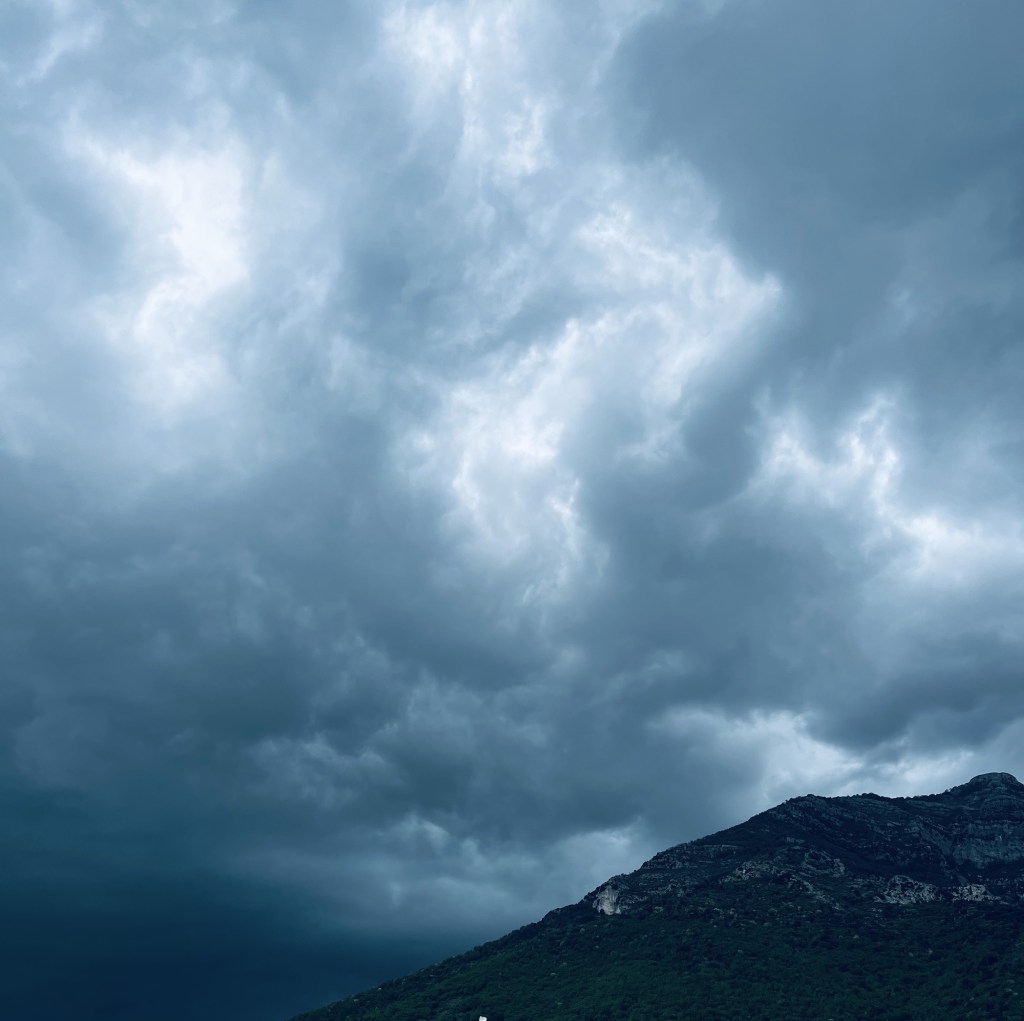
Faicchio is at about 1000 m altitude, tucked into the foothills of the Apennines that loom over the town on all sides. As the day wore on gathering clouds and claps of thunder indicated a coming storm that broke loose just as we entered our room for the night. Good timing.
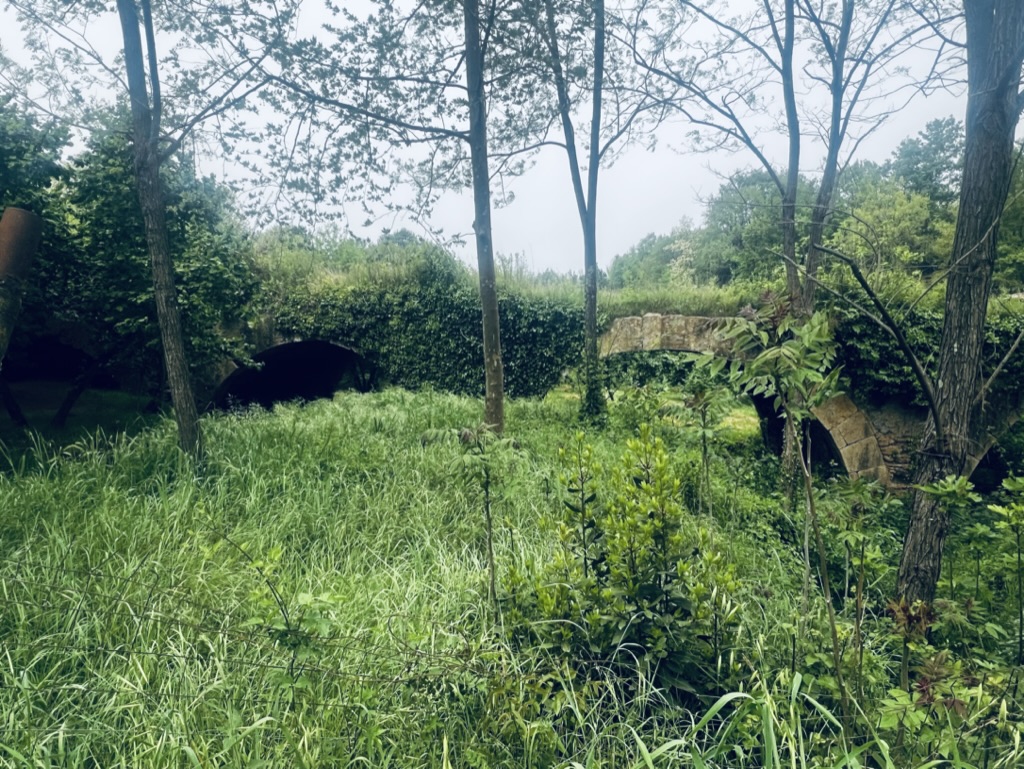
Walking along the Appia Antica we pass a 1st century Roman bridge which other than being overgrown with greenery seems to be in fine working condition. We pass ruins from various eras that testify to the long and tumultuous history of this area, invaded by everyone who had pretensions of Roman empire building: Lombards, Byzantines, Normans, Popes, France, Spain, the Holy Roman Emperors, Napoleon, Germans, and on and on.
At Pietramelara we ate unquestionably the best pizza we have ever tasted, cooked by Cosimo Chiudi, the pizzeria owner, who explained in great detail how he prepares the dough and selects the wide variety of supplements. We also had a bottle of very fine local wine which we will be looking for when back in the US.
One of the highlights of the day was the young man who came running out of his house to give us a book about the Via Francigena and then disappeared back into his house before we could thank him or even get his name. I guess the look the part of pilgrims though we feel more like wonderers.
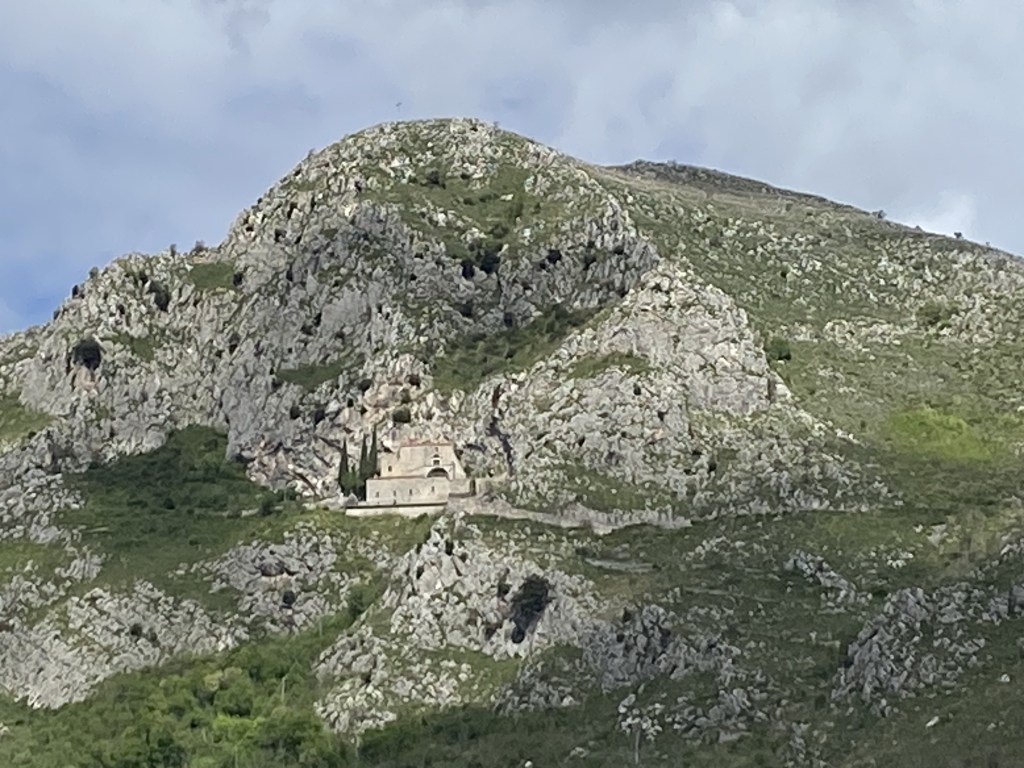
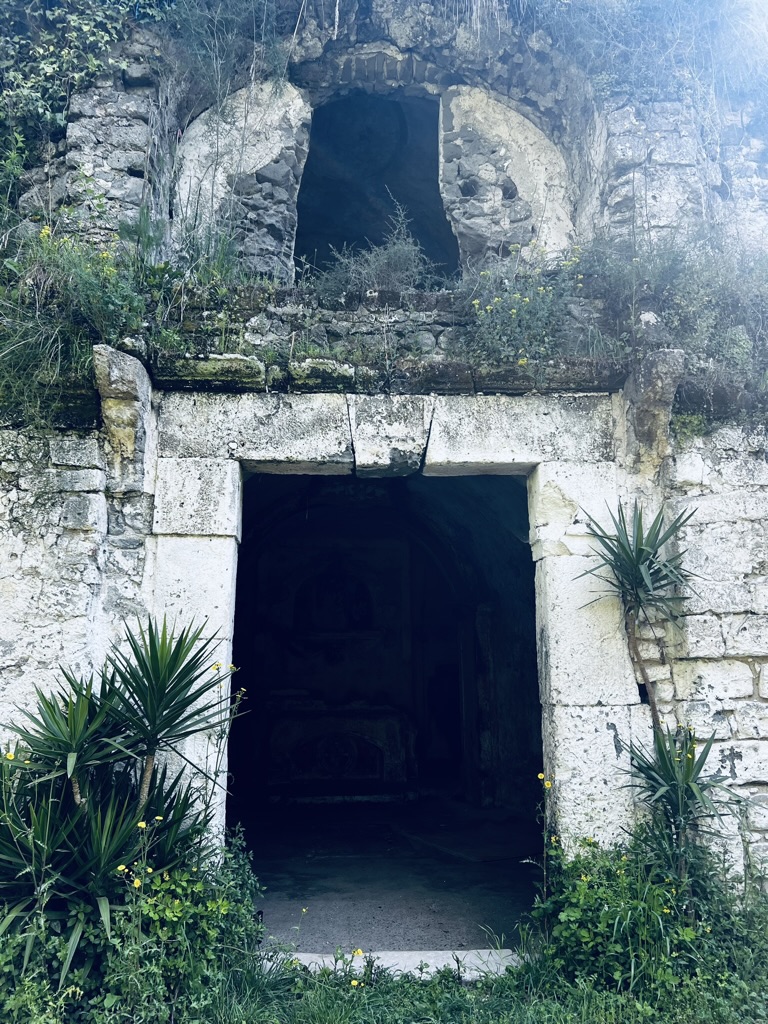
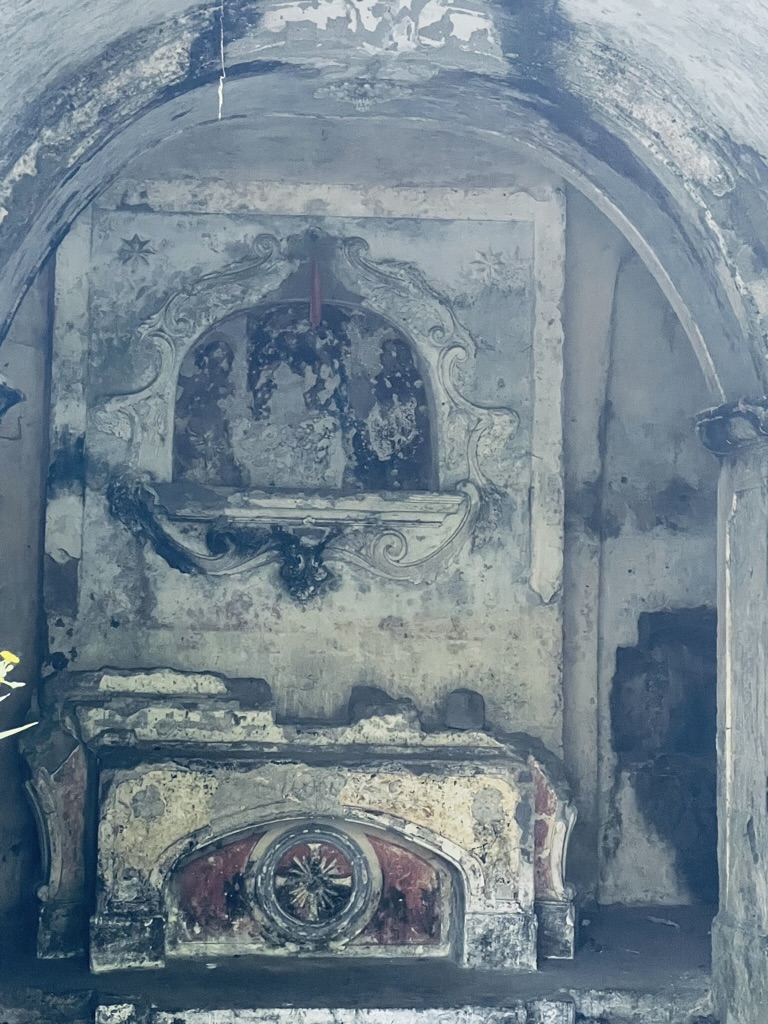
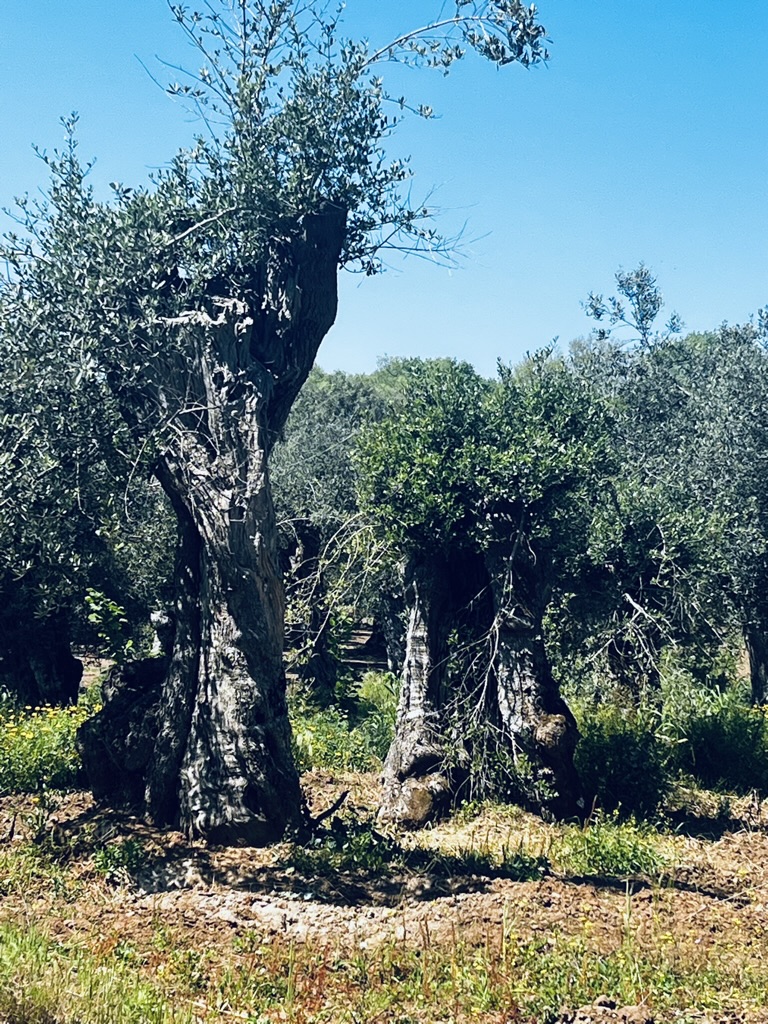
Walked by an old and unmarked church carved into a rock but of unknown origin or date. The iconography was unidentifiable. We paused for a while to imagine what it could have been concluding that it was most likely a church destroyed during WW2, but who knows it could have been an Etruscan temple infected by the Baroque. We are walking along the Via Appia, through old olive groves, where gnarly trees have survived hundreds of years, through earthquakes, plagues, famine, wars and human neglect but continue to produce a life-giving elixir for our benefit. Teano was a welcome relief even though it required a 300m climb, at the end of the day, up a deeply troughed escarpment. At Teano we enjoyed dinner at a restaurant that where patrons were out of Godfather central casting.
The heat is setting in earlier than ever, up in the 80s today, just in time for the first 30km trek of this walk. We started walking by the Garigliano River, and then made our way up the Aurunci mountains to Sessa Aurunca. This area was the site of some of the most ferocious fighting in WW2, Sessa itself and Teano, where we go tomorrow, were pulverized before the Germans were chased out. Nonetheless, the towns are full of life and you wouldn’t know they had come back from a pile of rubbish until you look at the pictures hanging in the café/bars that reveal a desolate landscape where nothing is standing. Great care was taken to restore the interior of the churches to their riotous Rococo pageantry, as though nothing happened. It was a tough day, but we had the best meal to date: a plate of spaghetti Lupini, the smallest vongole but by far the tastiest.







 Walking the Via Francigena