Pope to Puglia Day 7, 8 and 9 Fondi to Itri – 19km Itri to Formia – 15 km Formia to Minturno – 20 km

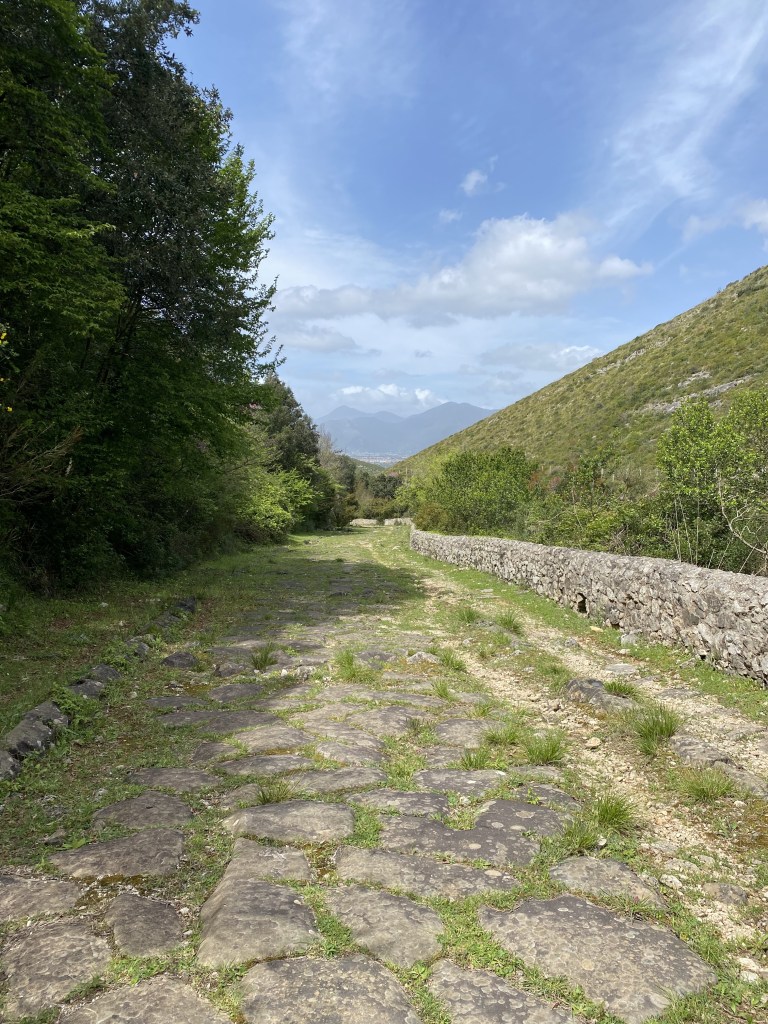
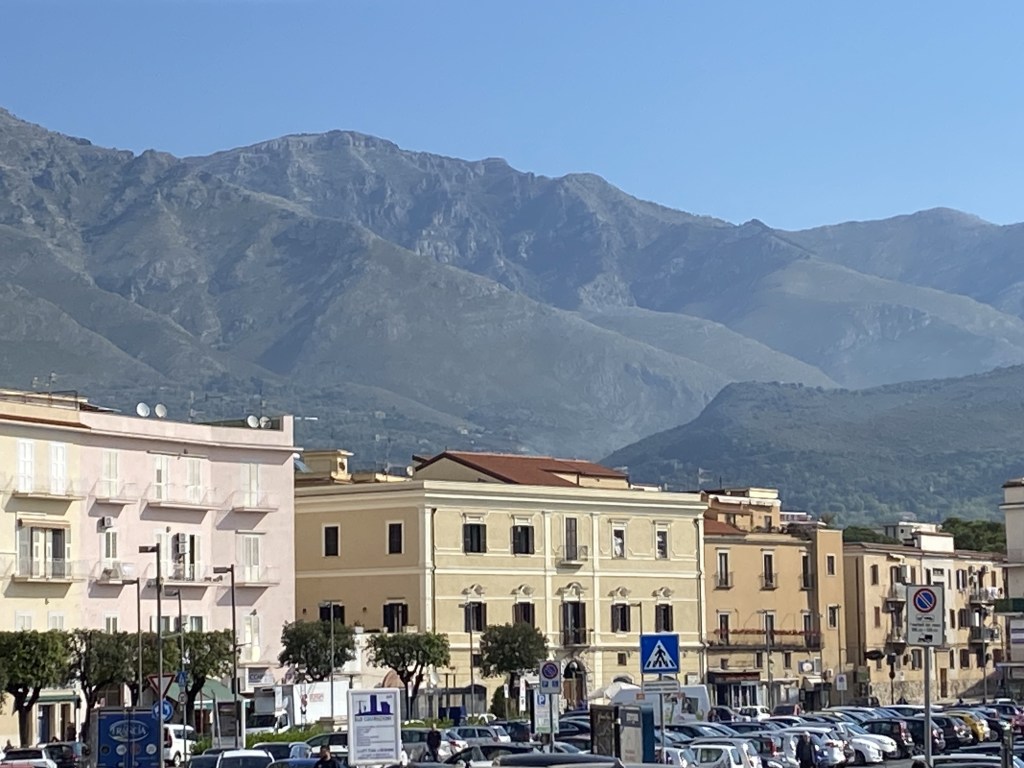
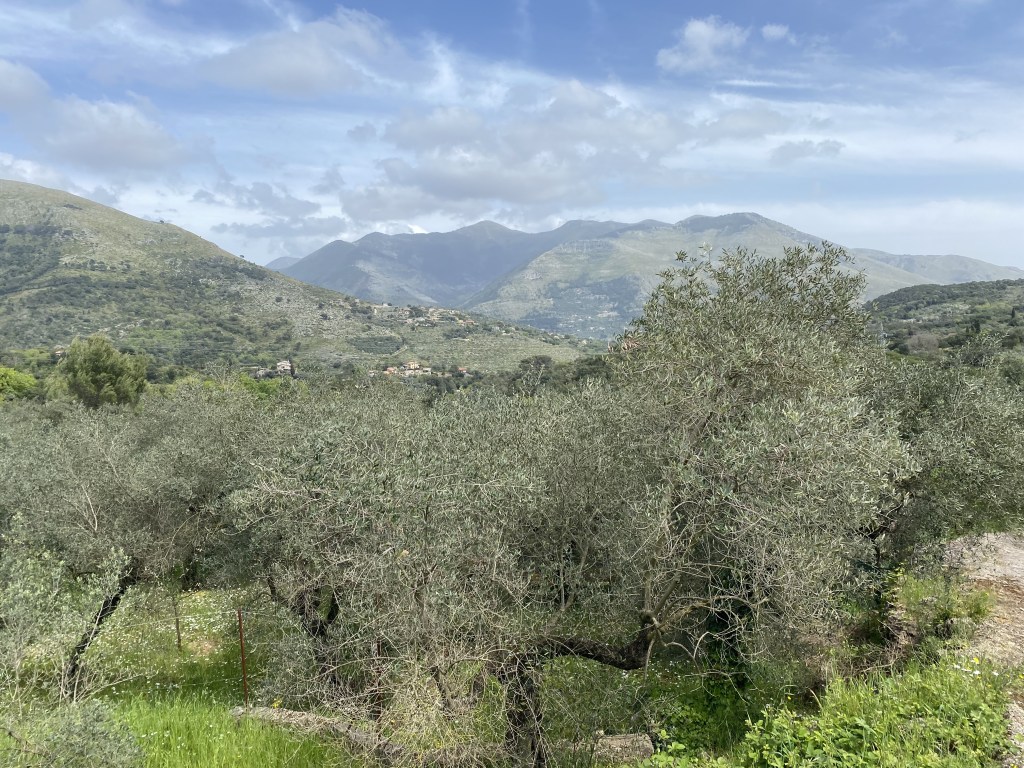
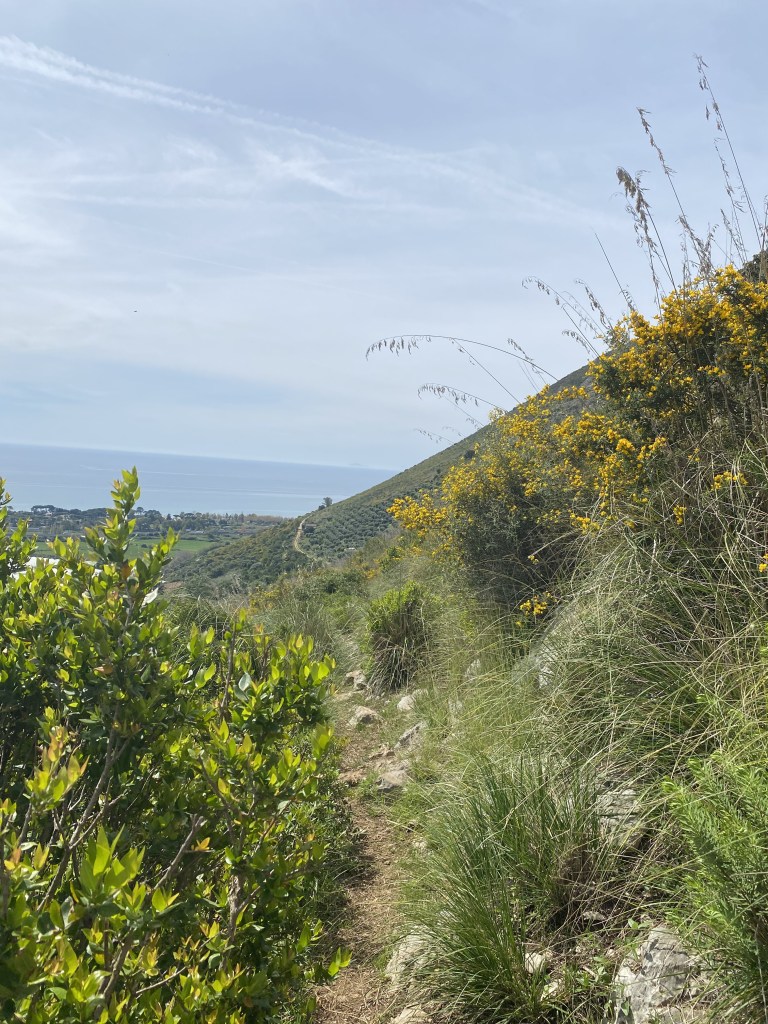
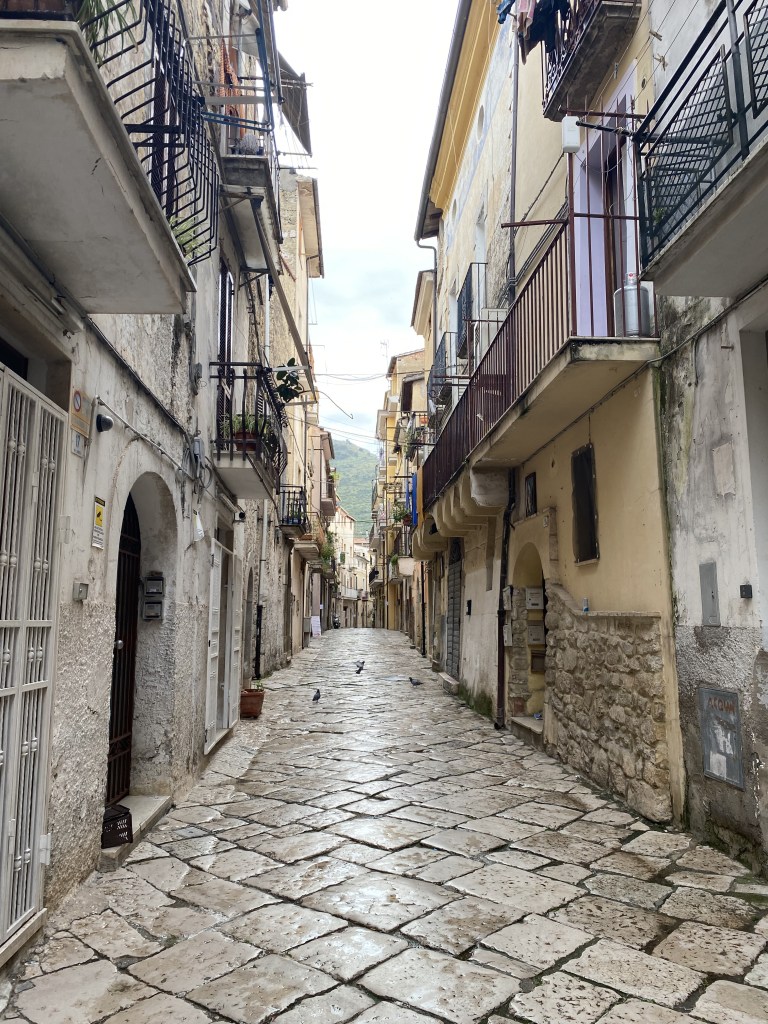
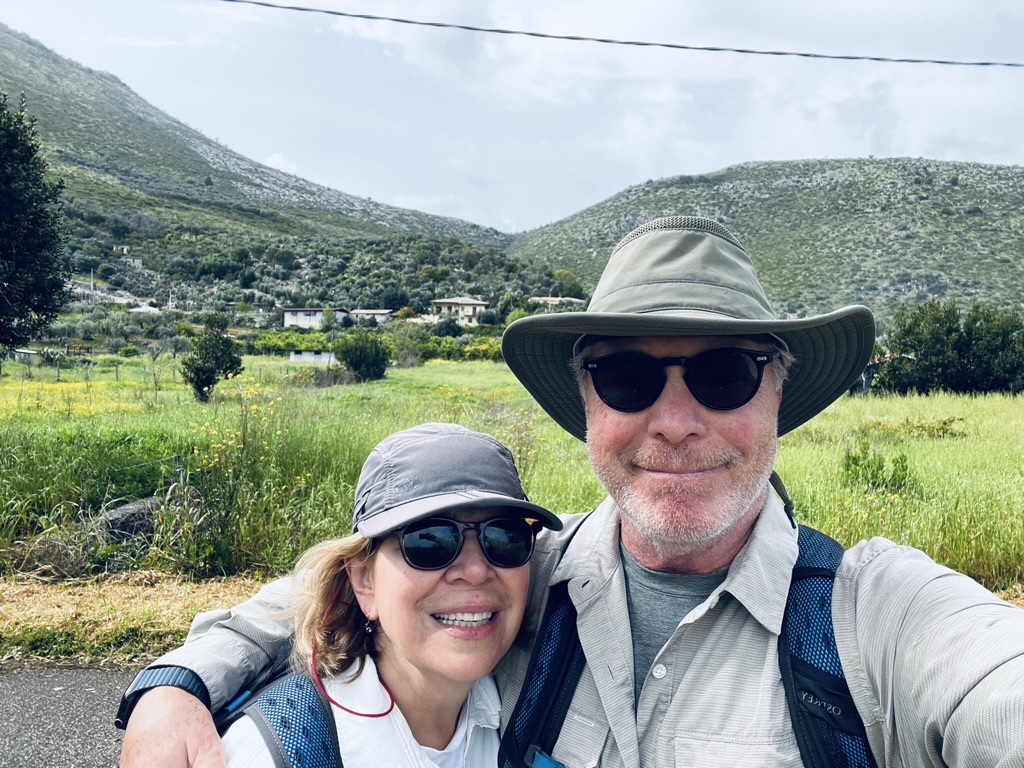
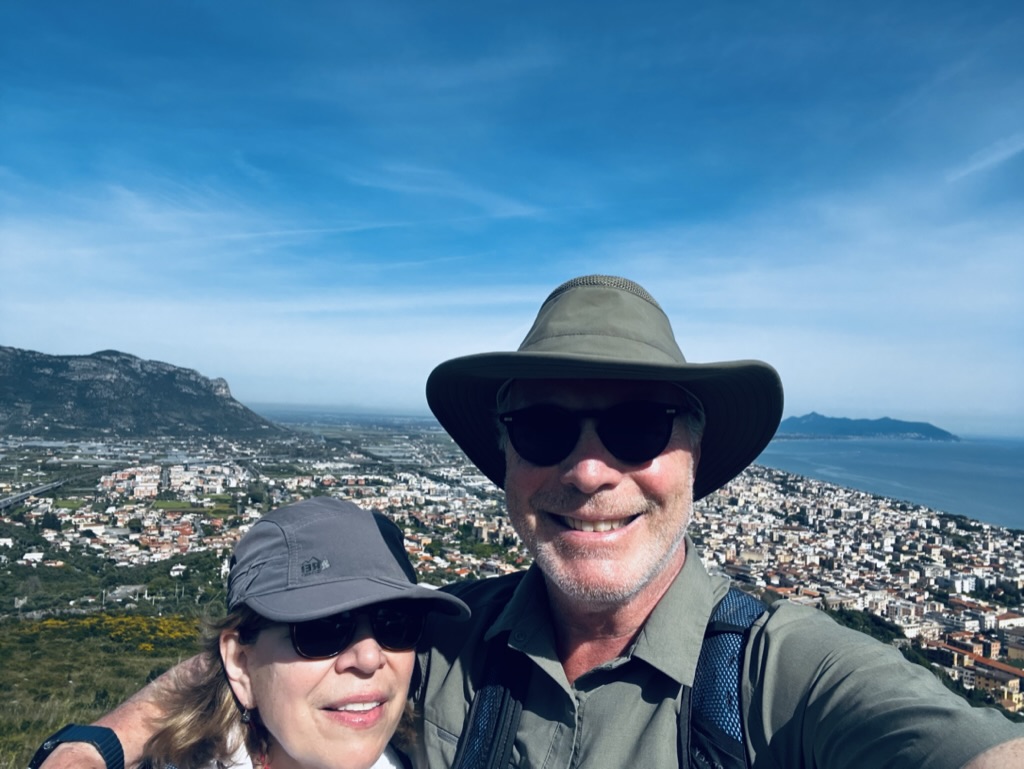
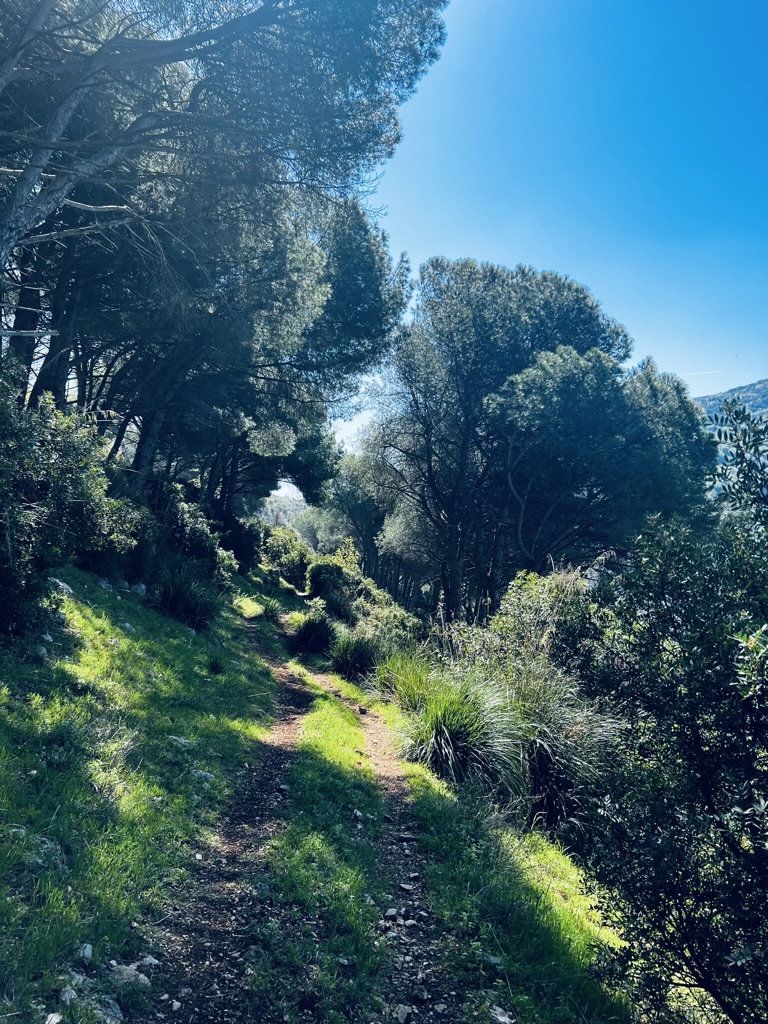
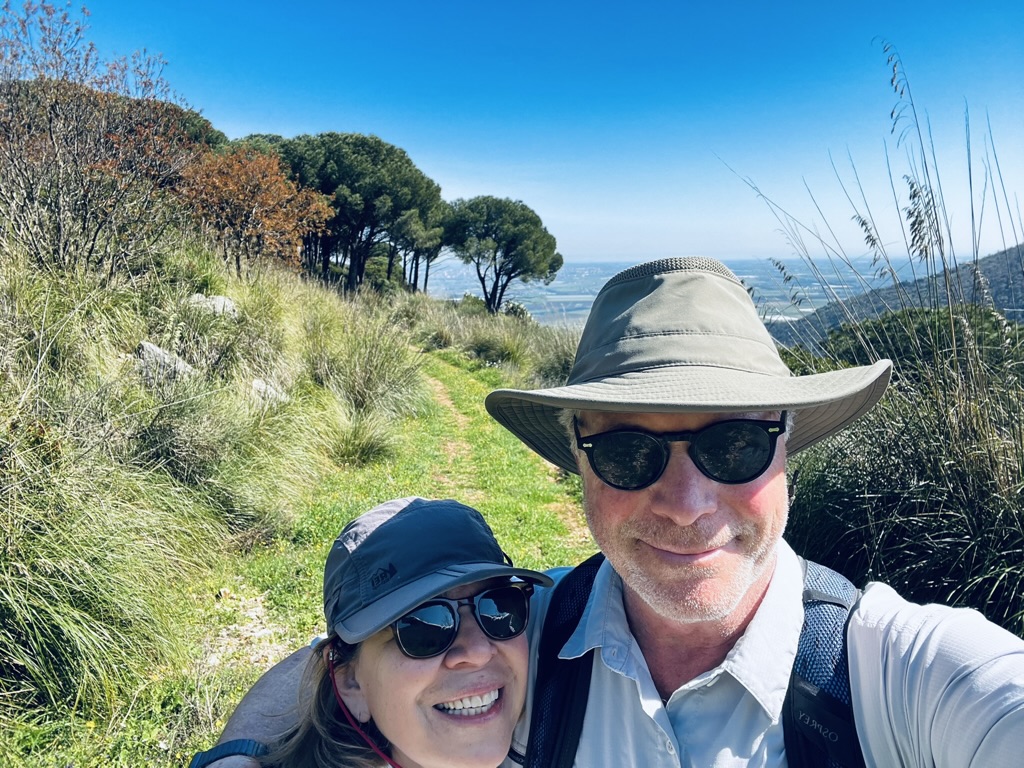
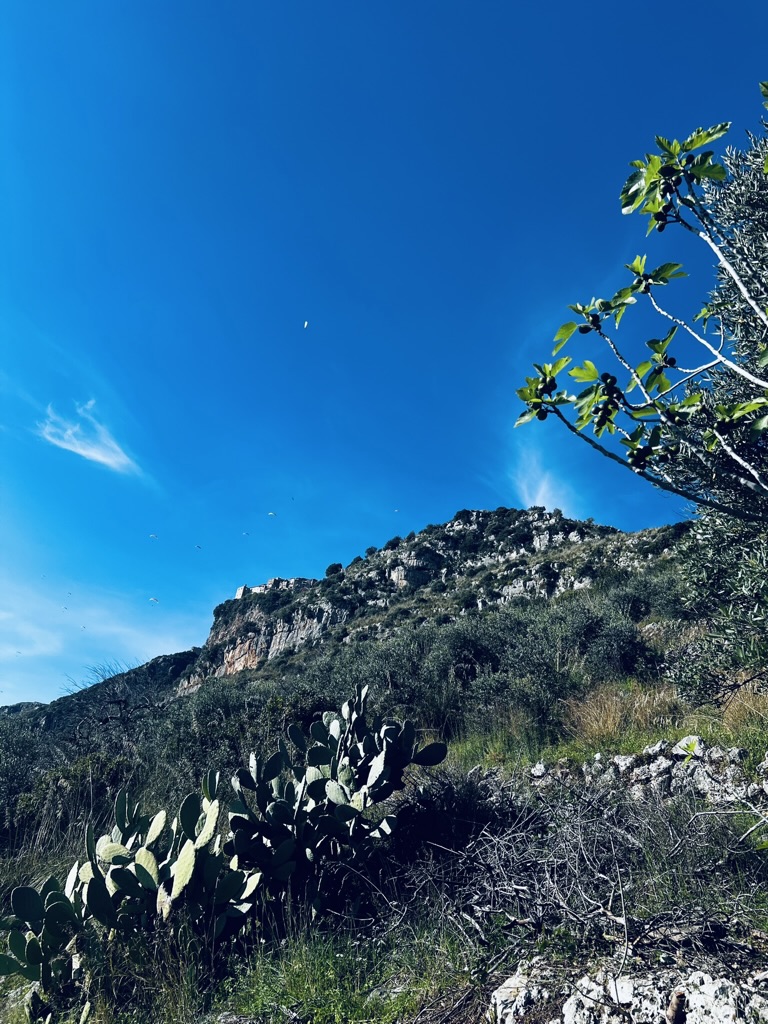
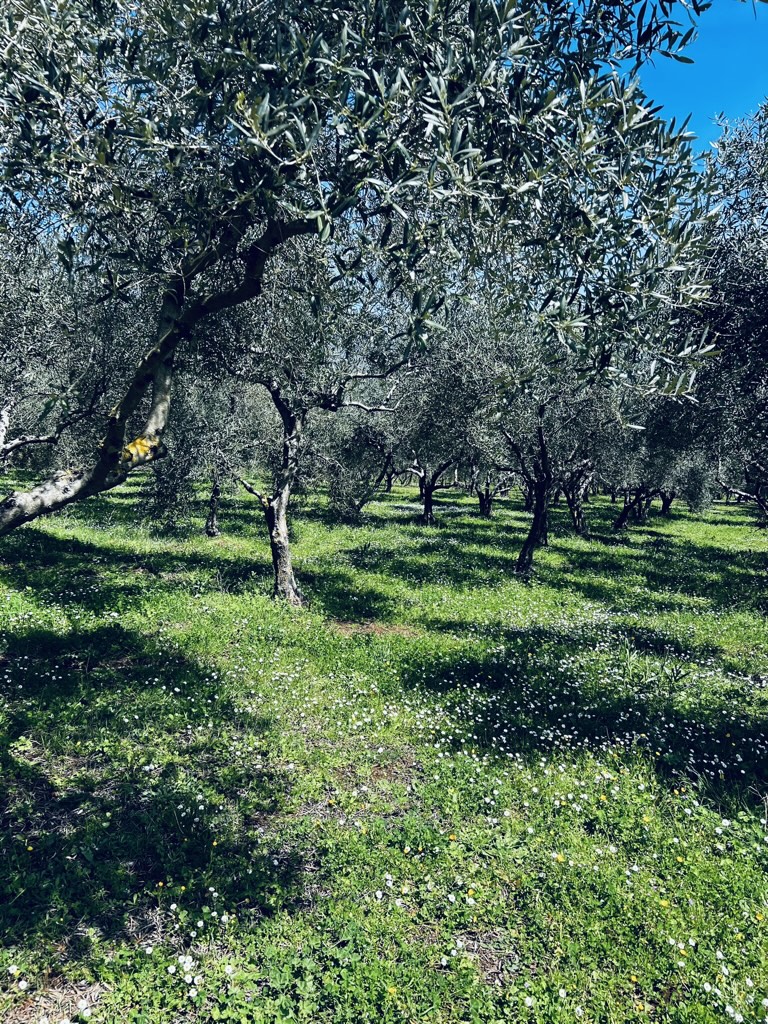
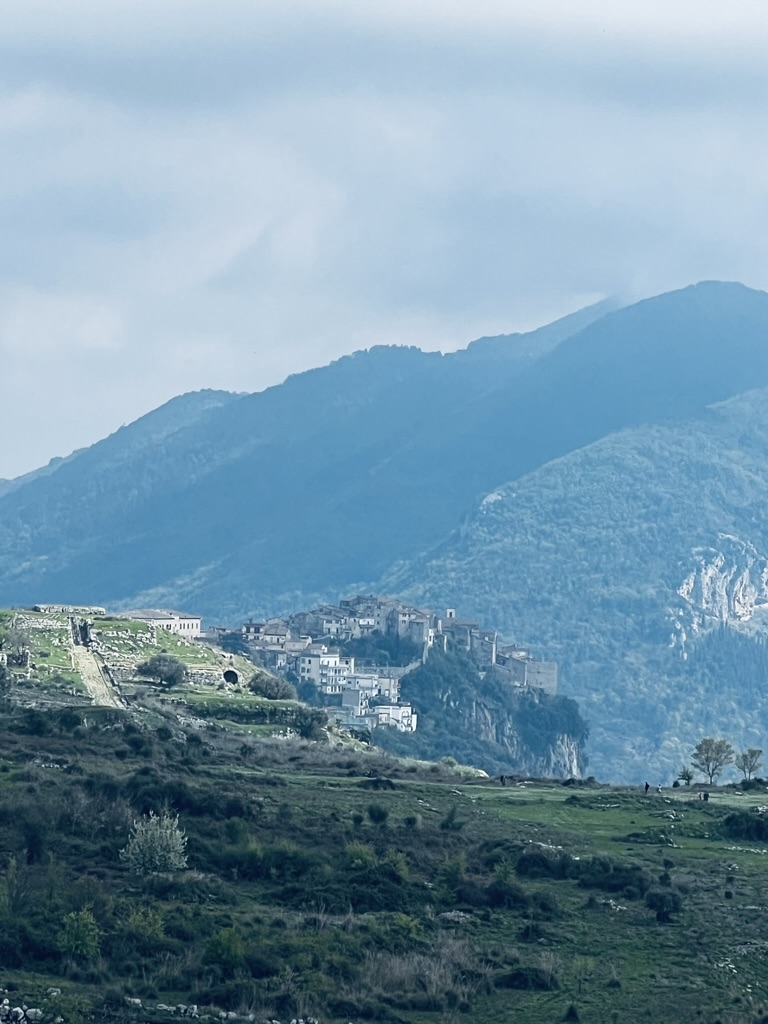
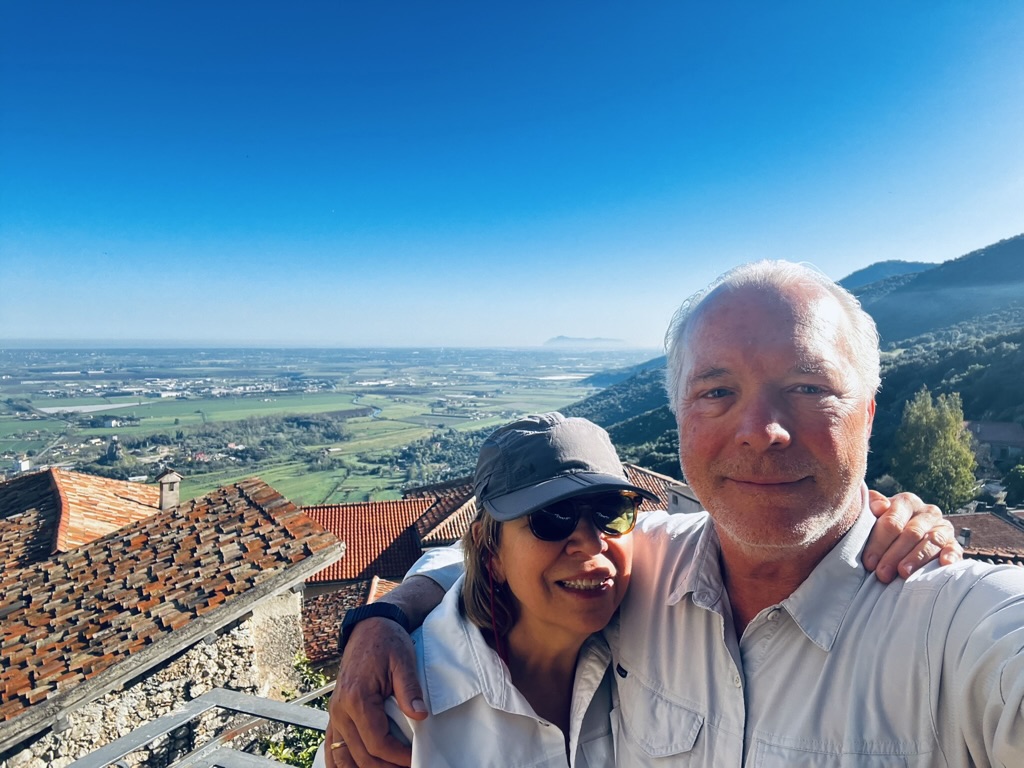
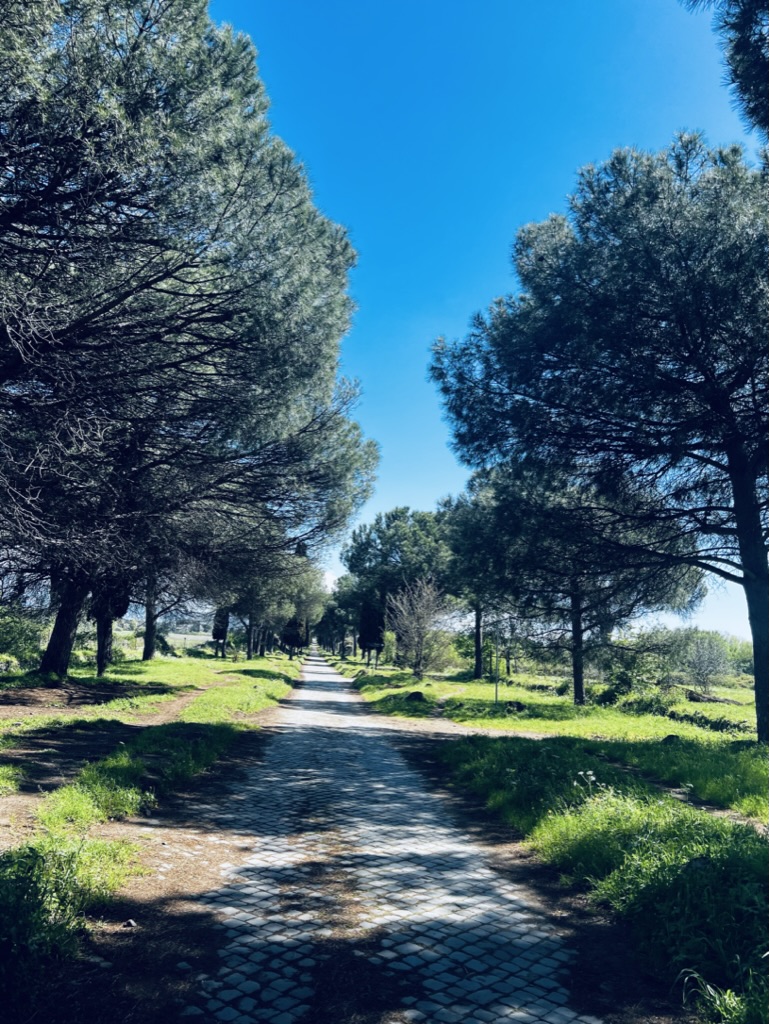
Three relatively uneventful and easier days, first walking along orchard groves, artichoke fava bean fields and fruit orchards, then by the sea in the Gulf of Gaeta.  The path from Fondi to Itri is on the old Roman road, the Appia Antica, still navigable though probably not on a bicycle.  The Aurinci mountains, part of the Apennines, tower over us like slumbering giants: daunting and impenetrable.  How the Allies crossed these mountains in WW2 in the face of punishing defense lines defies reason. 

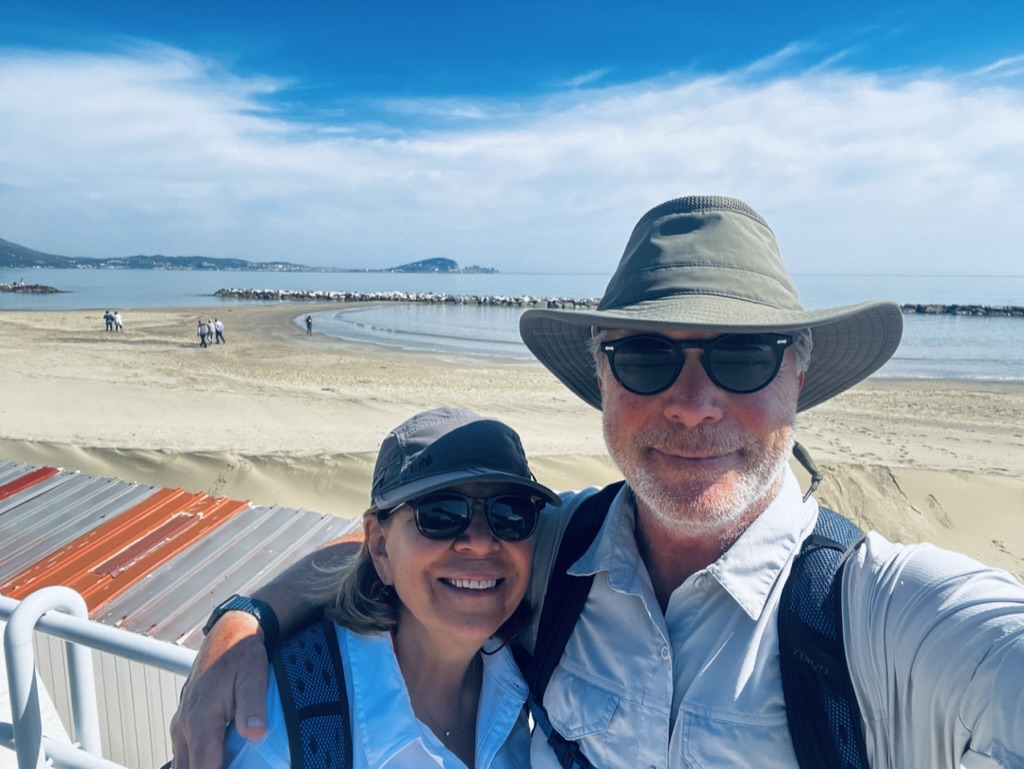
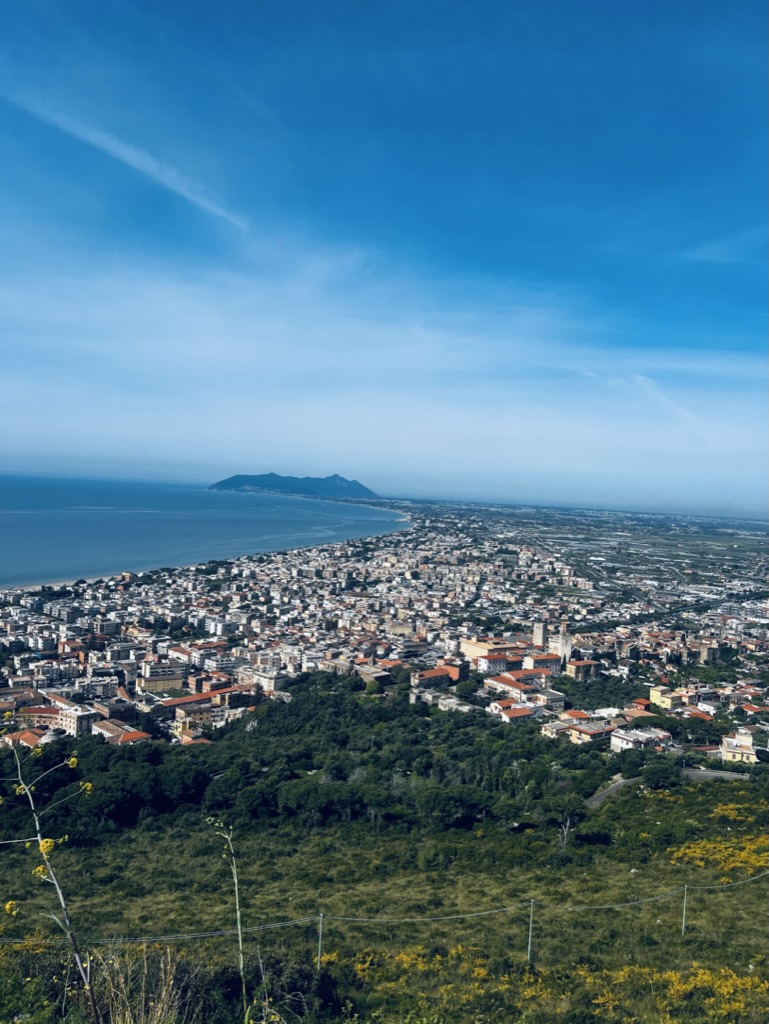
By the sea, we walk through beach towns, many deserted.  One can hear the echoes of last year’s crowds and imagine the beaches lined with umbrellas and lounge chairs cheek to jowl, but for now they look like the morning after a wild party.   Of course, the restaurants that are open offer great food.

Still, the sun is shining, the sea shimmering, and we stride with confidence. Tomorrow, we turn left to walk 7 days toward Benevento where we will begin our final assault over the Apennines. 

Pope to Puglia Paula’s Weekly Summary: The Wildebeest and Zebra are Back

The wildebeest and zebra are back!  The wildebeest offering guidance and security, the zebra expanding an incredible collection of ceramic pieces, porcupine quills, dead bugs (if travel sturdy) and rusty artifacts.  Spoiler alert: all suitable for gifting.

This first week has been a baptism by fire.  It started on a lavish note: the bathtub in our first hotel on Piazza Navona, a red-lacquered monument in the center of our Aphrodite sweet, would have been suitable to baptize a small congregation, and the complementary towels would have made Christo proud. Perhaps I was cavalier about the six-week journey at the start, but reality sunk in quickly following a series of 26+ km phases, walking more 8.5 hours each day, ended in our small rooms with us moving mechanically around like robots in a robot repair shop, bumping into the walls and each other.

But we are strong.  In contrast with our foot centric commentary last year, that often bordered on qualifying for an “only fans site”, I have decided that further discussion of my feet will be limited.  Some things are just better imagined than seen.  However, I can report on 2 podiatric improvements: 1) I start with 10 new toenails; and 2) a shoehorn is more efficient than a mildly arthritic index finger when putting on a boot.

The Francigena occasionally throws obstacles in the path of a well-intentioned pilgrim. 

For example, on the first day, a large metal fence and orange netting blocked our path. Of course we were unwilling to accept a detour.  We instead deployed a two-phase tactic.  First, find a sag in the fence; second, climb over it.  The wildebeest cleared the fence like a gazelle and then offered to help. 

Edward: “Ok Paula just lift your leg and I will grab your foot and pull it over.”

Paula: “Hold on a minute my pants are entangled with the barb wire.”

Note that this maneuver required a perfect arabesque to land safely on the steep incline on the other side of the fence.   Rest assured that all was executed with the elegance and grace of a Dolce&Gabbana fashion show.

A couple of days later we had to breach construction site fencing, adorned with arts and crafts “Do Not Enter” signs (in Italian of course,) by unhinging part of the fence.  Surely placing a construction site in the middle of the Via Francigena was an oversite which we felt no need to observe.  

At one point we were obliged to hitchhike to compensate for a slight navigational miscalculation that took us 7 km off our path.  I did go a little Diana Nyad on this one.  Imagine 2 senior citizens standing on the side of the road hitchhiking, looking like semester abroad escapees from an REI sponsored camp. 

This week was not just about vandalism.  We are listening to “The Day of Battle”, Rick Atkinson’s account of the Italian Allied campaign during WW2.  My suggestion of the Barbara Streisand biography was tabled, temporarily.  We walked through many towns that only 80 years ago were scorched by war.  Some of the historic treasures were spared by agreements between the combatants.  One such agreement protected the papal summer residence at Castel Gandolfo, the site of our second night.

In Sermoneta we visited the church of Santa Maria Assunta where I noticed a small offering box with the following suggestion: “Offerta Per Anime in Purgatorio” which translates to “Donations for the Souls in Purgatory.” I have never seen such a collection box. I had several thoughts: “Gee, what could a soul possibly need” and “How are these donations delivered” and “They must have a crazy high administrative cost.”  I really think a better business model would be personal sponsorship by which you sponsor a soul in purgatory like the ASPCA or UNICEF children. But how do you know who is in purgatory?  It’s like delivering an Amazon package without an address.

In Itri we spent the night at a “Glamping” camp, a recent (?) development in camping couture.  The camp consisted of 4 geodesic domes made in Japan complete with air conditioning, showers, toilets, bidets, television, and chenille bedcovers dotted with plastic-colored hearts. Our pod was in the middle of an olive grove.

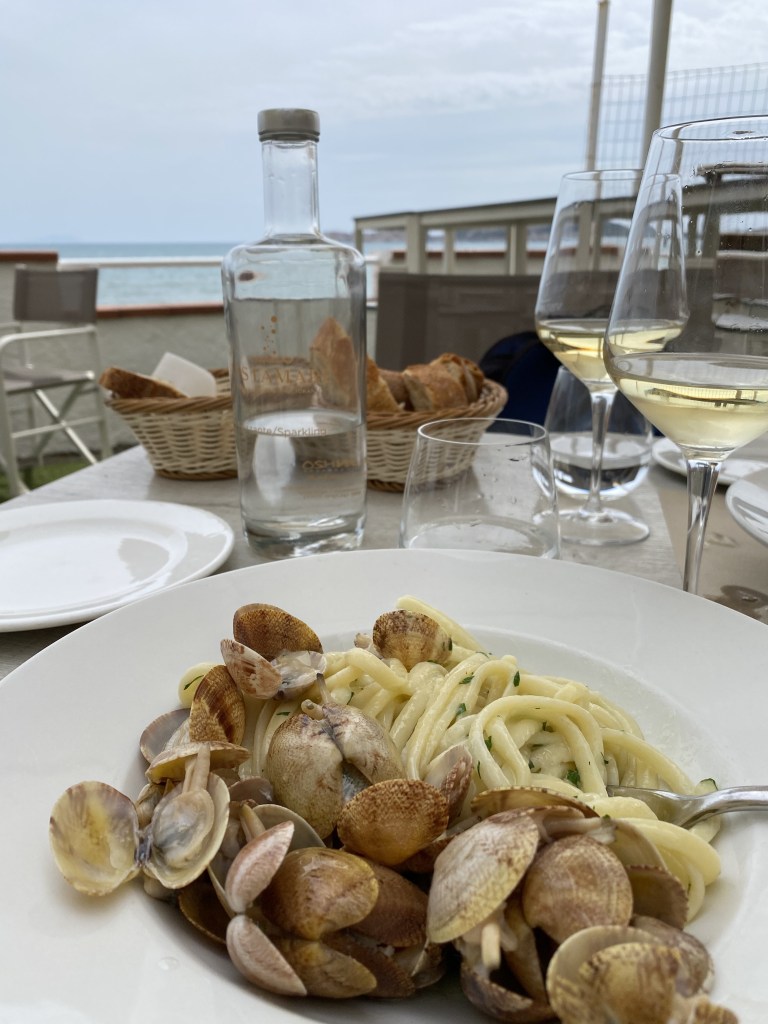
For the next two days we walk around the Gulf of Gaeta.  We arrived at our first destination, Formia, in time for a languid lunch by the sea, the first lunch of the week.  The waiter brought a bottle of wine to the table and pulled the corkscrew from his apron.  Holding the bottle confidently he turned it to cut the foil from its neck, his wedding ring marking each rotation when contacting the glass. Tap, tap, tap. Like a call to prayer. 

A new feature of this weekly summary will highlight individuals who “made our week.” We want to recognize Corrado and Lidia who provided luggage transfers for 4 days. Aside from warm generosity and care, they gave us the carved wooden figure of a Francigena Pilgrim.  Corrado, it turns out, is an excellent carpenter.  We want to recognize Vincenzo who appeared out of the mist as evening fell while we were hitchhiking with the genial “Where do you want to go.”

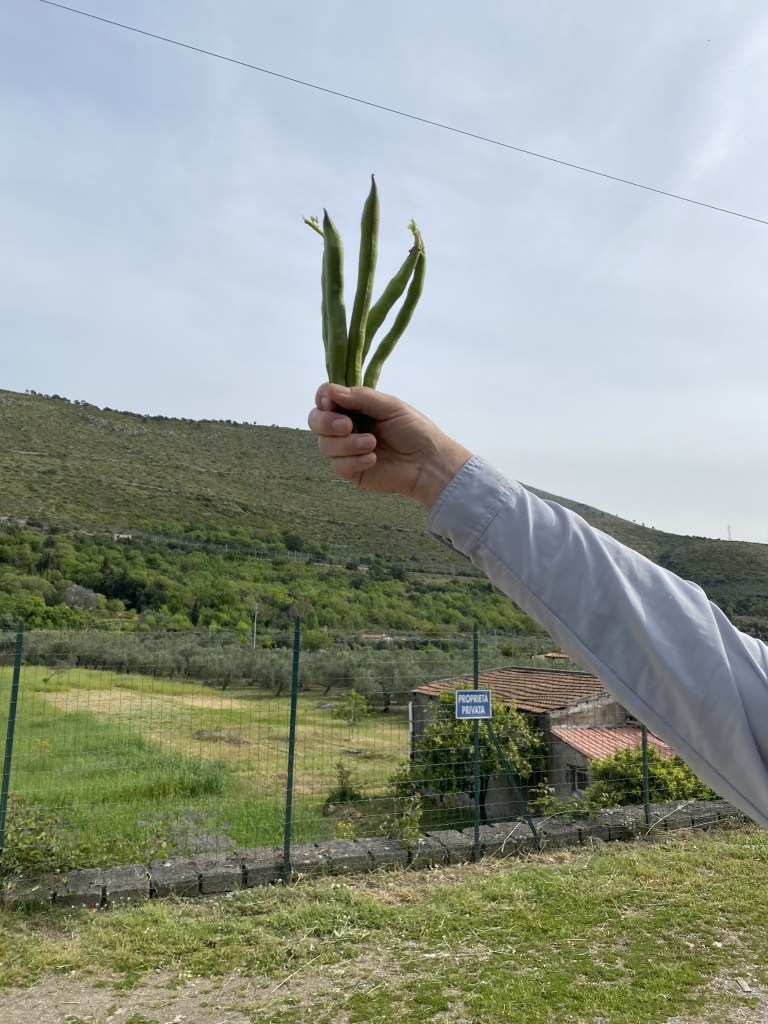
Finally, we want to recognize the unknown lady who stopped to give us a handful of fava beans pods which we ate while strolling along. Small gestures can have large impacts.   

A presto
Pope to Puglia Day 6 Terracina to Fondi – 25 km

As we were getting the pilgrim’s stamp at the municipal center in Terracina, we met the mayor, a dapper looking man wearing jeans, a tattered leather motor jacket, a scarf and sunglasses who seemed very busy.  His predecessor was arrested last year for granting public beach licenses to commercial establishments in return for a tip. 

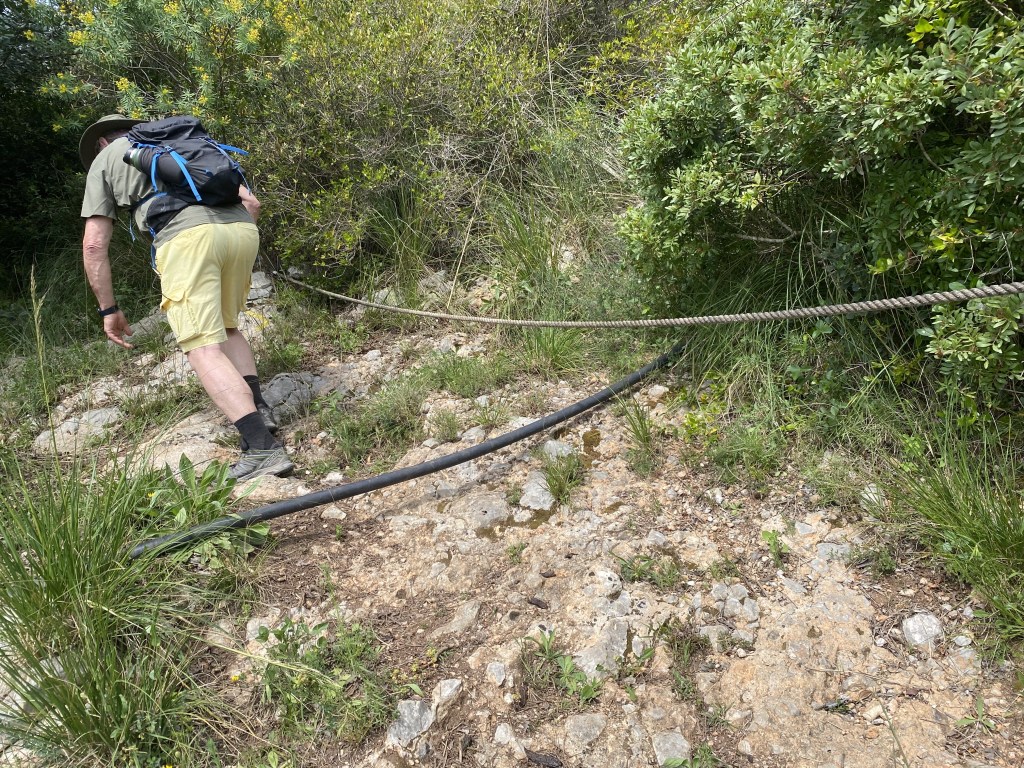
A section of the trail was precariously wedged between rock walls on the left and menacing scarp on the right.  A feeble rope strung along wavering wooden poles provided a comforting sense that someone knew this section was perilous which was quickly overwhelmed by the realization that no adequate safety measures had been placed. 

We sat briefly for a Fanta at a café mid-afternoon.  The sun was shining, a gentle offshore breeze cooled the air.  A group of men smoked cigarettes and drank beer as they spoke in excited tones in a dialect I could not decipher.  I mean not one bit.  Remarkable how the barista spoke to me in a very clear Roman accent and then turned to the man next to me speaking a completely different language.  I feel like a Bostonian speaking to a Virginian.  Oh wait…

Pope to Puglia – Day 5 Abbazzia di Fossanova to Terracina

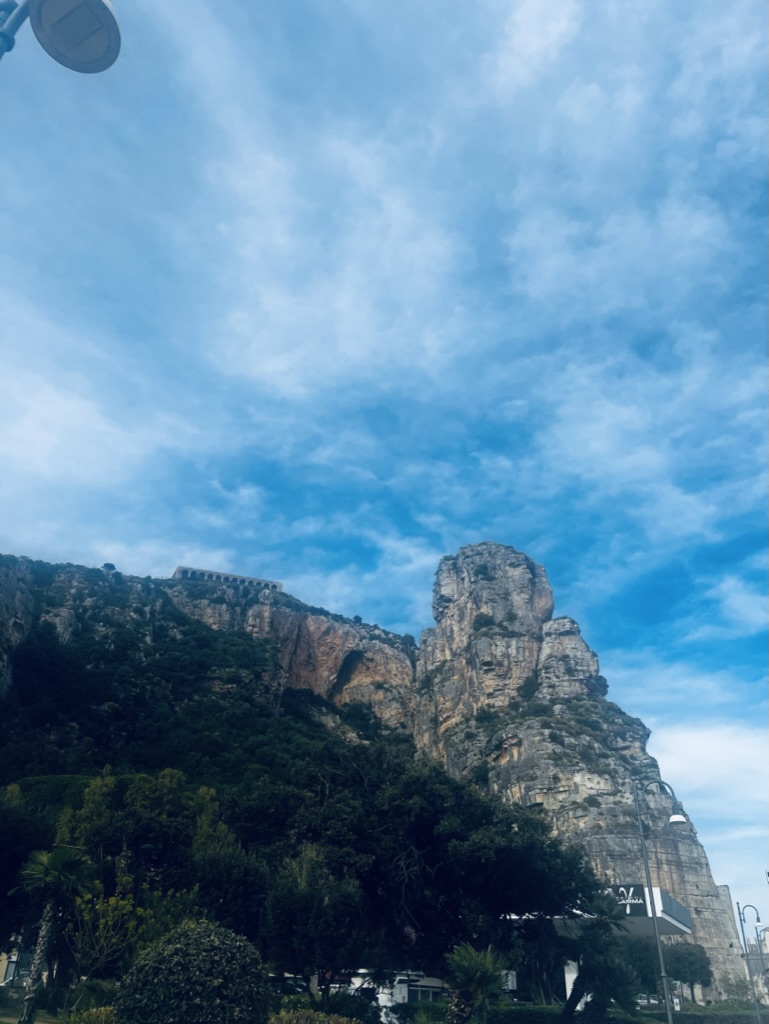
We walked on the Via Appia, a road as straight as an arrow, by canals that drain the Pontine Marshes. The land is flat, for ages home to deadly malaria that scourged visitors, especially in the summer months. Mussolini drained the marshes in the 1930s and gave the land to people from the north to farm.  These days the landscape is festooned with all manner of fruit trees, vegetable tracks and lemon trees so heavy with fruit that the branches kiss the ground.  We spend the night by the sea, under the watchful eye of Jupiter’s 1st century BCE temple that presides on a rocky promontory 1000 ft above.

Pope to Puglia – Day 4 Sermoneta to Abbazzia Fossanova 28 km

We are falling into familiar patterns.  Edward worries about logistics, navigation, supply lines, conquering the next hill, destinations.  Paula collects ceramic shards, some of which may be the remains of Etruscan urns, porcupine quills and, recently, parts of concertina wire fencing whose significance will remain unknown. 

After 9 hours of walking, at km 28 of our journey when we should have arrived at our destination, we realize that we had taken a wrong turn; we were still 7 KM away from our end point and it was getting dark.   We decided to hitch hike.  Very quickly a car stopped, the driver asked, “Where do you want to go?”, when we told him he merely noted “That is a long way, get in.” Vincenzo, the driver, recounted his adventures on Il Camino di Campostella, the Via di San Francesco; he had been on many pilgrimages.  When we arrived we were very grateful and offered to pay to which he replied “Ci mancherebbe altro. Il Camino provides” as he drove off.    

We arrive at the Cistercian Abby of Fossanova, the place where St Thomas Aquinas died in 1274.   The  Abby is austere, Cistercians did not believe in any decorations or “fantasies” except crucifixes.  We logged in the tower over the entrance gate, a welcome respite after a long day

Pope to Puglia – Day 3. Giulianello to Sermoneta 28km

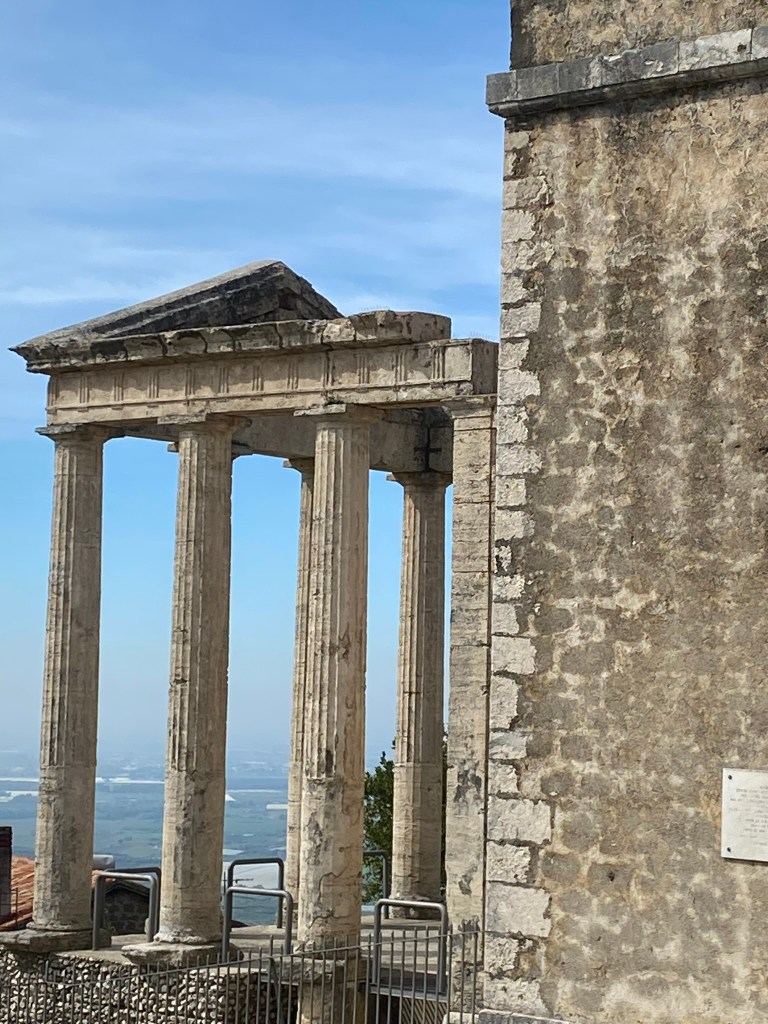
A 9-hour day, longer than expected, through olive groves, by a 1st century Temple of Hercules and with several steep ascents, but Sermoneta proved worth it.  This well-preserved medieval town owes its place in art and culture to the Caetani family who in the 12th century built an elegant castle around which the town grew.

Pope Boniface VIII, a Caetani, took refuge there before he was killed by Phillip IV of France who, in turn, moved the papacy to Avignon.  Not satisfied merely that Boniface was dead, Phillip persuaded the new French Pope, Clement V, to try him, posthumously, for heresy and sodomy.   Boniface never saw it coming.      

History wasn’t through with Sermoneta. 300 years later Pope Alexander VI, a Borgia Pope, converted the castle into a mighty, but austere, fortress for which the Sermonetans never forgave him.   The main church, Santa Maria Assunta, boasts frescoes by Benozzo Gozzoli which alone should make the town a must see.  And, finally, the movie Silk with Keira Knightley was filmed there and everyone we met had dinner with her. 

A long way up

Pope to Puglia

Day 2

Castel Gandolfo to Giulianello – 24km

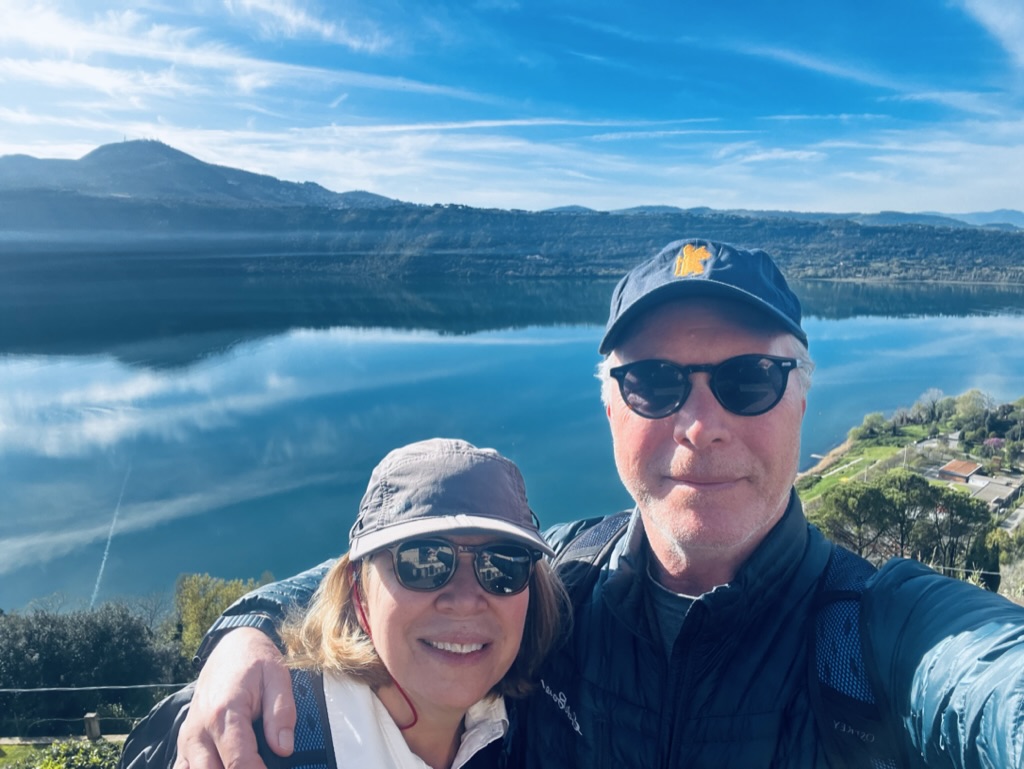
We left the papal palace and the church of St. Thomas of Villanova, the latter designed by Bernini, to walk around Lago Albano and over the crater’s edge to Lago di Nemi and its eponymous town which one enters through 20-foot-thick walls to be greeted by the massive Palazzo Ruspoli, often characterized as austere.  Nemi is a graceful little town which, like most little towns in Italy, has its own identity, history, character, and treasures.  Right now Nemi is celebrating strawberries, mounds of which can be found in front of every café and store.

After a demanding climb of 2400 ft we descended into Velletri, a bustling town that shows no sign of the heavy bombardment it endued during WW2.   We proceeded to Giulianello which while only 6 km from Velletri at the end of the day felt like an eternity. 

Pope to Puglia

Day 1

Rome to Castel Gandolfo: 26 km

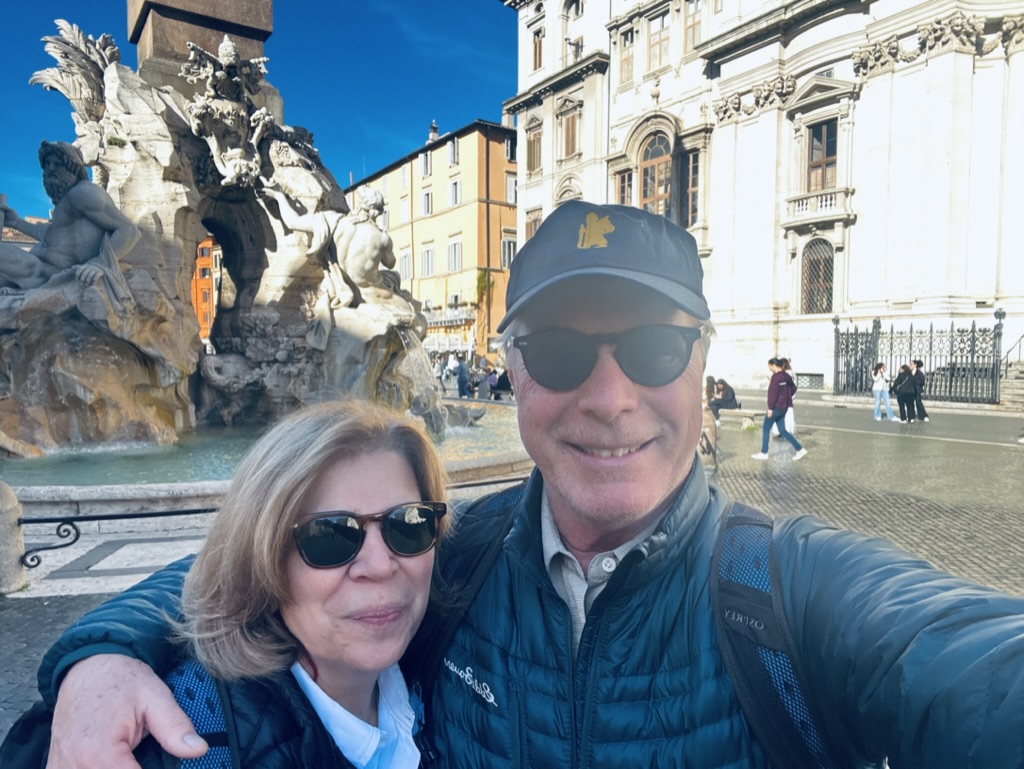
We departed Rome from Piazza Navona.  We walked around the Pantheon, passed the Roman Forum, around the Colosseum, the Arch of Titus, the Baths of Caracalla, through the gate of Saint Sebastian and onto the Appia Antica which we followed for 18 km over the grooved basalt stones and passed the remains of Roman villas, tombs and aqueducts.  A quick review of Roman antiquity

Castel Gandolfo , the site of the Pope’s summer residence, sits 1200 ft above the Roman plain on one side and Lago Albano on the other.  It is a well ordered and carefully curated town built around the castle of its eminent summer resident.  Quiet now.

Many have asked: why walk?  We are told about the many physical and mental benefits of walking.  It’s good for your heart, lungs, circulation, and bones. It’s a cure for depression, improves concentration and calms your nerves.  It seems the architecture of our bodies evolved to favor walking.  We are born to walk.  But none of this really matters because we walk as we do because we like it. We have no goal in mind, other than to reach the next stop.  We are not competing for distance, duration, or speed.  We are stubbornly committed to the principles of slow walking, empty the mind, be grateful for each step. 

Wonderful weather, getting in the groove.

Pope to Puglia

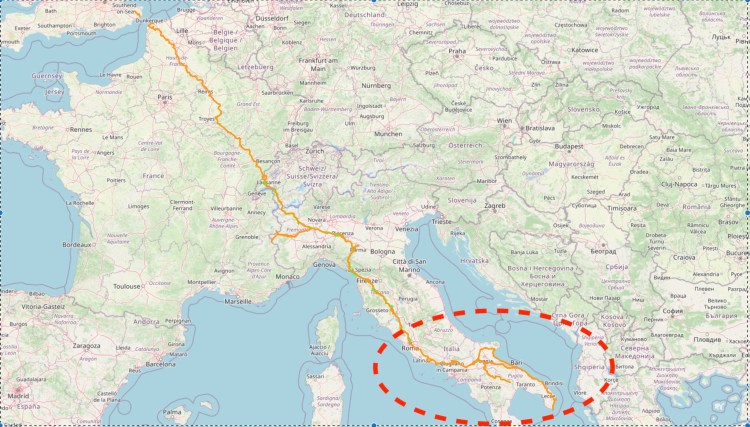
We walk, again, this time from Rome to Santa Maria di Leuca in Puglia, at the very tip of the heel of the Italian peninsula. It is referred to as the Via Francigena del Sud (VFS) though it is not part of the original Via Francigena pilgrimage route, the trek taken by Archbishop Sigeric of Canterbury in 994 from Canterbury to Rome to collect his Pallium from Pope John XV (which we walked in 2022 and 2023).

This peregrination will take us along the Tyrrhenian coast to Terracina, across the Apennines to the Adriatic coast at Monte Sant’Angelo then more or less along the coast to Bari, Brindisi, Lecce before we arrive at land’s end. at Santa Maria di Leuca. The 975 km trek will take us 6 weeks.

Via Francigena del Sud

Screenshot

As with last year’s walk, we have no expectations. We will take each step as an achievement on its own merits, at the end of each day we will have earned the privilege of doing it again in the morning. The changing whether, the random animal sounds, the crunch of our steps on gravel, the rustle of wind blown leaves will be our companions. We will never be alone.

We will write a daily blog and weekly summaries. If you follow us, we will feel your presence and we welcome your comments, they fortify us.

P2 Stage 38 La Storta to Rome, 28km

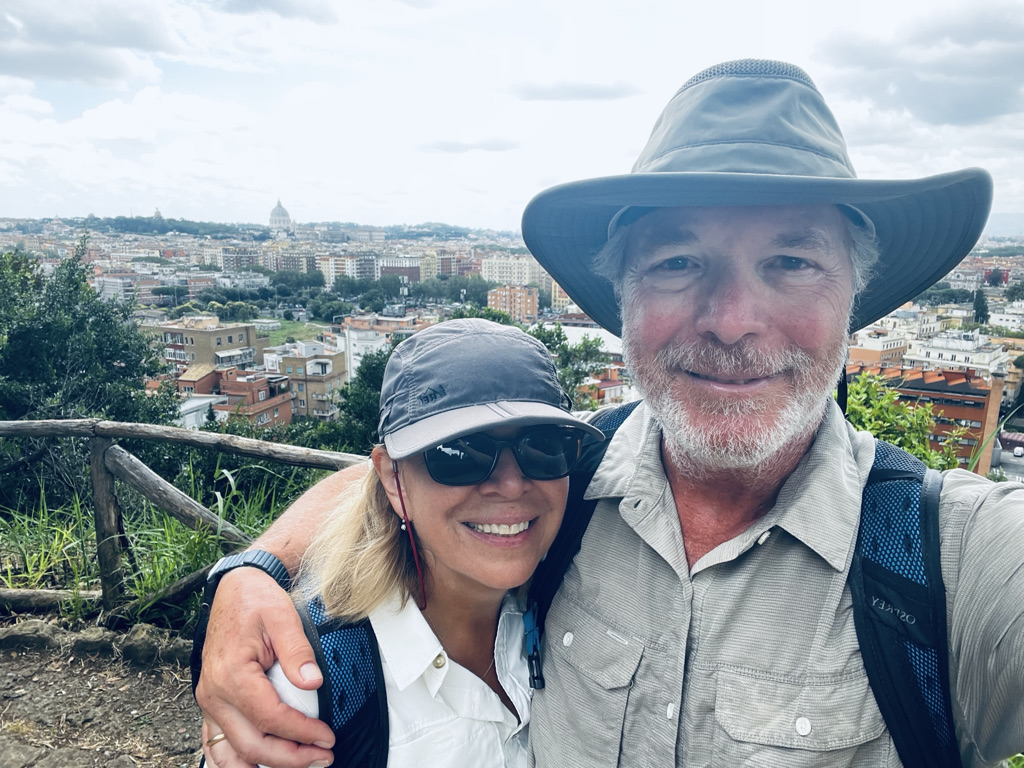
Our final stage. We walked through the Roman suburbs, over Monte Mario, Mons Gaudii, and finally entered St Peter’s Sq. We crossed paths with Giannni, aka Pavia, who greeted us saying “You look like a work of art. Are you feeling emotional?” he asked in typical Italian fashion where emotions and feelings are always at the surface. Yes, we answered choked up a bit.

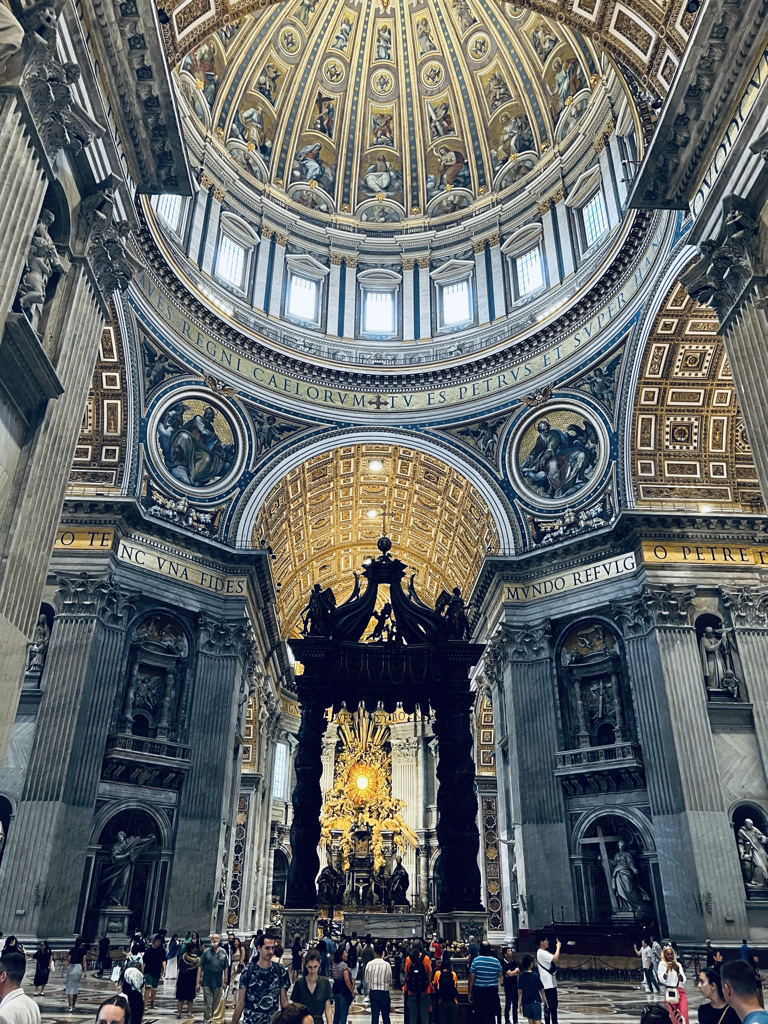
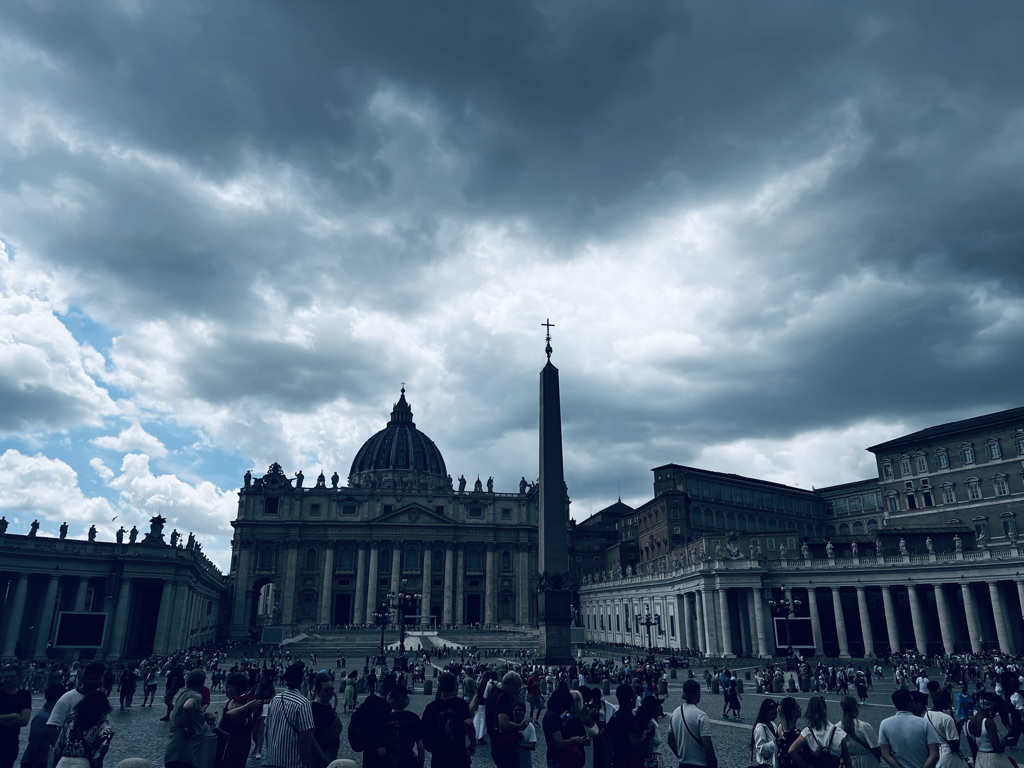
St Peter’s Square was mobbed with visitors from all over the world, but it is large enough to accommodate many more. The basilica is such an overwhelming structure in size and composition, it would be difficult to minimize its effect. Bleary-eyed we filed through the fast lane to get our Testimonium and then gained access to the Basilica ahead of a long line of visitors. In Canterbury the comment was “Pilgrims get in free”, in St Peter’s it’s “Pilgrims don’t have to wait in line.” After the pilgrim’s mass we tracked down the Archbishop. In Canterbury, we told him, the Bishop blessed our journey, we needed his blessing to close it off. He obliged. Thus in 16 short weeks we were able to bridge the Anglican and Catholic churches. Is Istambul or Jerusalem next?

We are too overwhelmed by the end of our journey and heavy with wine to say good-bye. There will be another “trip summary” tomorrow, before we cap this off. All I can say is we love Rome and loved our walk.