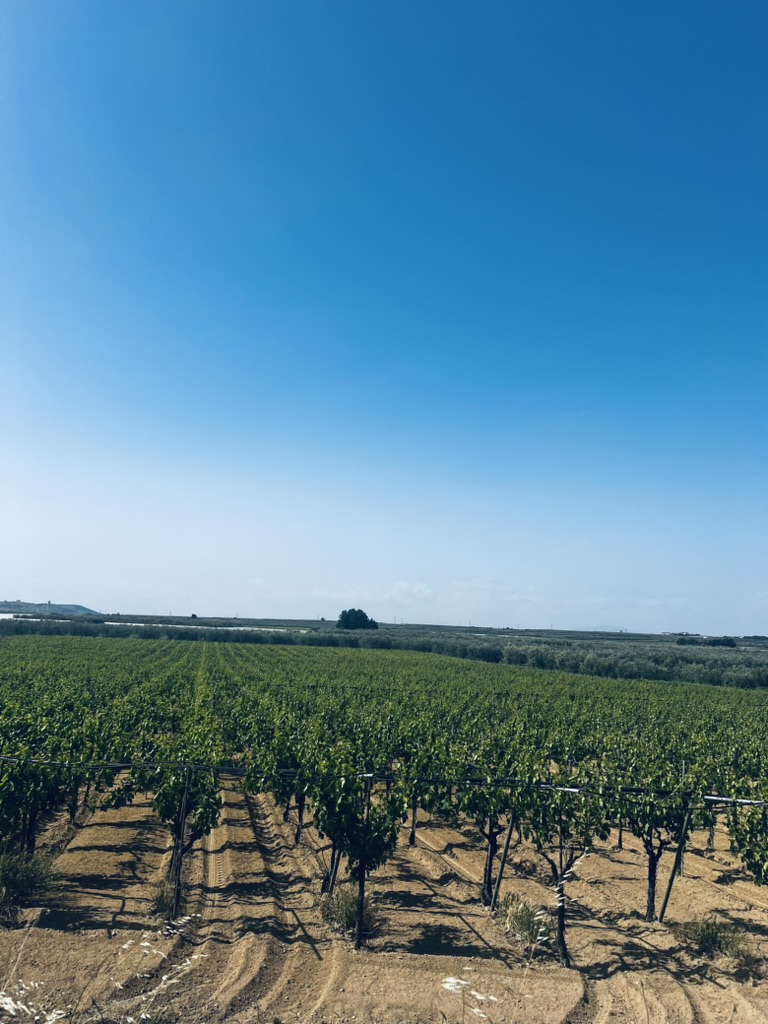
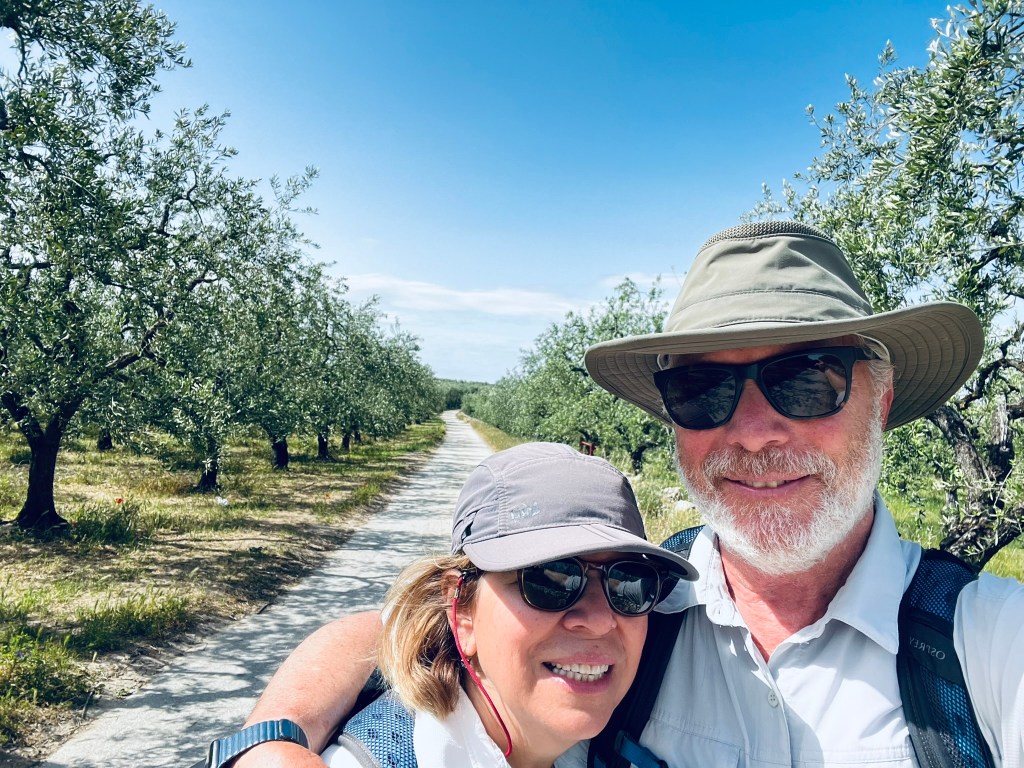
We left the mountains to return to the “tavaliere”, the flat-ish plain between the Apennines and the Adriatic, and the main Via Francigena route. Our path over the last 2 days mostly has been through olive groves and vineyards. Miles and miles of them. The olive trees, gnarly and knobby, hardly resembling trees at all, many of them hundreds of years old, persist stubbornly through wars, earthquakes, storms and scorching hot weather, on rocky arid ground, to produce a delectable elixir. A great paradox of nature.
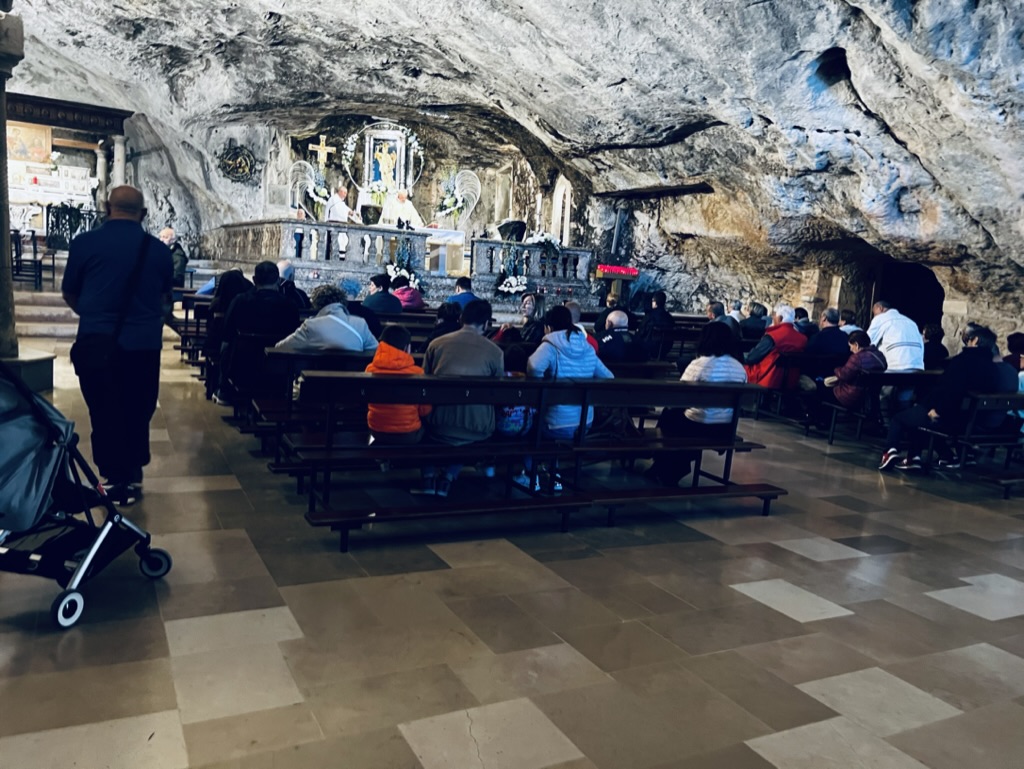
Before leaving Monte Sant’Angelo, we visited the grotto where, legend has it, in 492 CE the Archangel Michael appeared to a local shepherd proclaiming that anyone who visited the grotto would have all sins forgiven. So, we have that going for us.
Puglians are unusually welcoming. Many stop to ask us the usual questions: where you are going, where are you from, where are you staying tonight, etc. But some want to develop a relationship. On the way to Canosa we crossed paths with Francesco, on a tractor, straight out of central casting for a movie about harvesting. He explained the virtues of Puglian olives: “The best olives in the world are the Coratina olives from this area. Tuscans blend Coratina olives with theirs to give their olive oil flavor and the afterbite. And we have the best wines.” He has cousins in Florida. He shut off his tractor, ready to talk for the rest of the day, but we pushed on. On our way to Andria today we were stopped by Riccardo, also riding a tractor, and obviously trying out for a movie about harvesting. He wanted to make sure we were ok, invited us to refill our water bottles with water from his 500 m deep well. It was pretty good. He insisted I wash out my arm, which I scraped during a maneuver I will not bother to explain here, with the clean fresh water from deep in the ground. He told us about his 14-year-old daughter who wants to go to America. We could have had dinner with him if we asked.
As we walk, we are listening to, Paula enduring, the history of the crusades by Zoe Oldenbourg in which we learn about Bohemond, a Norman leader who became legendary for his physical appearance (he was extraordinarily handsome according to Anna Komnene, the Byzantine emperor’s daughter), strength, courage, military genius, and knowledge about Byzantium. He is buried in Canosa where his Norman-structured octagonal mausoleum is found. By the time we got there it was closed. We enquired at the tourist office where Daniella cheerfully called the local priest who has the key. The priest, Don Filippo, agreed to come over to open the Mausoleum for us immediately. I love this culture of the generous spirit.




You sure one trip to the Grotto in Monte Sant’Angelo is gonna cover you guys? 😂
Beth ❤️
LikeLike
Twisted
Gnarly dark bark
Silvery slender flicker
Pump green plump to black shake to drop
Olive
LikeLike
beautiful country. Elena
LikeLike